Vitamin D mcg to IU: a dose chart with what each dose means
This article contains affiliate links to iHerb. If you buy through them, we earn a commission at no extra cost to you. It doesn't affect which forms we recommend. Learn more
The NHS advises 10 micrograms, your bottle from iHerb says "125 mcg (5,000 IU)", and a forum post swears by 4,000 IU. This page puts every common vitamin D dose in one chart: the IU figure, who it's advised for, and where the upper limit sits.
Multiply micrograms by 40 and you have IU. Divide IU by 40 and you’re back to micrograms. The factor is the same for D3 (cholecalciferol) and D2 (ergocalciferol), and NIH ODS, EFSA and the FDA all use it. If you’d rather not do sums, type in the number from your bottle:
Vitamin D: mcg to IU and back
Pick a direction and type the number from the label or your prescription
400
Your vitamin D dose in the other unit
Formula: IU = mcg × 40, mcg = IU ÷ 40. It's the same for D3 and D2.
Answer in IU. EFSA and the NHS set the adult limit at 100 mcg (4,000 IU) a day; children aged 1 to 10 should have no more than 50 mcg (2,000 IU).
Vitamin D3 on iHerb1 mcg = 40 IU (NIH ODS, EFSA, FDA). Add up every bottle: D3 also turns up in multivitamins and calcium tablets.
Vitamins A and E convert differently. For those, use the general IU to mcg and mg converter.
Vitamin D mcg to IU chart: 2.5 to 250 mcg
The right-hand column says what each figure means in official advice. Where a dose has no advice of its own, you’ll see the nearest reference point.
| mcg | IU | What this dose is |
|---|---|---|
| 2.5 | 100 | a quarter of the NHS daily amount |
| 5 | 200 | half the NHS amount |
| 8.5 | 340 | the lower end of NHS advice for breastfed babies |
| 10 | 400 | NHS advice for adults in autumn and winter and for children aged 1–4 all year; the US figure for babies |
| 12.5 | 500 | between NHS advice and the US recommended amount |
| 15 | 600 | US recommended amount from age 1 to 70, in pregnancy and when breastfeeding |
| 20 | 800 | US amount over 70; the base for % Daily Value on American labels |
| 25 | 1,000 | the limit for babies: under 12 months (NHS), under 6 months (EFSA, NIH) |
| 35 | 1,400 | EFSA’s limit for babies aged 7–11 months |
| 50 | 2,000 | the limit for children aged 1–10 (EFSA, NHS) |
| 62.5 | 2,500 | the US limit for ages 1–3 (rounded to 63 mcg in NIH tables) |
| 75 | 3,000 | the US limit for ages 4–8 |
| 100 | 4,000 | the limit for adults and teenagers, including pregnancy and breastfeeding |
| 125 | 5,000 | a quarter above the adult limit: medical advice only |
| 250 | 10,000 | two and a half times the limit |
A recommended amount is what most people need. An upper limit is how much you can take every day, long term, without harm. There’s a wide gap between the two, and 10 mcg and 25 mcg bottles sit comfortably inside it.
10, 15, 25, 50 and 125 mcg of vitamin D in IU
- 10 mcg = 400 IU. The daily amount the NHS advises for nearly everyone from October to March.
- 12.5 mcg = 500 IU.
- 15 mcg = 600 IU, the US figure for adults up to 70.
- 25 mcg = 1,000 IU, a common strength for softgels and drops.
- 50 mcg = 2,000 IU. Half the adult limit, and the whole limit for a child under 11.
- 125 mcg = 5,000 IU. A popular bottle on iHerb, but above the 100 mcg limit.
1,000, 2,000, 4,000, 5,000 and 10,000 IU in mcg
To go the other way, divide by 40:
- 1,000 IU is 25 mcg;
- 2,000 IU is 50 mcg;
- 4,000 IU is 100 mcg, exactly the adult limit;
- 5,000 IU is 125 mcg;
- 10,000 IU is 250 mcg. NIH ODS says signs of toxicity are unlikely below this, yet it’s still two and a half times the limit;
- 50,000 IU is 1,250 mcg, or 1.25 mg. If a doctor prescribes a capsule like this, they also tell you how often to take it.

Why vitamin D is hardly ever given in mg
Vitamin D doses are tiny. 125 mcg is 0.125 mg and 10 mcg is 0.01 mg. In milligrams you end up with strings of zeros after the decimal point, which is where mistakes creep in. That’s why the FDA requires vitamin D on labels in mcg and allows IU in brackets as an extra. The NHS and EFSA give their figures in micrograms too, and UK labels show % NRV rather than % DV.
The mistake to avoid is mixing up mg and mcg. 1 mg = 1,000 mcg. A note saying “0.5 mg” means 500 mcg, or 20,000 IU, five times the adult limit. If you see a dose in mg, multiply by 1,000 first and only then by 40.
Why vitamin E has a different factor, and where IU came from, is explained in what an IU on a vitamin label means. With vitamin E the form matters as well: see vitamin E IU to mg.
Which vitamin D dose suits you
The NHS says 10 mcg, US tables say 15–20 mcg, and the bottle a friend recommended says 1,000 IU. They don’t contradict each other: they’re maintenance amounts with different margins, and all of them sit below the limit. Pick your situation:
Which vitamin D dose fits you
Pick your situation. Answers follow NHS advice and NIH ODS figures, not your blood test
Your situation
What's advised
10 mcg (400 IU), October to March
The NHS advises 10 mcg a day for adults and children over 4 in autumn and winter. The US figure for ages 19–70 is a little higher: 15 mcg (600 IU).
Dose: 10–15 mcg (400–600 IU) a day
What's advised
10 mcg (400 IU) all year
If you're rarely outdoors, live in a care home or cover most of your skin outside, the NHS advises 10 mcg every day, all year. People with dark skin should consider the same.
Dose: 10 mcg (400 IU) a day, all year
What's advised
20 mcg (800 IU) by US figures
NIH ODS sets 20 mcg (800 IU) for people over 70, while NHS advice for all adults is 10 mcg. After 70 the limit stays at 100 mcg (4,000 IU).
Dose: 10–20 mcg (400–800 IU) a day
What's advised
10 mcg (400 IU), as for other adults
The NHS advises the same 10 mcg in pregnancy and while breastfeeding; the US figure from NIH ODS is 15 mcg (600 IU). The limit doesn't change: 100 mcg (4,000 IU). Check the D3 in your pregnancy vitamin before adding another bottle.
Dose: 10 mcg (400 IU) a day; 15 mcg by US figures
Anything above 15 mcg in pregnancy is for your midwife or GP to decide.
What's advised
Follow your health visitor or GP
The NHS advises 10 mcg a day all year for children aged 1–4, and 8.5–10 mcg for breastfed babies. Limits are lower than for adults: 25 mcg (1,000 IU) under 12 months, 50 mcg (2,000 IU) from 1 to 10 years.
Adult softgels of 50–125 mcg are not for children.
What's advised
Your doctor sets the course
If a blood test shows a deficiency, your GP chooses the dose and how long to take it. Treatment and everyday maintenance are different plans, so don't carry on with a treatment dose without a follow-up test.
Forms, D3 with K2 and timing are covered in how much vitamin D3 to take. If you’ve had a blood test, our page on vitamin D test results explains the numbers.
Upper limits for children and adults
| Age | EFSA | NHS | NIH (US) |
|---|---|---|---|
| 0–6 months | 25 mcg (1,000 IU) | 25 mcg (1,000 IU) | 25 mcg (1,000 IU) |
| 7–12 months | 35 mcg (1,400 IU) | 25 mcg (1,000 IU) | 38 mcg (1,500 IU) |
| 1–3 years | 50 mcg (2,000 IU) | 50 mcg (2,000 IU) | 63 mcg (2,500 IU) |
| 4–8 years | 50 mcg (2,000 IU) | 50 mcg (2,000 IU) | 75 mcg (3,000 IU) |
| 9–10 years | 50 mcg (2,000 IU) | 50 mcg (2,000 IU) | 100 mcg (4,000 IU) |
| 11–17 years | 100 mcg (4,000 IU) | 100 mcg (4,000 IU) | 100 mcg (4,000 IU) |
| Adults | 100 mcg (4,000 IU) | 100 mcg (4,000 IU) | 100 mcg (4,000 IU) |
EFSA reviewed the limit in 2023 and kept 100 mcg for adults, including during pregnancy and breastfeeding. The NHS and US figures are the same, and from age 11 the adult limit applies.
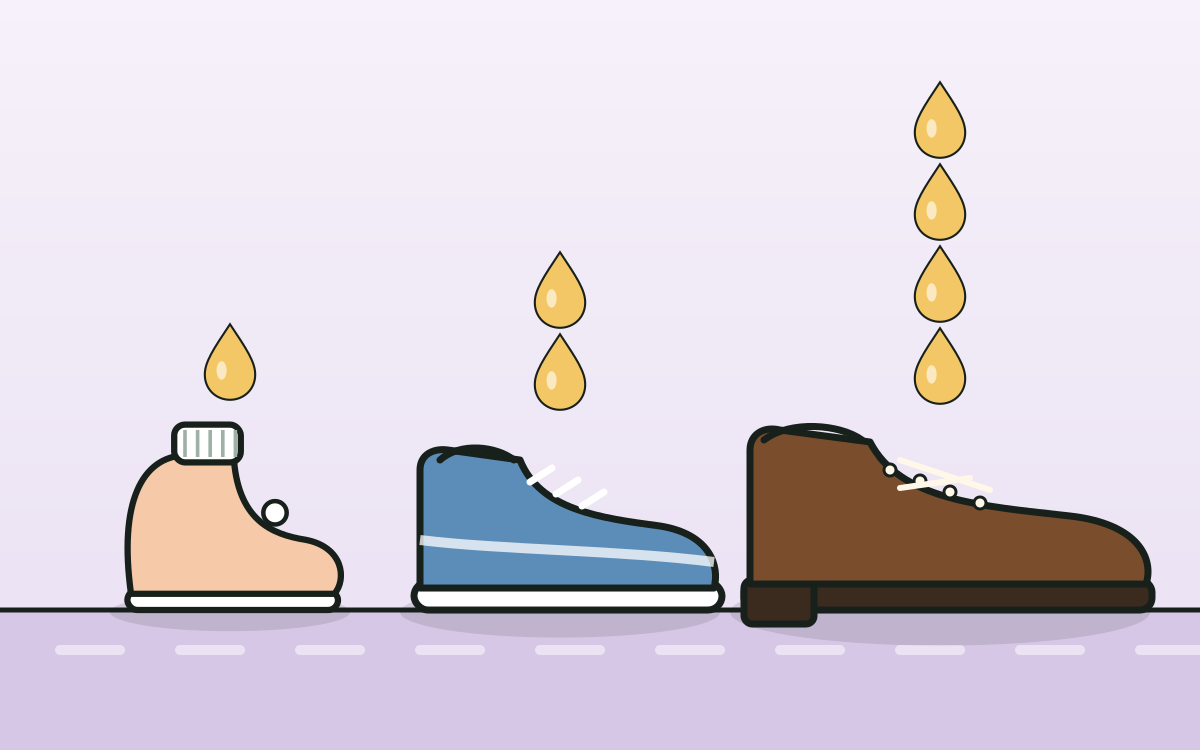
Children’s limits are two to four times lower than the adult one. Don’t split a 50 mcg adult softgel by eye for a toddler: children’s doses come from your health visitor or GP, and our page on vitamins for children covers the rest.
When to talk to your GP or pharmacist first
NIH ODS notes that vitamin D overdose almost always comes from supplements, not from food or sunshine. Check with your GP or pharmacist if:
- you take orlistat, a statin, steroids or a thiazide diuretic, all of which NIH ODS lists as interacting with vitamin D;
- you have kidney disease or have had high calcium in a blood test;
- you’re already on a treatment course, in which case don’t add your own bottle on top;
- you’re pregnant and want more than 15 mcg (600 IU) a day;
- the vitamin D is for a child.
How to choose vitamin D3 on iHerb by dose
- Find the Vitamin D3 line in the Supplement Facts panel and read the mcg figure. The IU in brackets is for cross-checking.
- Check the serving: one softgel or two, and how many drops.
- Add up the D3 from every bottle: multivitamin, calcium with D3, cod liver oil.
- Compare the total with the limits table. For an adult, that’s no more than 100 mcg a day.
- For the other lines on the panel, see how to read a supplement label.
Bottom line: what to choose
You want a flexible dose
D3 drops
Work out the mcg per drop from the serving on the label
D3 drops on iHerbYour doctor prescribed 125 mcg (5,000 IU)
D3 125 mcg, exactly as prescribed
It's above the limit, so only for as long as your doctor says
D3 5,000 IU on iHerbButtons lead to selections of the right form on iHerb. These are affiliate links; your price doesn't change.
FAQ
How many IU is 10 mcg of vitamin D?
400 IU. That’s the daily amount the NHS advises for adults and children over 4 in autumn and winter, and all year for children aged 1 to 4.
What is 50 mcg of vitamin D in IU?
2,000 IU (50 × 40). It’s the upper limit for children aged 1 to 10, according to EFSA and the NHS, and half the adult limit.
Is 125 mcg of vitamin D3 the same as 5,000 IU?
Yes. 125 × 40 = 5,000 IU, or 0.125 mg. That’s a quarter above the adult limit of 100 mcg (4,000 IU), so take it only if a doctor has prescribed it.
How many mcg is 4,000 IU of vitamin D?
100 mcg: divide 4,000 by 40. It’s exactly the upper limit for adults set by EFSA and the NHS.
How many mcg is 10,000 IU of vitamin D?
250 mcg, two and a half times the adult limit. NIH ODS says signs of toxicity are unlikely below this amount, but it isn’t a dose to take every day without medical advice.
Is the IU to mcg conversion the same for D3 and D2?
Yes. EFSA and the FDA use the same factor for both: 1 mcg of cholecalciferol (D3) or ergocalciferol (D2) equals 40 IU.
Sources
- NHS. Vitamins and minerals – Vitamin D
- EFSA. Summary of Tolerable Upper Intake Levels for vitamins and minerals
- EFSA NDA Panel (2023). Scientific opinion on the tolerable upper intake level for vitamin D
- NIH ODS. Vitamin D – Fact Sheet for Health Professionals
- FDA (2019). Converting Units of Measure for Folate, Niacin, and Vitamins A, D, and E on the Nutrition and Supplement Facts Labels
Vitamin D in numbers
From NHS, EFSA and NIH ODS
- Conversion
- 1 mcg = 40 IU; 1 IU = 0.025 mcg
- NHS advice
- 10 mcg (400 IU) a day in autumn and winter
- US recommended amount
- 15 mcg (600 IU); over 70, 20 mcg (800 IU)
- Adult upper limit
- 100 mcg (4,000 IU) a day
- Children aged 1–10
- no more than 50 mcg (2,000 IU)
- In milligrams
- 125 mcg = 0.125 mg
The limit covers every supplement you take that day: D3 also hides in multivitamins and calcium tablets.
Shop D3 on iHerbThe amount the NHS advises for autumn and winter
Contents
- Vitamin D mcg to IU chart: 2.5 to 250 mcg
- 10, 15, 25, 50 and 125 mcg of vitamin D in IU
- 1,000, 2,000, 4,000, 5,000 and 10,000 IU in mcg
- Why vitamin D is hardly ever given in mg
- Which vitamin D dose suits you
- Upper limits for children and adults
- When to talk to your GP or pharmacist first
- How to choose vitamin D3 on iHerb by dose