Vitamins for over 50s and over 60s: what changes with age and where to start
After 50 the list of vitamins hardly changes, but the setting around it does. B12 is absorbed less well, skin makes less vitamin D, and the medicine box fills up with tablets that don't always mix with supplements. This section is for you and for anyone buying vitamins for their parents.
Vitamins for over 50s, 60s and 70s
Vitamins for over 50s and the best vitamins for over 60s in the UK: vitamin D, B12, calcium and protein per NHS and NIH, plus supplements you can skip.
10 min readBone health and falls over 50
Bone health over 50: 700 mg calcium mostly from food, 10 mcg vitamin D, when calcium supplements help, K2 evidence, FRAX and preventing falls in older adults.
11 min readMuscle loss with age: sarcopenia
Sarcopenia and muscle loss in older adults: the chair and grip tests, resistance exercise first, protein for over 60s at 1.0–1.2 g/kg, creatine with training, HMB.
9 min readSupplements and kidney disease
Supplements to avoid with kidney disease: magnesium, potassium, phosphorus, vitamins A and E, high-dose vitamin C, risky herbs, eGFR stages and renal vitamins.
10 min readWhen pills are hard to swallow
Trouble swallowing pills? Two tested techniques, liquid, chewable and gummy vitamins for adults and their drawbacks, can you crush tablets, and when to see a GP.
9 min readSupplements and your medicines
Supplements and medication interactions after 50: which vitamins clash with statins, warfarin, metformin or levothyroxine, and how to get an NHS medicines review.
11 min readConstipation after 60
Constipation in elderly people: causes such as iron, calcium and painkillers, remedies for older adults (fluids, fibre, walking), psyllium, magnesium and red flags.
10 min readSleep after 60
Insomnia in older adults: normal sleep changes over 60, CBT for insomnia first, sleeping pills and falls, melatonin for the elderly in the UK and modest supplements.
10 min readMemory after 60
Memory supplements for the elderly: does ginkgo help memory, what omega-3, B vitamins and vitamin D trials show, normal forgetfulness vs warning signs and GP tests.
10 min readVitamins for elderly parents
Vitamins for elderly parents without the guesswork: helping elderly parents with medication, a list for the GP, avoiding double doses and gifts for their health.
10 min read
Who this section is for
People over 50 and 60 who want to know which vitamins they actually need. And their adult children, who are often the ones ordering from iHerb for a mum in Swansea or a dad who lives on his own.
We don’t review “senior formulas”. Instead you’ll find what changes with age, what official advice supports, and how to keep supplements from clashing with medicines.
What changes after 50 and 60
- B12 is absorbed less well. Many older adults have less stomach acid, which is needed to release B12 from meat and dairy. That’s why the NIH advises over-50s to get most of their B12 from fortified foods or tablets. More in our vitamin B12 guide.
- Skin makes less vitamin D. It becomes less efficient with age, and most of us spend less time outdoors. The NHS advises 10 mcg a day all year if you’re not often outside.
- Muscle and bone mass shrink. Protein from food, staying active, and calcium with vitamin D all help. The European Society for Clinical Nutrition (ESPEN) advises older people to eat at least 1 g of protein per kilo of body weight a day.
- More medicines. Blood pressure, diabetes, cholesterol, thyroid: each tablet can raise its own question about supplements.
- The kidneys slow down. MedlinePlus (NIH) notes that medicines stay in the body longer with age, and doses sometimes need reviewing.
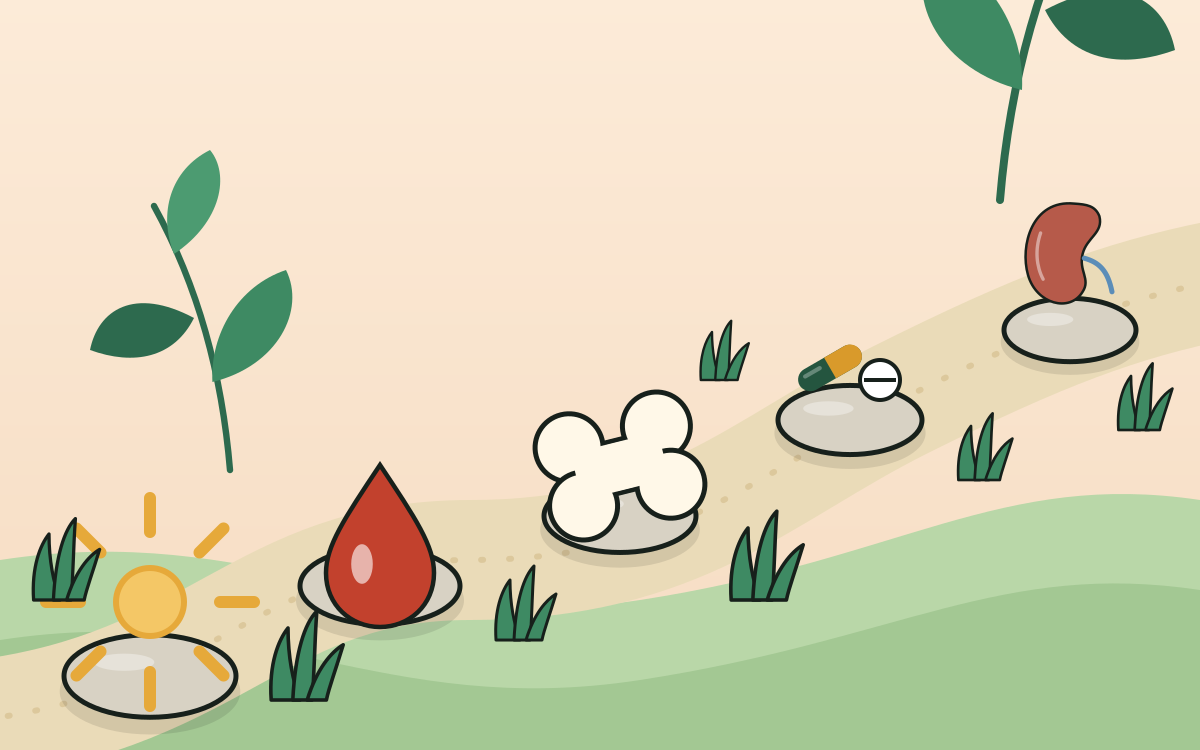
Where to start after 50
Pick the situation closest to yours and open the guide that fits
Your situation
What to do first
Think about vitamin D and B12; the rest depends on you
After 50, B12 from food is absorbed less well, so the NIH advises getting most of it from fortified foods or a supplement. Vitamin D matters in autumn and winter.
Guide figure: vitamin D 10 mcg (400 IU) a day in autumn and winter (NHS)
What to do first
Vitamin D all year round
The NHS advises a year-round vitamin D supplement if you're not often outdoors, live in a care home or usually cover up your skin outside.
Guide figure: 10 mcg (400 IU) a day; no more than 100 mcg (4,000 IU)
What to do first
Make a list before you buy anything
Write down every medicine and supplement and show the list to your GP or pharmacist. Some pairs need spacing out or a blood test.
What to do first
A chat, a list and a pill organiser
Start with what worries your parents, not with your shopping list. Gather every box and bottle, look for doubles, and only then think about buying.
What to do first
Liquid and chewable forms exist
Drops, chewables and powders help many people. But not every medicine can be split or crushed, so check with a pharmacist first.
What to do first
No minerals without your doctor
With age, the kidneys clear medicines more slowly. With kidney disease, take magnesium, potassium, calcium or vitamin D only on medical advice.
Potassium supplements and potassium salt substitutes are dangerous with some blood pressure medicines.
Topics in the 50+ section
| Topic | What matters | Guide |
|---|---|---|
| Which vitamins you need | D, B12; calcium and protein from food | vitamins for over 50s, 60s and 70s |
| Bones and falls | vitamin D, calcium, strength and balance | bone health and osteoporosis supplements |
| Muscle | protein, activity, creatine in some cases | sarcopenia and muscle loss |
| Supplements and medicines | statins, warfarin, levothyroxine, diuretics | supplement and medication interactions |
| Kidneys | magnesium, potassium, vitamin D only with your doctor | supplements to avoid with kidney disease |
| Swallowing | drops, chewables, splitting tablets | trouble swallowing pills |
| Constipation | fluids, fibre, activity, care with magnesium | constipation in older adults |
| Sleep | routine, daylight; melatonin is prescription-only in the UK | sleep problems over 60 |
| Memory | a check-up matters more than supplements | memory over 60 |
| Helping parents | a chat, a list, a pill organiser | vitamins for elderly parents |
| Medicines list | all medicines and supplements on one sheet | medication list template |
| Pill calendar | a weekly chart with tick boxes | printable pill calendar |
Vitamins for the elderly: checks before you buy
Before a new bottle joins the others, check how it fits with everything you already take. Five quick checks:
Five checks before you buy
Tick what you've already checked. Anything left unticked is a question for your pharmacist
0 / 5 checked
All checked. Add the new bottle to your medicines list so your GP knows about it.
When to see your GP rather than shop
- You’ve lost weight without trying, or lost your appetite.
- You have numbness, tingling in the feet, unsteadiness or memory problems. Ask for a B12 test before starting tablets.
- You’re falling or feeling dizzy more often.
- You take several medicines and can’t remember what some are for. Ask for a review of the whole list.
How to choose on iHerb
- Make a list of medicines for your GP and show it to your GP or pharmacist.
- Start with one nutrient at a sensible dose: vitamin D 400–1,000 IU, B12 500–1,000 mcg.
- Compare doses with your multivitamin so you don’t double up.
- If tablets are hard to swallow, choose drops, chewables or a powder.
- Not sure where to start? Try our vitamin check; it has answers for ages 51–64 and 65+.
Bottom line: what to choose
Over 50, few fortified foods
Vitamin B12 tablets
Check your multivitamin doesn't already cover it
Vitamin B12 on iHerbButtons lead to selections of the right form on iHerb. These are affiliate links; your price doesn't change.
FAQ
What vitamins should over 50s take?
Official advice is short. The NHS recommends 10 mcg of vitamin D a day in autumn and winter, and all year if you’re not often outdoors. The NIH advises people over 50 to get most of their B12 from fortified foods or supplements. Calcium and protein are best from food.
What are the best supplements for over 60s in the UK?
The same short list: vitamin D and B12. If you take several medicines, show your GP or pharmacist a list of everything first. Some supplements need spacing out from medicines, and a few combinations are risky.
Do elderly people need iron supplements?
Usually not. From 50, men and women need the same 8.7 mg of iron a day (NHS), which a normal diet covers. Iron tablets are for a shortfall confirmed by a blood test.
Can I take vitamins with blood pressure or heart medicines?
Most vitamins are fine, with exceptions. Potassium supplements and potassium salt substitutes are dangerous with ramipril, losartan or spironolactone. Ginkgo and high-dose vitamin E may add to bleeding risk with warfarin. Ask your pharmacist before you start.
Do I need a special 50+ multivitamin?
Not necessarily. If you choose one, look for an iron-free formula with vitamin A within normal amounts, and check it doesn’t double up on vitamin D or calcium from other bottles.
Sources
- NHS. Vitamin D
- NIH ODS. Vitamin B12 – Fact Sheet for Consumers (PDF)
- NHS. Calcium
- NHS. Iron
- Volkert D. et al. ESPEN guideline on clinical nutrition and hydration in geriatrics. Clinical Nutrition, 2019
- Administration for Community Living (US). Older adults' nutrition needs: vitamin D (PDF)
- MedlinePlus (NIH). Taking multiple medicines safely
50+ at a glance
Based on the NHS, NIH ODS and ESPEN
- Vitamin D
- 10 mcg (400 IU) a day; all year if you rarely go out
- B12 after 50
- mostly from fortified foods or tablets (NIH)
- Calcium
- food first: 700 mg a day (NHS)
- Iron from 50
- 8.7 mg a day; supplements only after a test
- Protein
- at least 1 g per kg body weight a day (ESPEN)
- Several medicines
- make a list for your GP before buying supplements
With kidney disease, or if you take warfarin, diuretics or levothyroxine, check any supplement with your GP first.