L-arginine: what it does, what the evidence says on blood pressure and erections, and who should avoid it
This article contains affiliate links to iHerb. If you buy through them, we earn a commission at no extra cost to you. It doesn't affect which forms we recommend. Learn more
L-arginine is sold for "circulation" and "men's health". It does lower blood pressure a little, and there is modest evidence in mild erectile dysfunction. But it may be dangerous after a heart attack, and it shouldn't be mixed with several common medicines.
What L-arginine is
L-arginine is an amino acid your body can make, and you also get it from protein foods. Denmark’s National Food Institute (DTU) estimates that people get about 3–5 g of arginine a day from an ordinary diet. Meat, fish, dairy, nuts and seeds are all good sources.
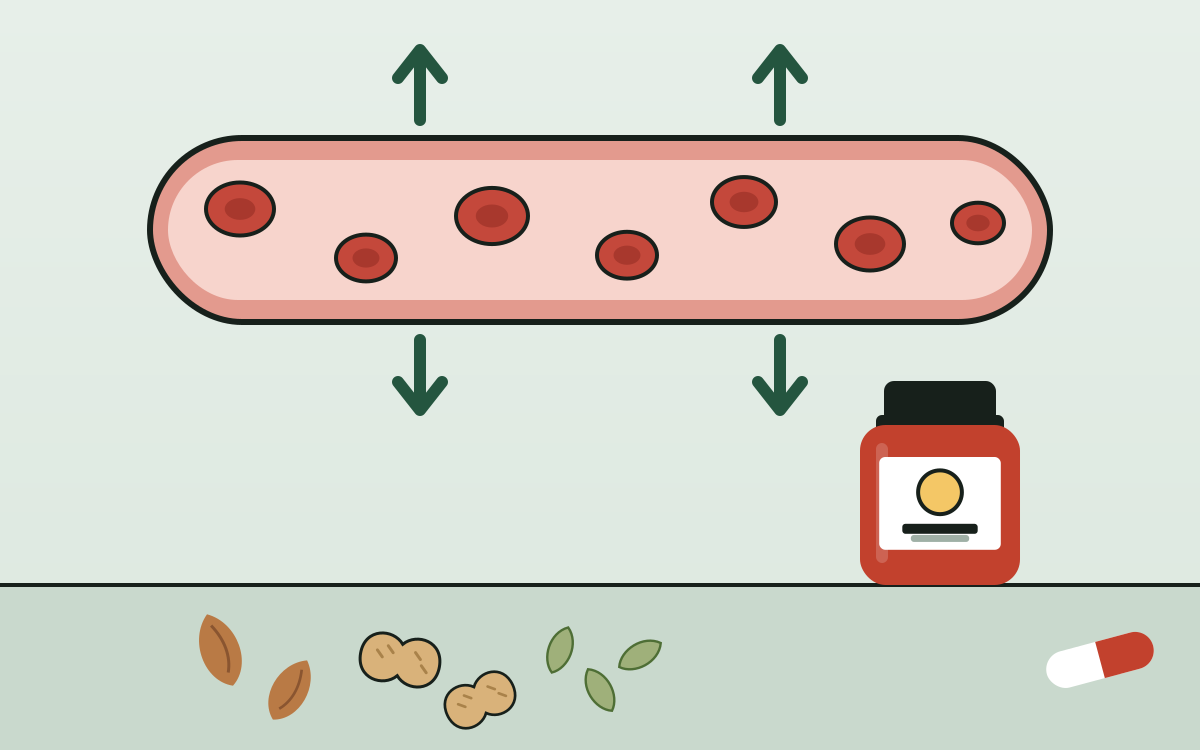
The main reason for interest in arginine is nitric oxide (NO). An enzyme called nitric oxide synthase makes NO from arginine, and NO relaxes the muscle in blood vessel walls. Vessels widen, blood pressure drops slightly and blood flow improves. That’s where the hopes for arginine in high blood pressure, angina and erectile dysfunction come from.
Arginine is also used to build proteins and creatine: your body makes creatine from glycine, arginine and methionine.
L-arginine benefits: what the evidence says
| Goal | What trials found | How reliable |
|---|---|---|
| Blood pressure | Systolic 5.4 mmHg and diastolic 2.7 mmHg lower on average at 4–24 g a day | Moderate: 11 trials, 387 people |
| Erections | Improvement in mild to moderate ED at 1.5–5 g | Weak: 10 trials, often with other ingredients |
| Angina, poor leg circulation | Small studies suggest possible benefit | Weak |
| After a heart attack | More deaths than on placebo | Safety signal: not recommended |
Mayo Clinic rates arginine as generally safe and possibly helpful for high blood pressure, angina, peripheral artery disease (leg pain on walking due to poor blood flow) and erectile dysfunction with a physical cause. It also says arginine isn’t recommended for anyone who has recently had a heart attack.
So the benefits are modest and the risks for some groups are serious. This isn’t a supplement to take “just in case”.
L-arginine and blood pressure
A 2011 meta-analysis pooled 11 double-blind, placebo-controlled trials with 387 people. Doses ranged from 4 to 24 g a day. Compared with placebo, systolic pressure fell by 5.4 mmHg on average and diastolic by 2.7 mmHg. The result held when only trials of 4 weeks or longer, and only people not on blood pressure medicines, were counted.
That’s a modest effect. It doesn’t replace blood pressure tablets your GP has prescribed. If you already take them, arginine may add to their effect and push your blood pressure too low.
Safety check before buying L-arginine
Tick each line that's true for you. If any line stays unticked, speak to your GP or pharmacist first
0 / 8 ticked
All ticked. Start with the dose on the label and keep an eye on how you feel and on your blood pressure.
L-arginine on iHerbL-arginine for men: the evidence on erections
A 2019 meta-analysis gathered 10 trials with 540 men with mild to moderate erectile dysfunction. Arginine at 1.5–5 g improved erections more often than placebo or no treatment. Side effects affected 8.3% of men on arginine and 2.3% on placebo, and none were severe.
These data have real limits:
- some trials gave arginine together with other ingredients, so arginine’s own share is unclear;
- doses and durations varied a lot;
- severe ED wasn’t studied.
Erections depend on healthy blood vessels, so ED is often linked with high blood pressure, diabetes and high cholesterol. If you have problems, see your GP first and get these checked. Don’t combine arginine with sildenafil without medical advice, as your blood pressure could drop too far. There’s no promise of better sexual performance here. For what usually makes sense for men, see our guide to supplements for men and the men’s health and sport section.
L-arginine after a heart attack: the VINTAGE MI trial
This is the biggest reason for caution. The VINTAGE MI trial (2006) enrolled 153 people after a first heart attack. Average age was 60, and 68% were men. Half took arginine, aiming for 9 g a day, and half took a placebo for 6 months on top of usual treatment.
- Arginine didn’t improve artery stiffness or heart function.
- 6 people (8.6%) died in the arginine group and none in the placebo group.
- The safety committee stopped recruitment early.
Death wasn’t the trial’s main outcome, so chance can’t be ruled out. But the authors stated plainly that arginine should not be recommended after an acute heart attack. Mayo Clinic gives the same advice.
L-arginine and herpes
People with herpes are often told to be careful with arginine. In cell culture studies from 1981, the herpes simplex virus needed arginine to multiply, and lysine, a similar amino acid, held it back. That’s the basis of the common advice to limit arginine-rich foods such as nuts and seeds.
Whether this matters in people isn’t known, because good trials are lacking. But if you get frequent cold sores or genital herpes flare-ups, discuss large doses of arginine with your GP first.
L-arginine side effects
At usual doses, healthy adults tolerate arginine fairly well. Mayo Clinic lists these possible effects when it’s taken by mouth:
- nausea, stomach pain, bloating and diarrhoea;
- headache;
- gout flare-ups;
- allergic reactions, airway inflammation and worsening asthma.
How does that compare with food? DTU estimates that 6 g of arginine from a supplement roughly doubles what you’d get from an ordinary diet. Total intake still stays well below 20 g a day, the level up to which no harm was found in healthy adults. Human studies have used up to 42 g a day for up to several months, but they weren’t designed to test safety, and you don’t need doses like that.
L-arginine interactions with medicines
According to Mayo Clinic, arginine may interact with:
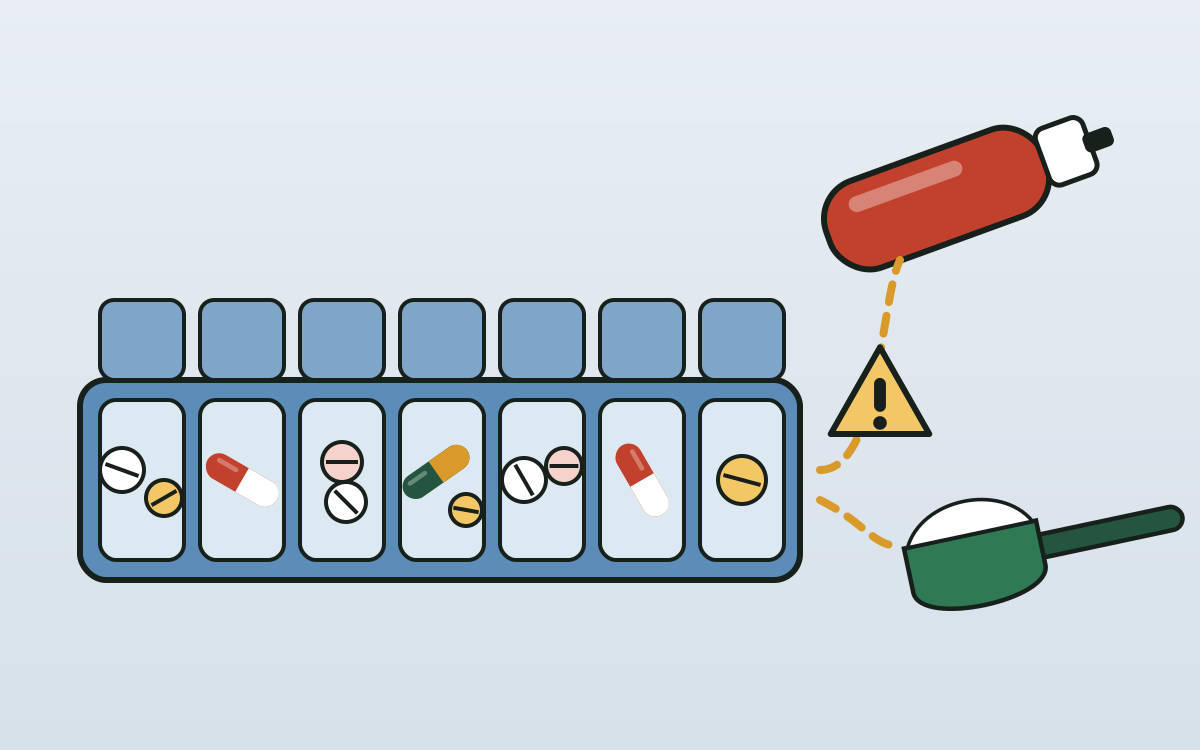
- nitrates such as GTN (glyceryl trinitrate) for angina: blood pressure may drop too far;
- sildenafil: also a risk of very low blood pressure;
- blood pressure medicines: the effects add up;
- potassium-sparing diuretics (spironolactone, amiloride, triamterene): blood potassium may rise to unsafe levels;
- blood thinners: a possible higher risk of bleeding;
- diabetes medicines: blood sugar may fall further.
If you carry a GTN spray for angina, arginine isn’t for you unless your GP says otherwise. To check supplement combinations, use our vitamin compatibility chart.
L-arginine dosage: how to take it
- Do the safety check above. If any line doesn’t apply to you, see your GP first.
- Start with the dose on the label. Check the grams of arginine per serving rather than the capsule weight.
- Use the trials as a guide: 1.5–5 g a day for erectile function, 4–24 g for blood pressure.
- Stay under 20 g a day. Safety in healthy adults is supported up to that level; DTU judged 6 g a day from a supplement to be safe.
- Watch how you feel. Nausea, stomach pain, bloating or diarrhoea mean lowering the dose. Check your blood pressure at home.
- Review after 4–8 weeks. No effect means no point carrying on.
Who should avoid L-arginine without medical advice
- Anyone who has had a heart attack, or has angina or heart failure.
- Anyone taking nitrates, sildenafil, blood pressure medicines, potassium-sparing diuretics, blood thinners or diabetes medicines.
- People with frequent herpes outbreaks.
- People with asthma or severe allergies.
- Pregnant or breastfeeding women, and children: a doctor should decide.
How to choose L-arginine on iHerb
- Look for L-arginine and find the line with the grams of arginine per serving.
- For doses of several grams, powder is more practical than capsules.
- Compare the price per 1 g of arginine in £ or €, not per tub.
- Skip “men’s blends” with ten herbs: you can’t tell what works or what it interacts with.
- Not sure you need a supplement? Try our vitamin check.
Our Supplement Facts guide explains how to find the grams on a label and work out the cost per dose. Another amino acid popular with men and athletes is L-carnitine.
Bottom line: what to choose
Mildly raised blood pressure, no medicines
L-arginine powder
Study doses are easier to reach with powder
Powder on iHerbGeneral support for men
A men's multivitamin
Plus vitamin D in autumn and winter, per NHS advice
Multivitamins on iHerbButtons lead to selections of the right form on iHerb. These are affiliate links; your price doesn't change.
FAQ
What are the benefits of L-arginine?
Your body turns arginine into nitric oxide, which relaxes blood vessel walls. Arginine is also used to make proteins and creatine. As a supplement it has been studied for blood pressure, angina, poor circulation in the legs and erectile dysfunction, with modest effects.
What is the right L-arginine dosage?
Blood pressure trials used 4–24 g a day; erectile dysfunction trials used 1.5–5 g. Start with the dose on the label and watch your blood pressure and stomach. Up to 20 g a day is an observed safe level in healthy adults, but not after a heart attack or with certain medicines.
Does L-arginine help with erectile dysfunction?
In a meta-analysis of 10 trials (540 men), arginine improved erections more often than placebo, but only in mild to moderate ED, and many trials combined it with other ingredients. ED can be a sign of blood vessel disease, so see your GP first.
Does L-arginine lower blood pressure?
A little. In a meta-analysis of 11 trials, systolic pressure fell by 5.4 mmHg and diastolic by 2.7 mmHg on average. If you already take blood pressure tablets, only add arginine with your GP’s agreement.
What are the side effects of L-arginine?
Mayo Clinic lists nausea, stomach pain, bloating, diarrhoea, headache, gout and allergic reactions, and it can worsen asthma. The serious risks are after a heart attack and with nitrates, sildenafil or potassium-sparing diuretics.
Can I take L-arginine if I get cold sores?
In cell culture studies from 1981, the herpes simplex virus needed arginine to multiply, and lysine held it back. Human evidence is scarce, but if you get frequent outbreaks, talk to your GP before taking large doses.
Sources
- Schulman S.P. et al. L-Arginine Therapy in Acute Myocardial Infarction: The VINTAGE MI Randomized Clinical Trial. JAMA, 2006
- Dong J.Y. et al. Effect of oral L-arginine supplementation on blood pressure: a meta-analysis of randomized, double-blind, placebo-controlled trials. American Heart Journal, 2011
- Rhim H.C. et al. The Potential Role of Arginine Supplements on Erectile Dysfunction: A Systemic Review and Meta-Analysis. Journal of Sexual Medicine, 2019
- Mayo Clinic. L-arginine
- DTU National Food Institute. Risk assessment of L-arginine in food supplements (in Danish), 2020
- Griffith R.S. et al. Relation of arginine-lysine antagonism to herpes simplex growth in tissue culture. Chemotherapy, 1981
L-arginine at a glance
For adults, based on meta-analyses, Mayo Clinic and DTU
- What it is
- an amino acid your body turns into nitric oxide
- From food
- about 3–5 g a day (Danish data)
- Blood pressure
- 5.4/2.7 mmHg lower at 4–24 g a day
- Erections
- modest evidence in mild to moderate ED
- Observed safe level in healthy adults
- up to 20 g a day
- Not without a doctor
- after a heart attack, with nitrates or sildenafil
L-arginine doesn't replace treatment for high blood pressure or erectile dysfunction. See your GP first.
Shop L-arginine on iHerbCheck the grams of arginine per serving
Contents
- What L-arginine is
- L-arginine benefits: what the evidence says
- L-arginine and blood pressure
- L-arginine for men: the evidence on erections
- L-arginine after a heart attack: the VINTAGE MI trial
- L-arginine and herpes
- L-arginine side effects
- L-arginine interactions with medicines
- L-arginine dosage: how to take it
- Who should avoid L-arginine without medical advice
- How to choose L-arginine on iHerb