Vitamin D test: what your 25(OH)D level means, who needs testing, and deficiency symptoms
This article contains affiliate links to iHerb. If you buy through them, we earn a commission at no extra cost to you. It doesn't affect which forms we recommend. Learn more
One vitamin D test report says 32, another says 80, and they can be the same result in different units. This page sets out the official cut-offs, who actually needs a test, and what to do with your number.
What a vitamin D test measures
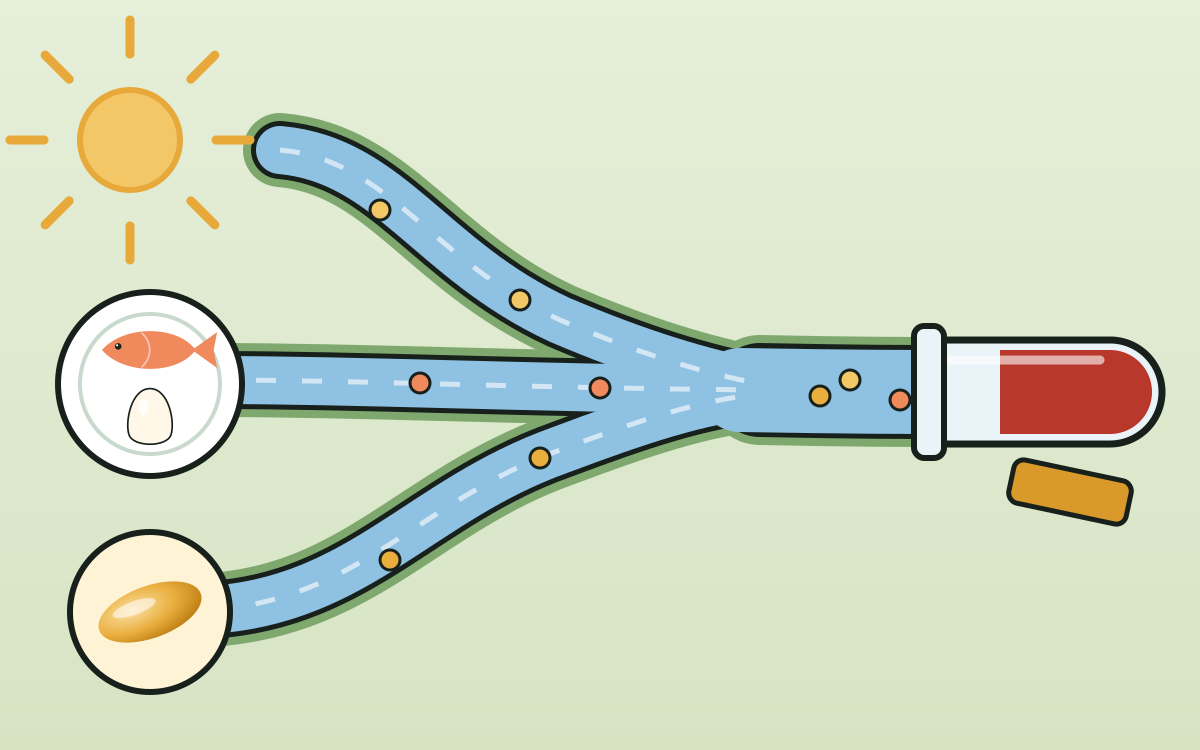
Vitamin D status is checked with 25(OH)D (25-hydroxyvitamin D, or calcidiol). Your liver turns vitamin D from skin, food and supplements into this form. It has a half-life of about 15 days in the blood, so the test reflects your intake over recent weeks rather than one day.
On a request form or home test kit it may be called:
- “25-OH vitamin D” or “25(OH)D”;
- “vitamin D, 25-hydroxy”;
- “calcidiol”.
“1,25-dihydroxyvitamin D” is a different test. NIH ODS says it’s a poor guide to vitamin D status: it lasts only hours in the blood and falls only when deficiency is severe.
Vitamin D levels: nmol/L and ng/mL
Labs report results in one of two units. UK labs usually report nmol/L, while US labs use ng/mL. If an NHS report says 50 nmol/L and a US-style report says 20 ng/mL, that’s the same level. Converting is simple:
- ng/mL × 2.5 = nmol/L;
- nmol/L × 0.4 = ng/mL.
The cut-offs used by NIH ODS, based on the US National Academies:
| 25(OH)D, nmol/L | 25(OH)D, ng/mL | What it means for a healthy adult |
|---|---|---|
| below 30 | below 12 | deficient: risk of rickets in children and osteomalacia in adults |
| 30–50 | 12–20 | usually not enough for bone health |
| 50 or more | 20 or more | enough for most people |
| above 125 | above 50 | possible adverse effects, especially above 150 nmol/L (60 ng/mL) |
Some labs and private tests print a range starting at 75 nmol/L (30 ng/mL). That’s a higher target used by some clinics. NIH ODS considers 50 nmol/L or more enough for most people. In its 2024 guideline, the US Endocrine Society chose not to set cut-offs for “sufficiency” or “deficiency” at all.
UK guidance starts lower. In 2016 the Scientific Advisory Committee on Nutrition (SACN) concluded that 25(OH)D shouldn’t fall below 25 nmol/L at any time of year. It worked out that about 10 mcg (400 IU) a day keeps most people above that line in winter, and that’s where the NHS dose comes from. UK osteoporosis guidance uses bands that match the NIH table: below 30 nmol/L deficient, 30–50 insufficient, above 50 adequate.
Lab methods differ too. NIH ODS warns that a result can read falsely high or low depending on the assay and the lab. A spring test from your GP and an autumn kit from a private lab can’t be compared fairly, so stick to one lab.
Read your vitamin D test in 4 steps
Tap through the steps in order
Find the units on your report
25(OH)D is reported in nmol/L (usual in the UK) or ng/mL (usual in the US). For the same blood, the nmol/L number is 2.5 times bigger.
- ng/mL × 2.5 = nmol/L
- nmol/L × 0.4 = ng/mL
- 20 ng/mL is 50 nmol/L
Compare with the NIH ODS thresholds
These cut-offs for healthy people come from the US National Academies and are used by NIH ODS.
- below 30 nmol/L (12 ng/mL): deficient
- 30–50 nmol/L (12–20 ng/mL): not enough for bone health
- 50 nmol/L (20 ng/mL) or more: enough for most people
- above 125 nmol/L (50 ng/mL): possible harm
Why your report may say something else
Labs use different methods and print different ranges. The same sample can give noticeably different results in two labs.
- compare results from the same lab
- some labs and private test kits use a higher target of 75 nmol/L (30 ng/mL)
Decide with your GP
The number helps choose a dose but doesn't replace an assessment. If you're deficient, your GP will set the dose and duration.
- a repeat test makes sense after 2–3 months, not sooner
- above 125 nmol/L: stop high doses and show the result to your GP
- healthy adults can take the NHS maintenance dose without a test
Who needs a vitamin D test
In the UK, the NHS advises everyone to consider 10 mcg (400 IU) of vitamin D a day in autumn and winter, and all year for some groups, without testing first. The US Endocrine Society also advises against routine testing in healthy people.
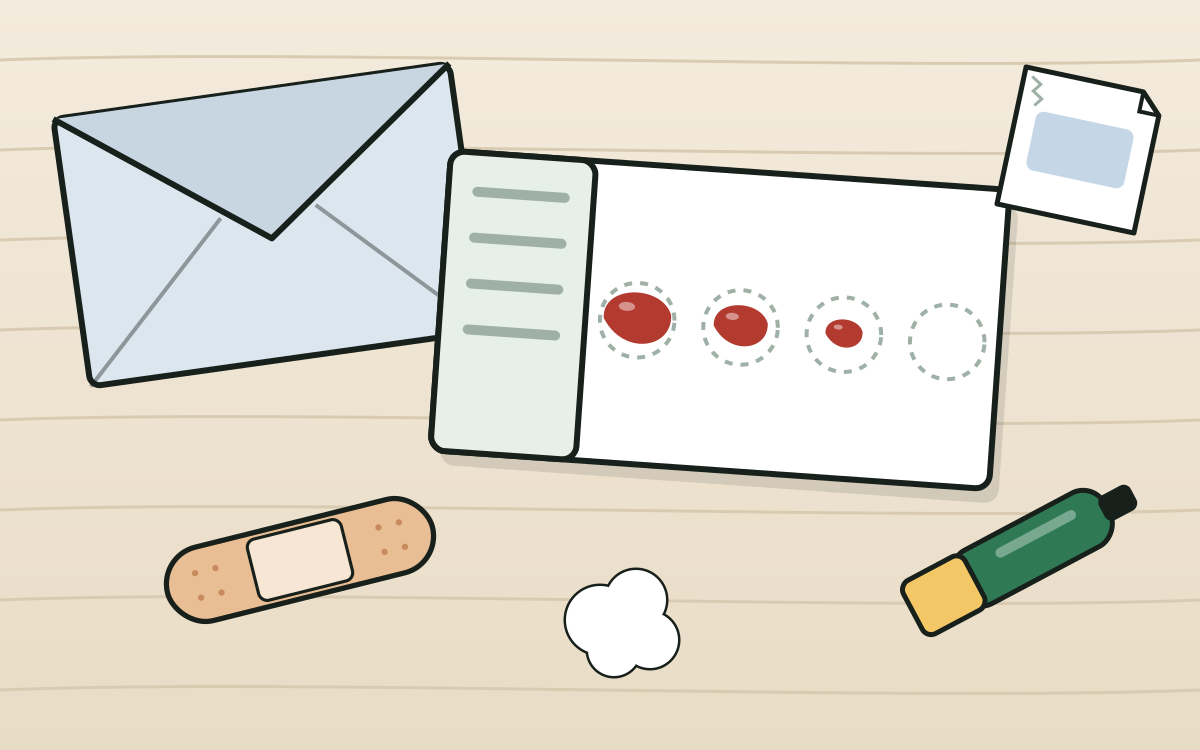
A test makes sense if:
- you have symptoms that could be osteomalacia: bone pain, muscle weakness and aches;
- you have a condition that affects fat absorption: coeliac disease, Crohn’s disease, ulcerative colitis, cystic fibrosis or some liver diseases;
- you’ve had gastric bypass surgery;
- your GP is treating a deficiency or has prescribed high doses;
- you’ve taken more than 4,000 IU a day for a long time without monitoring.
Low vitamin D is more common in people who rarely get sun on their skin, people with darker skin, older adults and people with obesity. Even then, decide on testing with your GP or pharmacist.
Vitamin D levels in women and in pregnancy
The 25(OH)D cut-offs are the same for women and men, and pregnancy doesn’t change them. The recommended intake in pregnancy is the same as for other adults: 10 mcg (400 IU) a day according to the NHS.
After the menopause, vitamin D is often paired with calcium for bone health. How to combine them and whether you need K2 is covered in our guide to calcium and vitamin K2. For a broader overview, see supplements for women.
Vitamin D deficiency symptoms
According to NIH ODS, severe deficiency leads to:
- in adults, osteomalacia: soft bones with bone pain, plus muscle weakness and aches;
- in children, rickets: bone deformities.
Mild deficiency usually has no clear symptoms. Tiredness, frequent colds and low mood have many possible causes, from poor sleep to low iron. You can’t judge your vitamin D level by how you feel.
What to do with your result
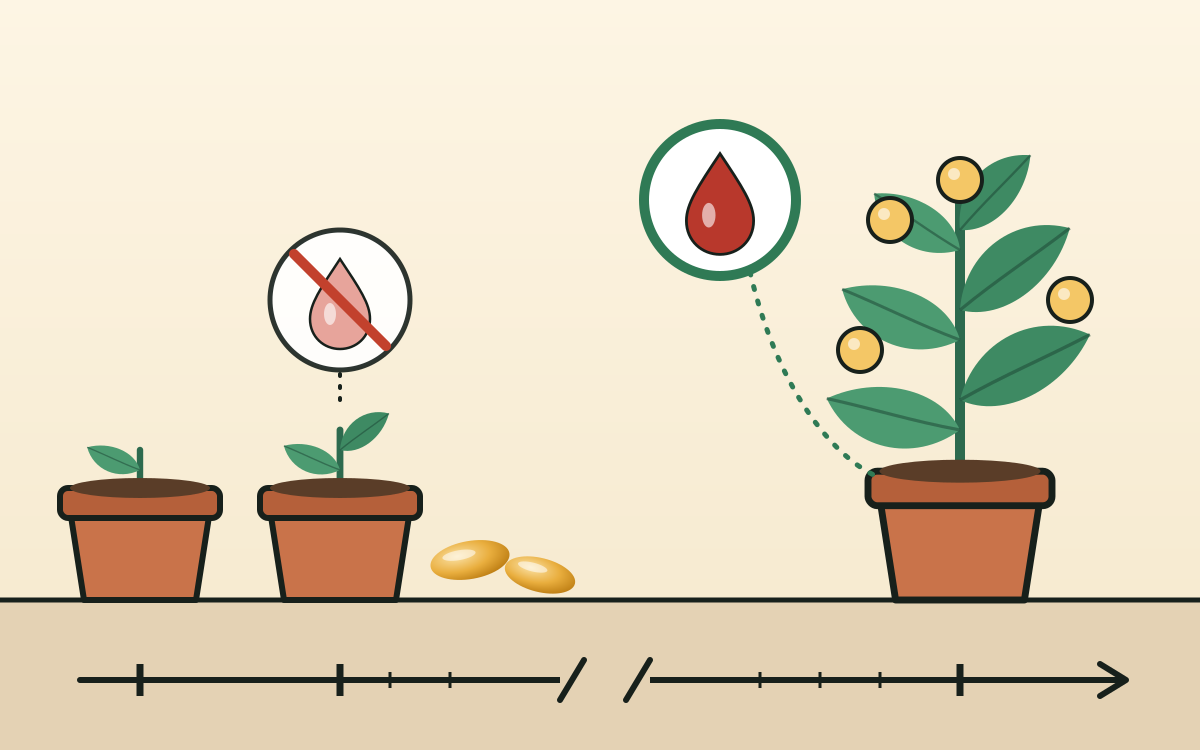
First get the number into the unit you need. The converter below also shows the NIH ODS cut-offs.
Convert your 25(OH)D result
Pick the unit on your report and type in the number
50 nmol/L
The same result, just converted
Your result: 50 nmol/L
NIH ODS cut-offs: below 30 nmol/L deficient, 30–50 not enough for bone health, 50 or more enough for most people, above 125 possible harm.
ng/mL × 2.5 = nmol/L. Compare results from the same lab and the same time of year.
| Result | What to do |
|---|---|
| below 30 nmol/L (12 ng/mL) | see your GP, who will set the treatment dose and duration |
| 30–50 nmol/L (12–20 ng/mL) | a maintenance dose is usually enough; our guide on how much vitamin D3 to take covers the doses |
| 50–125 nmol/L (20–50 ng/mL) | carry on; if you’re taking high doses, ask your GP whether to lower them |
| above 125 nmol/L (50 ng/mL) | stop high doses and show the result to your GP |
Retest no sooner than 2–3 months after changing your dose. With a half-life of about 15 days, the level settles after 4–5 half-lives.
If your bottle gives IU and your GP gave the dose in micrograms, use our IU to mcg converter.
Vitamin D in winter: why your result depends on the season
Your skin makes vitamin D from summer sunlight, but at northern latitudes it makes little or none in winter. In the UK that’s roughly October to March. So the same person can get noticeably different results in September and in March.
- Compare tests taken at the same time of year.
- A result from late summer may drop by the end of winter.
- Our vitamin D sunlight calendar shows which months the sun does little for vitamin D where you live.
Who should be careful with vitamin D
Don’t raise your dose without medical advice if you:
- have kidney disease or kidney stones;
- take thiazide diuretics: with vitamin D they can push blood calcium too high;
- take steroids such as prednisolone, or orlistat: they lower vitamin D levels, so agree the dose with your GP;
- are pregnant or breastfeeding and want more than 4,000 IU a day.
Levels above 375 nmol/L (150 ng/mL), almost always from large supplement doses, cause nausea, weakness, confusion, kidney stones and an irregular heartbeat. The NHS says adults shouldn’t take more than 100 mcg (4,000 IU) a day. For children, follow NHS guidance and your health visitor or GP.
How to choose vitamin D on iHerb
- If you have a reason to test, check your 25(OH)D first.
- Choose D3 (cholecalciferol): it raises blood levels better than D2.
- Check the dose per softgel or drop in mcg and IU: 25 mcg = 1,000 IU.
- For maintenance, the NHS dose is 10 mcg (400 IU) a day; many adults take up to 25 mcg (1,000 IU). Higher doses only on medical advice.
- Count vitamin D in multivitamins and calcium combinations.
- Take it with a meal that contains some fat.
Other common tests, such as ferritin levels, are collected in tests and deficiencies.
Bottom line: what to choose
Autumn and winter, no test
D3 10 mcg (400 IU) or a little more
The NHS maintenance dose; with a meal
D3 on iHerbButtons lead to selections of the right form on iHerb. These are affiliate links; your price doesn't change.
FAQ
What is a normal vitamin D level?
According to NIH ODS, a 25(OH)D level of 50 nmol/L (20 ng/mL) or more is enough for most people. Below 30 nmol/L (12 ng/mL) is deficient, and above 125 nmol/L (50 ng/mL) carries a risk of adverse effects. Your lab’s printed range may differ.
How do I convert ng/mL to nmol/L?
Multiply by 2.5. For example, 30 ng/mL = 75 nmol/L. The other way round, nmol/L × 0.4 = ng/mL.
Do I need a vitamin D test before taking supplements?
Usually not for maintenance doses. The NHS advises 10 mcg (400 IU) a day for everyone in autumn and winter without testing, and the US Endocrine Society advises against routine testing in healthy people. Testing makes sense with symptoms, malabsorption, high doses or treatment for deficiency.
What are the symptoms of vitamin D deficiency?
Severe deficiency causes osteomalacia in adults, with bone pain and muscle weakness, and rickets in children. Mild deficiency usually has no clear symptoms, so you can’t tell your level by how you feel.
How long after starting vitamin D should I retest?
Not before 2–3 months. 25(OH)D has a half-life of about 15 days, so the level takes several weeks to settle. A test a week after starting tells you little.
Sources
- NIH ODS. Vitamin D – Fact Sheet for Health Professionals
- NIH ODS. Vitamin D – Fact Sheet for Consumers
- NHS. Vitamins and minerals – Vitamin D
- Demay MB et al. Vitamin D for the Prevention of Disease: An Endocrine Society Clinical Practice Guideline, 2024
- Society for Endocrinology. Vitamin D deficiency: is it really a problem and what's the solution? (SACN threshold and UK bands), 2016
Vitamin D test at a glance
For adults, based on NIH ODS and the NHS
- What's measured
- 25(OH)D (calcidiol)
- Unit conversion
- ng/mL × 2.5 = nmol/L
- Deficient
- below 30 nmol/L (12 ng/mL)
- Enough for most
- 50 nmol/L (20 ng/mL) or more
- Too high
- above 125 nmol/L (50 ng/mL)
- Healthy, no symptoms
- routine testing not recommended
Compare results from the same lab: different methods give different numbers.
Shop D3 on iHerbTreatment doses for deficiency come from your GP
Contents
- What a vitamin D test measures
- Vitamin D levels: nmol/L and ng/mL
- Who needs a vitamin D test
- Vitamin D levels in women and in pregnancy
- Vitamin D deficiency symptoms
- What to do with your result
- Vitamin D in winter: why your result depends on the season
- Who should be careful with vitamin D
- How to choose vitamin D on iHerb