Quercetin benefits: what's known for hay fever and immunity, how well it's absorbed, and whether you need it with zinc or bromelain
This article contains affiliate links to iHerb. If you buy through them, we earn a commission at no extra cost to you. It doesn't affect which forms we recommend. Learn more
Quercetin is sold for hay fever and "immune support", often bundled with bromelain and zinc. Human trials show small effects at best, the add-ons are mostly unproven, and high doses aren't for people with kidney disease or on certain medicines.
What quercetin is and what it’s used for
Quercetin is a flavonoid, a plant pigment from the polyphenol family. It’s the most common flavonoid in our food, found in red onions, apples, leafy greens and tea. It isn’t a vitamin, and there’s no recommended intake.
In lab studies, quercetin acts as an antioxidant and reduces the release of histamine, the substance behind sneezing, itching and swelling in allergies. That’s where the label claims come from:
- easing hay fever;
- supporting immunity and warding off colds;
- “helping zinc work”.
Memorial Sloan Kettering (MSKCC), a New York cancer hospital, notes that most of this comes from lab studies, and it’s still unclear whether the effects happen in the human body.
Quercetin in food
Even the richest foods contain only tens of milligrams per 100 g. According to Germany’s Federal Institute for Risk Assessment (BfR), supplements often provide up to 1,000 mg a day, far more than people usually get from food.
| Food, 100 g | Quercetin, mg |
|---|---|
| Wild rocket, raw | 66 |
| Red onion, raw | 39 |
| Watercress | 30 |
| Kale, raw | 23 |
| Green chilli | 15 |
| Blueberries | 8 |
| Broccoli, raw | 3 |
| Black tea, 100 ml | 2 |
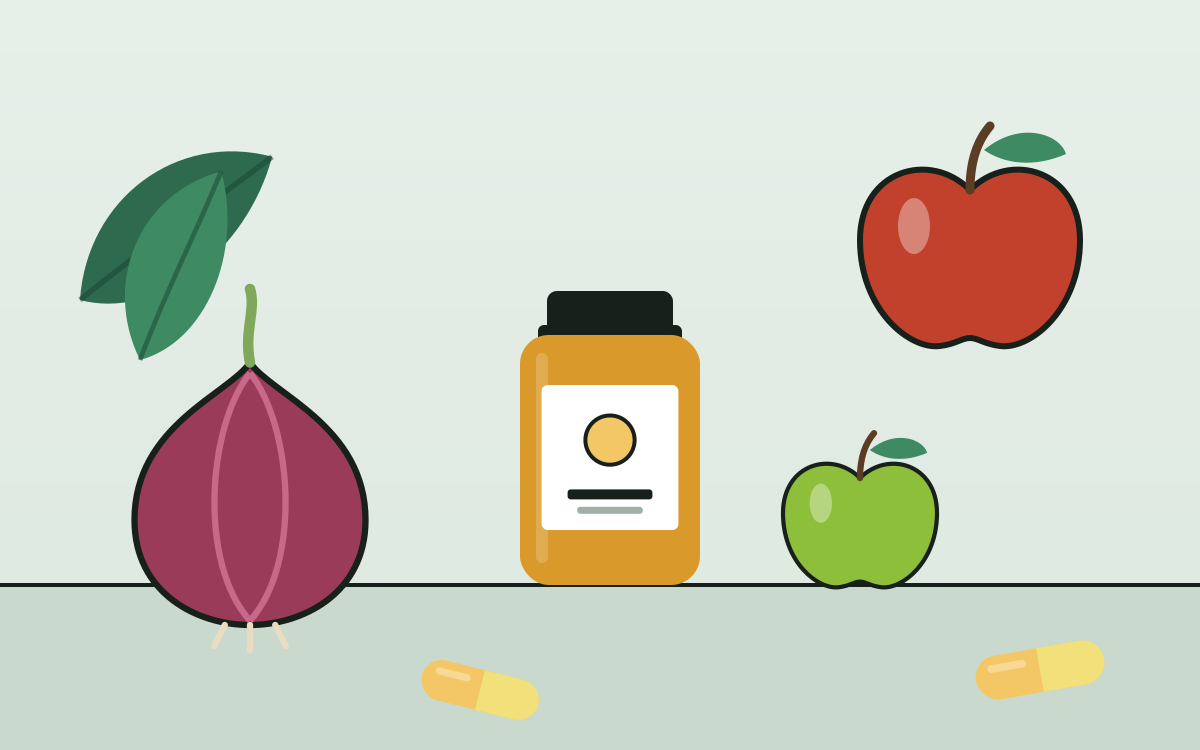
Figures from the Linus Pauling Institute. Content varies with variety and cooking. A 100 g portion of red onion holds several times less than a single capsule:
Quercetin supplement absorption
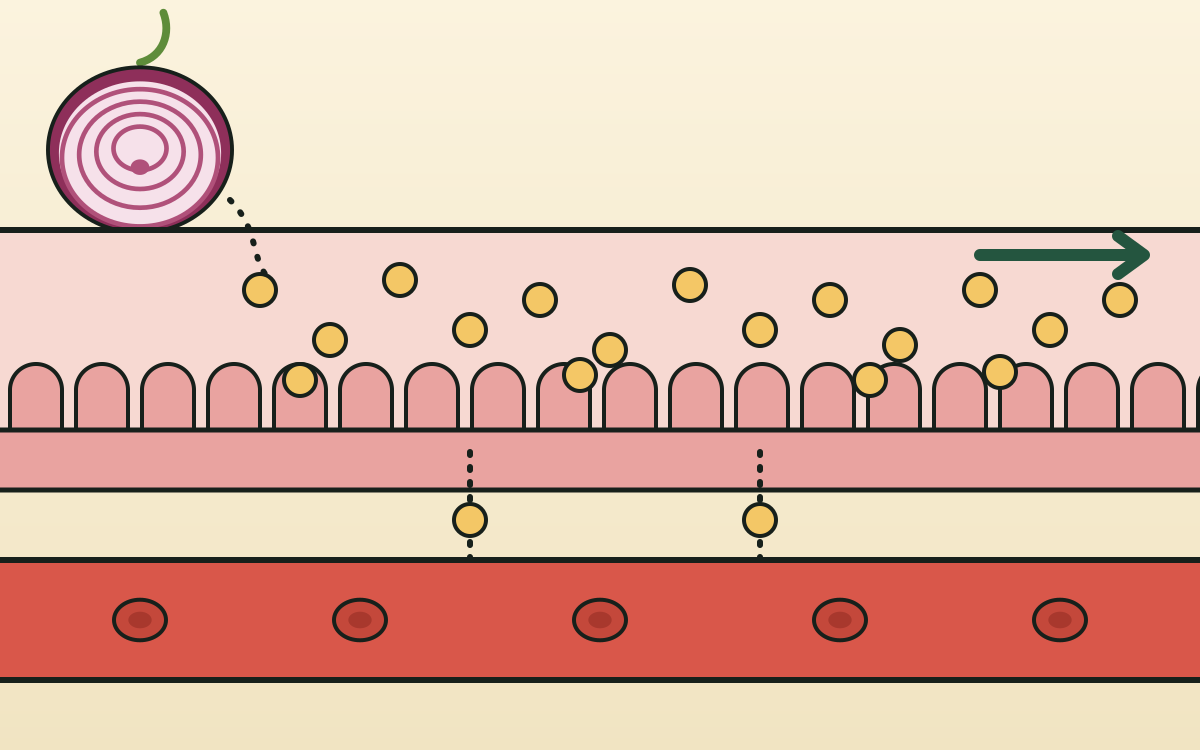
Flavonoids in general are poorly absorbed: little gets in, and what does is quickly processed and excreted. The form matters:
- Onions beat apples. In a 2012 study, peak blood levels after onion powder were about 4 times higher than after apple peel powder.
- Quercetin dihydrate is the standard form in capsules and the best studied.
- Phytosome is quercetin bound to lecithin. It was designed to improve absorption and was used in some recent trials.
Rutin is another form: quercetin bound to a sugar. It’s sold on its own and in “citrus bioflavonoid” supplements.
Quercetin and blood pressure
This is a less famous but relatively well-studied use. In a crossover trial of 96 people with metabolic disorders, 150 mg of quercetin a day lowered systolic blood pressure by 2.6 mmHg. Diastolic pressure and other markers didn’t change. Trials at 500–730 mg a day found similar results.
A drop of 2–3 mmHg is small. Quercetin doesn’t replace blood pressure medicines, and if you take them, check with your GP first.
Quercetin for hay fever: what’s known
This is the most popular use, but the data are modest.
- A Japanese trial (2022). 66 adults with pollen allergy took 200 mg of quercetin phytosome or a placebo for 4 weeks. The quercetin group reported less eye itching, sneezing and runny nose on a questionnaire.
- A 2025 meta-analysis pooled 13 trials of polyphenols in allergic rhinitis (823 people). Nasal symptoms improved, but certainty was low to very low, and quality of life didn’t change significantly. It also included polyphenols other than quercetin.
For hay fever, the NHS suggests starting with a pharmacist, who can recommend antihistamine tablets, drops or sprays and steroid nasal sprays. Quercetin is, at most, something to discuss as an add-on.
Quercetin for immunity
The largest trial ran in the US in 2010. 1,002 adults took 500 mg or 1,000 mg of quercetin a day, or a placebo, for 12 weeks. Overall, it didn’t change how often people caught colds or how bad they were.
A difference appeared only in a subgroup: physically fit adults over 40 (325 people) taking 1,000 mg had 31% fewer sick days. Subgroup findings like this need confirming.
Small COVID-19 trials gave quercetin alongside treatment. A meta-analysis of 6 of them found fewer hospital admissions but not fewer deaths, and its authors called for large trials. Options with stronger evidence are in our immunity section.
Quercetin and zinc, bromelain and vitamin C
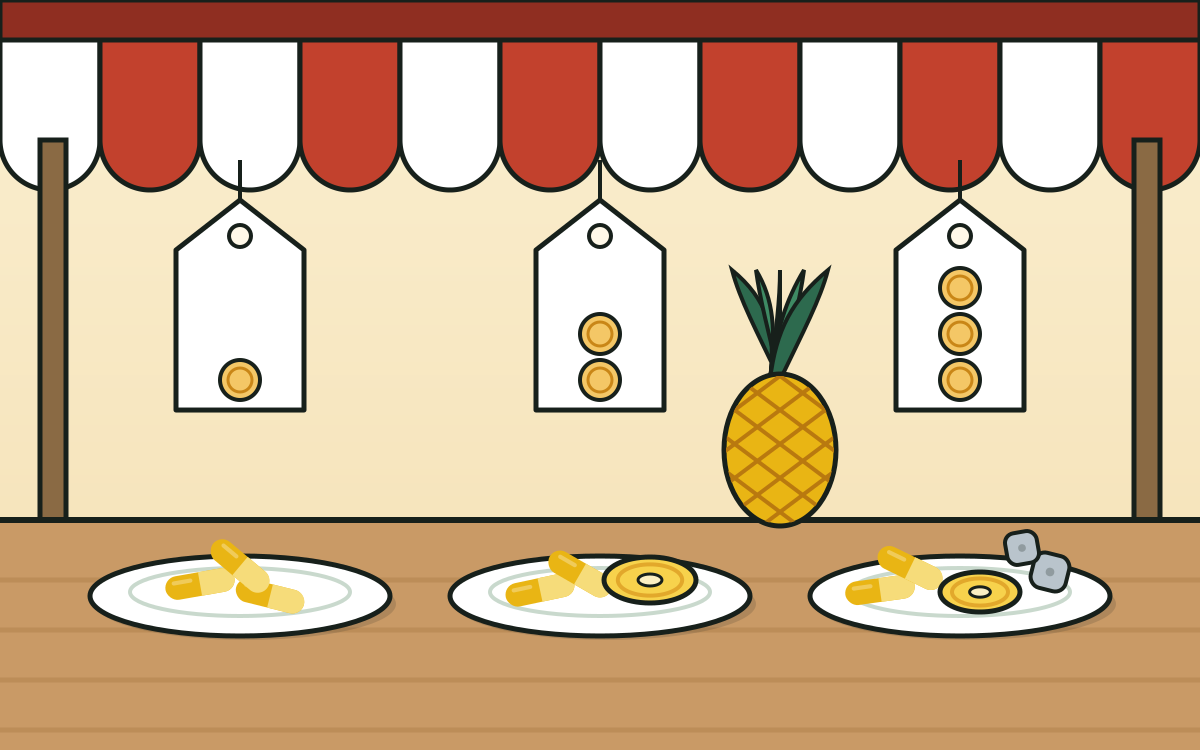
iHerb has many formulas that combine quercetin with bromelain, vitamin C and zinc. The evidence behind each pairing is thin:
- Zinc. In a 2014 experiment, quercetin carried zinc ions into mouse liver cancer cells and artificial membrane bubbles. This hasn’t been tested in people. Count the zinc alongside your other supplements; our guide to zinc explains the limits.
- Bromelain. A pineapple enzyme added “for absorption”. We haven’t found reliable human studies that confirm it. Bromelain itself is covered in our guide to digestive enzymes.
- Vitamin C. Safe at these doses, but a normal diet usually covers your needs. Our vitamin C guide explains when a supplement makes sense.
Decoding a "quercetin with bromelain and zinc" label
A typical combination formula. Tap a line to see what's behind it
Supplement Facts
What it means
Serving size
Every dose below is for 2 capsules. If you take one, halve the numbers.
What it means
Amount per serving
Quercetin and bromelain have no daily value, so their % DV column is empty.
What it means
Quercetin
As much as in 1.3 kg of red onions. In a large trial, 500 and 1,000 mg a day didn't reduce colds overall.
What it means
Bromelain
A pineapple enzyme added "for absorption". We haven't found reliable human studies that confirm it.
What it means
Vitamin C
A safe amount, but a normal diet usually covers your vitamin C needs anyway.
What it means
Zinc
The idea that quercetin carries zinc into cells comes from cell and liposome experiments, not people. With food, 15 mg of zinc gets close to EFSA's 25 mg limit.
How to take quercetin
There’s no official dose. These figures come from research:
- 150–1,000 mg a day is the dose range used in clinical trials.
- Up to 1,000 mg a day for up to 3 months produced no significant side effects, according to the Linus Pauling Institute.
- Side effects at 1,000 mg are rarely reported: headache and tingling in the hands and feet.
- Long-term high doses are poorly studied, so taking it in courses is sensible.
Start with 250–500 mg a day and review after 4–8 weeks.
Quercetin and your kidneys
In a phase I trial, people with cancer received very high doses of quercetin by intravenous infusion. At 1,700 mg per square metre of body surface, kidney damage was severe enough to stop the dose rising, and some kidney toxicity occurred at lower doses too.
That was an infusion, not a tablet. But a 2018 review by Germany’s BfR notes that in animal studies quercetin worsened damage in kidneys that were already injured. So if you have kidney disease, avoid quercetin supplements.
Quercetin interactions with medicines
- Ciclosporin. In rats, quercetin cut blood levels of ciclosporin by 43%. This hasn’t been tested in people, but the authors advise transplant patients to avoid quercetin, because too little of the drug risks rejection.
- Warfarin. In one reported case, a 79-year-old man on a stable warfarin dose had a rise in INR after starting quercetin; it returned to normal when he stopped.
- Medicines broken down by CYP3A4 and CYP2C19. In lab studies, quercetin inhibited these enzymes. The clinical importance is unknown.
- Chemotherapy. As an antioxidant, quercetin may interfere with some cancer drugs.
If you take regular medicines, check combinations in our vitamin compatibility chart and talk to your GP or pharmacist.
Who should avoid quercetin
- People with kidney disease.
- Transplant recipients and anyone taking ciclosporin.
- Pregnancy and breastfeeding. Safety hasn’t been established.
- Oestrogen-sensitive tumours – in an animal study, quercetin made oestrogen-driven breast tumours worse.
- Children – only if a doctor recommends it.
How to choose quercetin on iHerb
- Decide why you want it. If you’re not sure you need a supplement at all, try our vitamin check.
- Pick the form: quercetin dihydrate as the default; phytosome if you’ll pay for better absorption.
- Check the dose: 250–500 mg per capsule is easy to work with.
- Look at the add-ons. Zinc, vitamin C and bromelain raise the price, and zinc needs adding to your other supplements.
- Compare the price per 500 mg of quercetin and prefer products with independent quality testing (USP, NSF and similar).
Our guide to reading a supplement label explains the Supplement Facts panel. A related polyphenol from grapes is covered in our guide to resveratrol.
Bottom line: what to choose
If you want to try it for hay fever
Quercetin 250–500 mg
An add-on to treatment, not a substitute
Quercetin on iHerbIf you already take zinc or a multivitamin
Quercetin without zinc
Keep total zinc within 25 mg
Quercetin on iHerbButtons lead to selections of the right form on iHerb. These are affiliate links; your price doesn't change.
FAQ
What are the benefits of quercetin?
Quercetin is a plant flavonoid found in onions, apples, leafy greens and tea. It’s sold for hay fever, immunity and circulation. In the lab it reduces histamine release and inflammation, but in people the effects are small and mostly come from short trials.
How much quercetin should I take?
Trials used 150–1,000 mg a day, usually in one or two doses, for up to 3 months. No serious side effects were found at those doses. Start with 250–500 mg and review after 4–8 weeks.
Should I take quercetin and zinc together?
There’s no evidence the combination works better. The idea that quercetin carries zinc into cells comes from mouse liver cancer cells and artificial membranes. In a trial of 1,002 people, 500 or 1,000 mg of quercetin a day didn’t reduce colds. If you take zinc, keep your total within EFSA’s 25 mg limit.
Why is quercetin sold with bromelain?
Bromelain is a pineapple enzyme added to “improve absorption” and “boost the anti-inflammatory effect”. We haven’t found reliable human studies that confirm this. It adds to the price rather than to proven benefit.
Who shouldn't take quercetin?
People with kidney disease, pregnant or breastfeeding women, anyone taking ciclosporin after a transplant, and people having chemotherapy. If you take warfarin, only use it with your doctor’s agreement and INR checks.
Sources
- Linus Pauling Institute, Oregon State University. Flavonoids – Micronutrient Information Center
- Memorial Sloan Kettering Cancer Center. Quercetin – About Herbs
- Andres S et al. Safety Aspects of the Use of Quercetin as a Dietary Supplement. Mol Nutr Food Res, 2018
- Heinz SA et al. Quercetin supplementation and upper respiratory tract infection: A randomized community clinical trial. Pharmacol Res, 2010
- Lai YR et al. Clinical Effects of Polyphenolic Compounds on Allergic Rhinitis: A Systematic Review and Meta-Analysis. J Allergy Clin Immunol Pract, 2025
- Yu CP et al. Quercetin and rutin reduced the bioavailability of cyclosporine from Neoral through activating P-glycoprotein and CYP 3A4. J Agric Food Chem, 2011
- NHS. Hay fever
Quercetin at a glance
For adults, based on the Linus Pauling Institute, MSKCC and clinical trials
- Daily need
- none set: it isn't a vitamin
- Doses in studies
- 150–1,000 mg a day
- Hay fever
- small trials, weak evidence
- Colds
- no overall benefit in a trial of 1,002 people
- Food sources
- red onion, rocket, watercress, kale
- Caution
- kidney disease, ciclosporin, warfarin
Quercetin doesn't replace hay fever treatment. If you have kidney disease or a transplant, don't take it without medical advice.
Shop quercetin on iHerbCheck mg of quercetin per capsule and any add-ons
Contents
- What quercetin is and what it’s used for
- Quercetin in food
- Quercetin supplement absorption
- Quercetin and blood pressure
- Quercetin for hay fever: what’s known
- Quercetin for immunity
- Quercetin and zinc, bromelain and vitamin C
- How to take quercetin
- Quercetin and your kidneys
- Quercetin interactions with medicines
- Who should avoid quercetin
- How to choose quercetin on iHerb