Sarcopenia: muscle loss in older adults, how much protein over-60s need, and whether creatine helps
 Reviewed by
This article contains affiliate links to iHerb. If you buy through them, we earn a commission at no extra cost to you. It doesn't affect which forms we recommend. Learn more
Losing some muscle with age is normal. Losing so much strength that getting out of a chair becomes hard is not, and it has a name: sarcopenia. Exercise does most of the work here. Protein and, for some people, creatine help it along. This page covers how to check yourself, how much protein to aim for, and when supplements make sense.
What sarcopenia is
Sarcopenia is muscle loss that has gone far enough to affect strength and everyday life. The European working group on sarcopenia (EWGSOP2, 2019) calls it a muscle disease, built up over a lifetime. It puts strength first, because weak muscles predict falls and loss of independence better than muscle size does.
Diagnosis goes in steps:
- probable sarcopenia – low muscle strength (weak grip or slow chair rises);
- confirmed – a scan, such as DXA or bioimpedance, also shows low muscle mass;
- severe – walking speed or other physical performance is low as well.
| Test | What it measures | EWGSOP2 cut-off |
|---|---|---|
| Grip strength (dynamometer) | hand strength | under 27 kg for men, under 16 kg for women |
| 5 chair rises | leg strength | more than 15 seconds |
| Walking speed | physical performance | 0.8 metres per second or slower |
Warning signs that should prompt a check: falls, feeling weaker, walking more slowly, or losing weight without trying. International guidelines (ICFSR) suggest screening with walking speed or the short SARC-F questionnaire, which your GP can run.
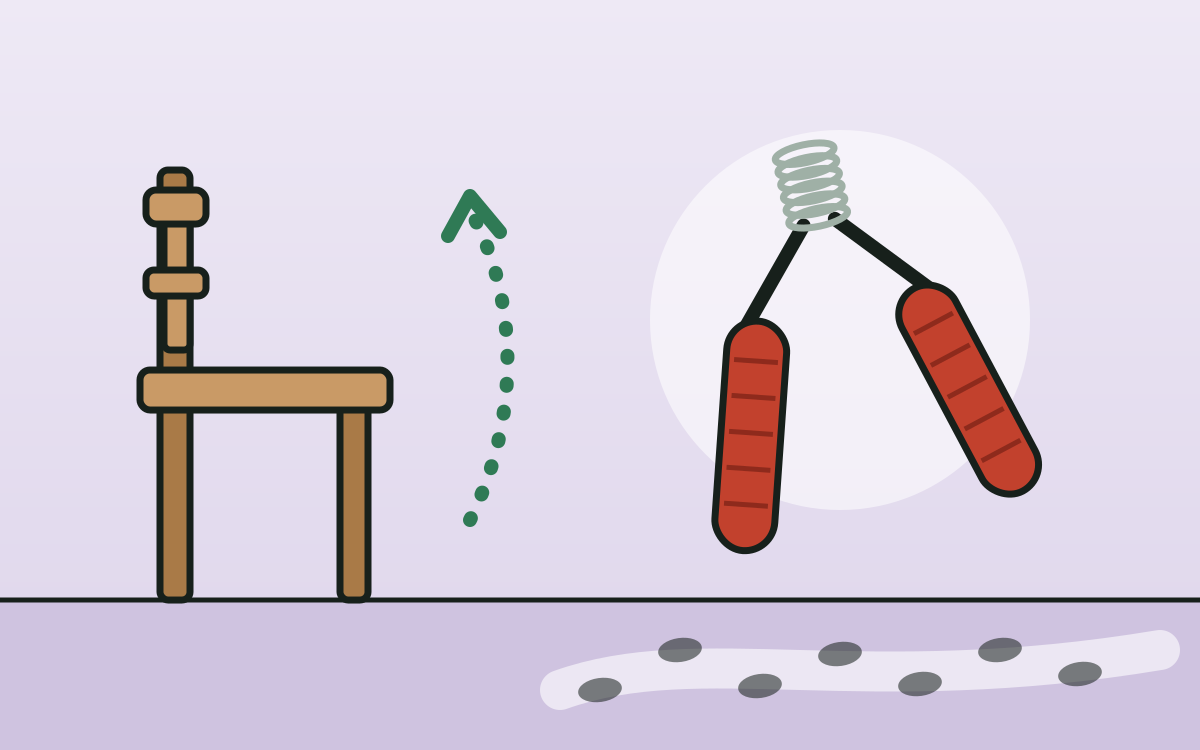
A check you can do at home. Sit on a firm dining chair with your arms crossed over your chest. Time how long it takes to stand up fully and sit down 5 times. Have someone nearby in case you lose balance. If it takes longer than 15 seconds, mention it at your next GP appointment.
Resistance exercise comes first
International ICFSR guidelines strongly recommend resistance training as the first treatment for sarcopenia. Protein is only a conditional recommendation. Supplements are there to help muscles respond to training, not to replace it.
The NHS advises adults over 65 to:
- do something active every day, even if it’s light;
- do activities that build strength, balance and flexibility on at least 2 days a week;
- build up to 150 minutes of moderate activity a week;
- break up long spells of sitting.
Strength work doesn’t need a gym. Standing up from a chair without using your arms, wall press-ups, a resistance band, carrying shopping and climbing stairs all count. If you have heart disease, osteoporosis or recent falls, ask your GP or a physiotherapist where to start. Our page on bone health and falls covers balance programmes.
How much protein do over-60s need?
Two expert groups have set targets for older people:
- PROT-AGE (2013): at least 1.0–1.2 g of protein per kg of body weight a day for over-65s; 1.2–1.5 g/kg with an acute or long-term illness; at least 1.2 g/kg for people who exercise.
- ESPEN (2019): at least 1 g/kg a day, adjusted for health, activity and appetite.
That’s more than the 0.75 g/kg often quoted for adults in general, so many older people need more protein than they think.
| Situation | Protein target | For a 60 kg person | For a 75 kg person |
|---|---|---|---|
| Healthy, over 65 | 1.0–1.2 g/kg | 60–72 g | 75–90 g |
| Exercising regularly | 1.2 g/kg or more | 72 g or more | 90 g or more |
| Acute or long-term illness | 1.2–1.5 g/kg | 72–90 g | 90–113 g |
Work out your own number:
How much protein you need a day
Pick your situation and enter your weight
70 g protein a day
A guide for protein from food and drink
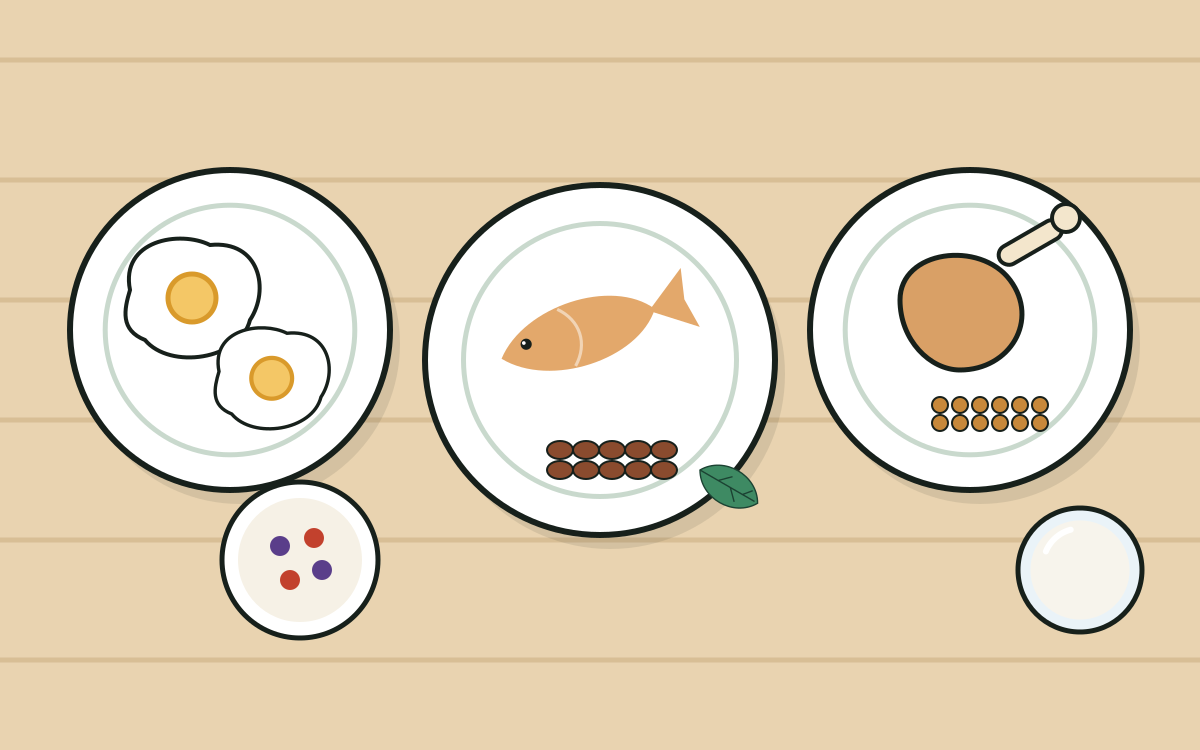
Spread it over 3 meals: a protein food on every plate
With chronic kidney disease, your kidney team sets the protein target, not a calculator
PROT-AGE: at least 1.0–1.2 g/kg for over-65s, 1.2–1.5 g/kg with illness. ESPEN: at least 1 g/kg. The exception is severe kidney disease (eGFR below 30) without dialysis.
Protein is easiest to reach when every meal includes a protein food: eggs or yoghurt at breakfast, fish, chicken or beans at lunch, meat, lentils or cheese in the evening. PROT-AGE found the evidence on timing too thin for firm rules, so spreading it out is about practicality.
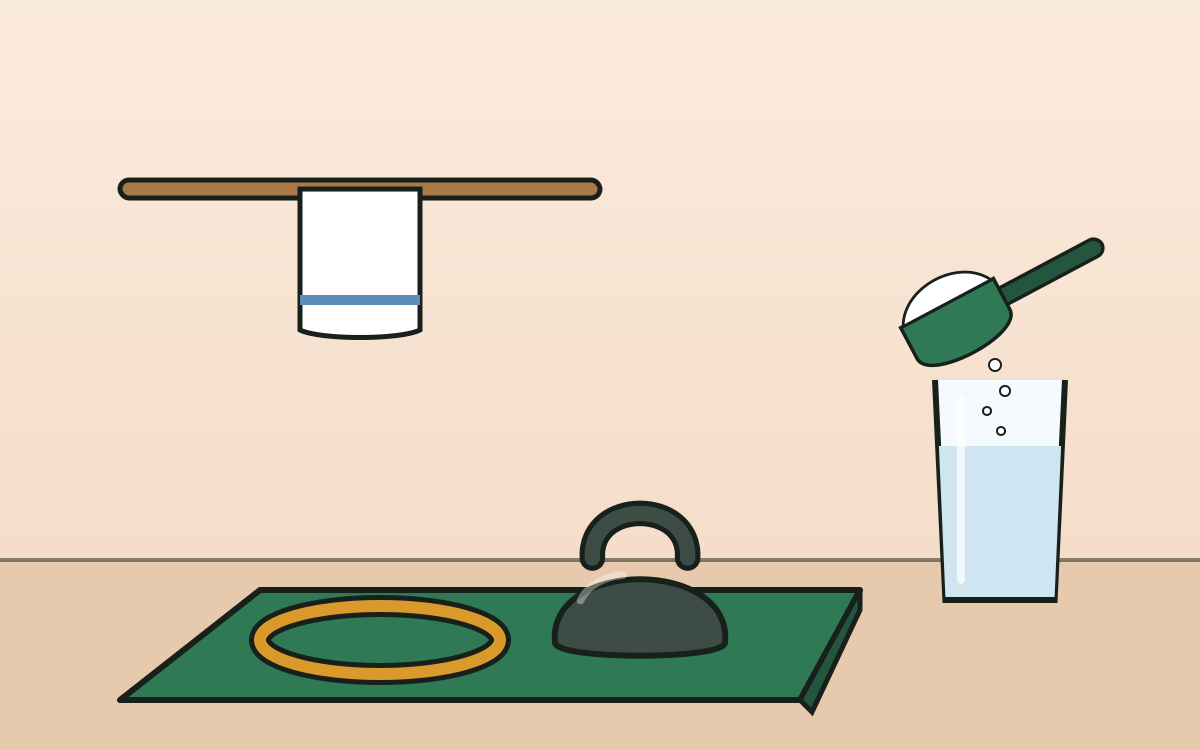
If your appetite is small, a protein powder helps. Unflavoured whey or milk protein can go into porridge, soup or mashed potato without changing the taste much.
Creatine for older adults
Creatine has the best evidence of any supplement here, but only together with training. A 2017 meta-analysis pooled 22 randomised trials with 721 participants, average age 57–70. Compared with placebo, creatine plus resistance training added about 1.37 kg of lean mass and more strength in both chest press and leg press.
Older adults take the same dose as younger ones: 3–5 g of creatine monohydrate a day, every day. Our creatine monohydrate guide covers loading, side effects and the water weight. Two points matter more after 60:
- Ask your GP to check your kidney function before you start.
- Creatine raises creatinine in the blood, so tell your doctor you take it before a kidney blood test.
Vitamin D, HMB and leucine
Vitamin D. The ICFSR guidelines give no recommendation for vitamin D to treat sarcopenia. Take the standard NHS dose of 10 mcg (400 IU) for bones and general health, and more only if a blood test shows you’re low. See our guide to vitamin D3 tablets.
HMB (beta-hydroxy-beta-methylbutyrate, made from the amino acid leucine). A 2021 meta-analysis of 9 trials with 448 older adults found more fat-free mass with HMB. But when HMB was added to exercise, it made no extra difference. The trials were small.
Leucine is an amino acid found in protein foods, especially dairy. Guidelines don’t recommend separate leucine capsules: ICFSR found too little good evidence for treatments beyond exercise and protein.
Kidney disease and high protein
High-protein advice has one big exception. PROT-AGE excludes people with severe kidney disease (eGFR below 30) who are not on dialysis: they may need to limit protein. The 2024 KDIGO kidney guideline also warns against high protein intake in kidney disease that is getting worse, while noting that frail older people may need more.
This is a balance only your kidney team can strike. If you have chronic kidney disease, don’t raise your protein, start a protein powder or take creatine without asking them. Our page on supplements with kidney disease explains why.
Where to start
A simple order of steps, using only the advice above:
Against muscle loss: five steps in order
Tap a step for the details
The chair test
Stand up and sit down 5 times with your arms crossed, with someone nearby. Over 15 seconds is worth mentioning to your GP.
- grip strength at the GP: under 27 kg for men, under 16 kg for women
- warning signs: falls, weakness, slower walking, weight loss
Strength work at least 2 days a week
Chair rises, wall press-ups, a resistance band, stairs. ICFSR calls resistance exercise the first treatment for sarcopenia.
1.0–1.2 g per kg of body weight a day
A protein food at every meal. With a small appetite, stir unflavoured protein powder into porridge or soup.
Optional: 3–5 g a day alongside training
In a meta-analysis of 22 trials, creatine with resistance training added about 1.37 kg of lean mass. Without training it does little.
- have your kidney function checked first
- tell your doctor about creatine before a creatinine test
With CKD, your kidney team comes first
With severe kidney disease, protein sometimes needs limiting. Protein powder and creatine only if your kidney team agrees.
Who should be careful
- Chronic kidney disease: protein targets and creatine only via your kidney team.
- Heart disease, recent falls or osteoporosis: ask about safe exercises first.
- Unexplained weight loss or weakness: see your GP before buying supplements.
- Several medicines: bring a list to your appointment; our medicines list for your GP makes it easy.
How to choose protein and creatine on iHerb
- Start with food. Add a powder only if you can’t reach your target.
- Choose an unflavoured powder with no added sugar so it mixes into ordinary meals.
- Compare grams of protein per scoop, not scoop size.
- For creatine, buy plain creatine monohydrate.
- Check your kidney function before you start creatine or a high-protein diet.
More on this age group is in our 50+ section, and our vitamin check has answers for 51–64 and 65+.
Bottom line: what to choose
Small appetite, struggle to eat enough
Unflavoured whey or milk protein
Stir into porridge, yoghurt or soup
Protein on iHerbStrength training 2+ times a week
Creatine monohydrate 3–5 g
Ask your GP to check your kidneys first
Creatine on iHerbButtons lead to selections of the right form on iHerb. These are affiliate links; your price doesn't change.
FAQ
What is sarcopenia?
Sarcopenia is the loss of muscle strength and mass that comes with age. The European definition (EWGSOP2) puts low strength first: weak grip or slow chair rises suggest probable sarcopenia, a muscle scan confirms it, and slow walking means it’s severe.
How much protein do over-60s need?
The PROT-AGE group recommends at least 1.0–1.2 g of protein per kg of body weight a day for people over 65, and 1.2–1.5 g/kg with an acute or long-term illness. ESPEN says at least 1 g/kg. For a 70 kg person that’s roughly 70–84 g a day.
Is creatine safe for older adults?
For healthy adults, creatine at 3–5 g a day is considered safe. Kidney problems and multiple medicines are more common after 60, so ask your GP to check your kidney function first, and tell them you take it before a creatinine blood test. With kidney disease, take it only if your kidney specialist agrees.
Can you reverse muscle loss with age?
Strength usually responds to training at any age. International guidelines (ICFSR) strongly recommend resistance exercise as the first treatment for sarcopenia, with protein as a support. Results take weeks to months of regular training.
Does vitamin D help muscle strength?
The international sarcopenia guidelines give no recommendation for vitamin D to treat muscle loss. Take the standard NHS dose of 10 mcg (400 IU) for general health, and more only if a blood test shows you’re low.
Sources
- Cruz-Jentoft AJ et al. Sarcopenia: revised European consensus on definition and diagnosis (EWGSOP2). Age Ageing, 2019
- Bauer J et al. Dietary protein intake in older people: a position paper from the PROT-AGE Study Group. JAMDA, 2013
- Volkert D et al. ESPEN guideline on clinical nutrition and hydration in geriatrics. Clin Nutr, 2019
- Dent E et al. International Clinical Practice Guidelines for Sarcopenia (ICFSR): Screening, Diagnosis and Management. J Nutr Health Aging, 2018
- Chilibeck PD et al. Effect of creatine supplementation during resistance training on lean tissue mass and muscular strength in older adults: a meta-analysis. Open Access J Sports Med, 2017
- Lin Z et al. The effect of HMB supplementation on body composition in older adults: a systematic review and meta-analysis. Eur Geriatr Med, 2021
- NHS. Physical activity guidelines for older adults
- NephJC. The KDIGO 2024 CKD Guidelines, part 2 (summary of practice points on protein and nutrition)
Sarcopenia at a glance
For older adults, based on EWGSOP2, PROT-AGE, ESPEN and ICFSR
- What it is
- loss of muscle strength and mass with age
- Quick check
- 5 chair rises taking more than 15 seconds
- First step
- resistance exercise at least 2 days a week
- Protein over 65
- at least 1.0–1.2 g per kg of body weight a day
- Creatine
- 3–5 g a day, only together with training
- Caution
- kidney disease: protein and creatine via your kidney team
Supplements work on top of exercise, not instead of it. Without strength training, creatine does little.
Shop protein on iHerbUnflavoured whey or milk protein mixes into food