Vitamin compatibility chart: which vitamins should not be taken together
This article contains affiliate links to iHerb. If you buy through them, we earn a commission at no extra cost to you. It doesn't affect which forms we recommend. Learn more
Most vitamins can be taken at the same time. Only a handful of pairs need to be spaced out: iron and calcium, iron and coffee, minerals and levothyroxine. Tap a cell in the chart to see whether two supplements mix and how far apart to take them.
How to use the vitamin compatibility chart
The chart covers 10 supplements and substances that people most often take together. They are magnesium, zinc, iron, calcium, vitamins D and C, omega-3 and copper, plus coffee or tea and levothyroxine (thyroid hormone). Find the row for one supplement and the column for the other. The colour of the cell gives the answer:
- green – fine to take at the same time;
- amber – take them at different times; the note gives the gap;
- red – possible harm at high doses or with long-term use, so ask a professional.
Tap a cell and the explanation appears below the chart. Everything assumes adults and usual supplement doses.
Vitamin compatibility chart
Tap where two supplements meet to see whether they can be taken together and how far apart
| Vitamin compatibility chart | Magnesium | Zinc | Iron | Calcium | Vitamin D | Vitamin C | Omega-3 | Copper | Coffee, tea | Levothyroxine |
|---|---|---|---|---|---|---|---|---|---|---|
| Magnesium | ||||||||||
| Zinc | ||||||||||
| Iron | ||||||||||
| Calcium | ||||||||||
| Vitamin D | ||||||||||
| Vitamin C | ||||||||||
| Omega-3 | ||||||||||
| Copper | ||||||||||
| Coffee, tea | ||||||||||
| Levothyroxine |
Pair
Pick a cell in the chart
Green means fine together, amber means take at different times, red means check with a doctor or pharmacist.
- ✓Fine together
- ⏱Take at different times
- !Caution – ask a professional
Based on NIH ODS, levothyroxine labelling (as quoted by NIH ODS) and clinical studies. Intervals are for adults at usual doses. If you take medicines, check the patient leaflet for the exact gap.
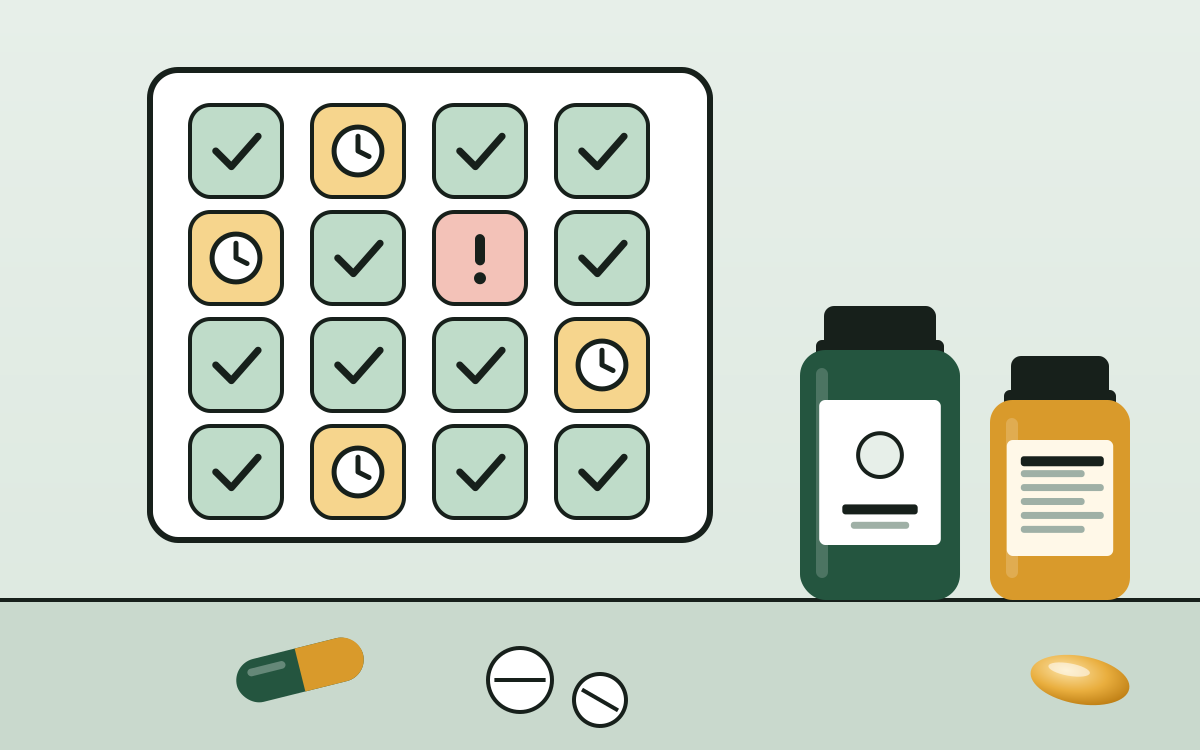
Vitamins that should not be taken together
There are hardly any strict bans among vitamins. But a few pairs get in each other’s way, and spacing them out helps.
| Pair | What happens | How to take them |
|---|---|---|
| Iron and calcium | Calcium may reduce iron absorption | At different times: iron in the morning, calcium in the evening |
| Iron (25 mg or more) and zinc | Iron reduces zinc absorption | At different meals |
| Iron and coffee or tea | Coffee cut iron absorption from a meal by 39%, tea by 64% | Coffee an hour before iron, or well over an hour after |
| Levothyroxine and calcium, iron, magnesium | Minerals bind the hormone in the gut | 4 hours apart |
| Levothyroxine and coffee | Coffee cut hormone absorption by 27–36% | Swallow the tablet with water, coffee 60 minutes later |
| Zinc at 50 mg or more and copper | High-dose zinc causes copper deficiency | Don’t take doses like this for weeks without medical advice |
Iron has the most restrictions. If you take it, choose a single-ingredient product and keep it away from calcium, coffee and tea. Vitamin C, on the other hand, helps: it improves absorption of non-haem iron, the type found in plants and supplements. For forms and doses, see our guide to iron tablets and the best iron supplement.
Supplements that work well together
These pairs can happily share one dose:
- iron and vitamin C: vitamin C improves iron absorption;
- vitamin D and magnesium: magnesium is needed to make the active form of vitamin D;
- vitamin D and calcium: calcium is poorly absorbed from the gut without vitamin D;
- vitamin D and omega-3: both are best taken with a meal containing fat;
- calcium and magnesium: they’re often combined in one tablet.
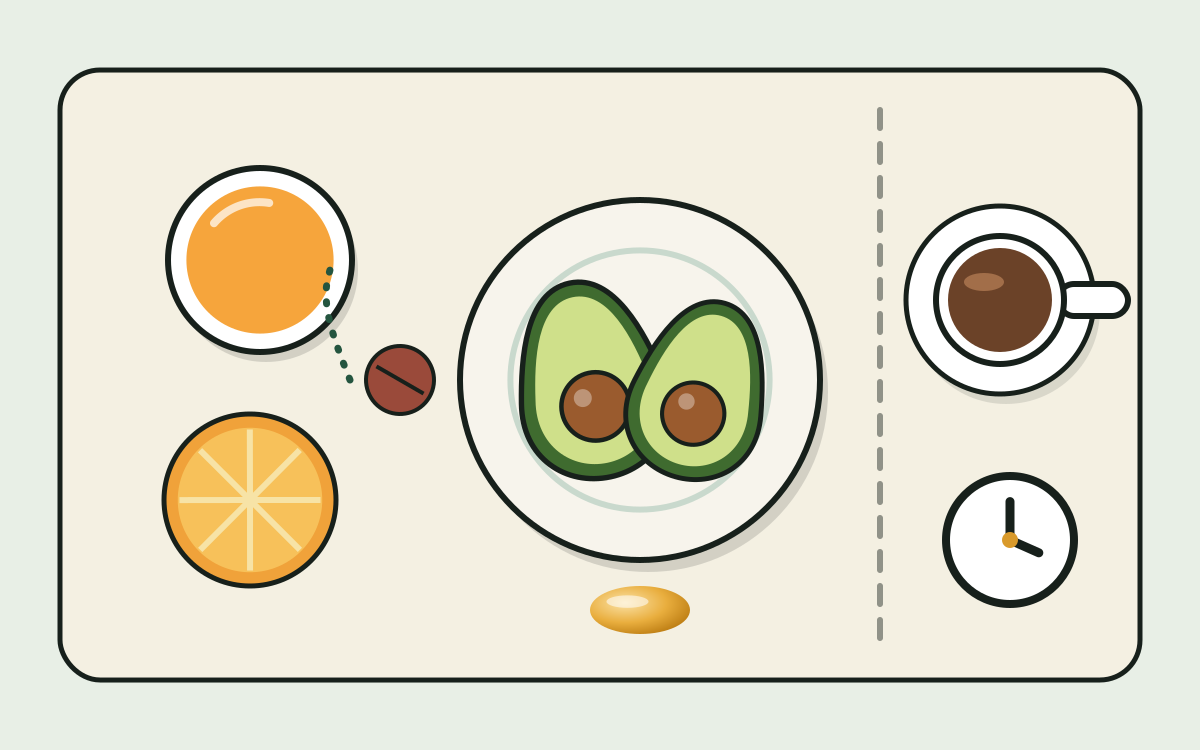
Calcium has one quirk: it’s absorbed best in doses of 500 mg or less. Split a larger dose into two. For choosing a calcium form with vitamin K2, read our calcium and vitamin K2 guide. The NHS advises 10 mcg (400 IU) of vitamin D a day in autumn and winter; more in our vitamin D3 dosage guide.
Can you take magnesium and zinc together?
Yes. You’ll often read that they compete for absorption, but the NIH sources only describe a problem at a very high zinc dose of 142 mg a day. That’s nearly ten times a normal 10–15 mg supplement.
The real issue with zinc is copper. Taking 50 mg of zinc or more for weeks blocks copper absorption, which can lead to anaemia and nerve damage. That’s why a sensible zinc dose is 10–15 mg; see our zinc dosage guide. The forms of magnesium and how well they’re tolerated are covered in magnesium glycinate vs citrate.
Compatibility myths
- “Vitamin C destroys B12.” Early reports of lower B12 and copper with vitamin C were largely due to lab assay errors. Later studies didn’t confirm them.
- “Coffee washes out calcium.” Caffeine reduces calcium absorption only slightly. There’s no need to separate them.
- “Every supplement should be taken on its own.” For most pairs this is unnecessary. Only the amber pairs in the chart need spacing.
- “Magnesium and calcium cancel each other out.” At usual doses they’re sold in the same tablet. Just keep each calcium dose at 500 mg or less.
Supplement and medicine interactions
Medicines interact with supplements far more than vitamins interact with each other. If you take anything regularly, show this table to your GP or to the pharmacist who hands over your prescription.
| Medicine | Supplements involved | What to do |
|---|---|---|
| Levothyroxine | Calcium, iron, magnesium, zinc; coffee | Minerals 4 hours apart, coffee 60 minutes later |
| Tetracyclines, quinolones (doxycycline, ciprofloxacin) | Magnesium, zinc, calcium, iron | Antibiotic 2 hours before the mineral or 4–6 hours after |
| Bisphosphonates (alendronic acid) | Magnesium and other minerals | At least 2 hours apart |
| Levodopa | Iron | Iron reduces its absorption; your doctor plans the timing |
| Proton pump inhibitors (omeprazole) | Iron, magnesium | Reduce iron absorption; low magnesium possible after more than a year |
| Metformin | Vitamin B12 | May lower B12; ask your GP about a blood test |
| Warfarin | Vitamin K, high-dose omega-3 | Keep vitamin K intake steady; omega-3 with INR monitoring |
| Penicillamine | Zinc | At least 1 hour apart |
| Lithium | Calcium | Together they raise the risk of high blood calcium |
For B12 and metformin, see our guide to vitamin B12; for omega-3 doses, see how to choose fish oil.
For the most common medicines, the gap is quicker to look up here:
Taking a medicine? Check the gap
Pick your medicine to see which supplements get in its way and how to space them
Your medicine
How to combine
Tablet first, minerals later
Calcium, iron, magnesium and zinc bind the hormone in the gut. Coffee cut its absorption by 27–36%.
Gap: minerals 4 hours apart, coffee 60 minutes later
How to combine
Keep the antibiotic away from minerals
Magnesium, zinc, calcium and iron reduce the absorption of doxycycline, ciprofloxacin and similar antibiotics.
Gap: antibiotic 2 hours before the mineral or 4–6 hours after
How to combine
Not with your minerals
Bisphosphonates are poorly absorbed alongside magnesium and other minerals.
Gap: at least 2 hours
How to combine
Watch iron and magnesium
Proton pump inhibitors reduce iron absorption, and magnesium can run low after more than a year.
How to combine
Check your B12
Metformin may lower vitamin B12. Ask your GP about a blood test.
How to combine
Keep things steady
Keep your vitamin K intake steady. High-dose omega-3 only with INR monitoring.
Check any new supplement with your anticoagulant clinic or GP.
How to build a supplement schedule
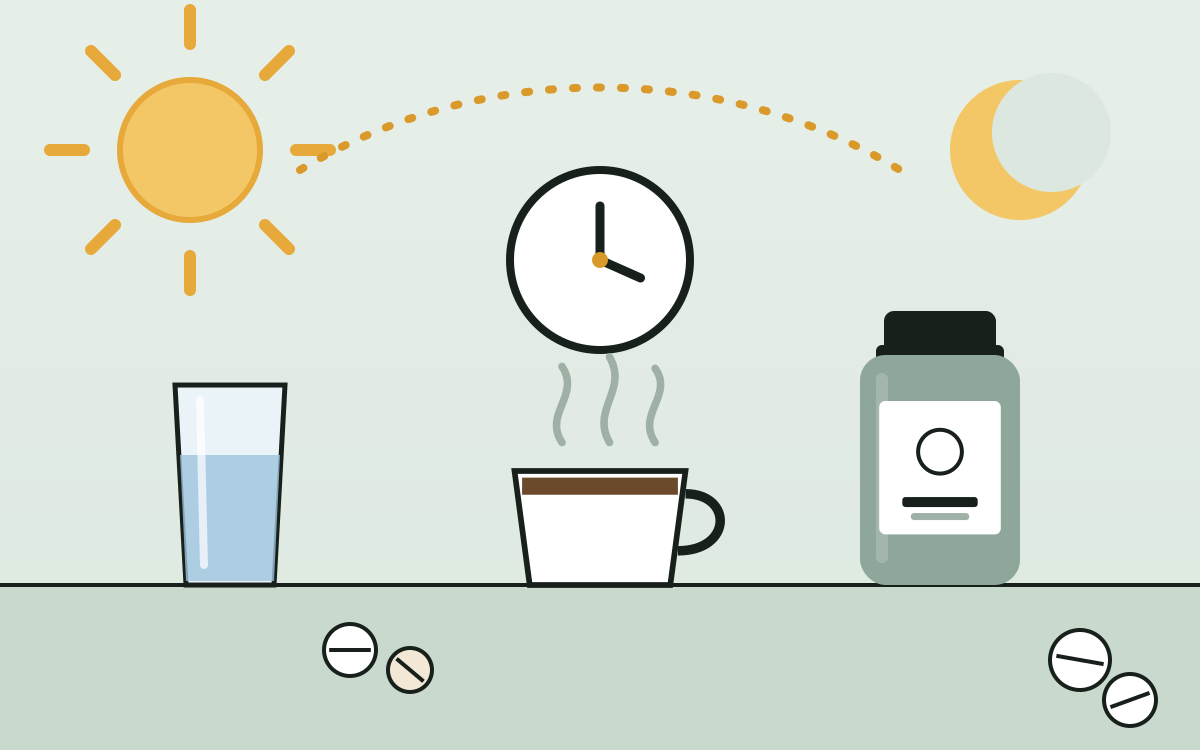
- List everything you take: medicines, vitamins, multivitamins, powders and electrolytes.
- If you take levothyroxine, take it first thing on an empty stomach with water. Wait at least 60 minutes before coffee.
- Move iron to at least 4 hours after levothyroxine. You can take it with orange juice for vitamin C, but not with coffee or tea.
- Keep calcium and magnesium for the evening. Take vitamin D and omega-3 with your main meal.
- During a course of antibiotics, follow the leaflet: minerals usually move to 4–6 hours after the tablet.
- If the timings don’t fit your day, ask your pharmacist to help.
When to speak to a doctor or pharmacist
- You take thyroid hormones, anticoagulants, osteoporosis medicines or antibiotics.
- You take 50 mg of zinc or a treatment dose of iron for more than a few weeks.
- You have kidney disease: minerals are cleared less well and can build up.
- You’re pregnant or breastfeeding.
How to choose supplements on iHerb that are easy to combine
- If something needs to be taken separately, choose single-ingredient products: iron, calcium and magnesium in separate bottles.
- Check your multivitamin: it often already has iron, calcium and zinc in one tablet.
- Add up zinc and iron from every bottle.
- Look for the elemental mineral dose in the Supplement Facts panel, not the weight of the compound. Our supplement label guide shows how.
Bottom line: what to choose
You take iron
Ferrous bisglycinate
Away from calcium, coffee and tea; fine with vitamin C
Iron on iHerbYou need calcium
Calcium citrate
Doses of 500 mg or less, in the evening, away from iron
Calcium on iHerbButtons lead to selections of the right form on iHerb. These are affiliate links; your price doesn't change.
FAQ
Which vitamins should not be taken together?
Very few common vitamins truly clash. Space out iron and calcium, iron and zinc (if the iron dose is 25 mg or more), and iron and coffee or tea. Levothyroxine should be taken 4 hours apart from calcium, iron and magnesium.
Can you take magnesium and zinc together?
Yes. Zinc only reduced magnesium absorption at a very high 142 mg a day, while a normal zinc supplement is 10–15 mg. That’s why the two are often sold in one product.
Can you take vitamin D and magnesium together?
Yes, they’re a compatible pair. Magnesium is needed to make the active form of vitamin D. Take vitamin D with a meal that contains some fat; magnesium is also best with food.
How long after taking iron can I drink coffee?
In a classic study, coffee drunk an hour after a meal reduced iron absorption as much as coffee with the meal, while coffee an hour before didn’t. The easiest option is coffee first, then wait well over an hour after your iron.
Can I take vitamins with levothyroxine?
Not at the same time. The label says not to take levothyroxine within 4 hours of calcium or iron, and it’s sensible to treat magnesium and zinc the same way. Most people take the tablet first thing with water and move minerals to lunch or the evening.
Does vitamin C destroy vitamin B12?
There’s no convincing evidence. NIH ODS notes that early reports of lower B12 and copper with vitamin C were largely due to lab assay errors and weren’t confirmed by later studies.
Sources
- NIH ODS. Iron – Fact Sheet for Health Professionals
- NIH ODS. Zinc – Fact Sheet for Health Professionals
- NIH ODS. Magnesium – Fact Sheet for Health Professionals
- NIH ODS. Calcium – Fact Sheet for Health Professionals
- NIH ODS. Vitamin C – Fact Sheet for Health Professionals
- Benvenga S. et al. Altered intestinal absorption of L-thyroxine caused by coffee. Thyroid, 2008
- Morck TA, Lynch SR, Cook JD. Inhibition of food iron absorption by coffee. Am J Clin Nutr, 1983
Compatibility at a glance
For adults at usual doses, based on NIH ODS
- 4 hours apart
- levothyroxine and calcium, iron, magnesium
- Different times of day
- iron and calcium; iron and zinc
- Coffee and tea
- an hour before iron, or well over an hour after
- Good pairs
- iron + vitamin C; vitamin D + magnesium
- Myth
- magnesium and zinc are fine together at usual doses
- Antibiotics
- 2 hours before minerals or 4–6 hours after
If you take prescribed medicines, check the patient leaflet or ask your pharmacist for the exact gap.
Shop magnesium on iHerbWorks alongside zinc and vitamin D in one dose
Contents
- How to use the vitamin compatibility chart
- Vitamins that should not be taken together
- Supplements that work well together
- Can you take magnesium and zinc together?
- Compatibility myths
- Supplement and medicine interactions
- How to build a supplement schedule
- When to speak to a doctor or pharmacist
- How to choose supplements on iHerb that are easy to combine