Chlorophyll: liquid chlorophyll benefits, chlorophyll water and what the evidence shows
This article contains affiliate links to iHerb. If you buy through them, we earn a commission at no extra cost to you. It doesn't affect which forms we recommend. Learn more
Chlorophyll water went viral on TikTok as a fix for body odour, acne, weight and "toxins". The bottle usually holds a semi-synthetic form, not chlorophyll itself, and the evidence behind it is thin. We look at what's actually known, how to take it and who should skip it.
Chlorophyll vs chlorophyllin: what’s in the bottle
Chlorophyll is the green pigment plants use to capture light. It’s in spinach, parsley, broccoli and every other leafy green. But a bottle labelled “liquid chlorophyll” usually contains something else.
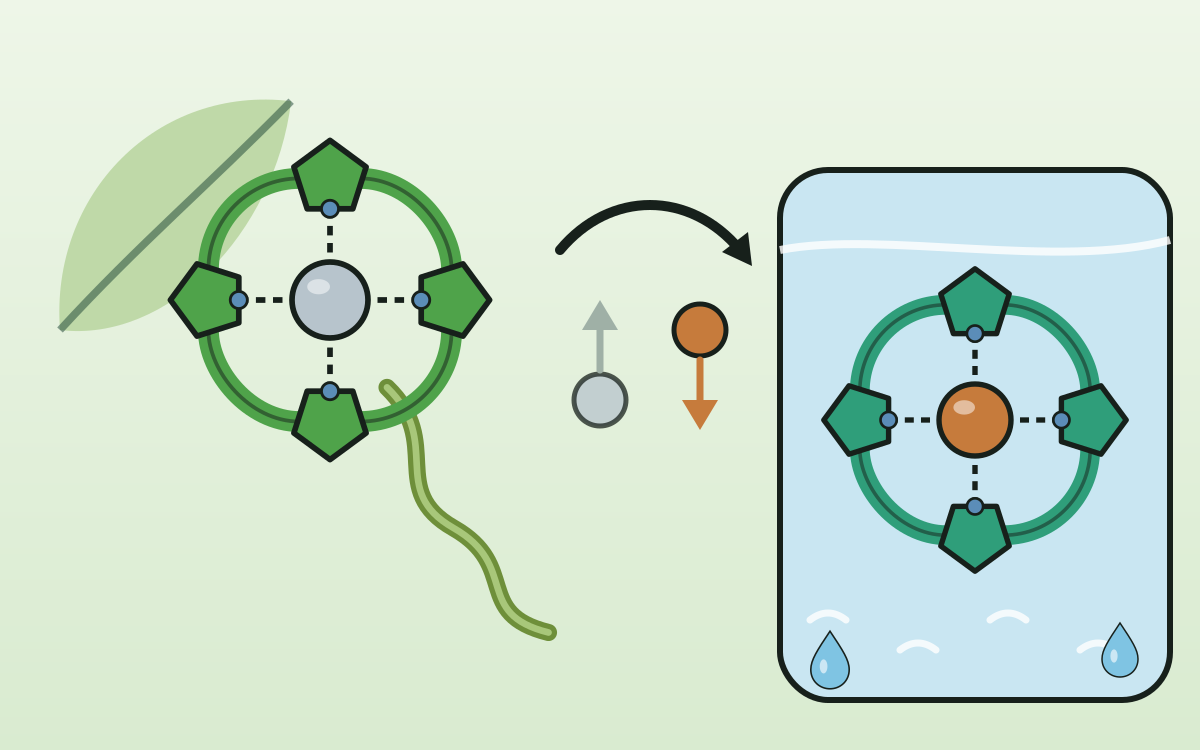
Most supplements contain sodium copper chlorophyllin. It’s a semi-synthetic mixture of salts made from chlorophyll, with copper replacing the magnesium at the centre of the molecule. Natural chlorophyll is less stable and far more expensive, so supplements rarely use it. Unlike natural chlorophyll, chlorophyllin dissolves in water, which makes it easy to sell as drops and concentrate.
The difference matters for absorption. In animal studies only 1–3% of natural chlorophyll was absorbed; the rest left in the stool. Chlorophyllin is absorbed better: people taking 300 mg a day had its breakdown products in their blood.
Chlorophyllin isn’t only a supplement. In the US it’s an approved green colouring for a few foods such as chewing gum, and for drugs and cosmetics. It also contains copper and sodium, so count it if you take other supplements with copper, such as a multivitamin or spirulina.
For other gut supplements, see our gut health section.
Chlorophyll benefits: what the studies say
| Claim | What was studied | Verdict |
|---|---|---|
| Stoma and incontinence odour | Case reports; in a placebo-controlled trial 75 mg 3 times a day didn’t help | Weak and mixed |
| Body odour in trimethylaminuria | Small Japanese study: 60 mg 3 times a day for 3 weeks lowered the odour compound in urine | Only in a rare condition |
| “Detox”, cancer prevention | China, 180 people: an aflatoxin marker in urine 55% lower | No drop in cancer shown |
| Acne, skin | Gel on the skin, studies of about 10 people | Topical only, little data |
| Weight loss, energy | No studies | Not shown |
Check the claim on your bottle:
Check the claim on the bottle
Pick the reason you're looking at liquid chlorophyll to see what the evidence says
The claim
What the evidence says
Not shown
There are no studies of "detox". The closest is a trial in China where chlorophyllin cut a urine marker of aflatoxin by 55%. A lower cancer risk hasn't been shown in people.
In trials: 100 mg of chlorophyllin 3 times a day for 4 months
What the evidence says
Weak and mixed evidence
Chlorophyllin is sold over the counter in the US for stoma odour. Yet in a placebo-controlled trial it worked no better than placebo. The rest is case reports.
In trials: 75 mg 3 times a day in the controlled trial
What the evidence says
No studies
There's no evidence chlorophyll helps you lose weight. If chlorophyll water replaces sugary drinks, that swap is what helps.
What the evidence says
Topical only, very little data
Small studies of a chlorophyllin gel on the skin, with about 10 people each, saw improvements. Drinking chlorophyll for skin hasn't been studied.
What the evidence says
Not shown
No study has shown chlorophyll gives you more energy. If you're always tired, check iron, B12 and sleep first.
What the evidence says
Real green veg do it better
Spinach, broccoli and parsley give you chlorophyll along with fibre. Paediatricians at CHOP also point to whole greens rather than supplements.
Odour. In the US, chlorophyllin is sold over the counter for colostomy odour and incontinence. Early reports looked promising, but in a controlled trial it reduced odour no better than placebo. Children’s Hospital of Philadelphia (CHOP) also notes no significant improvement in older patients with stomas or catheters. There are no studies for ordinary sweat or bad breath.
Trimethylaminuria. This rare inherited condition makes the body and urine smell fishy. In a small Japanese study, chlorophyllin at 60 mg 3 times a day for 3 weeks clearly lowered the odour compound in urine. That result doesn’t carry over to everyday body odour. Persistent bad breath or body odour is worth a visit to your dentist or GP: finding the cause beats masking it.
Aflatoxin. In a 2001 randomised trial, 180 adults in a Chinese area with high liver cancer risk took 100 mg of chlorophyllin or a placebo 3 times a day for 4 months. A urine marker of aflatoxin damage to DNA fell by 55%. That’s not a whole-body “detox”: it’s about binding one specific toxin from contaminated food. A lower cancer rate in people hasn’t been shown.
Skin. Acne and sun-damaged skin have only been studied with chlorophyllin gel on the skin. In one study 10 adults with acne used a gel twice a day for 3 weeks; in another, 10 women over 40 used one for 8 weeks. Both saw improvements, but neither had a placebo group. Drinking chlorophyll for skin hasn’t been studied. Chlorophyllin ointments have been used on wounds since the 1940s, but those studies were mostly uncontrolled too.
Chlorophyll water: the TikTok trend explained
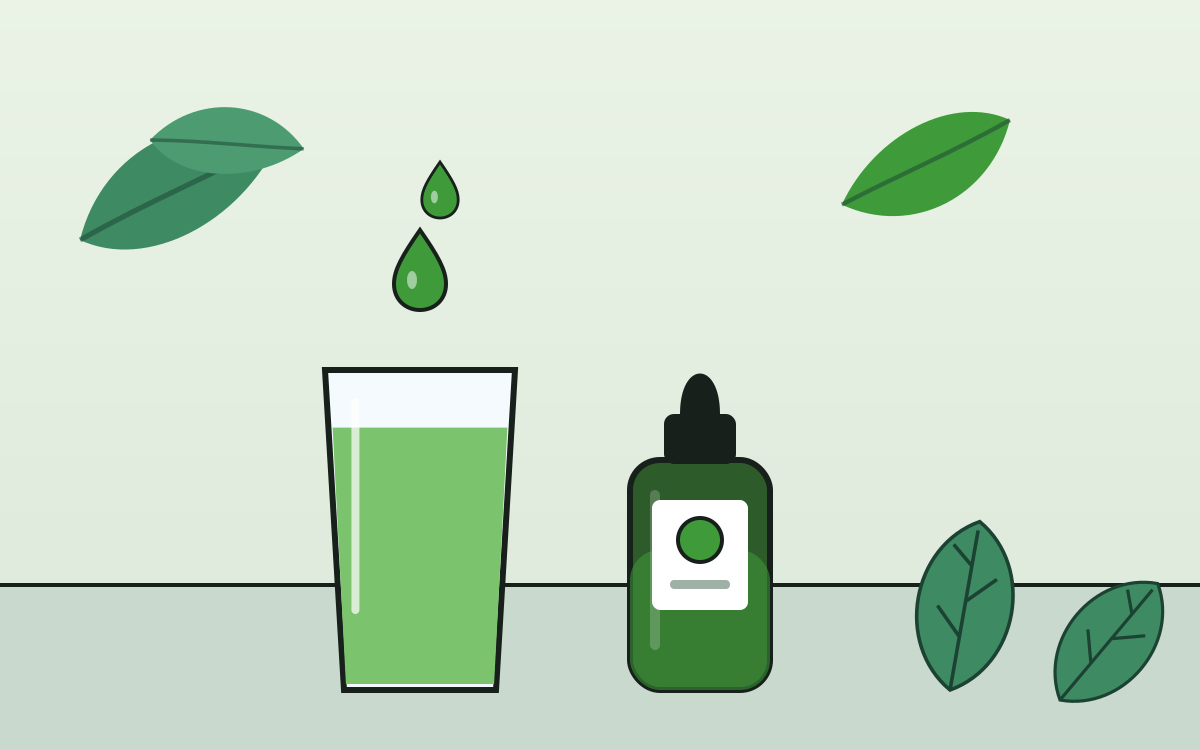
The trend is simple: a couple of droppers of liquid chlorophyll in a bottle of water turns it bright green. Videos credit it with clear skin, fresh breath, weight loss and flushing out “toxins”.
What might actually be true:
- you’re drinking more water, which is good in itself;
- green water replaced sugary drinks, and that genuinely helps with calories;
- everything else, from glowing skin to “cleansing” and energy, hasn’t been tested.
Paediatricians at CHOP point out that most of the data come from labs, animals or small studies. For teenagers with acne, they suggest treatments with stronger evidence first. If weight is your goal, read do weight loss supplements work.
How to take liquid chlorophyll
There’s no daily requirement: chlorophyll isn’t a vitamin. Pointers from studies and labels:
- studies used 100–300 mg of chlorophyllin a day, split into 3 doses;
- stir drops or concentrate into a glass of water;
- don’t go over the label dose;
- if nothing has changed after a few weeks, there’s no point carrying on.
Liquid or tablets:
| Liquid chlorophyll | Tablets and capsules | |
|---|---|---|
| Absorption | Liquid forms are absorbed better, says CHOP | Less well than liquids |
| Taste and colour | Colours the water and your tongue | No taste |
| Dose | Work out mg of chlorophyllin per ml | Fixed per tablet |
| Convenience | Needs a bottle of water | Easy when travelling |
Side effects: green poo and sun sensitivity
In more than 50 years of medical use, no toxic effects have been attributed to chlorophyllin. But some side effects are predictable:
- green poo and green urine – harmless; it’s the pigment leaving your body;
- a yellow or black tongue;
- diarrhoea – occasionally;
- sun sensitivity – skin burns more easily, especially fair skin, so wear sunscreen;
- a false positive guaiac test for hidden blood in stool: tell your doctor if you’re having one.
Green poo is expected on chlorophyll. Black, tarry stools or blood are not, so contact your GP or NHS 111 rather than blaming the supplement.

Who should avoid chlorophyll
- Pregnancy and breastfeeding. Safety hasn’t been tested, and the Linus Pauling Institute advises avoiding chlorophyllin.
- Children and teenagers. There’s little safety data; CHOP suggests talking to your child’s doctor first.
- Medicines that make you sun-sensitive: amitriptyline, fluoroquinolone antibiotics, tetracycline and methoxsalen. Together with chlorophyll, sunburn, blistering and rashes become more likely.
- Other copper supplements. Add up your total copper, especially with multivitamins.
- Stool tests for hidden blood. A guaiac test can give a false result.
To check combinations, see our vitamin compatibility chart.
Green vegetables instead of drops
CHOP’s paediatricians recommend getting chlorophyll from whole greens rather than supplements. According to the Linus Pauling Institute, a cup of raw spinach holds about 24 mg of chlorophyll, half a cup of parsley 19 mg, and a cup of garden cress about 16 mg. These foods bring fibre too, and they’re food, not supplements. If your goal is gut health, fibre and psyllium husk have far stronger evidence. If it’s your skin you’re buying drops for, see which supplements for skin have better evidence.
Compare the chlorophyll in an ordinary portion of greens with the chlorophyllin doses used in studies:
How to choose chlorophyll on iHerb
- Decide why you want it. For odour, skin and weight there’s almost no evidence.
- Check the Supplement Facts panel for mg of chlorophyllin (sodium copper chlorophyllin) per serving, not only ml.
- Check for sugar, flavourings and sweeteners.
- If you take medicines that make you sun-sensitive, ask your GP or pharmacist first.
- Compare the price per 100 mg of chlorophyllin.
Our label-reading guide explains how to read a Supplement Facts panel. To find out what you actually need, try our vitamin check.
Bottom line: what to choose
Curious about chlorophyll water
Liquid chlorophyll
Stick to the label dose and use sunscreen
Liquid chlorophyll on iHerbButtons lead to selections of the right form on iHerb. These are affiliate links; your price doesn't change.
FAQ
What are the benefits of liquid chlorophyll?
People take it for odour, “detox”, skin and weight loss, but there’s no good research for any of these. In the US, chlorophyllin is sold over the counter for stoma odour, yet in a controlled trial it worked no better than placebo.
How do you take chlorophyll water?
Usually you stir drops or a spoonful of concentrate into a glass or bottle of water. Studies used 100–300 mg of chlorophyllin a day, split into 3 doses. Don’t exceed the label dose, and protect your skin from the sun.
Why does chlorophyll turn your poo green?
It’s expected: chlorophyllin can colour stools and urine green and the tongue yellow or black. That’s harmless. But black, tarry stools or blood in your poo need urgent medical advice.
Does chlorophyll help with body odour and bad breath?
The evidence is thin. There are reports of benefit for stoma odour and incontinence, but a placebo-controlled trial found no effect. For persistent bad breath, start with your dentist.
Is chlorophyll safe in pregnancy?
Its safety in pregnancy and breastfeeding hasn’t been tested, so the Linus Pauling Institute advises avoiding chlorophyllin at these times.
Sources
- Linus Pauling Institute. Chlorophyll and Metallo-Chlorophyll Derivatives – Micronutrient Information Center
- Children's Hospital of Philadelphia. Chlorophyll supplements for body odor and acne
- RxList (Natural Medicines). Chlorophyll: uses, side effects, interactions
- Egner PA et al. Chlorophyllin intervention reduces aflatoxin-DNA adducts in individuals at high risk for liver cancer. PNAS, 2001
Chlorophyll at a glance
For adults, based on the Linus Pauling Institute and CHOP
- What's in the bottle
- usually sodium copper chlorophyllin
- Doses in studies
- 100–300 mg a day in 3 doses
- Odour
- no better than placebo in a controlled trial
- Detox, weight loss
- no studies
- Common effects
- green poo and urine, sometimes diarrhoea
- Caution
- sun exposure, pregnancy, breastfeeding
In over 50 years of use no toxic effects of chlorophyllin have been reported, but no benefit for healthy people has been shown either.
Shop chlorophyll on iHerbCheck mg of chlorophyllin per serving
Contents
- Chlorophyll vs chlorophyllin: what’s in the bottle
- Chlorophyll benefits: what the studies say
- Chlorophyll water: the TikTok trend explained
- How to take liquid chlorophyll
- Side effects: green poo and sun sensitivity
- Who should avoid chlorophyll
- Green vegetables instead of drops
- How to choose chlorophyll on iHerb