Best supplements for women: what you need in your 20s, 40s and over 50
Women do need some nutrients more often: iron with heavy periods, folic acid before pregnancy, calcium and vitamin D after the menopause. This page covers what and how much, without an all-purpose "women's formula".
Supplements for women by age
The best supplements for women by life stage: vitamin D, folic acid, iron, calcium, B12 and omega-3. Supplements for women over 40, and is a multivitamin worth it?
11 min readIron tablets: forms and dose
Ferrous sulphate vs bisglycinate vs fumarate: elemental iron per tablet, how to take iron tablets, alternate-day dosing, side effects and safe limits in the UK.
10 min readPregnancy and prenatal vitamins
Pregnancy vitamins UK: folic acid 400 mcg before pregnancy to week 12, vitamin D 10 mcg, iodine, iron only if tests show it, and why to avoid retinol and herbs.
12 min readFolic acid and methylfolate
Folic acid tablets: the NHS 400 mcg dose before pregnancy to week 12, who needs 5 mg, folate vs folic acid vs methylfolate, the MTHFR myth and the 1 mg limit.
10 min readCalcium, D3 and vitamin K2
Calcium carbonate vs citrate, elemental calcium per tablet and the 2,500 mg EFSA limit. What vitamin K2 (MK-7) does, D3 + K2 evidence, and why K2 and warfarin clash.
9 min readInositol and PCOS: the evidence
Inositol for PCOS: myo-inositol vs D-chiro-inositol, what the 2023 international PCOS guideline says, doses used in studies, side effects and inositol in pregnancy.
10 min read
How this section works
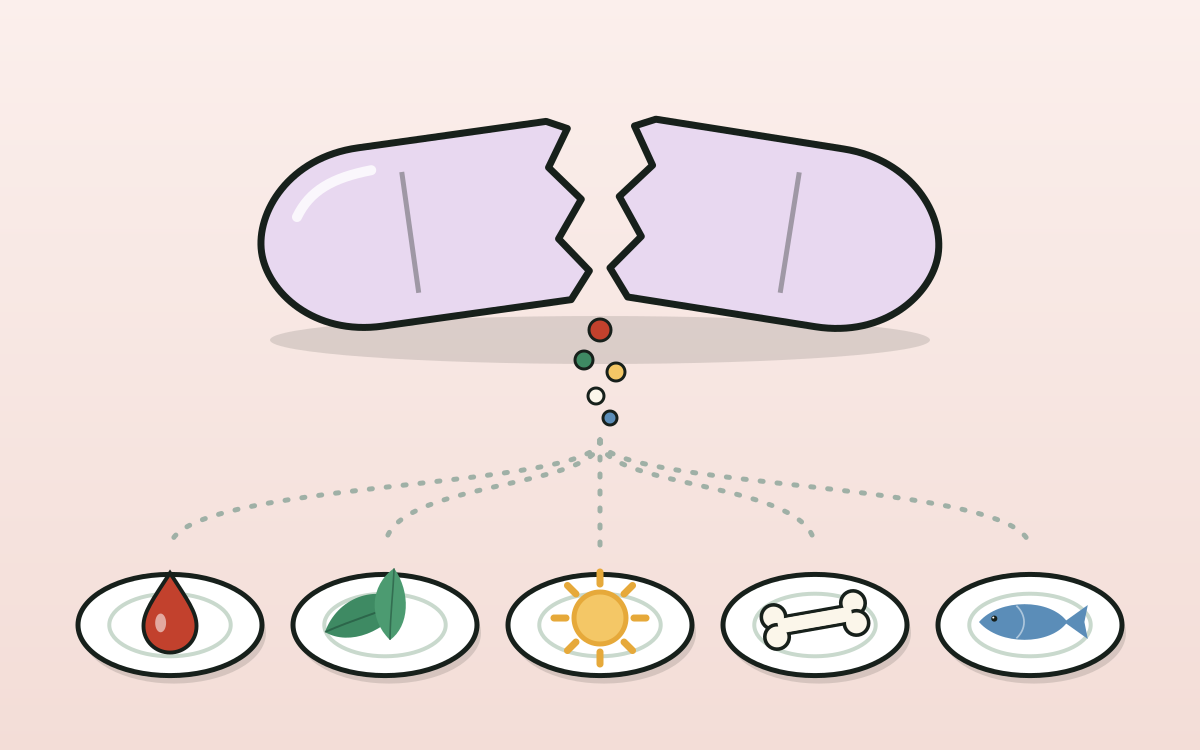
We don’t rate the bottle labelled “for women”. Instead, we look at the individual nutrients women need more often: the daily need, the upper limit, who should avoid each one and how to find the right form on iHerb.
Find your option: women's health
Pick your situation to see what's been studied and where to start
Your situation
What makes sense
Folic acid and vitamin D
Start folic acid before you conceive and keep taking it until week 12. Avoid vitamin A (retinol) supplements and fish liver oil in pregnancy.
Dose: 400 mcg folic acid and 10 mcg vitamin D a day (NHS)
If you have diabetes or take epilepsy medicine, your GP may advise 5 mg of folic acid.
What makes sense
Ferritin first, then iron
Heavy periods are a very common cause of iron deficiency anaemia. Ask your GP for a blood test: without a confirmed shortfall you don't need iron.
Dose: NHS need 14.8 mg a day; up to 17 mg from supplements is unlikely to cause harm
High-dose iron is dangerous for children: keep the bottle out of their reach.
What makes sense
Calcium, vitamin D and care with vitamin A
Aim to get calcium from food and top up only the gap. Keep vitamin A from food and supplements to 1.5 mg a day or less, as the NHS advises after the menopause.
Dose: calcium 700 mg a day in total; vitamin D 10 mcg (NHS)
What makes sense
B12 is a must
Vitamin B12 comes almost only from animal foods, so vegans need a supplement or fortified foods. It's worth checking iron too.
Best supplements for women: where to start
Our overview of supplements for women over 40 and 50 shows what changes with age. Tired, with heavy periods? Get a blood test first, then read which iron supplement is best. Trying for a baby? Go to pregnancy vitamins and folic acid.
Topics in this section
| Goal | What you need | Daily need (NHS) | Guide |
|---|---|---|---|
| Tiredness, heavy periods | iron after a test | 14.8 mg aged 19–49; 8.7 mg from 50 | iron tablets |
| Trying for a baby | folic acid, vitamin D | 400 mcg until week 12; vitamin D 10 mcg | pregnancy vitamins |
| Choosing a form: folic acid or methylfolate | folic acid | 400 mcg a day until week 12 | folic acid tablets |
| Bones over 50 | calcium, vitamin D, K2 | calcium 700 mg | calcium and vitamin K2 |
| Overview by age | D, B12, iron, calcium | – | supplements for women |
| Inositol and PCOS | limited evidence | – | inositol |
EFSA sets a safe level of 40 mg a day for iron and an upper limit of 2,500 mg for calcium. The NHS advises no more than 1,500 mg of calcium a day from supplements. The chart shows how far the daily need sits from those limits:
Who should take care
- In pregnancy, avoid retinol supplements and fish liver oil, because too much vitamin A can harm your baby.
- After the menopause, keep vitamin A from food and supplements to 1.5 mg a day or less.
- On levothyroxine, take it 4 hours apart from calcium and iron, which reduce its absorption.
- Store iron where children can’t reach it. An overdose is dangerous for them.
- With kidney disease, take calcium and magnesium only on medical advice.
What to check before you buy
- How much iron, calcium and vitamin A your multivitamin already provides.
- Whether you take iron and calcium at the same time: calcium reduces iron absorption.
- The calcium dose per tablet: absorption is best at 500 mg or less.
- That you’ve had a ferritin test before buying iron.
How to choose on iHerb
- Name your goal: pregnancy, low iron or bones after 50.
- Choose one nutrient at the right dose rather than a “women’s formula” with everything in it.
- Check the dose against the daily need and upper limit in our supplements A–Z.
- Space out iron, calcium and thyroid medicine.
Bottom line: what to choose
Buttons lead to selections of the right form on iHerb. These are affiliate links; your price doesn't change.
FAQ
What are the best supplements for women over 40?
Much the same as before: vitamin D in autumn and winter, iron only if your periods are heavy and a test shows you’re low, and B12 on a vegan diet. You don’t need a special “40+” formula; check it doesn’t duplicate what you already take.
What supplements do women need after 50?
After the menopause your iron need drops to 8.7 mg a day (NHS). Calcium (700 mg a day) is best from food, with a supplement only to fill the gap. Keep vitamin A from food and supplements to 1.5 mg a day or less, because more is linked to osteoporosis.
Should all women take iron?
No. Iron is for a confirmed shortfall, most often due to heavy periods or pregnancy. The NHS says 17 mg a day or less from supplements is unlikely to cause harm; higher doses can cause constipation and nausea and are dangerous for children.
When should I start taking folic acid?
Before you conceive and until 12 weeks of pregnancy, 400 mcg a day. If you’re already pregnant, start now. If you have diabetes or take epilepsy medicine, your GP may prescribe 5 mg.
Is a multivitamin for women in the UK worth it?
It can be convenient, but check the label: many contain iron and vitamin A. If you’re pregnant, choose a pregnancy-specific product without retinol. If you’re past the menopause, you may not need the iron.
Sources
What to choose
Situation and the best-supported nutrient
- Trying for a baby
- folic acid 400 mcg until week 12
- Heavy periods
- ferritin test, then iron if low
- Iron need, 19–49
- 14.8 mg a day (NHS)
- Over 50
- calcium 700 mg from food; vitamin D 10 mcg
- Vegan diet
- B12 is a must
In pregnancy, avoid vitamin A (retinol) supplements and fish liver oil.