Psyllium husk: benefits, how to take it safely and how much fibre you need a day
This article contains affiliate links to iHerb. If you buy through them, we earn a commission at no extra cost to you. It doesn't affect which forms we recommend. Learn more
The NHS advises 30 g of fibre a day, but most adults in the UK eat about 20 g. Psyllium husk can help close the gap and soften stools. It swells into a gel, though, so how much water you drink, when you take your medicines and where you start all matter.
What psyllium husk is
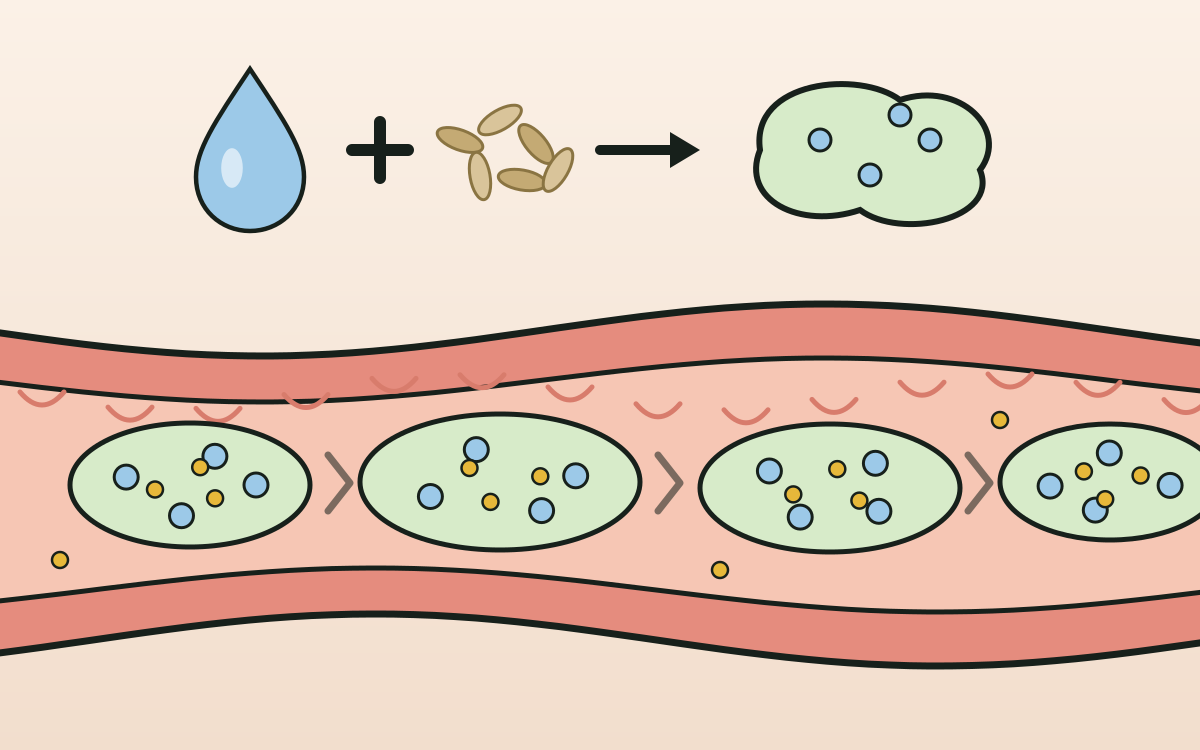
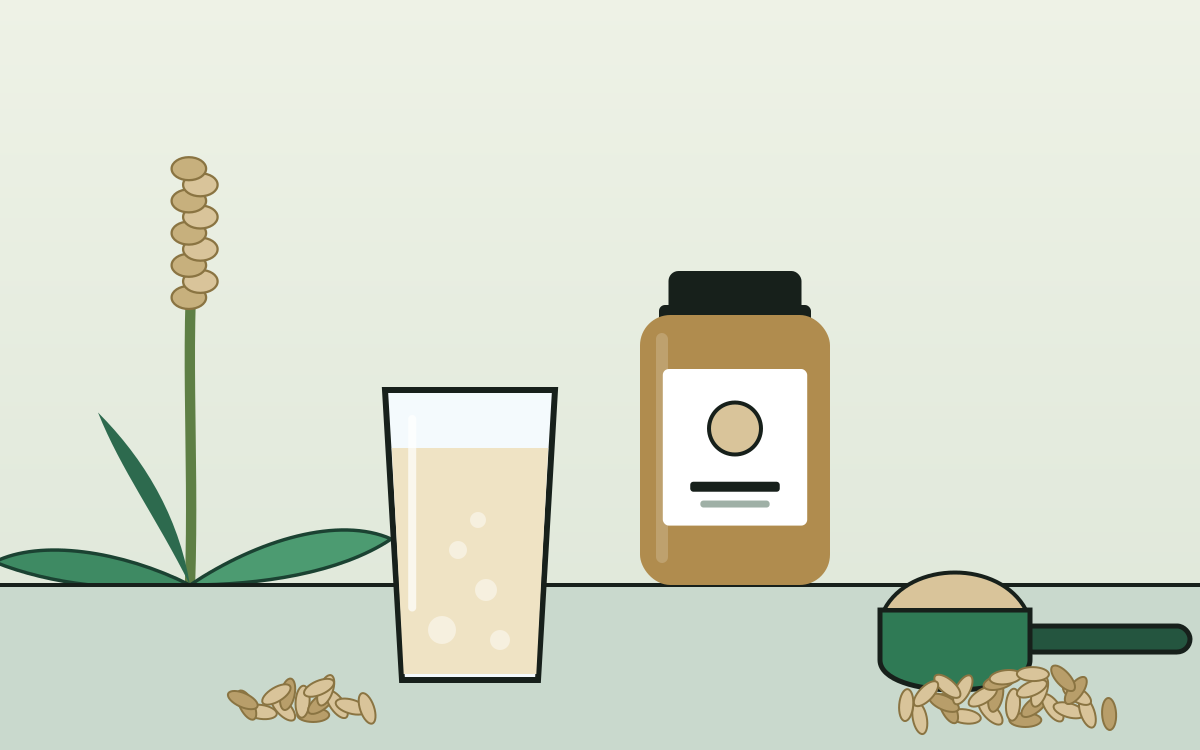
Psyllium husk is the outer coat of the seeds of Plantago ovata, a type of plantain. UK pharmacies sell it as ispaghula husk, a bulk-forming laxative; supplement shops call it psyllium husk. It’s mostly fibre, and in water it swells into a thick gel.
That gel explains everything psyllium does. It holds water in the bowel, so stools become softer and bulkier. It traps bile in the gut, which nudges LDL cholesterol down. And it’s the reason psyllium can be dangerous if you wash it down with a sip of water: the gel can lodge in your throat or oesophagus.
If you’ve come for a tub of psyllium, read the parts on water and medicine timing first: they decide whether it helps or causes trouble. For other gut supplements, see our gut health section.
How much fibre you need a day
The NHS advises adults to aim for 30 g of fibre a day. Yet the average UK adult gets about 20 g, and 11 to 18-year-olds about 16 g.
For children, NHS figures depend on age: about 15 g at 2–5 years, 20 g at 5–11 years and 25 g at 11–16 years. These are food targets, not supplement doses. Only give a child psyllium after talking to your GP or pharmacist.
Switch the group to compare the target with what people actually eat:
Fibre from food is linked with a lower risk of heart disease, stroke, type 2 diabetes and bowel cancer. So start with your plate, not a tub:
- porridge or a plain wholegrain cereal for breakfast;
- wholemeal or granary bread, wholewheat pasta, brown rice or bulgur wheat;
- beans, lentils or chickpeas in stews, curries and salads;
- potatoes with their skins on, and vegetables with every meal;
- fruit, oatcakes, unsalted nuts and seeds as snacks.
A food with 6 g of fibre or more per 100 g counts as high in fibre, says the NHS. When your diet is hard to change, or you want a gentle effect on bowel habit, psyllium is a handy fibre supplement.
Soluble vs insoluble fibre: what’s the difference
Fibre comes in different types, and the type decides what it does. Psyllium is a soluble, gel-forming fibre that bacteria barely ferment. That’s why it usually causes less wind than fermentable fibres such as inulin.
| Type | Examples | What it does | In IBS |
|---|---|---|---|
| Soluble, gel-forming | Psyllium, oat beta-glucan | Softens stools, lowers LDL cholesterol | Suitable; NICE recommends it |
| Soluble, fermentable | Inulin, FOS, wheat dextrin | Feeds gut bacteria, can cause wind | May worsen bloating |
| Insoluble | Wheat bran, skins | Adds bulk, speeds transit | NICE advises avoiding it |
Finely ground wheat bran has almost no laxative effect and can even firm stools up, according to the Linus Pauling Institute.
Psyllium husk benefits for your gut: constipation and IBS
Constipation. Ispaghula husk is the classic bulk-forming laxative. If you’re buying a laxative without a prescription, the NHS says it’s usually best to try this type first. In UK pharmacies, the standard dose is one 3.5 g sachet twice a day after meals. It usually takes 2–3 days to work. If you’re still constipated after 3 days, see a doctor. If psyllium doesn’t suit you, osmotic options include a short course of magnesium citrate for constipation.
Irritable bowel syndrome (IBS). NICE tells clinicians to review fibre intake in IBS, usually reducing it, and to discourage insoluble fibre such as bran. If more fibre is needed, it should be soluble, such as ispaghula powder or oats. A 2014 meta-analysis (14 trials, 906 patients) found soluble fibre eased IBS symptoms: seven people needed to take it for one to benefit. Bran showed no benefit.
Probiotics have also been studied in IBS: see our guide to probiotics for gut health. If particular foods set off your bloating, read about digestive enzymes.
Psyllium and cholesterol
This is psyllium’s best-studied benefit outside the gut. In a 2018 meta-analysis of 28 trials (1,924 people), about 10 g of psyllium a day lowered LDL cholesterol by 0.33 mmol/L on average, over a median of 8 weeks. In two trials, psyllium plus a statin lowered LDL more than the statin alone.
How regulators see it:
- The US FDA allows a heart disease risk claim on foods with at least 1.7 g of soluble fibre from psyllium husk per serving. The claim rests on 7 g of psyllium soluble fibre a day, as part of a diet low in saturated fat and cholesterol.
- The UK and EU have no authorised health claim for psyllium. Other gel-forming fibres do have one for normal blood cholesterol: 3 g a day of oat or barley beta-glucans, 4 g of glucomannan or 10 g of guar gum.
Psyllium doesn’t replace cholesterol medicine. If you’re on a statin, check with your GP before adding it.
How to take psyllium husk: water, timing and dose
Water comes first. Stir each dose into at least 150 ml of cold water and drink it straight away, as the NHS advises. In the US, psyllium laxatives must carry a choking warning and say to take them with a full glass of fluid, about 240 ml. Taken dry, the powder can swell in your throat.
These steps help you start without bloating:
How to start psyllium husk without the bloating
Five steps for adults. Tap a step to see the details
First make sure psyllium is right for you
Psyllium swells into a gel. That makes it dangerous if you have trouble swallowing, and unsuitable if your bowel is blocked.
- Don't take it with swallowing problems, a narrowed oesophagus, a bowel blockage or faecal impaction
- See your GP first: blood in your poo, a change in bowel habit lasting over 2 weeks, tummy pain with vomiting
- Under 6s only if a doctor prescribes it
Week one: half the label serving
Add fibre gradually, or wind and bloating are more likely. If your tummy is settled after a few days, move up to the full serving.
- Compare grams of psyllium per serving, not scoops or capsules
- For reference, a UK pharmacy sachet of ispaghula holds 3.5 g of husk; adults take 1 sachet twice a day
Every serving in a full glass of water
Stir the powder into at least 150 ml of cold water and drink it straight away, before it thickens. US labelling rules ask for a full glass, about 240 ml.
- Wash capsules down with a full glass too
- Drink more fluids than usual through the day
- Never swallow the powder dry
After a meal, not at bedtime
After breakfast and dinner works for most people. Take the evening dose at least an hour before bed: the NHS says a dose just before sleep makes it harder for your bowel to move things along.
- Take other medicines and supplements at least an hour before or after psyllium
- On lithium, carbamazepine, digoxin, insulin or other diabetes medicines, or thyroid hormones: ask your GP or pharmacist first
Check how it's going
For constipation, psyllium usually takes 2–3 days to work. If nothing has changed after 3 days, or things are worse, talk to a pharmacist or GP.
- Wind and bloating in the first few days usually settle
- Chest pain, vomiting or trouble swallowing after a dose: get medical help straight away
Doses from trials and pharmacy leaflets:
| Goal | What was studied | How to take it |
|---|---|---|
| Constipation | 3.5 g of husk twice a day | After meals; works in 2–3 days |
| IBS | Soluble fibre, including ispaghula | Start low, review after a few weeks |
| Cholesterol | About 10 g a day, median course 8 weeks | With diet changes, agreed with your GP |
| Fibre target | 30 g a day from all sources | Food first, psyllium as a top-up |
Timing. After breakfast and dinner suits most people. Take the evening dose at least an hour before bed, says the NHS. Take other medicines and supplements at least an hour before or after psyllium, because the gel can slow their absorption. To see which other supplements need spacing, use our vitamin compatibility chart.
Bloating and wind: how to avoid them
Wind and bloating are the most common side effects. The NHS says they often come from a sudden rise in fibre and should settle after a few days.
To keep discomfort down:
- start with half a serving and build up slowly;
- drink more water through the day, not only the glass with your dose;
- don’t add inulin, bran and lots of beans all at once;
- if bloating doesn’t settle, cut the dose and see your GP.
Allergy to psyllium is uncommon. A mild reaction means itchy eyes, nose or skin: stop taking it and ask a pharmacist. Try not to breathe in the powder when you measure it. Sudden swelling of the lips, tongue or throat, or trouble breathing, means calling 999.
Who shouldn’t take psyllium, and medicine interactions
Don’t take psyllium without medical advice if you have:
- difficulty swallowing, a narrowed oesophagus or other throat problems;
- a bowel blockage or faecal impaction;
- a weak or naturally slow bowel (colonic atony);
- a change in bowel habit lasting more than 2 weeks, or blood in your poo;
- tummy pain together with feeling or being sick.
Medicines. The NHS asks you to check with a GP or pharmacist first if you take lithium, carbamazepine, digoxin or mesalazine. The same goes for insulin and other diabetes medicines, and for codeine or other painkillers that cause constipation. Fybogel’s product information also lists thyroid hormones, and says diabetes treatment may need adjusting.
Pregnancy and breastfeeding. The NHS says ispaghula husk is commonly taken in pregnancy and isn’t harmful to the baby. It doesn’t pass into breast milk.
Children. Under 6s only if a doctor prescribes it. For older children, the dose depends on age and size, so follow your GP or pharmacist.
Weight loss. A review of 44 trials found psyllium didn’t improve feelings of fullness. For what to expect from slimming products, see do weight loss supplements work.
Some signs need your GP rather than a supplement. See a doctor if constipation hasn’t improved after 3 days of treatment or you notice blood in your poo. Weight loss without trying, constant tiredness or regular bloating also need checking.
How to choose psyllium husk on iHerb
- Pick a format. Powder is easier to adjust; capsules travel well, but a serving can be several capsules.
- Find the grams of psyllium per serving on the Supplement Facts panel, not the weight of a scoop or capsule.
- Look for “husk” or “husk powder” on the label: that’s the form used in trials.
- Check for sugar, flavourings and sweeteners. Aspartame matters if you have phenylketonuria.
- Compare the price per 10 g of psyllium, not per tub.
Our label-reading guide explains Supplement Facts panels. Not sure fibre is what you need? Try our vitamin check.
Bottom line: what to choose
Constipated, happy with a powder
Psyllium husk powder
Start with half a serving in a full glass of water
Powder on iHerbCan't face powders
Psyllium husk capsules
Check the grams: a serving can be several capsules
Capsules on iHerbRaised cholesterol
Psyllium alongside diet changes
Trials used about 10 g a day; talk to your GP
Psyllium on iHerbButtons lead to selections of the right form on iHerb. These are affiliate links; your price doesn't change.
FAQ
How do you take psyllium husk?
Stir each dose into at least 150 ml of cold water, ideally a full glass, and drink it straight away. Take it after a meal, with the evening dose at least an hour before bed. Start with half a serving and drink more fluids through the day.
How much fibre do I need a day?
The NHS advises adults to aim for about 30 g of fibre a day from all sources. The average UK adult gets about 20 g. Add wholegrains, pulses, vegetables and fruit first, and use psyllium to top up.
Can I take psyllium husk every day?
Many adults use it daily as a fibre top-up if nothing rules it out. As a laxative bought without a prescription, though, the NHS says to stop once constipation improves and not to use it for more than 7 days. If constipation keeps coming back, see your GP: they may suggest a longer course.
Why does psyllium make me bloated?
Wind and bloating are the most common side effects, especially when fibre goes up suddenly. They usually settle within a few days. Cut the dose and build up more slowly. If bloating doesn’t go away, speak to your GP.
Does psyllium husk help with weight loss?
There’s little evidence. A review of 44 trials found that psyllium didn’t make people feel fuller. Its proven benefits are for bowel habit and cholesterol, not weight.
Can I take psyllium husk when pregnant?
The NHS says ispaghula husk is commonly taken during pregnancy and isn’t harmful to the baby, and it doesn’t pass into breast milk. Drink plenty of fluids and tell your midwife or GP if constipation doesn’t improve.
Sources
- NHS. How to get more fibre into your diet
- NHS. How and when to take Fybogel (ispaghula husk)
- NHS. Laxatives
- NICE CG61. Irritable bowel syndrome in adults: diagnosis and management
- Moayyedi P et al. The effect of fiber supplementation on irritable bowel syndrome: a systematic review and meta-analysis. Am J Gastroenterol, 2014
- Linus Pauling Institute. Fiber – Micronutrient Information Center
- US eCFR. 21 CFR 101.81 – Health claims: soluble fiber from certain foods and risk of coronary heart disease
- Commission Regulation (EU) No 432/2012 as retained in GB law, Annex: list of permitted health claims
Psyllium husk at a glance
For adults, based on NHS, NICE and FDA
- Fibre target
- 30 g a day (NHS)
- Typical UK intake
- about 20 g a day
- What it is
- soluble, gel-forming fibre
- Dose for constipation
- 3.5 g twice a day after meals
- Water
- at least 150 ml per dose, ideally a full glass
- Caution
- swallowing problems, bowel blockage, medicines
Take other medicines and supplements at least an hour before or after psyllium.
Shop psyllium husk on iHerbCompare grams of psyllium per serving
Contents
- What psyllium husk is
- How much fibre you need a day
- Soluble vs insoluble fibre: what’s the difference
- Psyllium husk benefits for your gut: constipation and IBS
- Psyllium and cholesterol
- How to take psyllium husk: water, timing and dose
- Bloating and wind: how to avoid them
- Who shouldn’t take psyllium, and medicine interactions
- How to choose psyllium husk on iHerb