L-theanine: what it does, how much to take for stress and sleep, and pairing it with caffeine
This article contains affiliate links to iHerb. If you buy through them, we earn a commission at no extra cost to you. It doesn't affect which forms we recommend. Learn more
L-theanine is an amino acid from tea leaves, sold in capsules as a way to feel calmer. There is some research, but the trials are small and use about ten times the amount in a cup of tea. The pairing with coffee is the best studied; the evidence for stress and sleep is thinner.
What L-theanine is
L-theanine is an amino acid found in the leaves of the tea plant. Your body doesn’t use it to build proteins, and tea is the main source in an ordinary diet. It’s the compound often credited with the calmer feel of tea compared with coffee.
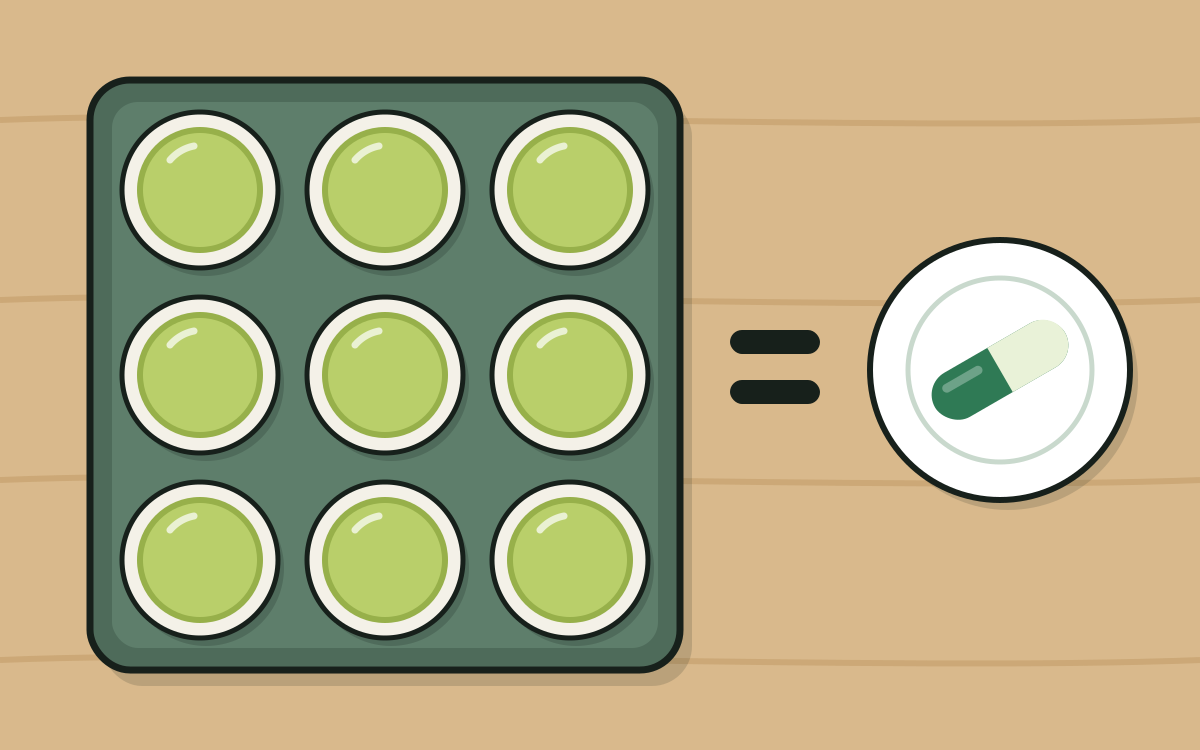
Tea doesn’t contain much of it. Health Canada estimates about 23 mg in a cup of green tea (2.5 g of leaves in 250 ml of water). Trials used 200 mg or more, which is nearly 9 cups.
As a supplement, L-theanine comes in three main forms:
- capsules and tablets of 100–200 mg, the most common option;
- chewables and powder, if you find capsules hard to swallow;
- blends sold “for sleep” or “for focus”, where L-theanine sits alongside caffeine, magnesium or herbs.
L-theanine benefits: what the evidence says
People mostly take L-theanine for stress, for sleep and alongside coffee. How strong the evidence is varies by goal.
| Goal | What trials found | How reliable |
|---|---|---|
| Stress and anxiety | 200 mg a day for 4 weeks lowered anxiety and depression questionnaire scores | Weak: 30 people in the main trial |
| Sleep | Slightly faster sleep onset and better self-rated sleep | Weak to moderate: small effect, pure L-theanine rarely tested |
| Focus with caffeine | Better alertness and attention switching for about 2 hours | Moderate, but caffeine does more of the work |
| Anxiety disorders, depression | A few small trials with mixed results | No evidence as a treatment |
How L-theanine acts in the brain isn’t fully understood. Reviews mention effects on calming brain chemicals such as GABA, but most of that comes from animal studies.
L-theanine for stress: the 2019 trial
One of the most cited trials comes from Japan. Thirty healthy adults took 200 mg of L-theanine a day for 4 weeks and a placebo for 4 weeks, in random order and blinded.
- After L-theanine, scores on depression and anxiety questionnaires (SDS and STAI) went down.
- Sleep scores on the PSQI questionnaire improved: time to fall asleep, night-time waking and use of sleep medication.
- Verbal fluency and executive function (planning and switching between tasks) improved slightly.
There are clear limits. The trial was small, results came mostly from questionnaires, and two of the authors work for Taiyo Kagaku, the company that supplied the L-theanine and placebo tablets. So treat the result as encouraging rather than proven.
L-theanine for sleep: what the reviews say
Two reviews of sleep studies were published in 2025.
- A meta-analysis of 19 papers (897 people). L-theanine slightly shortened the time to fall asleep, eased daytime tiredness and improved self-rated sleep quality. The authors point out that only a few trials used “pure” L-theanine; the rest tested blends.
- A review of 13 trials (550 people) that used L-theanine on its own. Doses ranged from 50 to 900 mg a day. The authors suggest 200–450 mg a day is safe and effective for supporting sleep in adults, and call for trials in people with clinical insomnia. The authors work in research and development at British American Tobacco, so the review isn’t fully independent.
L-theanine isn’t a sleeping pill. It may help you unwind rather than knock you out. If poor sleep has lasted 3 months or more, see your GP: cognitive behavioural therapy (CBT) for insomnia usually comes before any pill. For other options, see our guide to sleep supplements and the sleep and stress section.
L-theanine and caffeine
The caffeine pairing is better studied than L-theanine alone. In a meta-analysis of 11 trials, caffeine plus L-theanine moderately improved alertness and the accuracy of switching attention for about 2 hours after a dose. But the caffeine dose had a bigger influence on the result than the L-theanine dose.
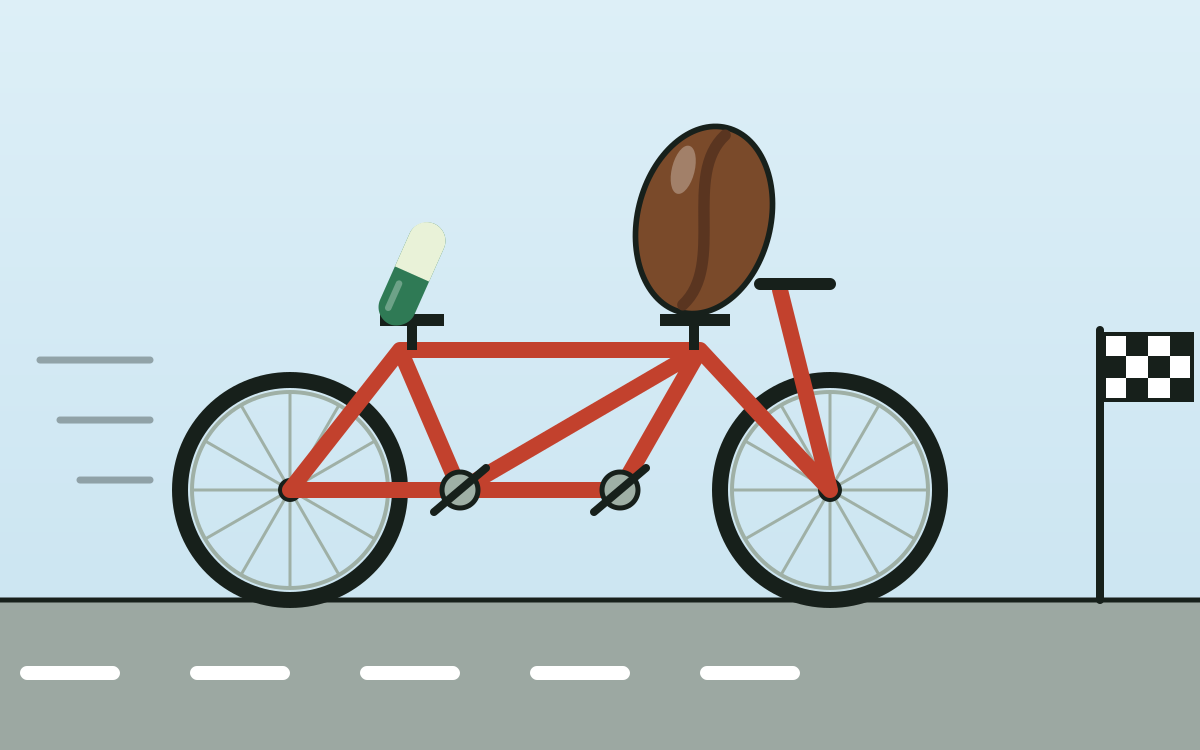
If your second office coffee leaves your hands shaky and your mind on edge, you have two options:
- cut the caffeine: EFSA considers up to 200 mg at once and up to 400 mg a day safe for healthy adults, and up to 200 mg a day in pregnancy;
- add L-theanine to your morning cup and see whether you feel steadier.
Cutting caffeine is the more reliable option. Ready-made “caffeine + L-theanine” capsules exist, but their caffeine adds to your coffee, tea and energy drinks. Check the caffeine per capsule on the label and add it to your daily cups. Avoid them in the evening: in some people, around 100 mg of caffeine close to bedtime is enough to disturb sleep.
L-theanine dosage: how to take it
- Decide what it’s for. Daytime tension, bedtime or alongside coffee: this sets the timing.
- Start with 200 mg. It’s the best-studied dose. Sleep trials went up to 400–450 mg a day.
- Pick a time. In the evening for sleep, or with your morning coffee for calm focus.
- Take it for 2–4 weeks and note your sleep, tension and mood.
- Review. If nothing has changed, there’s little point carrying on.
L-theanine is often combined with magnesium or glycine. Few trials have tested these pairings, so add one thing at a time. For magnesium and sleep, see our magnesium glycinate guide; for the 3 g bedtime dose, see glycine for sleep.
L-theanine or other supplements for sleep and calm
L-theanine isn’t the only option, and each one suits a different problem. Choose by what’s actually getting in the way:
- A busy mind in the evening: L-theanine 200 mg. It doesn’t cause drowsiness at usual doses, so some people take it in the daytime too.
- Light sleep and groggy mornings: glycine 3 g before bed, which was studied for sleep quality.
- A shifted body clock, jet lag or shift work: melatonin shifts your internal clock rather than calming you. In the UK it’s prescription-only, so speak to your GP.
- Low magnesium intake: magnesium glycinate tops up a shortfall but doesn’t work like a sleeping pill.
- You take antidepressants: don’t add any “mood” supplement without your GP, especially 5-HTP, which can be dangerous with them.
The same choice as a quick picker – tap your situation:
What's in the way: L-theanine or something else?
Pick your situation to see what was studied for it
What's keeping you up
What to try
L-theanine 200 mg
It doesn't cause drowsiness at usual doses, so some people take it in the daytime too. The effect in trials was small.
How to take: 200 mg for 2–4 weeks, then review
What to try
Cut the caffeine first
That's more reliable than any supplement. If you want to experiment, add L-theanine to your morning cup and see whether you feel steadier.
EFSA considers up to 200 mg of caffeine at once and 400 mg a day safe for healthy adults; up to 200 mg a day in pregnancy.
What to try
Glycine 3 g before bed
It was studied for sleep quality, although the trials were small.
How to take: 3 g about 30 minutes before bed
What to try
Melatonin – via your GP in the UK
Melatonin shifts your body clock rather than calming you. In the UK it's prescription-only, so speak to your GP.
What to try
Magnesium glycinate
It tops up a shortfall but doesn't work like a sleeping pill.
What to try
Talk to your GP first
Don't add any "mood" supplement on your own, especially 5-HTP, which can be dangerous with antidepressants.
Start with one product and give it 2–4 weeks. If you start three at once, you can’t tell what helped or what caused a side effect.
Side effects and who should avoid it
No serious side effects were reported in trials at 200–450 mg, but most lasted only weeks, so little is known about long-term use. If it makes you drowsy in the daytime or upsets your stomach, lower the dose or stop.
Check with your GP or pharmacist first if you:
- are pregnant or breastfeeding: there are no safety data;
- want to give it to a child: doses depend on age and weight, so ask a paediatrician;
- take sleeping tablets or sedatives such as zolpidem, diazepam or lorazepam, as drowsiness may increase;
- are having chemotherapy: discuss any supplement with your cancer team.
On stress: if anxiety stops you working or sleeping, lasts for weeks or comes with panic attacks, talk to your GP. A supplement won’t replace proper treatment. If you’re not sure which supplements you need at all, try our vitamin check. Herbs such as ashwagandha have been studied for stress too, but come with more safety caveats.
How to choose L-theanine on iHerb
- Look for L-theanine on the label, with 100–200 mg per capsule.
- Check for caffeine in the ingredients if you’re buying it for sleep.
- Compare the price per 200 mg in £ or €, not per tub.
- Skip “calm blends” with ten ingredients in small doses: you can’t tell what’s doing anything.
- If you take other supplements, check them in our vitamin compatibility chart.
Our Supplement Facts guide explains how to read a label and work out the cost per dose.
Bottom line: what to choose
Buttons lead to selections of the right form on iHerb. These are affiliate links; your price doesn't change.
FAQ
What are the benefits of L-theanine?
People take it to feel calmer under stress, to sleep better and to smooth out the edge of coffee. In small trials, 200 mg a day for 4 weeks slightly improved anxiety and sleep scores. It isn’t a medicine and doesn’t replace treatment.
How much L-theanine should I take?
Most trials used 200 mg a day. A 2025 review of sleep studies called 200–450 mg a day safe and effective for adults. Start with 200 mg, take it for 2–4 weeks and see whether anything changes.
Does L-theanine help you sleep?
Possibly, a little. A 2025 meta-analysis found people fell asleep slightly faster and rated their sleep a bit better, but few of the trials used pure L-theanine. It isn’t a sleeping pill.
Can you take L-theanine and caffeine together?
Yes, it’s the best-studied combination. In a meta-analysis of 11 trials, caffeine plus L-theanine improved alertness and switching attention for about 2 hours, and the caffeine dose mattered more. Keep total caffeine to 400 mg a day or less.
How much L-theanine is in tea?
Health Canada estimates about 23 mg in a cup of green tea. You’d need nearly 9 cups to get the 200 mg used in trials, along with a lot of caffeine.
What are the side effects of L-theanine?
No serious side effects were reported in trials at 200–450 mg, but most lasted only weeks. There are no safety data for pregnancy or breastfeeding. If you take sleeping tablets or sedatives, ask your GP or pharmacist first, as drowsiness may increase.
Sources
- Hidese S. et al. Effects of L-Theanine Administration on Stress-Related Symptoms and Cognitive Functions in Healthy Adults: A Randomized Controlled Trial. Nutrients, 2019
- Bulman A., D'Cunha N.M. et al. The effects of L-theanine consumption on sleep outcomes: A systematic review and meta-analysis. Sleep Medicine Reviews, 2025
- Cotter J. et al. Examining the effect of L-theanine on sleep: a systematic review of dietary supplementation trials. Nutritional Neuroscience, 2025
- Camfield D.A. et al. Acute effects of tea constituents L-theanine, caffeine, and epigallocatechin gallate on cognitive function and mood: a systematic review and meta-analysis. Nutrition Reviews, 2014
- EUFIC. EFSA opinion on the safety of caffeine
- Health Canada. Information on the use of L-theanine in supplemented foods
- Memorial Sloan Kettering Cancer Center. L-Theanine
L-theanine at a glance
For adults, based on published trials
- What it is
- an amino acid from tea leaves
- In a cup of green tea
- about 23 mg
- Dose in trials
- 200 mg a day; up to 400–450 mg for sleep
- Quality of evidence
- small trials, modest effects
- With caffeine
- better alertness for about 2 hours
- Ask a doctor first
- pregnancy, children, sleeping tablets, sedatives
L-theanine doesn't treat anxiety disorders or insomnia. If either is affecting your life, see your GP.
Shop L-theanine on iHerbCheck how many mg each capsule holds
Contents
- What L-theanine is
- L-theanine benefits: what the evidence says
- L-theanine for stress: the 2019 trial
- L-theanine for sleep: what the reviews say
- L-theanine and caffeine
- L-theanine dosage: how to take it
- L-theanine or other supplements for sleep and calm
- Side effects and who should avoid it
- How to choose L-theanine on iHerb