iHerb supplements in the UK and EU: which form to choose and how much to take
We sort iHerb's best-selling vitamins and supplements by goal. For each one you'll see which form is gentler, how much is really in a capsule, where the safe upper limit sits and which medicines it clashes with.
No promises of cures. Just forms, doses, limits and sources.
What you need
Goal and nutrientForms
Guides by goal
Types of magnesium: glycinate vs citrate
Types of magnesium compared: glycinate vs citrate, oxide and malate, elemental magnesium per capsule, NHS and EFSA limits, and the best supplement for you in the UK.
Sleep and stressSleep supplements and melatonin
Sleep supplements explained: why melatonin is prescription-only in the UK, how much melatonin works, and the evidence on L-theanine, glycine, magnesium, valerian.
Sleep and stressVitamin D tablets: how much D3
How much vitamin D3 to take: NHS advice of 10 mcg (400 IU) in autumn and winter, the 100 mcg limit, D3 vs D2, vitamin D3 and K2, and how to choose vitamin D tablets.
ImmunityZinc supplements: form and dose
Choosing a zinc supplement: zinc picolinate vs bisglycinate and citrate, how much zinc to take (NHS: 9.5 mg men, 7 mg women), the 25 mg limit and zinc for colds.
ImmunityBest omega-3 supplement: how to choose
How to pick the best omega-3 supplement in the UK: how much omega-3 per day, EPA and DHA per capsule, NHS fish advice, triglyceride vs ethyl ester, krill and algae.
Energy and heartVitamin B complex
Vitamin B complex: who needs one, what B-50 and B-100 mean, the NHS 10 mg limit for vitamin B6, niacin flushing, biotin and blood tests, and when to take B12 alone.
Energy and heart
Tools
Vitamin quiz: which vitamins do I need?
Which vitamins do you need? A free 9-question vitamin quiz based on NHS, NICE and NIH advice: what to take, what to test first and when to see your GP instead.
Vitamin compatibility chart
Vitamin compatibility chart: vitamins that should not be taken together, gaps for iron, calcium and levothyroxine, and can you take magnesium and zinc together?
Zinc calculator: food plus supplement
How much zinc per day do adults need, and how much zinc is too much? This calculator adds food zinc to your supplement and checks the total against UK and EU limits.
IU to mcg and mg converter
Convert IU to mcg or mg: vitamin D (1 mcg = 40 IU), vitamin A and beta-carotene (1 IU = 0.3 mcg RAE), vitamin E (1 IU = 0.67 or 0.45 mg). Reference table and FAQ.
How many fish oil capsules a day
How much omega-3 per day do you need, and how many fish oil capsules a day is that? Enter EPA and DHA from your label to get softgels for 250 mg or 500 mg.
B6 checker for your B complex
Adults need under 2 mg of B6 a day, yet B complexes often hold 50–100 mg. Check your dose in a minute and see how much B6 is too much and the signs of B6 toxicity.
How-to guides
Is iHerb legit? How to order
Is iHerb legit and safe to order from? How to place your first iHerb order from the UK or EU: country settings, restricted products, payment, VAT, duty and tracking.
9 min readHow to read a Supplement Facts label
Serving size, % Daily Value vs % NRV, "as" in brackets, proprietary blends, mcg vs IU, USP and NSF seals: how to read a supplement label and work out cost per dose.
7 min readiHerb UK: delivery, VAT and customs
Ordering from iHerb in the UK: VAT included at checkout for parcels up to £135, no customs duty below £135, delivery couriers, melatonin rules and how returns work.
8 min readiHerb in the EU: IOSS VAT and €3 duty
iHerb in Europe: IOSS VAT at checkout up to €150, the €3 customs duty per category since July 2026, orders over €150, and delivery to Germany and Ireland.
8 min read
iHerb supplements in the UK and EU: where to start
iHerb is an online shop for vitamins, supplements and natural products. It was founded in California in 1996 and ships to the UK and most EU countries from its US warehouses. The catalogue lists tens of thousands of products. One nutrient often comes in five or six forms, at very different doses and prices.
So before you compare brands, settle two things: which form suits you, and how much to take.
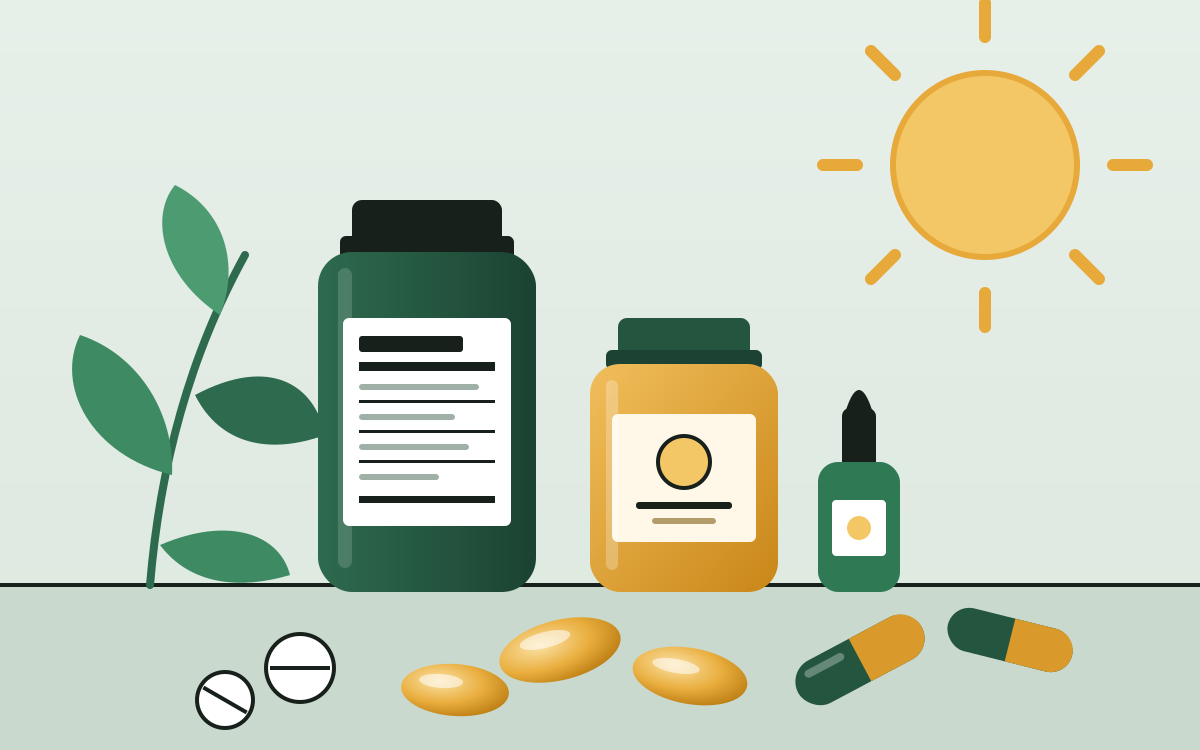
Not everyone needs supplements. In the UK and northern Europe they make the most sense in five cases:
- vitamin D, which the NHS advises everyone to consider at 10 mcg (400 IU) a day in autumn and winter, and all year if you rarely get sun on your skin;
- folic acid, 400 mcg a day before conception and until week 12 of pregnancy (NHS);
- vitamin B12 if you’re vegan, and possibly if you’re over 50 or on metformin, when levels can run low;
- omega-3 if oily fish rarely makes it onto your plate;
- magnesium if your diet is short on nuts, beans, lentils and whole grains.
The most popular supplements: what they’re for and which form to choose
The table answers the questions UK and EU shoppers ask most. Doses, interactions and who should avoid each one are in the full guides.
| Supplement | What it’s for | Best form | How much a day |
|---|---|---|---|
| Magnesium | muscles, nerves; if your diet is low in it | glycinate, citrate | 100–200 mg elemental magnesium; EFSA limit 250 mg from supplements |
| Vitamin D3 | bones, muscles, immunity; autumn and winter | D3 drops or softgels | 10 mcg (400 IU), NHS advice; no more than 100 mcg (4,000 IU) |
| Omega-3 | heart health if you eat little oily fish | triglyceride concentrate, algae oil | 250–500 mg EPA+DHA |
| Melatonin | jet lag, a shifted body clock | 0.5–1 mg tablets | prescription-only in the UK; EU rules vary by country |
| Zinc | immunity, skin, wound healing | picolinate, bisglycinate | 10–15 mg; EFSA limit 25 mg including food |
| Vitamin B12 | blood formation, nerves | cyanocobalamin or methylcobalamin | essential for vegans; a doctor sets the dose for a deficiency |
| Folic acid | planning a pregnancy | folic acid or methylfolate | 400 mcg before conception and to week 12 |
| Glycine and L-theanine | evening tension, sleep quality | glycine powder, L-theanine capsules | 3 g glycine or 200 mg L-theanine |
Magnesium glycinate vs citrate
The best type of magnesium depends on how you tolerate it. Glycinate is gentlest on the gut. Citrate is cheaper and dissolves well. Oxide is the cheapest but the most laxative. Read our full comparison of magnesium glycinate vs citrate and other types.
How much vitamin D3 to take
The NHS advises 10 mcg (400 IU) a day in autumn and winter. Many people take 25–50 mcg (1,000–2,000 IU) in winter, which stays under the limit. Take it with a meal that contains some fat.
Many vitamin D3 bottles on iHerb hold 125 mcg (5,000 IU). That is above the 100 mcg (4,000 IU) daily maximum set by EFSA and the NHS. See how much vitamin D3 to take and whether you need K2.
How to choose the best fish oil
The NHS recommends two portions of fish a week, one of them oily. If you eat less, omega-3 can fill the gap. “Fish Oil 1000 mg” is the weight of the oil: a softgel like that holds only about 300 mg of EPA and DHA. Learn how to choose the best fish oil by EPA and DHA.
Melatonin dosage and other sleep supplements
In the UK, melatonin is a prescription-only medicine, so you may not be able to order it to a UK address. In the EU the rules differ by country. Melatonin works mainly for jet lag and a shifted body clock. 0.5–1 mg is usually enough: 5–10 mg tablets don’t work better and more often leave you groggy.
Glycine for sleep and L-theanine are gentler options with smaller effects. Compare them in our sleep supplements guide.
The best form of zinc
Zinc supports immunity, skin and wound healing. EFSA’s upper limit is 25 mg a day from food and supplements combined. So the popular 50 mg bottles aren’t for long-term use. Find out which form of zinc to choose and how much to take.
B complex vs B12
B vitamins won’t give you more energy unless you’re low in them. B12 is essential for vegans and often needed over 50, and folic acid matters before pregnancy. “B-50” and “B-100” complexes contain 50–100 mg of B6. The NHS advises no more than 10 mg a day from supplements. Read about vitamin B12 and the B complex.
Daily need, upper limit and common iHerb doses
Plenty of people grab the best-selling bottle without checking the dose. The chart shows how much of each nutrient you need, where the safe upper limit is and which dose you’ll most often see on iHerb. Switch between nutrients: for some, the common dose sits past the red line.
Daily need, safe upper limit and a common iHerb dose
Pick a nutrient: green is what you need, the red line is the upper limit, amber is a common bottle dose
- Daily need: 400–800 IU (10–20 mcg; NHS: 10 mcg)
- Upper limit: 4,000 IU (100 mcg)
- Common iHerb dose: 5,000 IU per softgel
The common dose is 25% above the upper limit
Many D3 bottles on iHerb are 5,000 IU, above the 4,000 IU limit for daily use. The NHS advises 400 IU (10 mcg) in autumn and winter, and many people take 1,000–2,000 IU. Read more
- Daily need: 8–11 mg
- Upper limit: 25 mg (EFSA, food included)
- Common iHerb dose: 50 mg per capsule
The common dose is 2× the upper limit
A 50 mg capsule is twice the European limit. Long-term high doses push out copper; a sensible supplement is 10–15 mg. Read more
- Daily need: 1.3–1.7 mg
- Upper limit: 12 mg (EFSA, 2023)
- Common iHerb dose: 100 mg in a "B-100"
The common dose is 8.3× the upper limit
"B-50" and "B-100" complexes provide 50–100 mg of B6, while the NHS advises no more than 10 mg a day from supplements. Long-term, high doses risk numbness and tingling in the hands and feet. Read more
- Daily need: 100–200 mg – sensible supplement
- Upper limit: 250 mg (EFSA, supplements only)
- Common iHerb dose: 400 mg per tablet
The common dose is 60% above the upper limit
400 mg tablets are often magnesium oxide, which is more laxative. Split doses above 200 mg. Read more
- Daily need: 0.5–1 mg
- Upper limit: No official limit
- Common iHerb dose: 10 mg per tablet
The common dose is 10× the effective dose
EFSA confirmed the effect of 1 mg before bed. Doses of 5–10 mg don't work better but more often cause morning grogginess. Read more
- Daily need: 250–500 mg
- Upper limit: 5,000 mg (EFSA)
- Common iHerb dose: ≈300 mg in a "Fish Oil 1000 mg" softgel
The opposite trap: a "1000 mg" softgel holds only about 300 mg of EPA and DHA. Check EPA+DHA, not the weight of the oil. Read more
How much magnesium or zinc is really in a capsule
“Magnesium glycinate 1000 mg” doesn’t mean 1,000 mg of magnesium. A serving like that holds about 140 mg of the mineral itself. Pick a form, enter the compound weight from the product name, and the calculator shows the elemental magnesium or zinc next to the safe upper limit.
How much magnesium or zinc is in your bottle
Enter the compound weight from the product name to see the elemental mineral, which is what counts as your dose
140 mg
Elemental mineral per serving
56% of the safe upper limit (250 mg)
Sensible supplement dose: 100–200 mg
Shop this form on iHerbShares are approximate: the compound may be hydrated or not. If the Supplement Facts panel already lists the elemental mineral, there's nothing to convert.
How to choose supplements on iHerb: 6 rules
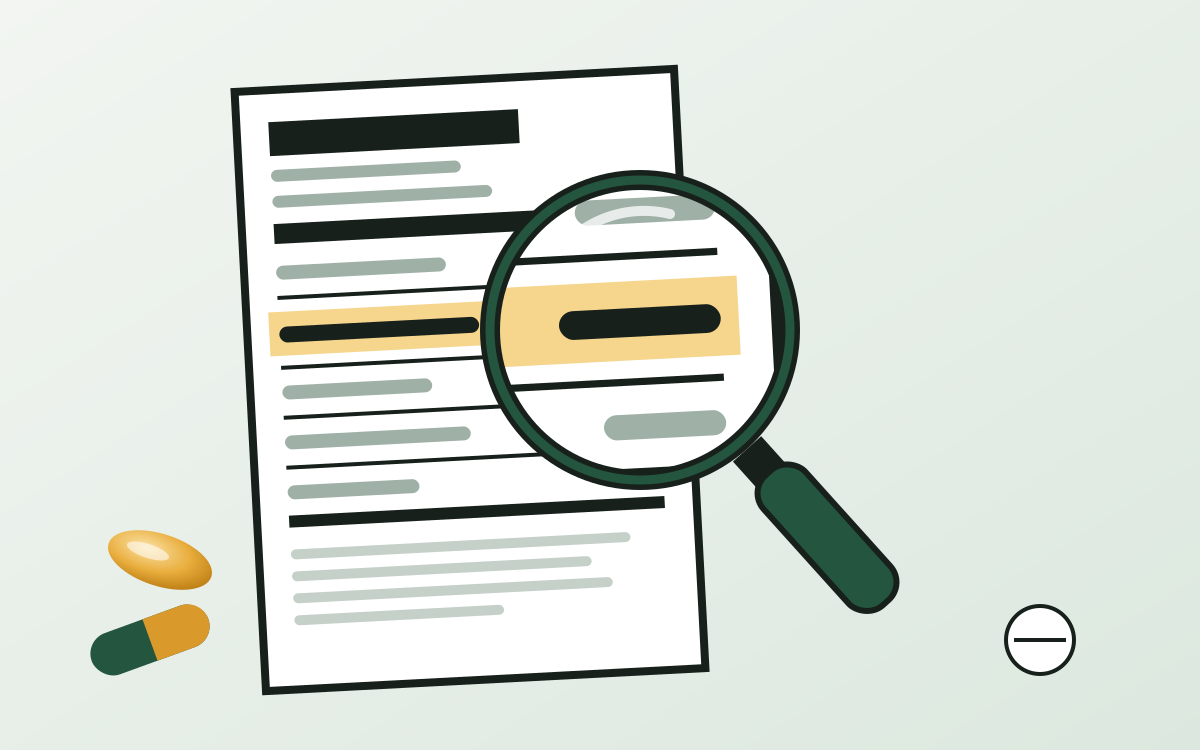
- Start with the goal, not the brand. Decide what you need and whether you have a reason to take it. Then choose the form.
- Look at the elemental amount. The Supplement Facts panel shows how much magnesium, zinc or EPA+DHA a serving contains. Our label guide explains how to read it.
- Check the serving size. “Serving Size” tells you how many capsules make a serving. It is often 2–4, not one.
- Compare with the upper limit. Use NHS and EFSA figures, especially for vitamin D, zinc, B6, vitamin A and iron. Popular iHerb doses are often above them.
- Compare cost per day, not per bottle. Divide the price by the number of days the bottle lasts, or use our supplement cost-per-day calculator.
- Look for independent testing. USP, NSF and, for omega-3, IFOS seals confirm contents and purity.
Popular supplements and what not to combine them with
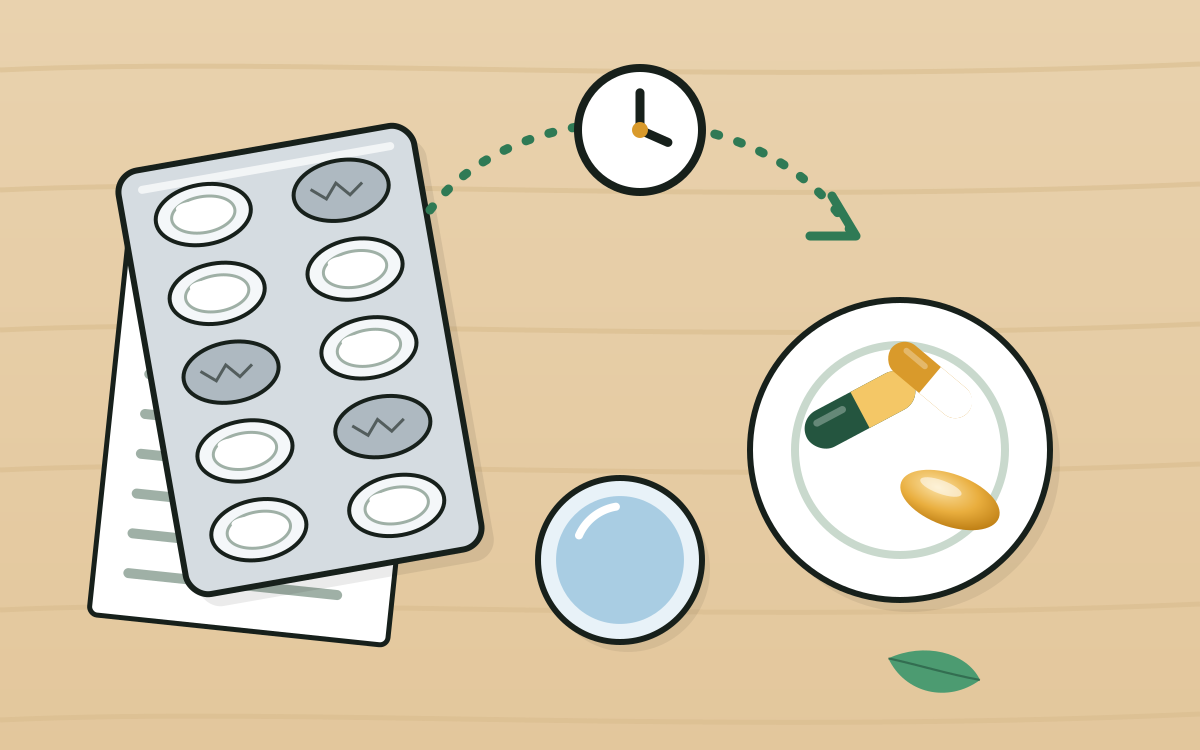
These are the interactions people ask about most. For pairs of supplements, see our vitamin compatibility chart.
| Supplement | Don’t combine with | What to do |
|---|---|---|
| Magnesium | tetracycline and fluoroquinolone antibiotics, bisphosphonates, levothyroxine | separate doses by 2–4 hours |
| Zinc | the same antibiotics, high-dose iron and calcium | take the antibiotic 2 hours before or 4–6 hours after |
| Vitamin D3 | thiazide diuretics, digoxin, high-dose calcium | only with your doctor’s agreement |
| Omega-3 | blood thinners and antiplatelet drugs (warfarin, clopidogrel) | high doses only with your doctor |
| Melatonin | sleeping pills, sedatives, blood thinners, anti-seizure drugs | talk to your doctor |
| Biotin | blood tests (troponin, thyroid hormones) | tell your doctor and ask when to stop it before a test |
If you take medication, are pregnant or have a long-term condition, speak to your GP or pharmacist before you order. A quick way is to take a photo of your bottles and show it to the pharmacist when you next collect a prescription.
Ordering from iHerb to the UK and EU
iHerb is an established retailer. It sells third-party brands, so check expiry dates, the Supplement Facts panel and testing seals. Our step-by-step answer to is iHerb legit and how to order covers the whole process.
- UK. iHerb includes VAT in its UK prices and says it aims to cover import duty, so most parcels arrive with nothing extra to pay. Couriers and limits are in our iHerb UK delivery and VAT guide.
- EU. iHerb is registered for IOSS, so VAT is collected at checkout on parcels up to €150. Since 1 July 2026 the EU also charges a €3 duty per customs category on small parcels, which iHerb offsets on orders over €10. Read iHerb shipping to Europe and VAT.
- Before you pay. Estimate the total with our iHerb VAT and duty calculator.
Find your way around DozaVita
- Supplements by goal: sleep, immunity, energy, skin, and women’s and men’s health.
- Supplements A–Z: every nutrient we cover, with its key dose.
- Supplement calculators: zinc intake, omega-3 softgels, B6 and cost per day.
- Popular iHerb brands: what the best-known brands sell and what to check on their labels.
How we write
Sources, not reviews
Intakes and limits come from EFSA opinions, NHS guidance and NIH ODS fact sheets. Effectiveness comes from systematic reviews. Every article ends with its reference list.
We count the active ingredient
"Magnesium glycinate 1000 mg" on the front is not 1,000 mg of magnesium. We show how much elemental nutrient you get per serving and how to check the label.
We write about the limits
When the benefit is small or the data is thin, we say so. We flag drug interactions and the cases where you need a test or a GP first.
Affiliate links, openly
We earn a commission from iHerb. Our links go to a selection of the right form, not to a single brand, and they don't change our conclusions.