Turmeric supplements and curcumin: what the evidence shows, why black pepper is added and the liver risks
This article contains affiliate links to iHerb. If you buy through them, we earn a commission at no extra cost to you. It doesn't affect which forms we recommend. Learn more
Curcumin is sold as an "anti-inflammatory", but the evidence is thin: it eases knee osteoarthritis pain a little, and high-absorption forms have been linked to liver injury. Below: what the trials found, why black pepper matters and who shouldn't take it.
Turmeric vs curcumin: what’s the difference?
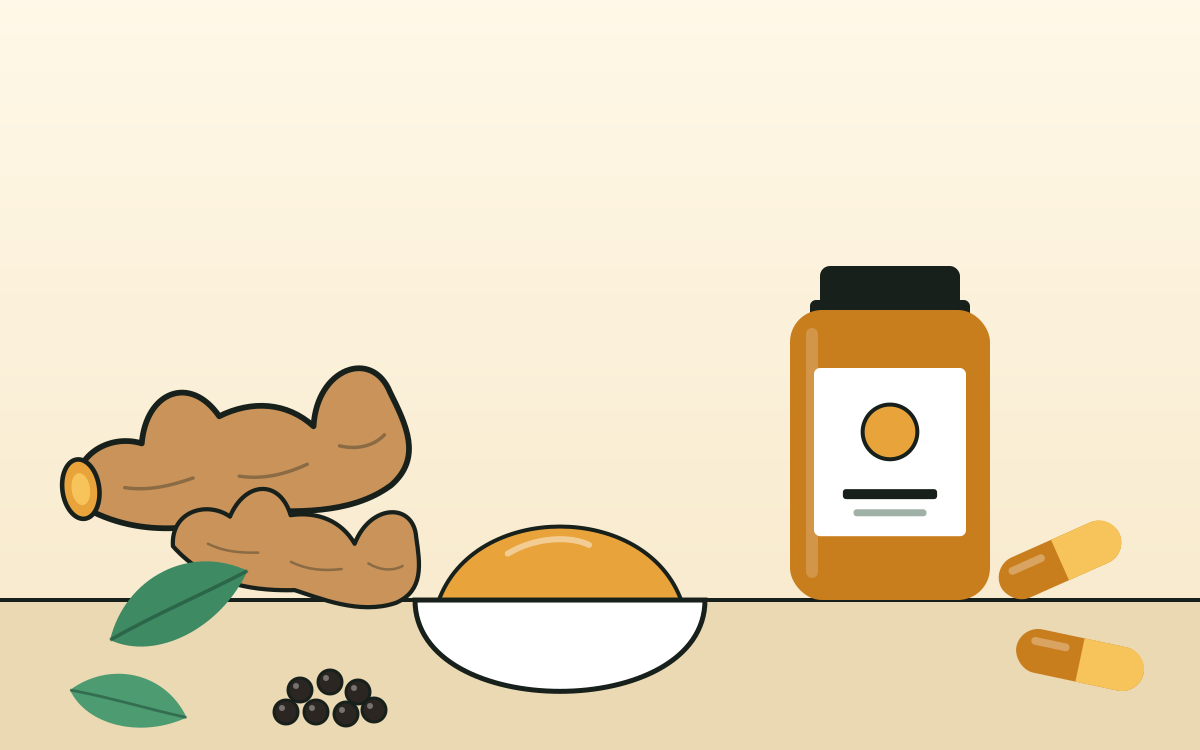
Turmeric is a plant in the ginger family. Its rhizome (underground stem) is dried and ground into the yellow spice. Curcumin is turmeric’s main active compound and gives it its colour. Together with related compounds, it’s known as a curcuminoid.
A tub labelled “turmeric supplement” or “turmeric tablets” can contain:
- ground root – the same spice, just in a capsule;
- turmeric extract – a concentrate with far more curcuminoids than the spice;
- extract with piperine – a black pepper compound added to improve absorption;
- “enhanced” forms – curcumin in liposomes, micelles, oils or other carriers.
NCCIH points out that products are hard to compare: their real curcumin content varies, and they often contain other plant ingredients. So check the label for curcuminoids in milligrams rather than the weight of the powder.
Curcumin benefits: what the research shows
Turmeric has traditionally been used for indigestion, colds, arthritis and liver problems. Today it’s sold for inflammation, joints, skin, cholesterol and mood. The evidence so far:
| Use | What was found | How reliable |
|---|---|---|
| Knee osteoarthritis pain | Less pain and stiffness than placebo | Positive early evidence, but better trials are needed (NCCIH) |
| Cartilage and joint swelling | No change in an MRI trial | One trial in 70 people |
| Fatty liver disease | Some measures improved | Unclear which ones |
| Mouth soreness after cancer treatment | Possible relief | Preliminary |
| Cholesterol, skin, mood | No firm conclusions | Too little data |
NCCIH’s summary: there isn’t enough evidence to conclude that turmeric or curcumin helps with any health condition. Knee osteoarthritis is the best-studied use, and the effect there is small.
Curcumin for joint pain
Several meta-analyses found less knee pain and stiffness with curcumin. Memorial Sloan Kettering’s review notes trials where turmeric extract worked as well as paracetamol or an anti-inflammatory painkiller. But in a randomised trial with MRI scans, it didn’t change joint swelling or cartilage.
If you want to try it, treat curcumin as an add-on. Exercise and weight management are the core of osteoarthritis care, as our guide to glucosamine and other joint supplements explains.
Is curcumin a good fit for you?
Pick what applies to you to see what trials and the EMA monograph say
Your situation
What's known
A trial of 8–12 weeks is reasonable
In knee osteoarthritis, curcuminoids eased pain a little, but the reviews are of low quality. Curcumin didn't change cartilage or joint swelling.
Doses: across 11 trials, doses below and above 1,000 mg a day worked about the same
A hot, red or suddenly swollen joint needs a GP appointment straight away
What's known
Turmeric in food is enough
NCCIH says there isn't enough evidence to call turmeric or curcumin beneficial for any health purpose. As a spice, turmeric is safe.
What's known
Talk to your GP first
Turmeric may raise the risk of bleeding with warfarin and other blood thinners. The evidence is limited to lab studies and one reported rise in INR.
Don't start curcumin yourself if you take warfarin, apixaban, clopidogrel or aspirin
What's known
Best avoided
The EMA advises against turmeric with gallstones, blocked bile ducts, cholangitis or liver disease, because it stimulates bile flow.
What's known
Only as a spice
NCCIH says turmeric supplements may be unsafe in pregnancy. The EMA doesn't recommend them in pregnancy or while breastfeeding.
What's known
Stop and get a blood test
Tiredness, nausea, poor appetite, dark urine and yellowing skin can be signs of liver injury. Stop curcumin and see your GP.
Especially if you take curcumin with piperine or an 'enhanced absorption' form
Turmeric and black pepper: why piperine is added
Curcumin is poorly absorbed because the liver and gut wall break it down quickly. Piperine from black pepper slows this down, so more curcumin reaches the blood. Manufacturers do the same with liposomes, micelles and other carriers.
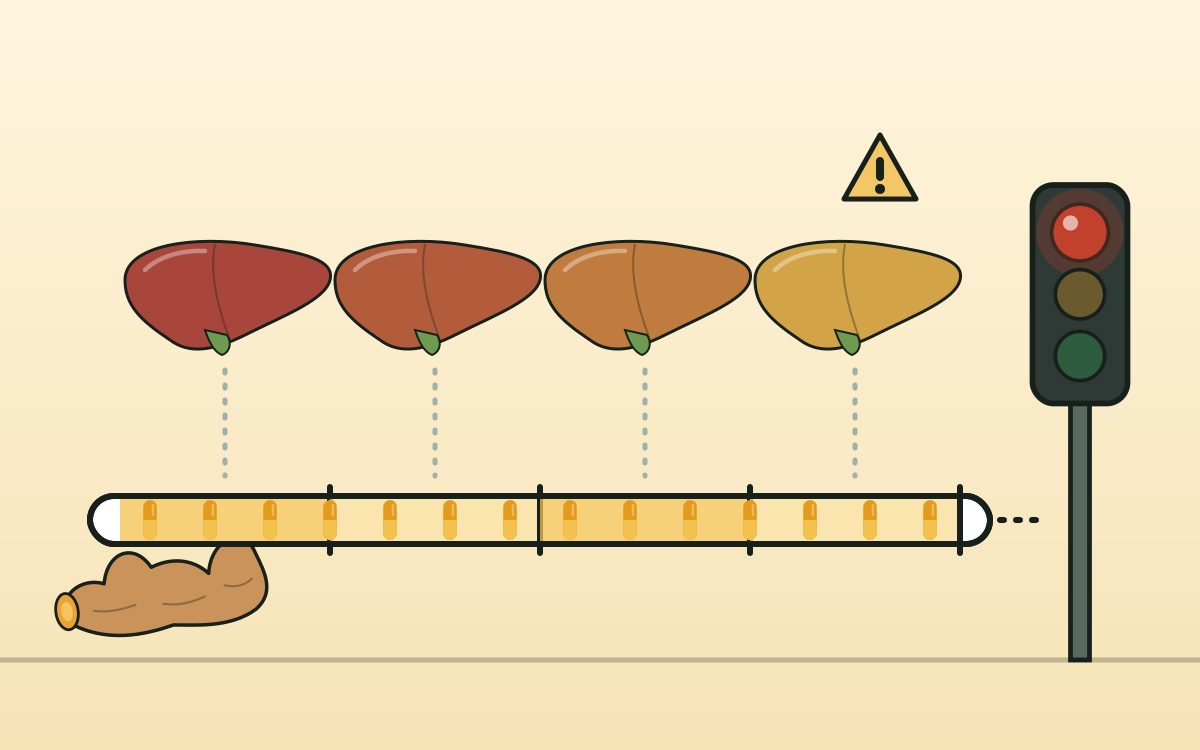
The catch is that better absorption cuts both ways. NCCIH states plainly that highly bioavailable curcumin may harm the liver, and many of the reported liver injury cases involved these products.
- Standard extract: NCCIH considers it likely safe in recommended amounts for up to 2–3 months.
- Piperine or “enhanced” forms: higher blood levels and more reports of hepatitis.
- Turmeric with pepper in food is ordinary cooking, not a therapeutic dose.
Turmeric and liver injury: Italy, the US and LiverTox
Turmeric has been a spice for centuries and is considered safe in food. Supplements are a different matter.
- Italy, 2019. In the first six months, the national herbal safety system received 28 reports of acute hepatitis, mostly with bile flow problems, after turmeric supplements. In all but one case, the link was rated at least possible, and the authorities took regulatory action.
- US DILIN network. 10 cases of turmeric-related liver injury, all since 2011. Five people were admitted to hospital and one died of acute liver failure. Injury appeared after 1–4 months, and 3 of the 7 products tested contained piperine.
- Genes. 7 of the 10 DILIN patients carried the HLA-B*35:01 gene variant. Risk may depend on inheritance, which you can’t check before buying.
- LiverTox, the US NIH reference on drug-induced liver injury, links turmeric products to several dozen cases of acute liver injury. It calls the injury well documented but probably very rare: roughly 1 in 10,000 to 1 in 100,000 people who take it.
Stop curcumin and see your GP straight away if you notice tiredness, nausea, poor appetite, dark urine, or yellowing of the skin or eyes.
Turmeric tablets: how to take them
There’s no single “right” dose of curcumin, because trials used different extracts and forms. So take the dose from the label of a standard extract that states curcuminoids in milligrams. The length of the course and how you feel matter more than the exact dose. And watch for turmeric in golden milk powders and joint blends: it adds up with your capsules.
A curcumin course: what to check, and when
From deciding to start to deciding to stop. Tap a step
Make sure it's safe for you
Don't take curcumin with gallstones or liver disease, in pregnancy or breastfeeding, or if you're under 18.
- Blood thinners, tacrolimus or chemotherapy – talk to your doctor first
A standard extract with curcuminoids in mg
Piperine and "enhanced" forms are better absorbed, but more hepatitis reports involve them.
- One turmeric product, not capsules plus golden milk powder plus a joint blend
Watch your liver
In the US DILIN cases, liver injury appeared after 1–4 months.
- Tiredness, nausea, poor appetite
- Dark urine, yellowing skin or eyes
- Any of these – stop and see your GP straight away
Judge the effect
For knee osteoarthritis, that's long enough. If the pain hasn't eased, stop.
Where the safety data ends
NCCIH considers standard forms likely safe for up to 2–3 months. Go beyond that only after talking to your GP.
For comparison, here’s an EFSA figure. For curcumin as the food colour E100, EFSA set an acceptable daily intake (ADI) of 3 mg per kg of body weight in 2010. For a 70 kg adult, that’s 210 mg a day. It’s a limit for a food colour, not a supplement dose, but many capsules contain more than that in a single serving.
Who should avoid curcumin: side effects and interactions
- Gallstones, blocked bile ducts, cholangitis or liver disease. The EMA advises against turmeric because it stimulates bile flow.
- Pregnancy and breastfeeding. NCCIH says turmeric supplements may be unsafe in pregnancy, and the EMA doesn’t recommend them.
- Under-18s – the EMA says safety hasn’t been established.
- Blood thinners such as warfarin, and antiplatelet medicines. Memorial Sloan Kettering says turmeric may raise the risk of bleeding, based on lab studies and one case report. The EMA monograph lists no known interactions, so the risk is uncertain, but ask first.
- Tacrolimus after an organ transplant: curcumin may increase its side effects.
- Chemotherapy. In lab studies turmeric interfered with some cancer drugs, so check with your oncology team.
- A family history of kidney stones. Memorial Sloan Kettering warns of a possible higher risk.
Common side effects are nausea, acid reflux, an upset stomach, diarrhoea or constipation. If you take several supplements or medicines, check our vitamin compatibility chart. For another herb sold “for the liver”, read our guide to milk thistle and silymarin.
How to choose a turmeric supplement on iHerb
- Decide what it’s for. With no clear goal, turmeric in food is enough; not sure what you need at all? Try our vitamin check.
- Check the warnings: gallbladder, liver, pregnancy, blood thinners.
- Find the curcuminoids in mg on the label, rather than the weight of “turmeric root”.
- Decide whether you want piperine: it’s better absorbed, but more hepatitis reports involve such forms.
- Note an end date 8–12 weeks ahead, then judge whether it’s working.
Our supplement label guide shows how to work out the dose per serving and spot unnecessary extras. For more in this section, see skin, hair and joints.
Bottom line: what to choose
Knee osteoarthritis and you'd like to try it
Turmeric extract without absorption enhancers
Try it for 8–12 weeks, then judge the effect
Curcumin on iHerbYou've chosen a black pepper formula
Curcumin with black pepper extract
Better absorbed, but the liver risk is higher too
Turmeric and black pepper on iHerbYou just want the spice
Ground turmeric for cooking
Safe in normal amounts in food
Ground turmeric on iHerbButtons lead to selections of the right form on iHerb. These are affiliate links; your price doesn't change.
FAQ
What are the benefits of curcumin?
The best-studied use is knee osteoarthritis, where reviews show a small drop in pain from low-quality studies. NCCIH says there isn’t enough evidence that turmeric or curcumin helps with any other health purpose.
Why is turmeric combined with black pepper?
Piperine from black pepper slows the breakdown of curcumin, so more of it reaches the blood. But high-absorption forms have been linked to liver injury, so keep any course short.
Are turmeric tablets better than the spice?
They’re different. Tablets usually contain a concentrated extract with far more curcuminoids than you’d eat in food. That’s why supplements carry risks, such as liver injury, that the spice in cooking doesn’t.
Can I take turmeric with warfarin?
Only if your GP or anticoagulation clinic agrees. Lab studies suggest turmeric could add to the effect of blood thinners, and in one reported case a patient’s INR rose after taking it with an anticoagulant. The evidence is thin, but bleeding is too serious a risk to test on yourself.
Can turmeric supplements damage your liver?
Rarely, yes. Italy had 28 reports of acute hepatitis linked to turmeric supplements in the first half of 2019, and the US DILIN network has described 10 cases, including one death. LiverTox estimates the risk at roughly 1 in 10,000 to 1 in 100,000 users. Stop and see a GP if you notice dark urine or yellowing skin.
Who should not take turmeric supplements?
People with gallstones, blocked bile ducts or liver disease, pregnant or breastfeeding women and under-18s. Anyone on blood thinners, tacrolimus or chemotherapy should only take it if their doctor agrees.
Sources
- NCCIH. Turmeric
- EMA/HMPC. European Union herbal monograph on Curcuma longa L., rhizoma (Rev. 1), 2018
- EFSA. Refined exposure assessment for curcumin (E 100). EFSA Journal, 2014
- LiverTox (NIDDK). Turmeric, 2025
- Menniti-Ippolito F et al. Turmeric food supplements and hepatotoxicity: an integrated evaluation approach. Ann Ist Super Sanita, 2020
- Halegoua-DeMarzio D et al. Liver injury associated with turmeric: ten cases from DILIN. Am J Med, 2023
- Memorial Sloan Kettering. About Herbs: Turmeric
Curcumin at a glance
For adults, based on NCCIH, the EMA, EFSA and LiverTox
- What it is
- the main active compound in turmeric
- Joints
- small drop in knee osteoarthritis pain; low-quality evidence
- Safe duration
- standard forms – up to 2–3 months (NCCIH)
- As food colour E100
- EFSA ADI – 3 mg per kg body weight a day
- Liver
- rare hepatitis cases, several dozen described, many with enhanced forms
- Avoid with
- gallstones, liver disease, pregnancy
Curcumin doesn't replace osteoarthritis treatment. If you take blood thinners, only start it after talking to your GP or pharmacist.
View curcumin on iHerbNCCIH considers standard forms likely safe for up to 2–3 months
Contents
- Turmeric vs curcumin: what’s the difference?
- Curcumin benefits: what the research shows
- Turmeric and black pepper: why piperine is added
- Turmeric and liver injury: Italy, the US and LiverTox
- Turmeric tablets: how to take them
- Who should avoid curcumin: side effects and interactions
- How to choose a turmeric supplement on iHerb