Pregnancy vitamins in the UK: folic acid before pregnancy, vitamin D, iodine and what to avoid
This article contains affiliate links to iHerb. If you buy through them, we earn a commission at no extra cost to you. It doesn't affect which forms we recommend. Learn more
Only two supplements are recommended for everyone in pregnancy: folic acid and vitamin D. Everything else, including iron and iodine, depends on your blood tests and situation. Here are the doses, the timings and what to avoid. Your midwife or GP has the final say on your plan.
Vitamins when trying to conceive
The NHS and NICE recommend two supplements for everyone planning a pregnancy – folic acid 400 mcg and vitamin D 10 mcg a day. Your GP or midwife decides on anything else, based on your blood tests and medical history.
Before you conceive:
- start folic acid 400 mcg a day – NICE suggests ideally 3 months before you start trying;
- take vitamin D 10 mcg (400 IU) a day in autumn and winter;
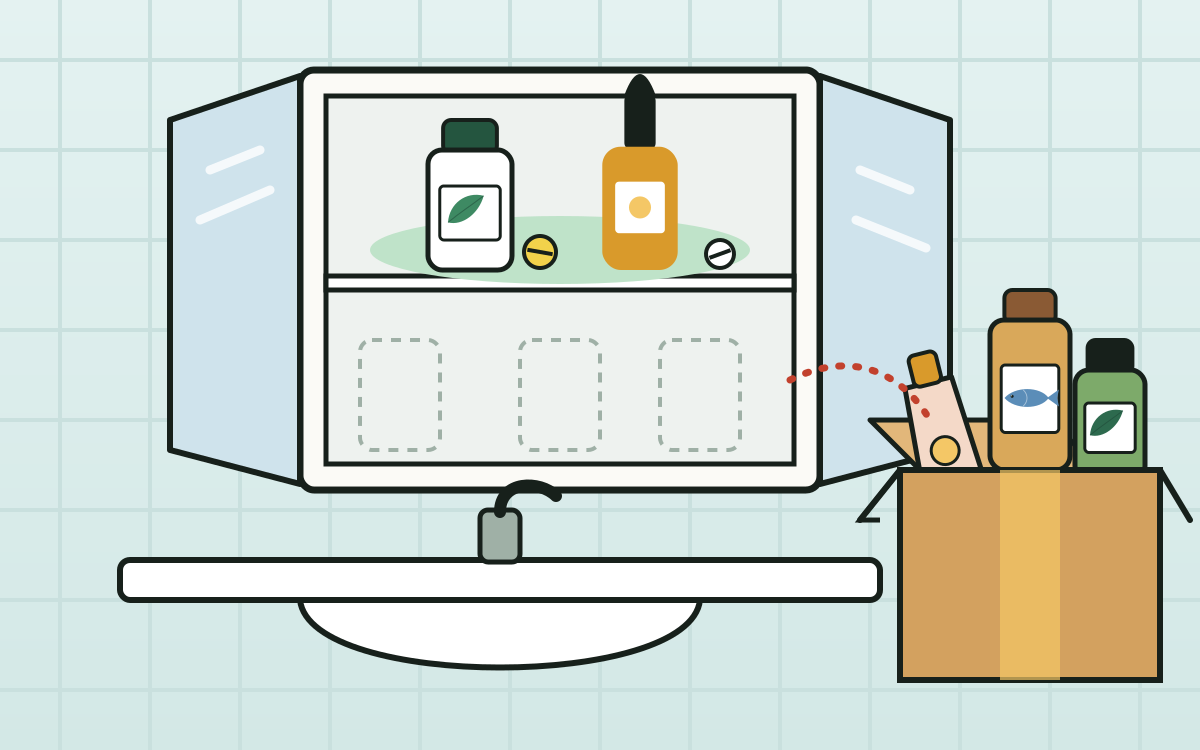
- check your cupboard: stop supplements with retinol (vitamin A), cod liver oil and herbal remedies;
- tell your GP about any regular medicines – some change the folic acid dose you need.
Folic acid before pregnancy: dose and timing
Folic acid lowers the risk of neural tube defects – serious conditions affecting the baby’s brain and spine, such as spina bifida. The neural tube forms in the first weeks of pregnancy, which is why you start before conception.
- Dose for everyone: 400 mcg a day, from before conception to the end of week 12 (NHS, NICE).
- If your pregnancy wasn’t planned: start as soon as you find out.
- 5 mg a day only on prescription. The NHS and NICE list these situations between them: a neural tube defect in you, the baby’s biological father, your family or a previous pregnancy; type 1 or type 2 diabetes; anti-epilepsy, HIV or other medicines that affect folate; sickle cell disease or thalassaemia.
- A higher BMI alone doesn’t need a higher dose. NICE’s 2025 guidance says 400 mcg is enough if your BMI is 25 or more.
Add up the folic acid from all your supplements. NIH ODS sets the adult upper limit at 1,000 mcg a day from supplements and fortified foods. This matters if you take a pregnancy multivitamin plus separate folic acid, or inositol with added folic acid.
Methylfolate (5-MTHF) is absorbed at least as well as folic acid, but NHS and NICE advice is specifically about folic acid. If someone suggests methylfolate, check the dose with your GP.
Pregnancy vitamins: what and how much
| Nutrient | How much a day | When | Worth knowing |
|---|---|---|---|
| Folic acid | 400 mcg | before conception to week 12 | 5 mg only on prescription |
| Vitamin D | 10 mcg (400 IU) | autumn and winter; all year if at risk | no more than 100 mcg a day |
| Iodine | 220 mcg (US), 250 mcg (WHO) | throughout pregnancy | ask your midwife about a supplement |
| Iron | per blood test | when a test shows it | US value: 27 mg |
| DHA | +100–200 mg on top of 250 mg EPA+DHA (EFSA) | if you eat little fish | never cod liver oil |
| Vitamin B12 | 2.6 mcg (US) | discuss if vegan | also matters when breastfeeding |
| Vitamin A (retinol) | none from supplements | all pregnancy | beta-carotene is fine |
Supplements by stage: from planning to breastfeeding
Tap a stage. Agree your own plan with your midwife or GP
Start folic acid
Folic acid is needed before conception because the neural tube forms in the first weeks. It's also a good moment to check what you already take.
- Folic acid 400 mcg a day, ideally from 3 months before conception (NICE)
- Vitamin D 10 mcg in autumn and winter
- Stop retinol supplements, cod liver oil and herbal remedies
- Diabetes, anti-epilepsy or HIV medicines, sickle cell disease, thalassaemia or a family history of neural tube defects – ask your GP about 5 mg
Folic acid every day
The key period for folic acid. If you didn't start before conception, start as soon as you know you're pregnant.
- Folic acid 400 mcg to the end of week 12
- Vitamin D 10 mcg a day
- Ask your midwife about iodine and blood tests
- No more than 1,000 mcg folic acid from all supplements unless prescribed
Vitamin D and decisions based on tests
After week 12, vitamin D is the one supplement for everyone. Everything else depends on blood tests and diet.
- Vitamin D 10 mcg; all year if you have dark skin or little sun
- Iron only if a blood test shows you're low
- No more than 2 portions of oily fish a week
- If you eat little fish, ask about DHA from fish body oil or algae
Vitamin D, plus B12 if you're vegan
NICE advises the same vitamin D when breastfeeding as in pregnancy. High-dose retinol is still not needed.
- Vitamin D 10 mcg a day
- Vegan? Ask about B12: breastfed babies of vegan mothers can become deficient
- Preformed vitamin A (retinol) no more than 3,000 mcg a day (NIH ODS)
What shouldn't be in your cupboard
These aren't needed in pregnancy or can cause harm, even when sold as "natural".
- Retinol supplements and cod liver oil
- Liver and liver pâté
- Herbal remedies your midwife hasn't agreed
- Kelp and seaweed supplements: their iodine is unpredictable
Vitamin D in pregnancy
The NHS advises 10 mcg (400 IU) of vitamin D a day in pregnancy and while breastfeeding, between September and March. NICE advises taking it all year if you have darker skin, and the NHS adds people who cover their skin outdoors or spend a lot of time indoors. Don’t take more than 100 mcg (4,000 IU) a day, as it could be harmful. Our vitamin D3 guide explains the forms.
Healthy Start vitamins
If you’re eligible for Healthy Start (England, Wales and Northern Ireland), you can get free vitamins during pregnancy and until your baby’s first birthday. According to NICE, the tablets contain 400 mcg of folic acid plus vitamins C and D, and you take one a day. If you don’t qualify, some NHS services still offer or sell them.
Iodine: where advice differs
Iodine is needed for the mother’s thyroid hormones and the baby’s brain development. Needs rise in pregnancy: the US figure is 220 mcg a day and WHO suggests 250 mcg, from food and supplements combined. The American Thyroid Association recommends a 150 mcg potassium iodide supplement if you’re planning a pregnancy, pregnant or breastfeeding.
NHS pregnancy advice doesn’t list iodine among routine supplements. Good food sources include sea fish, dairy and eggs. So it’s worth asking your midwife, especially if you eat little dairy or fish.
What to avoid:
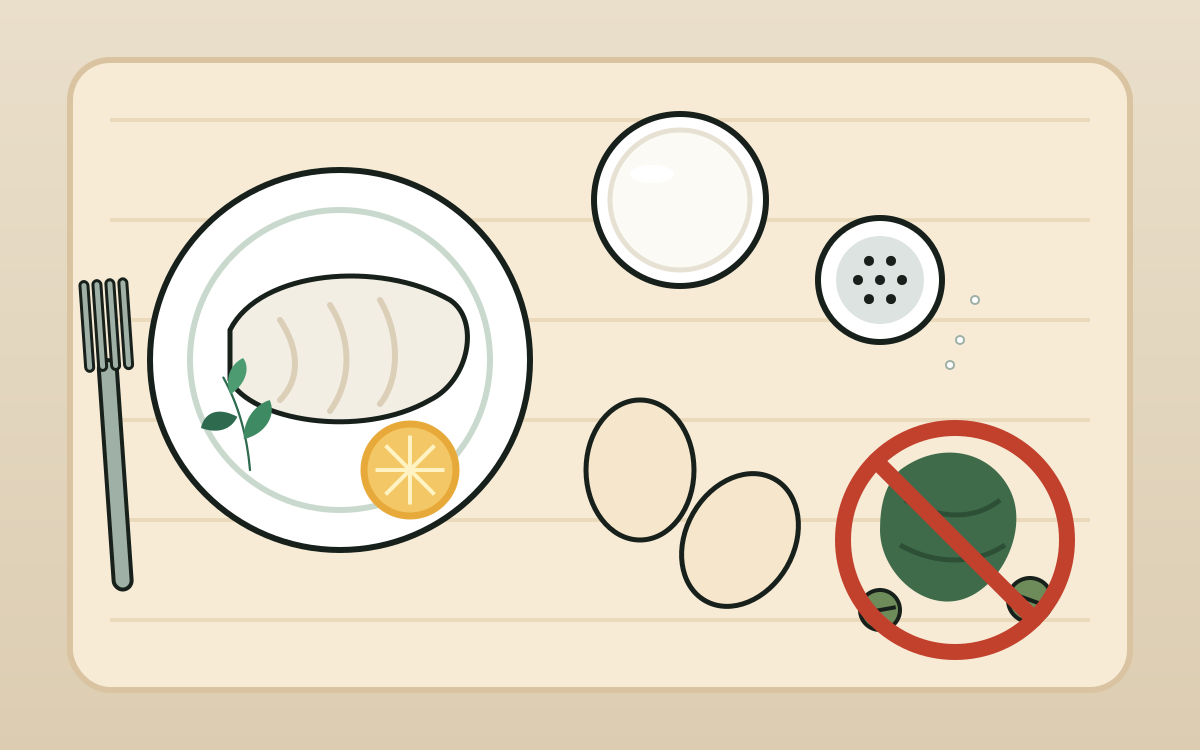
- iodine supplements without advice if you have a thyroid condition or take antithyroid medicines;
- kelp and seaweed supplements: NIH ODS reports 16–2,984 mcg of iodine per gram of seaweed, so the dose is unpredictable;
- going over the upper limit: 1,100 mcg a day in the US.
Iodine outside pregnancy is covered in our guide to selenium and iodine supplements.
Iron in pregnancy: only after a blood test
Your iron needs rise in pregnancy (the US value is 27 mg a day). But the NHS doesn’t list iron as a routine supplement: if a blood test shows your levels are low, your GP or midwife will advise iron.
Iron supplements often cause constipation and nausea. NIH ODS links doses of 45 mg a day or more with stomach side effects, and taking iron with food can help. Calcium may reduce iron absorption, so take them at different times. Our guide to iron tablets compares the forms.
Vitamin A and retinol: what to avoid
Too much preformed vitamin A (retinol) can cause birth defects. NIH ODS sets the upper limit at 3,000 mcg a day, including in pregnancy and breastfeeding. The NHS and NICE go further:
- don’t take supplements containing vitamin A (retinol) or cod liver oil;
- avoid liver and liver products such as pâté;
- check standard multivitamins: NICE warns they may contain retinol (look for retinyl palmitate or retinyl acetate on the label).
Beta-carotene, which your body converts to vitamin A as needed, isn’t known to cause birth defects. More in our guide to vitamins A and E.
Omega-3 and fish oil in pregnancy
A 2018 Cochrane review (70 trials, nearly 20,000 women) found that long-chain omega-3s lowered the risk of premature birth. Births before 37 weeks fell by 11%, and before 34 weeks by 42%. EFSA suggests an extra 100–200 mg of DHA a day in pregnancy, on top of the usual 250 mg of EPA+DHA.
In pregnancy, the NHS advises no more than 2 portions of oily fish a week. If you eat little fish, ask your midwife about a DHA supplement. Fish body oil or algae oil are the options; cod liver oil is not. See how to choose fish oil to read the label.
Herbal remedies and “natural” products
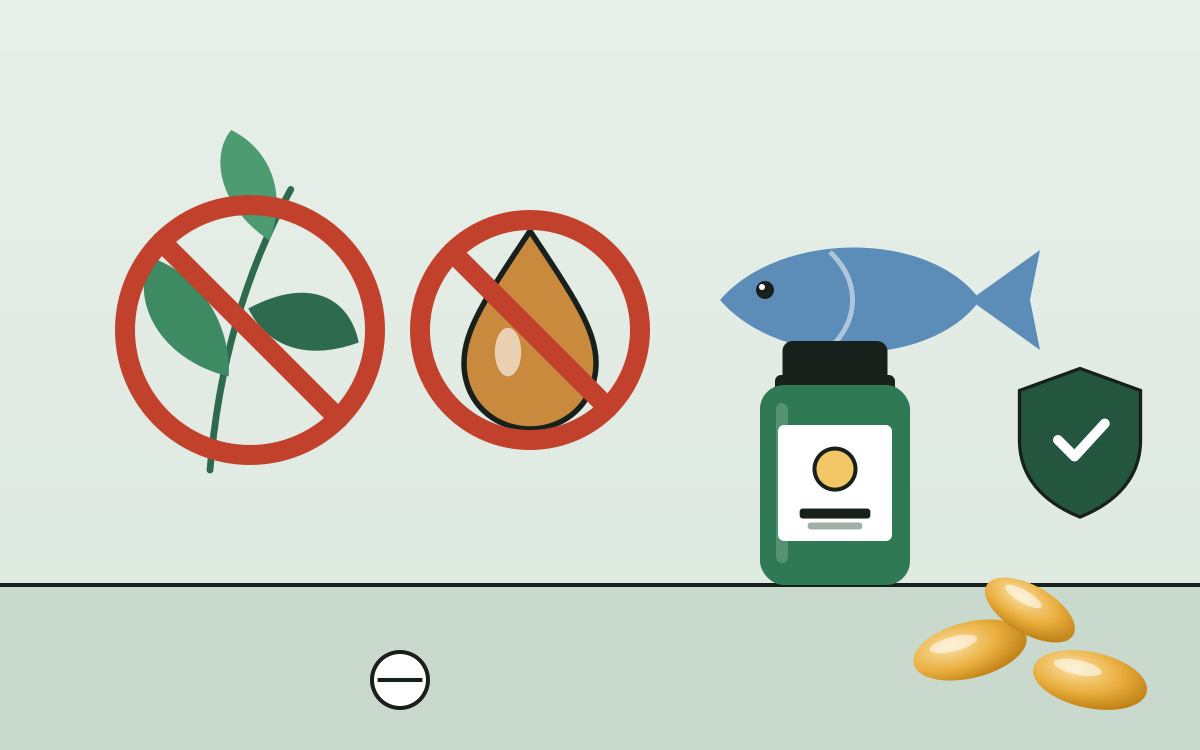
According to the NHS, not all “natural” remedies are safe in pregnancy. Some herbal products are of poor quality and may contain other substances, such as lead. The NHS also advises against herbal remedies if you’re trying to get pregnant.
In practice:
- herbal teas, blends and extracts only after talking to your midwife or GP;
- tell your midwife about every supplement, including homeopathic and aromatherapy products;
- supplements don’t replace antenatal care.
Who needs a different plan
- With diabetes, epilepsy, HIV treatment, sickle cell disease or thalassaemia, you need a different folic acid dose, prescribed by your GP.
- Methotrexate and anti-epilepsy medicines affect folate, so get medical advice.
- With a thyroid condition, take iodine and iron only on medical advice.
- If you’re vegan, talk to your midwife about B12: breastfed babies of vegan mothers can become deficient too.
- If you have PCOS and take inositol, tell your GP; our inositol guide explains the evidence.
How to choose on iHerb
Before a pregnancy multivitamin goes in your basket, go through its label line by line:
Check a pregnancy multivitamin: tap a line
A sample label. Each line explains what's fine and what's a reason to put the bottle back
Supplement Facts
What it means
Serving size
Every number below is per tablet. If a serving is 2 tablets, double the doses.
What it means
Folic acid: exactly right
The NHS and NICE advise 400 mcg a day from before conception to the end of week 12. If you also take separate folic acid or inositol with folic acid, add them up: no more than 1,000 mcg a day unless prescribed.
What it means
Vitamin D: fine
This is the NHS dose in pregnancy and while breastfeeding. Don't take more than 100 mcg (4,000 IU) a day.
What it means
Retinol: put it back
Too much preformed vitamin A can cause birth defects. The NHS and NICE advise no retinol supplements at all in pregnancy. Retinyl acetate on a label means the same thing.
What it means
Beta-carotene: fine
Your body converts beta-carotene to vitamin A as needed, and it isn't known to cause birth defects.
What it means
Iodine: ask your midwife
The American Thyroid Association recommends 150 mcg, but NHS advice doesn't list iodine among routine supplements. With a thyroid condition, never take iodine without advice.
What it means
Iron: only if a blood test shows you need it
27 mg is the US value in pregnancy. In the UK, iron is advised when a blood test shows your levels are low, and your GP or midwife sets the dose.
What it means
DHA: useful if you eat little fish
EFSA suggests an extra 100–200 mg of DHA a day in pregnancy. Fish body oil or algae oil are the options.
What it means
Cod liver oil: no
It's high in vitamin A, so it's off the list in pregnancy.
What it means
Herbal blend: only if your midwife agrees
The NHS warns that not all natural remedies are safe in pregnancy, and some herbal products are of poor quality and may contain substances such as lead.
- Start with folic acid 400 mcg and vitamin D 10 mcg, separately or in one pregnancy multivitamin.
- Check there’s no retinol in the formula (retinyl palmitate, retinyl acetate, vitamin A as retinol).
- Add up folic acid across all bottles: no more than 1,000 mcg in total unless prescribed.
- Add iron or iodine only after talking to your midwife or GP.
- For DHA, choose fish body oil or algae oil, never cod liver oil.
- Take a photo of the labels and show your midwife at your next appointment.
For general advice outside pregnancy, see supplements for women; for reading the label, our Supplement Facts guide.
Bottom line: what to choose
Trying to conceive
Folic acid 400 mcg
Ideally 3 months before conception, then to week 12
Folic acid on iHerbPregnant or breastfeeding
Vitamin D3 400 IU (10 mcg)
Higher doses only on medical advice
Vitamin D3 on iHerbLittle fish in your diet
DHA from fish oil or algae
Not cod liver oil; agree the dose with your midwife
DHA on iHerbButtons lead to selections of the right form on iHerb. These are affiliate links; your price doesn't change.
FAQ
How much folic acid should I take before pregnancy?
400 mcg a day, from before you conceive until the end of week 12. That’s the NHS and NICE advice for everyone. Your GP may prescribe 5 mg if your risk is higher, for example with diabetes, anti-epilepsy medicine, sickle cell disease or thalassaemia, or a neural tube defect in either parent, the family or a previous pregnancy.
When should I start taking folic acid?
Before you conceive: NICE suggests ideally 3 months before you start trying, and US guidance says at least a month. If your pregnancy wasn’t planned, start as soon as you find out and continue to week 12.
Do I need prenatal vitamins in the UK?
Not necessarily. Only folic acid and vitamin D are recommended for everyone. A pregnancy multivitamin is handy if it has 400 mcg folic acid and 10 mcg vitamin D and no retinol. If you’re eligible, Healthy Start vitamins are free.
Can I take fish oil while pregnant?
Not cod liver oil, which is high in vitamin A. Talk to your midwife about fish body oil or algae oil with DHA. A 2018 Cochrane review found omega-3s in pregnancy lowered the risk of premature birth.
Do I need an iodine supplement in pregnancy?
Your needs go up: the US figure is 220 mcg a day and WHO suggests 250 mcg. The American Thyroid Association recommends a 150 mcg supplement. The NHS doesn’t list iodine among routine pregnancy supplements. Ask your midwife, and never take iodine without advice if you have a thyroid condition.
Should I take iron tablets in pregnancy without a blood test?
No. In the UK, iron is advised when a blood test shows your levels are low. Iron tablets often cause constipation and nausea, which pregnancy can already bring. If you’re low, your GP or midwife will set the dose and recheck it.
Sources
- NHS. Vitamins, supplements and nutrition in pregnancy
- NICE NG247. Maternal and child nutrition: recommendations (2025)
- NHS. Medicines in pregnancy (herbal and complementary remedies)
- NIH ODS. Iodine – Fact Sheet for Health Professionals
- NIH ODS. Omega-3 Fatty Acids – Fact Sheet for Health Professionals
- NIH ODS. Folate – Fact Sheet for Health Professionals
- NIH ODS. Vitamin A and Carotenoids – Fact Sheet for Health Professionals
Pregnancy vitamins at a glance
Based on NHS, NICE and NIH ODS
- Folic acid
- 400 mcg a day: ideally 3 months before conception to week 12
- Folic acid 5 mg
- only if your GP prescribes it
- Vitamin D
- 10 mcg (400 IU) a day; never more than 100 mcg
- Iodine
- ask your midwife; WHO: 250 mcg a day in total
- Iron
- only if a blood test shows you need it
- Avoid
- retinol, cod liver oil, herbal remedies
This guide doesn't replace your antenatal care: agree any supplements with your midwife or GP.
Shop folic acid on iHerbStart before you conceive, or as soon as you find out you're pregnant
Contents
- Vitamins when trying to conceive
- Folic acid before pregnancy: dose and timing
- Pregnancy vitamins: what and how much
- Vitamin D in pregnancy
- Healthy Start vitamins
- Iodine: where advice differs
- Iron in pregnancy: only after a blood test
- Vitamin A and retinol: what to avoid
- Omega-3 and fish oil in pregnancy
- Herbal remedies and “natural” products
- Who needs a different plan
- How to choose on iHerb