Milk thistle and silymarin: does it help the liver, how to take it and who should avoid it
This article contains affiliate links to iHerb. If you buy through them, we earn a commission at no extra cost to you. It doesn't affect which forms we recommend. Learn more
Milk thistle is taken "for the liver" and "to detox", but large reviews haven't found a proven benefit in liver disease. It's usually well tolerated. You'll find what silymarin trials showed, the EMA doses and who should avoid it.
What milk thistle and silymarin are
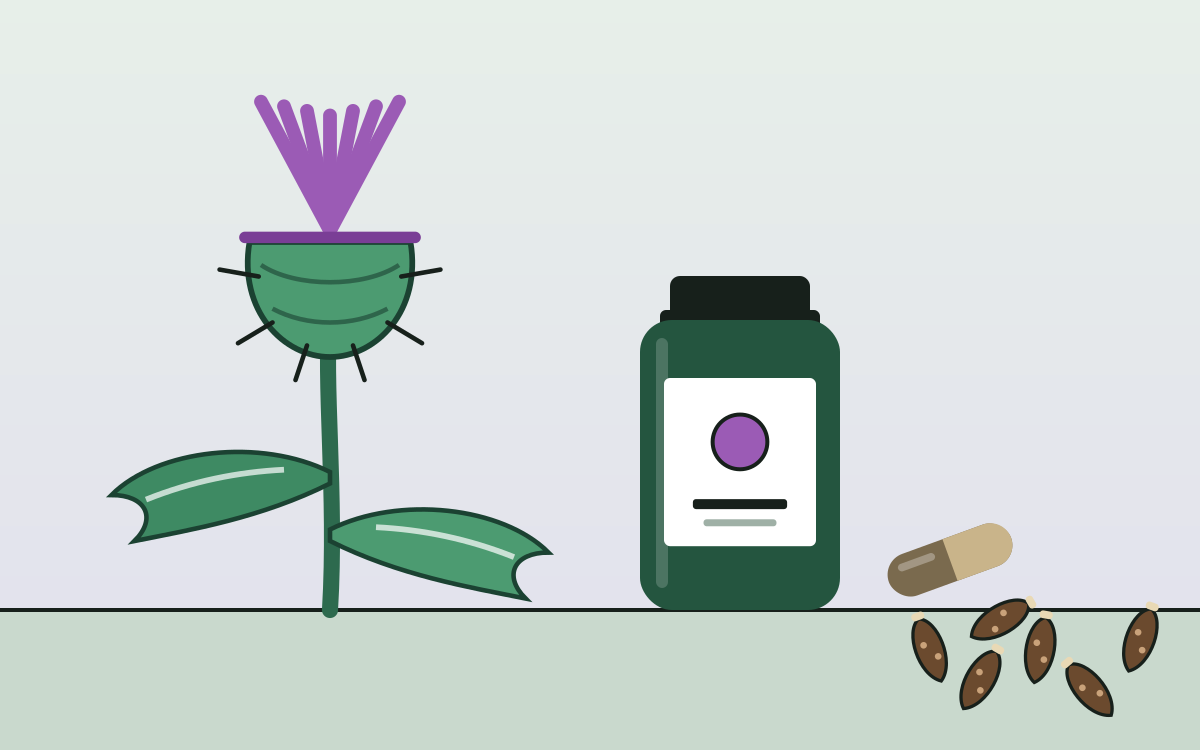
Milk thistle is a prickly plant with large purple flowers from the daisy family. Its fruits (often called seeds) are used medicinally. The main active part of the extract is silymarin, a mixture of compounds. Of these, silibinin is the best studied.
Historically, people took milk thistle for liver problems and to increase breast milk. Today it’s sold for the liver, diabetes and “detox”. On iHerb you’ll find:
- crushed or powdered fruits – for tea or in capsules;
- standardised extract – with the silymarin content stated in milligrams;
- “liver support” and detox blends – milk thistle alongside other herbs.
Milk thistle for liver health: what the trials found
Milk thistle has been studied in many liver conditions. NCCIH sums it up: results have been conflicting or too limited to draw conclusions.
| Condition | What was found | How reliable |
|---|---|---|
| Alcohol-related liver disease, hepatitis B and C | No effect on death, complications or liver tissue (Cochrane, 18 trials, 1,088 people) | Most trials low quality |
| Chronic hepatitis C | An NIH-funded trial showed no benefit | Randomised, placebo-controlled |
| Fatty liver inflammation (NASH) | No significant improvement in liver tissue after 48 weeks | Randomised, 78 people |
| Blood sugar in type 2 diabetes | May help | Few trials, mostly in the Middle East |
| Breast milk supply | Unclear | Little data |
In the Cochrane review, liver-related deaths were lower when all trials were pooled. But the effect disappeared in the high-quality trials, and the authors say their results question any benefit of milk thistle.
The hepatitis C trial tested higher than usual doses: 420 or 700 mg of silymarin three times a day for 24 weeks. Only 2 people in each group reached the target fall in the liver enzyme ALT, on silymarin and on placebo alike. Viral load and quality of life didn’t change either.
Milk thistle for a fatty liver
Fatty liver disease (NAFLD, now also called MASLD) is the commonest reason people look for a “liver supplement”. In a US trial, 78 people with fatty liver inflammation took 420 or 700 mg of silymarin three times a day for 48 weeks. Their liver biopsies didn’t improve significantly compared with placebo.
The NHS says healthy lifestyle changes are the main treatment for fatty liver disease: a balanced diet, at least 150 minutes of exercise a week, losing weight if needed, no smoking and no more than 14 units of alcohol a week. If it has progressed to fibrosis or cirrhosis, a liver specialist manages treatment.
Worried about your liver? What to do before milk thistle
Five steps in the right order. Tap a step
Find out what's going on
A heavy feeling on the right or abnormal results can come from many conditions. Your GP can arrange blood tests and, if needed, a scan.
- Liver function tests (ALT, AST, GGT, bilirubin)
- Hepatitis B and C tests if you've never had them
Find the cause
The commonest causes of liver damage are alcohol, excess weight and viral hepatitis; medicines and supplements are less common causes.
- Tell your GP about every supplement, including herbs
- Viral hepatitis has proven treatments
Start with what works
For fatty liver disease, the NHS says healthy lifestyle changes are the main treatment: losing weight, moving more, cutting alcohol.
- Fibrosis or cirrhosis is managed by a liver specialist
If you still want milk thistle
Make sure it's safe for you.
- Allergy to the daisy family (ragweed, chamomile, chrysanthemum) – avoid
- Sirolimus, warfarin, haloperidol, risperidone – only with your doctor's agreement
- Pregnancy, breastfeeding, under-18s – not recommended
Keep an eye on symptoms
The EMA advises seeing a doctor if symptoms last more than 2 weeks, and straight away if you notice jaundice or a change in the colour of urine or stools.
- Repeat your blood tests when your GP suggests
Milk thistle detox: why “cleansing” isn’t a reason to take it
Your liver clears and processes substances by itself, without a “cleanse”. No trials show that milk thistle detoxes a healthy person’s liver.
Detox blends carry a practical risk too. Memorial Sloan Kettering describes a man on warfarin whose INR (a blood clotting measure) rose from 2.64 to 4.12 after a liver cleanse supplement containing milk thistle. It returned to normal when he stopped. With multi-herb detox mixes, it’s harder to know what you’re actually taking.
Mushroom poisoning: a hospital drug, not a capsule
For death cap mushroom poisoning, hospitals sometimes give silibinin into a vein alongside other treatment. A review of 877 cases over 40 years found 90% survival with silibinin, compared with 59% with supportive care alone. In cases where the toxin was confirmed, though, the difference wasn’t statistically significant.
Milk thistle capsules are no substitute. If you develop vomiting, stomach pain or diarrhoea after eating wild mushrooms, call 999 straight away and keep any leftover mushrooms.

How to take milk thistle
The European Medicines Agency (EMA) accepts milk thistle as a traditional herbal medicine for indigestion, a feeling of fullness and to support liver function, once a doctor has ruled out serious disease. This means it has a long record of safe use, but not enough clinical proof that it works.
EMA doses for adults, taken before meals:
| Form | Single dose | Times a day |
|---|---|---|
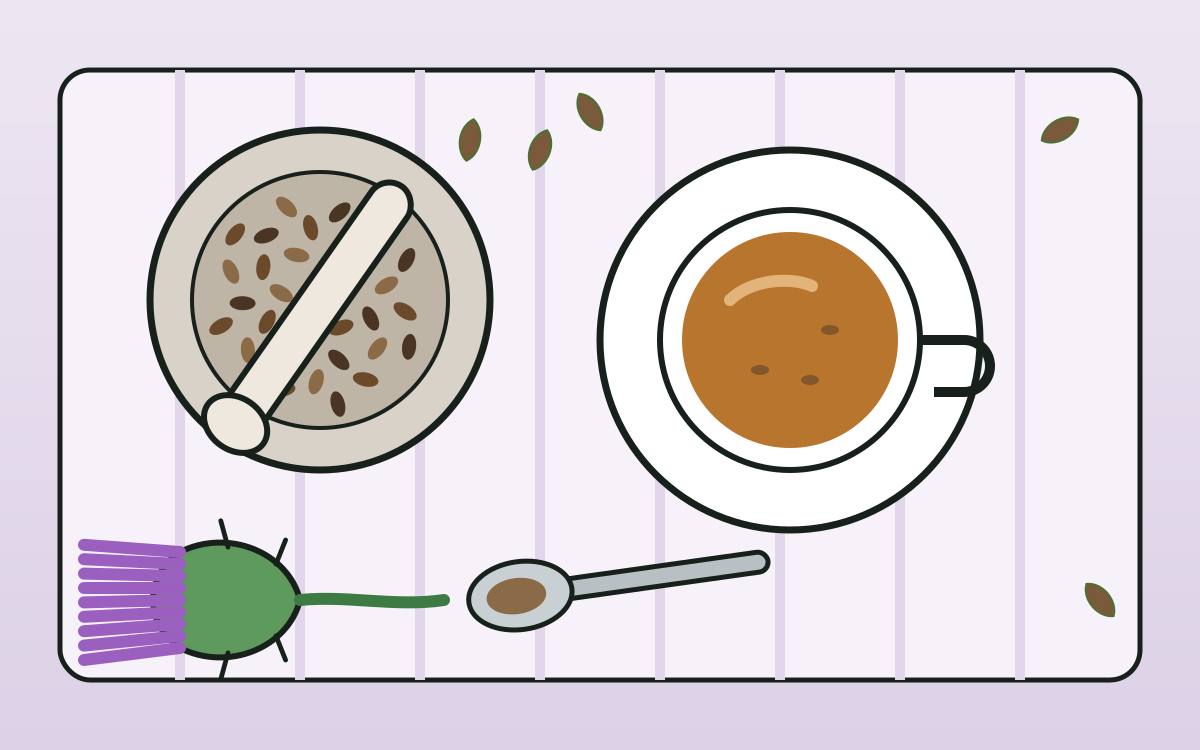
| Crushed fruit for tea | 3–5 g in 100 mL boiling water | 2–3 |
| Powdered fruit | 300–600 mg | 2–3, up to 1,800 mg a day |
| Dry extracts | 70–250 mg, depending on the extract | 1–4, as labelled |
Pick the form you have in your hand or are looking at on iHerb:
Which form of milk thistle, and how much
Pick a form to see the EMA dose and what to check
Form
What to know
Crushed fruits
The traditional way: pour boiling water over the fruits and drink it as a tea. Handy if you'd rather not take capsules.
EMA dose, before meals: 3–5 g in 100 mL boiling water, 2–3 times a day
What to know
Powder in capsules or by the spoon
Add up your daily total: the amount of powder per capsule varies.
EMA dose, before meals: 300–600 mg 2–3 times a day, up to 1,800 mg a day
What to know
Standardised extract
Compare products by milligrams of silymarin per serving, not by the weight of the extract.
EMA dose, before meals: 70–250 mg 1–4 times a day, depending on the extract – follow the label
What to know
Drops instead of capsules
Suits people who don't like swallowing capsules. Check the label for alcohol.
EMA dose, before meals: as labelled
What to know
Plain milk thistle is the better pick
With a dozen herbs in one capsule, it's harder to know what you're taking. One man on warfarin saw his INR rise from 2.64 to 4.12 after a liver cleanse supplement containing milk thistle.
On warfarin, check any herb with your GP or pharmacist first.
What to know
Blood tests and your GP come first
Milk thistle doesn't treat hepatitis, cirrhosis or poisoning. Your GP can arrange tests and look for the cause.
Yellowing skin or a change in the colour of your urine or stools: see a doctor straight away. Symptoms lasting over 2 weeks need a visit too.
See a doctor if symptoms last more than 2 weeks or get worse. If you notice yellowing skin or a change in the colour of your urine or stools, go straight away.
How long can you take milk thistle?
There’s no standard course. EMA guidance works on 2 weeks: if indigestion or fullness hasn’t settled by then, look for the cause rather than carrying on. Liver trials gave silymarin for 24–48 weeks with no more serious side effects than placebo. But they found no benefit either, so long-term use “just in case” makes little sense.
Side effects and who should avoid milk thistle
By mouth, milk thistle is usually well tolerated. Common side effects include bloating, nausea, wind, an upset stomach and diarrhoea, and less often headache. NCCIH also flags quality problems: some products contained much more or less silymarin than stated, and some held pesticides or mycotoxins.
Don’t take milk thistle if:
- you’re allergic to the daisy family – ragweed, chamomile, chrysanthemum, marigold. Rash, hives, asthma attacks and anaphylaxis are possible;
- you’re pregnant or breastfeeding – safety hasn’t been established and the EMA doesn’t recommend it;
- you’re under 18 – there isn’t enough data.
Interactions to mention to your doctor or pharmacist:
- sirolimus after a kidney transplant – milk thistle may slow its clearance;
- warfarin – a rise in INR has been reported;
- haloperidol and risperidone – cases of pancreatitis have been reported with the combination;
- diabetes medicines – milk thistle may affect blood sugar, so monitor your levels;
- other medicines processed by the liver – in lab studies silymarin affected the CYP3A4 and UGT enzymes, though human data conflict.
If you take several products, check our compatibility chart. For another popular herb with liver risks, read our guide to turmeric and curcumin.
How to choose milk thistle on iHerb
- Get your liver blood tests done and ask your GP whether milk thistle makes sense for you.
- Rule out the warnings: daisy-family allergy, pregnancy, interacting medicines.
- Choose plain milk thistle rather than a detox blend with a dozen herbs.
- Check the silymarin in mg on the label and compare the dose with the table above.
- Prefer products with independent quality testing, since contaminants have been found in milk thistle.
More supplements for digestion are collected in our gut health section. Not sure what you need? Start with our vitamin check.
Bottom line: what to choose
Your GP is happy for you to try it
Milk thistle extract with silymarin stated in mg
Compare products by silymarin, not extract weight
Silymarin on iHerbYou prefer a tea
Crushed milk thistle fruits
EMA: 3–5 g in 100 mL boiling water, 2–3 times a day
Milk thistle seed on iHerbYou'd rather avoid capsules
Liquid milk thistle extract
Check whether it contains alcohol
Liquid milk thistle on iHerbButtons lead to selections of the right form on iHerb. These are affiliate links; your price doesn't change.
FAQ
What are the benefits of milk thistle?
None are proven. A Cochrane review of 18 trials in alcohol-related liver disease and hepatitis B or C found no effect on death, complications or liver tissue. NCCIH describes the evidence as conflicting or too limited.
Is milk thistle good for a fatty liver?
There’s no good evidence that it is. In a US trial, 48 weeks of silymarin didn’t significantly improve liver biopsies in people with fatty liver inflammation. The NHS says lifestyle changes are the main treatment.
What is silymarin?
Silymarin is a mixture of compounds from milk thistle fruits and the main active part of the extract. Its best-studied component is silibinin.
How should I take milk thistle?
The EMA monograph says before meals. For powdered fruit, that’s 300–600 mg two or three times a day, up to 1,800 mg. Take extracts as labelled. See a doctor if symptoms last more than 2 weeks.
Does milk thistle detox your liver?
Your liver clears substances on its own, and milk thistle “detoxes” haven’t been shown to do anything. One man on warfarin had a rise in INR after a liver cleanse supplement containing milk thistle.
Who should not take milk thistle?
People allergic to the daisy family (ragweed, chamomile, chrysanthemum), pregnant or breastfeeding women and under-18s. With sirolimus, warfarin, haloperidol or risperidone, only take it if your doctor agrees.
Sources
- NCCIH. Milk Thistle
- EMA/HMPC. European Union herbal monograph on Silybum marianum (L.) Gaertn., fructus
- Rambaldi A et al. Milk thistle for alcoholic and/or hepatitis B or C virus liver diseases. Cochrane Database Syst Rev, 2007
- Navarro VJ et al. Silymarin in non-cirrhotics with non-alcoholic steatohepatitis: a randomized trial. PLoS One, 2019
- Tan JL et al. Amanitin intoxication: effects of therapies on clinical outcomes. Clin Toxicol, 2022
- Memorial Sloan Kettering. About Herbs: Milk Thistle
- NHS. Non-alcoholic fatty liver disease (NAFLD)
Milk thistle at a glance
For adults, based on NCCIH, the EMA and Cochrane
- What it is
- a daisy-family plant; silymarin comes from its fruits
- Liver disease
- evidence conflicting or too limited
- EU status
- traditional herbal medicine; efficacy not proven
- EMA doses
- powdered fruit up to 1,800 mg a day; extracts as labelled
- Side effects
- bloating, nausea, wind, allergy
- Avoid
- daisy-family allergy; pregnancy, breastfeeding, under-18s
Milk thistle doesn't treat hepatitis, cirrhosis or poisoning. If you're worried about your liver, start with blood tests and your GP.
View milk thistle on iHerbNo improvement after 2 weeks? See a doctor (EMA)
Contents
- What milk thistle and silymarin are
- Milk thistle for liver health: what the trials found
- Milk thistle detox: why “cleansing” isn’t a reason to take it
- Mushroom poisoning: a hospital drug, not a capsule
- How to take milk thistle
- Side effects and who should avoid milk thistle
- How to choose milk thistle on iHerb