Glucosamine, chondroitin, MSM and collagen: what the evidence says about joint supplements
This article contains affiliate links to iHerb. If you buy through them, we earn a commission at no extra cost to you. It doesn't affect which forms we recommend. Learn more
Glucosamine and chondroitin are the best-known supplements for joints, but large trials and NICE take a sceptical view. If you still want to try one, you'll find the trial doses, the safety checks and a simple way to judge whether it's working.
What matters more than supplements for osteoarthritis
Osteoarthritis is the most common form of arthritis. NICE’s 2022 guideline names three core treatments:
- therapeutic exercise;
- weight management, if you’re overweight;
- clear information about the condition and support.
It’s diagnosed from your symptoms and an examination; scans usually aren’t needed. Medicines are chosen with your GP based on symptoms. Glucosamine, however, is something NICE tells the NHS not to offer: there’s no strong evidence of benefit.
Exercise is tailored to you: strengthening the muscles around the joint and general aerobic fitness. A physiotherapist can set up a programme, and supervised sessions are an option. NICE warns that joint pain may increase when you start, but regular exercise benefits your joints in the long term. If you’re overweight, any amount of weight loss is likely to help, and losing 10% of your body weight is likely to be better than 5%.

Supplements are at best an add-on. If you decide to try one, take it alongside exercise, not instead of it. A tub of glucosamine won’t do a single squat for you.
When to see a GP
Joint pain isn’t always osteoarthritis. See a GP promptly in these cases:
- The joint is hot, red or very swollen.
- The pain started after an injury or fall.
- You have a temperature as well as joint pain.
- Several joints hurt at once, especially in the hands and feet.
- The pain stops you walking or sleeping.
These can be signs of inflammation, gout or a ligament injury. Glucosamine won’t help, and treatment will be delayed.
Glucosamine and chondroitin: what the trials found
This is the most studied pair of joint supplements, and the results are conflicting.
- GAIT trial (2006). 1,583 people with knee osteoarthritis took glucosamine 1,500 mg, chondroitin 1,200 mg, both, the anti-inflammatory celecoxib or placebo for 24 weeks. Glucosamine and chondroitin didn’t reduce pain better than placebo. In people with moderate to severe pain the combination looked better, but that was an exploratory analysis.
- Cochrane review of glucosamine (2005). 20 trials, 2,570 people. The benefit came mainly from trials of one company’s preparation (Rotta). Trials of other preparations, and the better-quality trials, showed no improvement in pain or function.
- Cochrane review of chondroitin (2015). 43 trials. Pain fell a little: 53 in 100 people on chondroitin had a 20% drop in knee pain, against 47 in 100 on placebo. Many trials were of low quality.
Together or separately?
Combination products are marketed as stronger, but the data barely supports that. In GAIT, 60.1% of people on placebo had a 20% drop in pain. The rate was 3.9 percentage points higher on glucosamine, 5.3 on chondroitin and 6.5 on the combination. None of these differences was statistically significant. Only celecoxib, a standard anti-inflammatory medicine, made a significant difference: 10 points.
Why the evidence is so mixed
- Different products. In the Cochrane review, positive results came mostly from one company’s product; other glucosamine products showed no benefit.
- Trial quality. When only well-concealed trials were counted, the effect disappeared.
- Wide variation. Chondroitin trial results differed a lot, and the review couldn’t explain why.
- A strong placebo effect. Osteoarthritis pain comes and goes, and expecting relief noticeably changes how pain feels.
Remember the placebo group in GAIT: 60% of people taking dummy pills had a 20% drop in pain. So “it worked for me” in online reviews doesn’t mean the glucosamine did the work. The neighbour who swears by her tub may well be one of those 60%.
| Supplement | Dose in trials | What the evidence shows | Caution |
|---|---|---|---|
| Glucosamine | 1,500 mg | no better than placebo overall; NICE advises against | shellfish, warfarin, diabetes |
| Chondroitin | 1,200 mg | small reduction in pain; low-quality trials | warfarin |
| MSM | 6 g | one pilot trial of 50 people | no long-term data |
| Type II collagen (UC-II) | 40 mg | one large manufacturer-run trial | – |
| Omega-3 | varied | in rheumatoid arthritis, less need for painkillers | warfarin |
MSM for joints
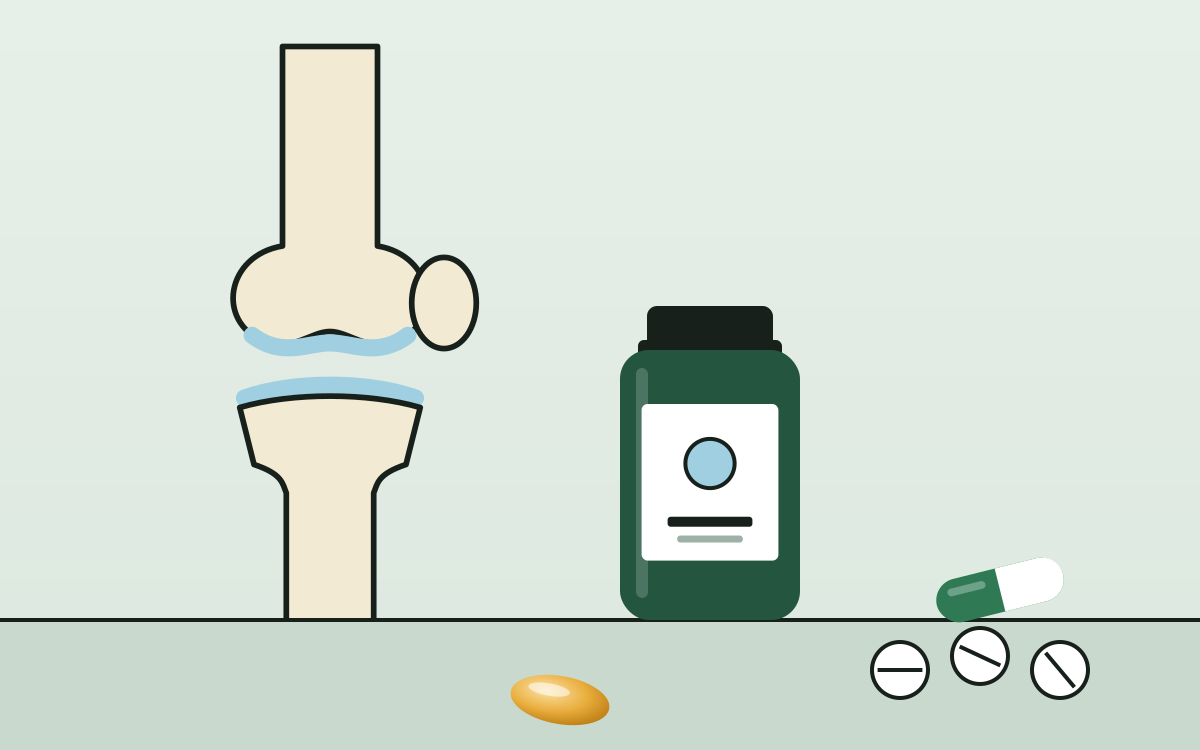
MSM (methylsulfonylmethane) is an organic sulphur compound often added to glucosamine blends. The evidence is thin. In a pilot trial, 50 people aged 40–76 with knee osteoarthritis took 3 g of MSM twice a day (6 g in total) for 12 weeks. Pain and physical function improved more than with placebo, without major side effects.
Its authors say a trial like this can’t confirm long-term benefit or safety. If MSM comes in a blend, compare the dose with the trial: it used 6 g a day, and a blend may contain far less.
Collagen for joints
Undenatured type II collagen (UC-II) is taken in a tiny dose: 40 mg a day. In a trial of 191 people with knee osteoarthritis, after 180 days it improved pain and function scores more than placebo and more than glucosamine with chondroitin. But two of the three authors worked for the ingredient’s manufacturer, and independent repeats are scarce.
Hydrolysed collagen in gram doses lowered the total symptom score and stiffness in a 2019 meta-analysis, but the pain score itself didn’t change significantly. Any benefit is modest and less certain than the marketing suggests. Types, sources and doses are covered in our guide to collagen supplements.
Omega-3 for joints
Omega-3 has been studied mainly in rheumatoid arthritis, not osteoarthritis. According to NIH ODS, people with rheumatoid arthritis in trials needed fewer anti-inflammatory drugs. But there was no consistent effect on painful or swollen joints or morning stiffness.
If you take omega-3 anyway, choose by EPA and DHA per capsule, as explained in our guide on how to choose fish oil. High doses of fish oil with warfarin may affect clotting. EFSA, as cited by NIH ODS, considers up to 5 g of EPA and DHA a day safe for long-term use in adults.
How to give a joint supplement a fair trial
Five steps so you don't take a bottle for years for nothing. Tap a step
Know what's causing the pain
Osteoarthritis, rheumatoid arthritis, gout and injuries need different treatment. Supplements were studied mainly in knee osteoarthritis.
- A hot, red or very swollen joint – see a GP
- Exercise and weight management are the core treatment for osteoarthritis
Check it's safe for you
Glucosamine is often made from shellfish shells. With warfarin, glucosamine and chondroitin have been linked to bleeding.
- Shellfish allergy – choose a non-shellfish source
- Warfarin – only after talking to your GP or pharmacist
- Diabetes – keep an eye on blood sugar
Pick one product
Five-ingredient blends make it impossible to tell what works. Choose one and use the dose from trials.
- Glucosamine – 1,500 mg
- Chondroitin – 1,200 mg
- UC-II – 40 mg
Give it 3–6 months
That's how long the main trials lasted. Rate your pain from 0 to 10 once a week.
No benefit – stop
If your pain hasn't eased, there's no point carrying on. NICE advises against glucosamine for osteoarthritis.
- Ask your GP or a physiotherapist about other options
Who should avoid joint supplements
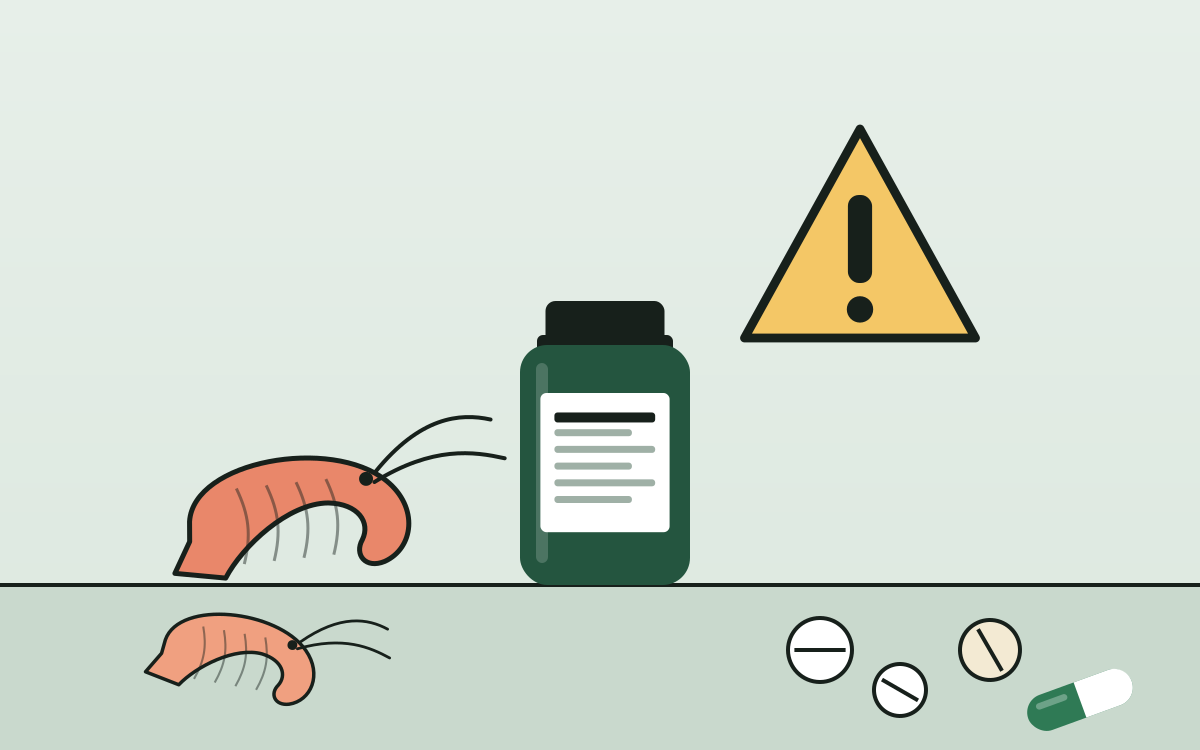
- Shellfish allergy. Glucosamine is often made from shellfish shells, and an allergic reaction is possible. Look for “shellfish-free”.
- Warfarin. Glucosamine and chondroitin have been linked to a higher bleeding risk, and high-dose glucosamine has caused bruising and bleeding. Only take them after talking to your GP or pharmacist.
- Diabetes. Glucosamine may raise blood sugar in some people, so keep an eye on your readings.
- Liver disease. Avoid glucosamine if possible.
- Asthma. Flare-ups have been reported with glucosamine.
- Pregnancy and breastfeeding. Little is known about the safety of glucosamine and chondroitin.
Common side effects of glucosamine include itching, heartburn, nausea and diarrhoea. If you get a rash, swelling or worse pain after starting a supplement, stop and tell your GP. Don’t drop prescribed painkillers or other medicines in favour of a supplement. If you take several medicines, check our vitamin compatibility chart and ask your pharmacist.
How to choose a joint supplement on iHerb
- Make sure it’s osteoarthritis and not another joint condition: that’s for your GP to decide.
- Choose a single product rather than a five-ingredient blend, so you can tell whether it works.
- Check the dose per serving: glucosamine 1,500 mg, chondroitin 1,200 mg, UC-II 40 mg.
- With a shellfish allergy, look for “shellfish-free” or “vegan”.
- Put a date 3–6 months ahead in your calendar and decide then whether it’s helping.
Our Supplement Facts guide explains how to work out the dose per serving. For more guides, see skin, hair and joints.
Bottom line: what to choose
Knee osteoarthritis, want to try
Glucosamine 1,500 mg + chondroitin 1,200 mg
A trial of 3–6 months
Glucosamine on iHerbShellfish allergy
Chondroitin or shellfish-free glucosamine
Look for shellfish-free or vegan on the label
Shellfish-free on iHerbWant a small capsule
Type II collagen (UC-II)
40 mg a day; evidence from the manufacturer
UC-II on iHerbButtons lead to selections of the right form on iHerb. These are affiliate links; your price doesn't change.
FAQ
Does glucosamine work for knee pain?
If it helps, the effect is small. In the large GAIT trial, glucosamine and chondroitin were no better than placebo overall. NICE advises the NHS not to offer glucosamine for osteoarthritis because there’s no strong evidence of benefit.
What are the best supplements for joints?
No supplement has strong evidence. Chondroitin has a small effect on pain in a Cochrane review; glucosamine, MSM and type II collagen have weaker or industry-funded data. Exercise and weight management work better.
Is glucosamine and chondroitin better than glucosamine alone?
Not clearly. In GAIT, the combination wasn’t significantly better than placebo overall. An exploratory analysis suggested a benefit in people with moderate to severe pain, but that needs confirming.
Can I take glucosamine if I'm allergic to shellfish?
Glucosamine is often made from shellfish shells, and people with a shellfish allergy may react to it. Choose products labelled shellfish-free or vegan and check with your GP or allergy clinic.
Can I take glucosamine with warfarin?
Only after talking to your GP or pharmacist. Glucosamine and chondroitin have been linked to a higher risk of bleeding in people on warfarin, so your INR may need extra checks.
How long does glucosamine take to work?
Trials lasted 3–6 months. If your pain hasn’t eased by then, there’s no point carrying on.
Sources
- NICE. Osteoarthritis in over 16s: diagnosis and management (NG226), 2022
- Towheed TE et al. Glucosamine therapy for treating osteoarthritis. Cochrane Database Syst Rev, 2005
- Singh JA et al. Chondroitin for osteoarthritis. Cochrane Database Syst Rev, 2015
- Clegg DO et al. Glucosamine, chondroitin sulfate, and the two in combination for painful knee osteoarthritis (GAIT). N Engl J Med, 2006
- Kim LS et al. Efficacy of methylsulfonylmethane (MSM) in osteoarthritis pain of the knee: a pilot clinical trial. Osteoarthritis Cartilage, 2006
- NCCIH. Glucosamine and Chondroitin for Osteoarthritis: What You Need To Know
- MSD Manual (Consumer Version). Glucosamine
Joint supplements at a glance
For adults with osteoarthritis, based on Cochrane, NICE and NCCIH
- Core treatment
- exercise and weight management (NICE)
- Glucosamine
- 1,500 mg a day; NICE advises against it
- Chondroitin
- 1,200 mg a day; small effect on pain
- MSM
- 6 g a day in one small trial
- Shellfish allergy
- shellfish-derived glucosamine may cause a reaction
- Warfarin
- glucosamine and chondroitin – bleeding risk
This evidence is about osteoarthritis. Rheumatoid arthritis and gout need different treatment.
Shop glucosamine on iHerbTry it for 3–6 months; no benefit – stop