Vitamin E IU to mg: how to convert natural and synthetic vitamin E
This article contains affiliate links to iHerb. If you buy through them, we earn a commission at no extra cost to you. It doesn't affect which forms we recommend. Learn more
There's no single answer to "how many mg is that?" for vitamin E: it depends on the form. Find d-alpha or dl-alpha in the ingredients and the maths takes seconds; the chart below shows where a sensible daily dose ends.
400 IU of vitamin E is 268 mg if the form is natural and 180 mg if it’s synthetic. That’s almost a 1.5-fold difference, so find the form first and convert second:
Vitamin E: IU to mg and back
First find the form in the ingredients: d-alpha or dl-alpha. Then type the number
268
Your vitamin E dose in the other unit
Natural: 1 IU = 0.67 mg. Synthetic: 1 IU = 0.45 mg.
Answer in mg. Natural form (d-alpha, RRR); its esters, acetate and succinate, use the same factor.
d-alpha tocopherol on iHerbFactors from NIH ODS and the FDA. The NHS says 540 mg (800 IU) a day or less from supplements is unlikely to cause harm; EFSA's limit is 300 mg a day, about 450 IU.
For vitamins D and A, use the general IU to mcg and mg converter. This page sticks to vitamin E and goes into more detail.
Vitamin E IU to mg chart: 100 to 1,000 IU
| IU on the label | Natural d-alpha, mg | Synthetic dl-alpha, mg | NHS: up to 800 IU from supplements | EFSA limit (about 450 IU) |
|---|---|---|---|---|
| 100 | 67 | 45 | below | below |
| 200 | 134 | 90 | below | below |
| 400 | 268 | 180 | below | below |
| 800 | 536 | 360 | at the limit | above |
| 1,000 | 670 | 450 | above | above |
The NHS puts the daily need at 4 mg for men and 3 mg for women, and says you should be able to get it from your diet. US figures are higher, at 15 mg for adults. Even so, NIH ODS notes that most vitamin-E-only supplements contain at least 67 mg (100 IU of the natural form), which is more than four times the US amount.
d-alpha vs dl-alpha tocopherol: natural and synthetic vitamin E
Natural alpha-tocopherol is a single molecule with one particular shape (RRR). Synthetic alpha-tocopherol is an equal mix of eight stereoisomers: molecules with the same atoms arranged in different shapes in space, rather like left and right mittens. Your blood and tissues keep only four of the eight, so, according to NIH ODS, a milligram of the synthetic form is about half as active as a milligram of the natural one. FDA labelling rules count it the same way: 1 mg of vitamin E on a label is 1 mg of natural alpha-tocopherol or 2 mg of synthetic. That’s where 0.67 and 0.45 come from. Both give the milligrams of vitamin E that count towards your needs, not the weight of the ingredient in the softgel.
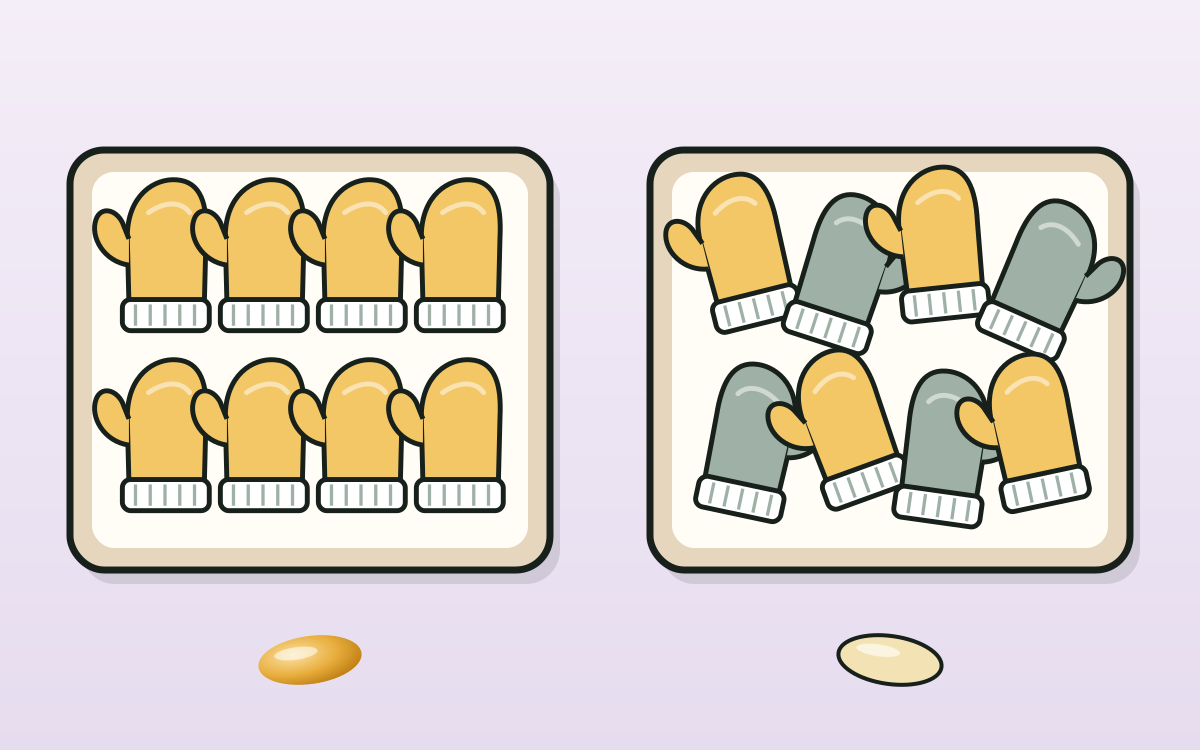
A prefix in the ingredients tells you which one you have:
- d-alpha tocopherol or RRR-alpha-tocopherol – natural;
- d-alpha tocopheryl acetate or succinate – also natural, as an ester;
- dl-alpha tocopherol, all-rac-alpha-tocopherol or dl-alpha tocopheryl acetate – synthetic.
Esters (acetate and succinate) help vitamin E keep longer on the shelf. Your body splits and absorbs them as well as the plain tocopherol, and the FDA converts them with the factor of their form. If the front of the bottle only says “400 IU”, turn it round: the form is in the Supplement Facts panel.
What does your vitamin E label say
Find the Vitamin E line and the words in brackets. Pick the closest match
In brackets or in the ingredients
What it means
Natural form
A d with no l means natural alpha-tocopherol (older labels say RRR). For this form 1 IU = 0.67 mg.
400 IU is: 268 mg
What it means
Natural form, as an ester
Succinate and acetate are esters that help vitamin E keep longer. Your body splits and absorbs them as well as plain tocopherol. Same factor: 0.67 mg.
400 IU is: 268 mg
What it means
Synthetic form
A dl- prefix, sometimes all-rac, marks the synthetic form. Only four of its eight forms count, so 1 IU = 0.45 mg of vitamin E.
400 IU is: 180 mg
What it means
No form given – work out both
Bottle fronts often show IU only. Turn it round and look for the form in the Supplement Facts panel. Until you find it, think of it as a range.
400 IU is: 180 to 268 mg
What it means
Talk to your doctor first
Large doses of vitamin E with warfarin or other anticoagulants raise the risk of bleeding. EFSA states that its 300 mg limit doesn't apply to people on these medicines.
Don't start vitamin E without the clinic or GP who manages your anticoagulant.
400, 800 and 1,000 IU of vitamin E in mg
400 IU is 268 mg of the natural form or 180 mg of the synthetic form. Those are the doses used in two large trials that NIH ODS describes: HOPE gave 400 IU of natural vitamin E (268 mg), and SELECT gave 400 IU of synthetic dl-alpha-tocopheryl acetate (180 mg).
800 IU works out at 536 or 360 mg, and 1,000 IU at 670 or 450 mg. Both sit above EFSA’s limit, so they’re not doses to take for months without medical advice. Our guide to vitamins A and E covers the risks of high doses.
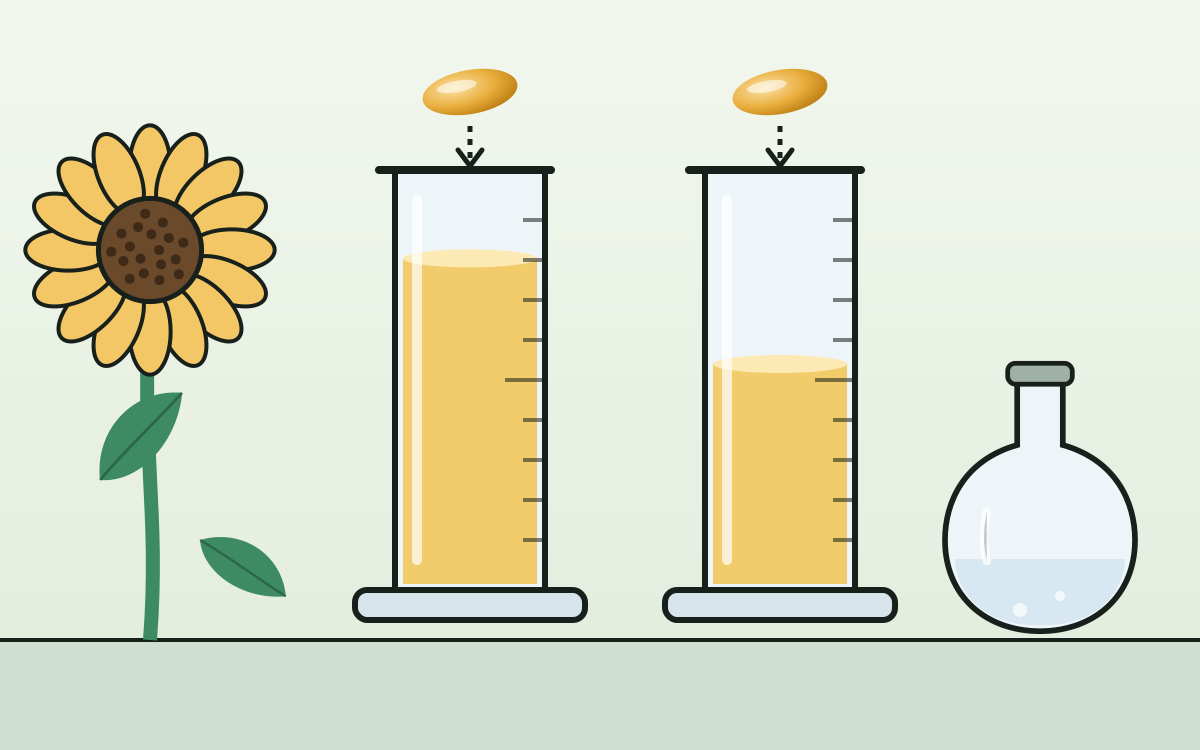
Upper limits: NHS, EFSA and the US
Each body counts vitamin E slightly differently, so comparing them in IU is easiest:
- NHS – taking 540 mg (800 IU) or less a day of vitamin E supplements is unlikely to cause any harm.
- EFSA – 300 mg a day for adults, including in pregnancy and breastfeeding; lower for children, from 100 mg at ages 1–3 to 260 mg at 15–17. EFSA counts vitamin E as alpha-tocopherol equivalents, and the report behind its limit pairs 800 IU with 537 mg. On that basis 300 mg is about 450 IU. EFSA is currently reviewing this limit.
- US (NIH) – 1,000 mg a day for adults, which NIH gives as 1,500 IU of the natural form or 1,100 IU of the synthetic form.
Why 1,100 and not 2,222 (1,000 ÷ 0.45)? The US limit counts the full weight of synthetic vitamin E, all eight stereoisomers, not only the four that count towards your needs. Use 0.45 to compare a dose with daily needs; for the limit, NIH does its own IU conversion.
When high doses matter: anticoagulants
Large doses of vitamin E taken with warfarin or other anticoagulant or antiplatelet medicines can raise the risk of bleeding, especially if your diet is low in vitamin K (NIH ODS). EFSA is explicit that its 300 mg limit doesn’t apply to people on anticoagulants or to people with malabsorption. The same report notes that vitamin E can increase the risk of bleeding in people who take aspirin.
Speak to your GP or anticoagulation clinic before the first softgel if:
- you take warfarin, another anticoagulant or daily aspirin;
- you have a condition that affects fat absorption, or a bowel disease;
- you’re having surgery: a source cited in the EFSA report suggests avoiding high doses (800–1,200 mg alpha-tocopherol equivalents) for two weeks before and after an operation;
- you’re pregnant or breastfeeding and want more than your pregnancy vitamin already gives.
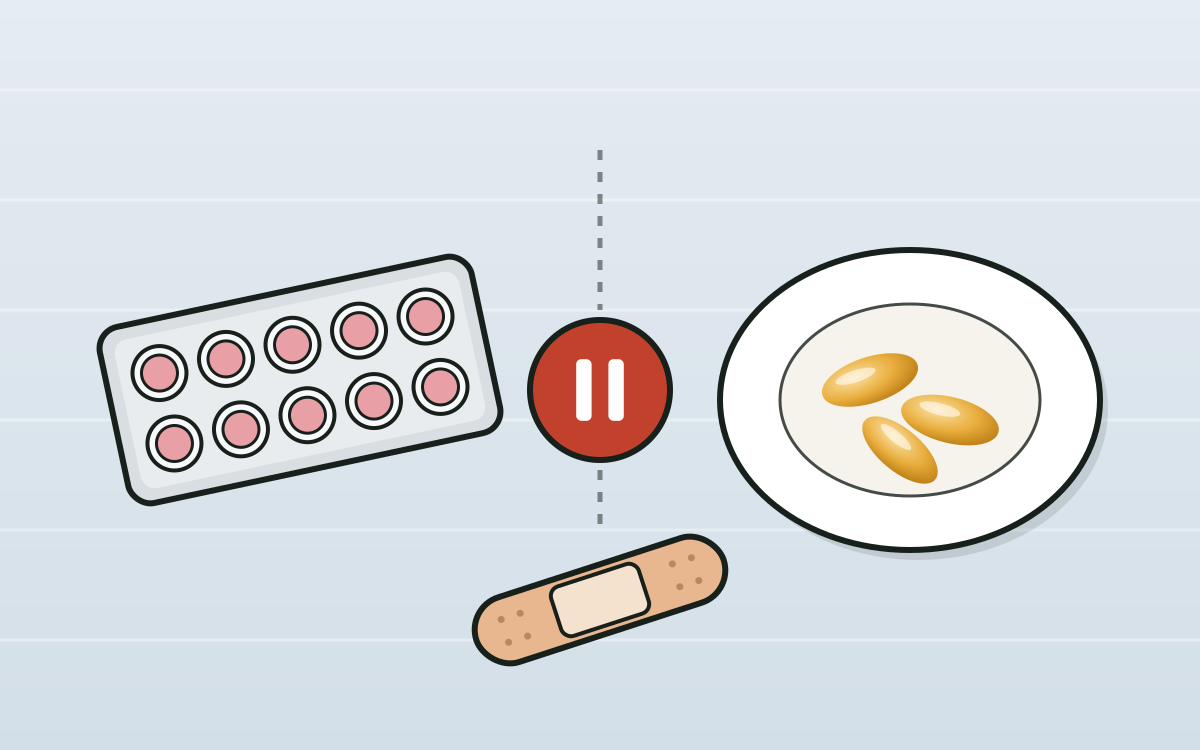
Our page on supplements and medicines helps with other prescriptions, and the vitamin compatibility chart covers combinations of supplements.
How to choose vitamin E on iHerb
- Find the Vitamin E line in the Supplement Facts panel: it gives the dose in mg and the form in brackets.
- Use the d- or dl- prefix to tell natural from synthetic.
- If the bottle only shows IU, convert with the calculator above.
- Add up the vitamin E from every supplement you take: multivitamin, omega-3, skin formulas.
- For daily use, stay at or below 400 IU (268 mg of the natural form).
- For the rest of the panel, see how to read a supplement label; for why IU exist at all, see what an IU on a vitamin label means.
Vitamin D is simpler, with one factor for every form: see vitamin D mcg to IU.
Bottom line: what to choose
You want vitamin E on its own
Natural d-alpha, up to 400 IU
268 mg, below EFSA's 300 mg limit
d-alpha on iHerbA small dose is enough
100–200 IU of the natural form
67–134 mg, already many times the NHS daily need
Vitamin E 100 IU on iHerbYou already take a multivitamin
Add up the E in both bottles first
A separate bottle may turn out to be unnecessary
Multivitamins on iHerbButtons lead to selections of the right form on iHerb. These are affiliate links; your price doesn't change.
FAQ
How do you convert vitamin E IU to mg?
Check the form in the ingredients. For natural d-alpha-tocopherol, multiply the IU by 0.67; for synthetic dl-alpha-tocopherol, multiply by 0.45. The factors come from NIH ODS and the FDA.
How many mg is 400 IU of vitamin E?
268 mg if it’s the natural form (d-alpha) and 180 mg if it’s synthetic (dl-alpha). Both are within EFSA’s limit of 300 mg a day and the NHS figure of 540 mg.
What is 800 IU of vitamin E in mg?
536 mg of the natural form or 360 mg of the synthetic form. 800 IU is the most the NHS says is unlikely to cause harm from supplements, and it’s above EFSA’s limit.
Vitamin E 1,000 IU in mg – is that too much?
1,000 IU is 670 mg natural or 450 mg synthetic. It’s above both the NHS figure of 800 IU and EFSA’s 300 mg, so don’t take it without medical advice.
d-alpha vs dl-alpha tocopherol: what's the difference?
d-alpha is natural vitamin E, a single molecule. dl-alpha is synthetic: an equal mix of eight stereoisomers, of which your body keeps four. So the FDA counts 2 mg of dl-alpha as 1 mg of vitamin E on the label, and 1 IU of it gives 0.45 mg instead of 0.67 mg.
Sources
- NHS. Vitamins and minerals – Vitamin E
- NIH ODS. Vitamin E – Fact Sheet for Health Professionals
- FDA (2019). Converting Units of Measure for Folate, Niacin, and Vitamins A, D, and E on the Nutrition and Supplement Facts Labels
- EFSA. Summary of Tolerable Upper Intake Levels for vitamins and minerals
- EFSA. Tolerable Upper Intake Levels for Vitamins and Minerals (2006): vitamin E
Vitamin E conversion
From NIH ODS, the FDA, NHS and EFSA
- Natural (d-alpha, RRR)
- 1 IU = 0.67 mg
- Synthetic (dl-alpha, all-rac)
- 1 IU = 0.45 mg
- 400 IU
- 268 mg natural or 180 mg synthetic
- NHS daily need
- 4 mg for men, 3 mg for women
- NHS: unlikely to harm
- up to 540 mg (800 IU) from supplements
- Take care with
- warfarin and other anticoagulants
Esters (acetate, succinate) use the factor of their own form.
Shop d-alpha on iHerb400 IU of the natural form is 268 mg