Supplement glossary: what the terms on vitamin labels mean
Forty terms you'll meet on iHerb labels and in our guides. Each one in a line: what it means and what to check before you buy.
How to use this glossary
Terms are grouped alphabetically, with abbreviations in their place in the alphabet. If a whole line of the label confuses you rather than one word, start with our guide to reading a supplement label. Daily needs and limits for each nutrient are in the supplements A–Z.
Decode a label in 30 seconds
Pick what puzzles you on the bottle for a two-line explanation
What the label says
What it means
International units (IU)
IU measure activity, not weight. Each vitamin has its own factor, so IU to mcg is worked out separately for D, A and E.
Example: vitamin D: 1,000 IU = 25 mcg
What it means
Share of the daily reference on the label
UK and EU labels use NRV; US labels on iHerb use DV. That's why the same dose can read 500% on one bottle and 125% on another.
Example: 25 mcg vitamin D = 500% NRV or 125% DV
Over 100% doesn't mean unsafe; check the upper limit instead.
What it means
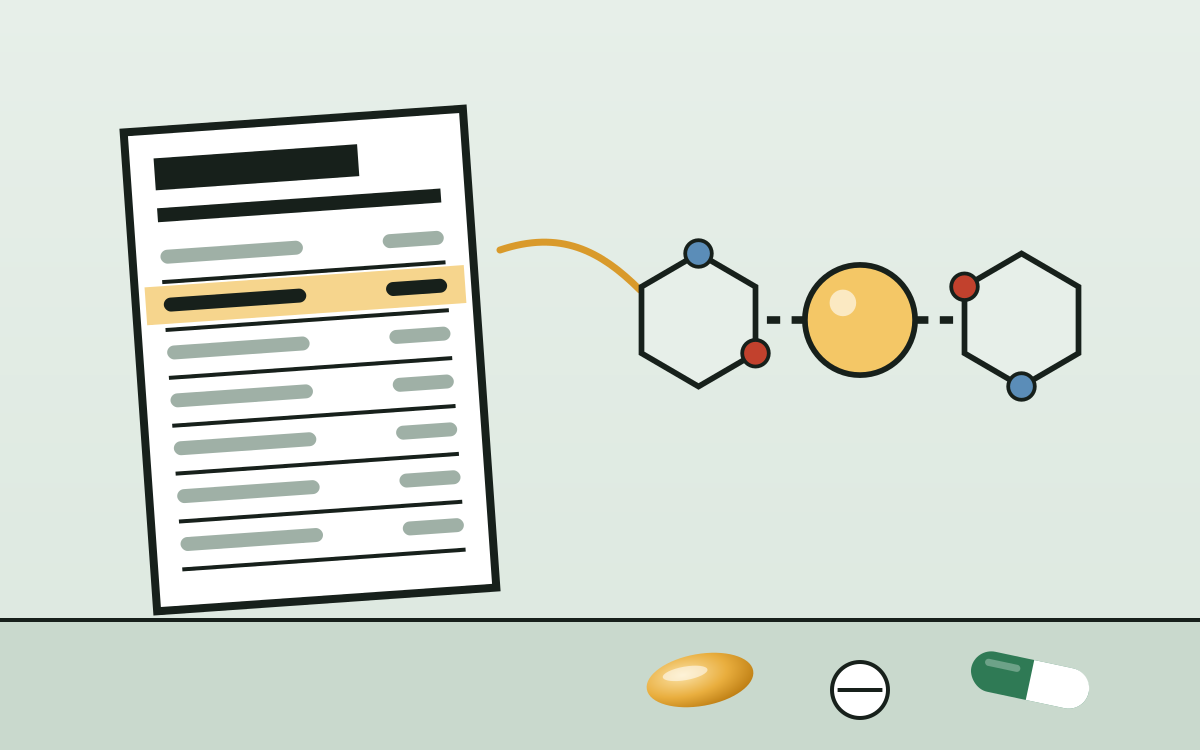
Form and elemental amount
The number on the line is the mineral itself; the compound follows "as" in brackets. "Bisglycinate" means the mineral is bound to two glycine molecules; "chelate" means it's bound to amino acids, most often glycine.
Example: Magnesium (as bisglycinate) 200 mg = 200 mg of magnesium
What it means
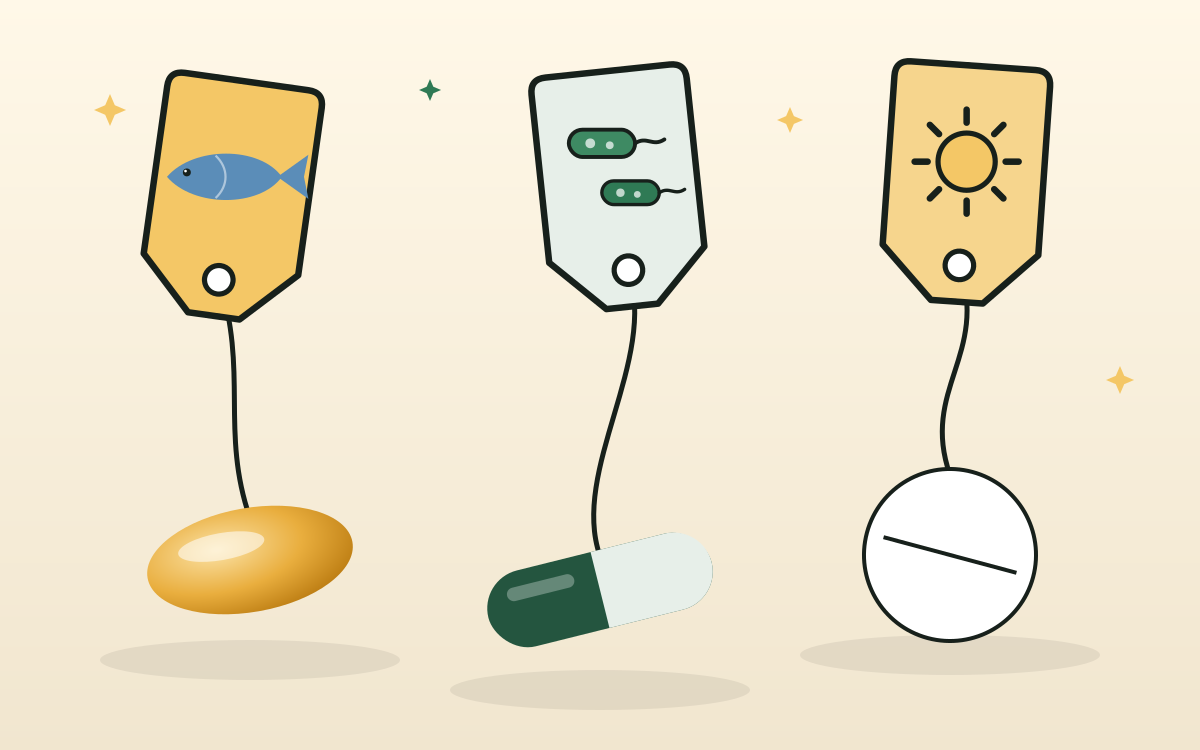
Chemical form of omega-3
TG are natural triglycerides, EE are ethyl esters, rTG are esters turned back into triglycerides. EE are absorbed slightly less well, but every form raises EPA and DHA in the blood.
What it means
Colony-forming units
The number of live bacteria in a probiotic. Check whether the count is guaranteed to the end of shelf life: some bacteria die in storage.
Example: 1 × 10⁹ CFU = 1 billion CFU
What it means
Independent testing marks
USP checks identity, dose, contaminants and how the tablet breaks down. NSF Certified for Sport and Informed Sport screen for substances banned in sport. IFOS tests fish oil lot by lot.
A mark applies to a specific product or batch, not to the whole brand.
A–C: from adequate intake to cyanocobalamin
| Term | What it means | What to check |
|---|---|---|
| AI (adequate intake) | A reference intake set when there isn’t enough evidence for an RDA | Biotin’s 30 mcg is an AI, for example |
| Beta-carotene | A plant form of vitamin A that the body converts as needed | High-dose supplements are unsafe for smokers and former smokers |
| Bioavailability | The share of a nutrient that’s absorbed and reaches your tissues | Differences between good forms are usually smaller than adverts suggest |
| Bisglycinate | A mineral bound to two molecules of the amino acid glycine | Usually gentle on the stomach; common for magnesium, iron and zinc |
| CFU | Colony-forming units: the number of live bacteria in a probiotic | Look for the count guaranteed at the end of shelf life |
| Chelate | A mineral bound to amino acids | Check which ones: often glycine (bisglycinate), sometimes a mix such as lysinate glycinate |
| Cholecalciferol (D3), ergocalciferol (D2) | The two forms of vitamin D | D3 raises blood levels more and for longer |
| Cyanocobalamin, methylcobalamin | Forms of vitamin B12 | NIH ODS finds no evidence that absorption depends on the form; cyanocobalamin is the most common |
D–G: from DFE to GMP
| Term | What it means | What to check |
|---|---|---|
| DFE | Dietary folate equivalent: 1 mcg DFE = 1 mcg food folate = 0.6 mcg folic acid taken with food | 400 mcg DFE on a label = 240 mcg folic acid |
| DV (% DV) | Daily Value: the US reference used on US labels | 25 mcg vitamin D = 125% DV |
| EE | Ethyl esters, a concentrated form of omega-3 | Absorbed slightly less well than TG; take with a meal |
| EFSA | European Food Safety Authority | Sets EU reference intakes and upper limits |
| Elemental amount | The amount of the mineral itself, without the rest of the compound | 1,000 mg of magnesium glycinate gives about 140 mg of magnesium |
| Enteric coating | A coating that dissolves in the gut rather than the stomach | Used in fish oil to reduce fishy aftertaste and burps |
| Food supplement | The legal category for supplements in the UK and EU: they’re food, not medicines | Labels can’t claim to treat or prevent disease |
| GMP | Good Manufacturing Practice | Says the factory is controlled, not that the dose in the bottle is right |
I–M: from IFOS to MHRA
| Term | What it means | What to check |
|---|---|---|
| IFOS | International Fish Oil Standards programme | Tests fish oil lot by lot and publishes the results |
| Informed Sport | A UK-run testing programme for sports supplements | Every batch is screened for substances banned in sport |
| IU | International unit: a measure of activity, not weight | Each vitamin converts differently; for vitamin D, 1 mcg = 40 IU |
| mcg (µg) | Microgram, a thousandth of a milligram | Don’t confuse with mg: the difference is a thousandfold |
| Menaquinone (MK-7) | One of the forms of vitamin K2 used in supplements | If you take warfarin, don’t take vitamin K without your GP’s agreement |
| Methylfolate (L-5-MTHF) | An active form of folate | The NHS pregnancy advice and the original trials use folic acid |
| MHRA | The UK medicines regulator | Melatonin is a prescription-only medicine in the UK |

N–P: from NIH ODS to proprietary blend
| Term | What it means | What to check |
|---|---|---|
| NIH ODS | The US Office of Dietary Supplements | Publishes free fact sheets for every nutrient |
| NRV (% NRV) | Nutrient reference value used on UK and EU labels | For vitamin D it’s 5 mcg, so percentages look higher than % DV |
| NSF | A US certification body; NSF Certified for Sport is its mark for athletes | Every lot is tested for banned substances |
| Oxide | A mineral combined with oxygen | Lots of mineral per tablet but less well tolerated; magnesium oxide is laxative |
| Picolinate | A mineral bound to picolinic acid | A common form of zinc and chromium |
| PRI | Population reference intake: EFSA’s figure for almost all healthy people | The European equivalent of the RDA |
| Proprietary blend | A total weight for a mix, without each ingredient’s share | You can’t tell the dose of any single ingredient |
R–Z: from RAE to USP
| Term | What it means | What to check |
|---|---|---|
| RAE | Retinol activity equivalent: 1 mcg RAE = 1 mcg retinol = 2 mcg beta-carotene from supplements | 1 IU retinol = 0.3 mcg RAE |
| RDA | Recommended dietary allowance: enough for 97–98% of healthy people | Counts food and supplements together |
| Retinol | Preformed vitamin A (with retinyl esters) | EFSA’s upper limit is 3,000 mcg a day; avoid retinol supplements in pregnancy |
| RNI | Reference nutrient intake: the UK figure the NHS quotes | Enough for almost everyone in an age group |
| rTG | Re-esterified triglycerides: ethyl esters converted back into triglycerides | Used for concentrated fish oils high in EPA and DHA |
| Serving size | The number of capsules the label figures refer to | A serving is often 2–4 capsules |
| TG | Triglycerides, the natural form of fat in fish | Standard, non-concentrated fish oil |
| Tocopherol | Vitamin E. Natural form: d-alpha; synthetic: dl-alpha | 1 IU natural = 0.67 mg; 1 IU synthetic = 0.45 mg |
| UL | Tolerable upper intake level | A ceiling, not a target; EFSA and US limits differ |
| USP Verified | Mark of the US Pharmacopeia | Checks identity, dose, contaminants and how the tablet breaks down |
Terms that come with safety warnings
Some words on a label are about your health, so give them a longer look than the price:
- retinol – watch your total vitamin A in pregnancy and after the menopause;
- beta-carotene – high doses are unsafe for smokers and former smokers;
- vitamin K (MK-7) – interacts with warfarin;
- biotin – distorts several blood tests, including thyroid and troponin tests;
- iron – high doses are dangerous for children, so keep bottles out of reach;
- probiotics – people who are seriously ill or immunocompromised should check with their doctor first.
How to use the glossary when choosing on iHerb
- Find the form after “as” on the label and look it up in the tables above.
- Check whether the elemental amount is shown, and check the unit: mg, mcg or IU. Our IU to mcg converter does the maths.
- Compare the dose with the upper limit, not only with % DV.
- For fish oil, check the form (TG, rTG or EE) and the EPA+DHA total. Our guide on how to choose fish oil explains more.
- Look for USP, NSF, Informed Sport or IFOS marks if independent testing matters to you.
Try it on a typical label: tap each line and the explanation appears beside it.
A label with hints
A typical Supplement Facts panel. Tap a line to decode the term
Supplement Facts
What it means
Serving size
Every number below is for 2 capsules, not one. A serving is often 2–4 capsules, so do the division yourself if you take fewer.
What it means
% DV
The share of the US daily value. 25 mcg of vitamin D reads 125% DV here, while a UK or EU label shows the same dose as 500% NRV. Over 100% doesn't mean unsafe: check the upper limit.
What it means
Cholecalciferol, mcg and IU
Cholecalciferol is D3, which raises blood levels more and for longer than D2. IU measure activity, not weight: for vitamin D, 1 mcg = 40 IU.
What it means
Elemental amount and chelate
15 mg is the zinc itself. The form follows "as": bisglycinate, a mineral bound to two glycine molecules. Forms like this are usually gentle on the stomach.
What it means
DFE
Dietary folate equivalent. 1 mcg DFE = 0.6 mcg of folic acid taken with food, so 400 mcg DFE is 240 mcg of folic acid.
What it means
Retinol and RAE
Retinyl esters are preformed vitamin A. EFSA's upper limit is 3,000 mcg a day, and retinol supplements are off the list in pregnancy.
What it means
Proprietary blend
Only the total weight of the mix is shown. You can't tell how much of each ingredient it contains.
What it means
USP and GMP
The USP mark means identity, dose, contaminants and how the tablet breaks down were checked. GMP says the factory is controlled, not that the dose in the bottle is right.
Frequently asked questions
What does “chelate” mean on magnesium or zinc?
The mineral is bound to amino acids, usually glycine. These forms tend to be gentler on the stomach. See types of magnesium and the best form of zinc for detail.
What’s the difference between % NRV and % DV?
They’re shares of different references: NRV is used in the UK and EU, DV in the US. The same vitamin D dose can read 500% NRV and 125% DV.
Why isn’t the UL a recommended dose?
The upper limit is the ceiling for safe daily use, not a goal. Most people need a dose much closer to the daily need.
Is TG or EE fish oil better?
TG and rTG forms are absorbed slightly better, but every form raises EPA and DHA in the blood. The EPA+DHA total and taking it with food matter more.
Sources
Updated