L-carnitine: does it help weight loss, which form to choose and how to take it
This article contains affiliate links to iHerb. If you buy through them, we earn a commission at no extra cost to you. It doesn't affect which forms we recommend. Learn more
L-carnitine is one of the best-selling "fat burner" supplements. In trials it added about 1.3 kg of weight loss on top of placebo, and a healthy body usually makes all the carnitine it needs. There are also open questions about heart health and a few medicines it can clash with.
What L-carnitine is and what it does
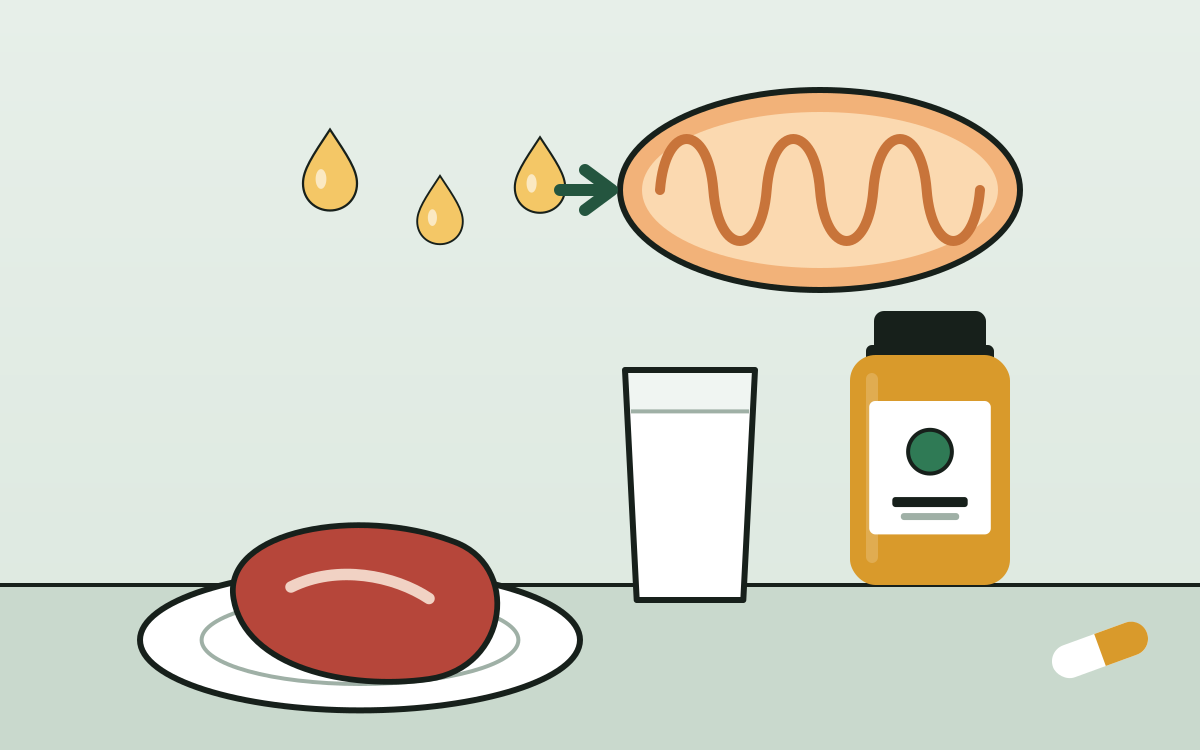
Carnitine is a name for several related compounds: L-carnitine, acetyl-L-carnitine and propionyl-L-carnitine. Their main job is to carry fatty acids into mitochondria, the cell’s power stations, where fat is burned for energy.
Your body makes carnitine in the liver, kidneys and brain from the amino acids lysine and methionine. You also get it from food, mostly red meat. That’s why NIH ODS calls it conditionally essential: healthy children and adults don’t need it from food or supplements, but some illnesses and medicines can leave you short.
Carnitine from food is absorbed far better than from supplements: 63–75% against 14–18%.
| Food and portion | Carnitine |
|---|---|
| Beef steak, 85 g | 42–122 mg |
| Minced beef, 85 g | 65–74 mg |
| Whole milk, 1 cup (240 ml) | 8 mg |
| Cod, 85 g | 3–5 mg |
| Chicken breast, 85 g | 2–4 mg |
| Wholemeal bread, 2 slices | 0.2 mg |
A diet with meat provides about 24–145 mg of carnitine a day; a vegan diet about 1.2 mg. Figures from NIH ODS.
Forms of carnitine and what each is for
You’ll find several forms on iHerb. They aren’t interchangeable: each was studied for different things.
- L-carnitine: the basic form, most often used in weight loss trials.
- L-carnitine L-tartrate: carnitine bound to tartaric acid, tested in athletes.
- Acetyl-L-carnitine (ALCAR): studied mainly for memory and Alzheimer’s disease.
- Propionyl-L-carnitine: studied in peripheral artery disease at 2 g a day for 4–6 months; that’s a matter for your doctor rather than self-treatment.
Which carnitine fits your goal
Pick a goal to see the form, the dose used in studies and what to expect
Your goal
What's known
L-carnitine: a small effect
In a meta-analysis of 9 trials, people taking L-carnitine lost 1.33 kg more on average than those on placebo. Without a calorie deficit it won't shift weight.
In studies: 1.8–4 g a day for 1–12 months
Around 3 g a day can cause nausea, diarrhoea and a fishy body odour.
What's known
L-carnitine L-tartrate: mixed results
This form has been tested in athletes. One 24-week trial found exercise felt a little easier. A review of 11 trials found no gain in moderate-intensity performance and only a few small gains in high-intensity work.
In studies: 2 g twice a day for 24 weeks
What's known
Acetyl-L-carnitine: no proven benefit
It has been studied in Alzheimer's disease. In a Cochrane review a small effect on doctors' ratings at 12–24 weeks had gone by week 52, memory tests didn't improve, and the authors didn't support routine use.
In studies: 1–3 g a day for 12–52 weeks
Memory problems are a reason to see your GP, not to pick a supplement.
What's known
You usually don't need it
Your liver and kidneys make carnitine. A vegan diet supplies only about 1.2 mg a day, but NIH ODS says healthy people make enough on their own.
What's known
Ask your doctor first
Valproate, phenobarbital, phenytoin and carbamazepine lower blood carnitine. Carnitine may add to the effect of warfarin, and 2–4 g a day blunted the effects of thyroid hormone in a trial.
If you take warfarin or levothyroxine, or are on dialysis, only take carnitine with your doctor's agreement.
L-carnitine for weight loss: what trials show
This is the most common reason people buy carnitine. The idea sounds logical: if carnitine carries fat into the cell’s furnace, more carnitine should burn more fat. But a healthy body already has enough.
A 2016 meta-analysis pooled 9 randomised trials with 911 people:
- those taking carnitine lost 1.33 kg more on average than those on placebo;
- BMI fell by 0.47 kg/m² on average;
- the longer people took it, the smaller the effect;
- eight of the trials used 1.8–4 g a day for 1 to 12 months.
In a year-long trial in 258 adults with poorly controlled type 2 diabetes, people on orlistat (a weight loss medicine) plus 2 g of carnitine a day lost 11.3 kg, against 9.5 kg on orlistat alone. In another trial, carnitine on its own for 6 months made no difference to weight. So there is an effect, but it’s small and only appears alongside a calorie deficit. For what actually helps with weight and where supplements fall short, see do weight loss supplements work.
L-carnitine for exercise
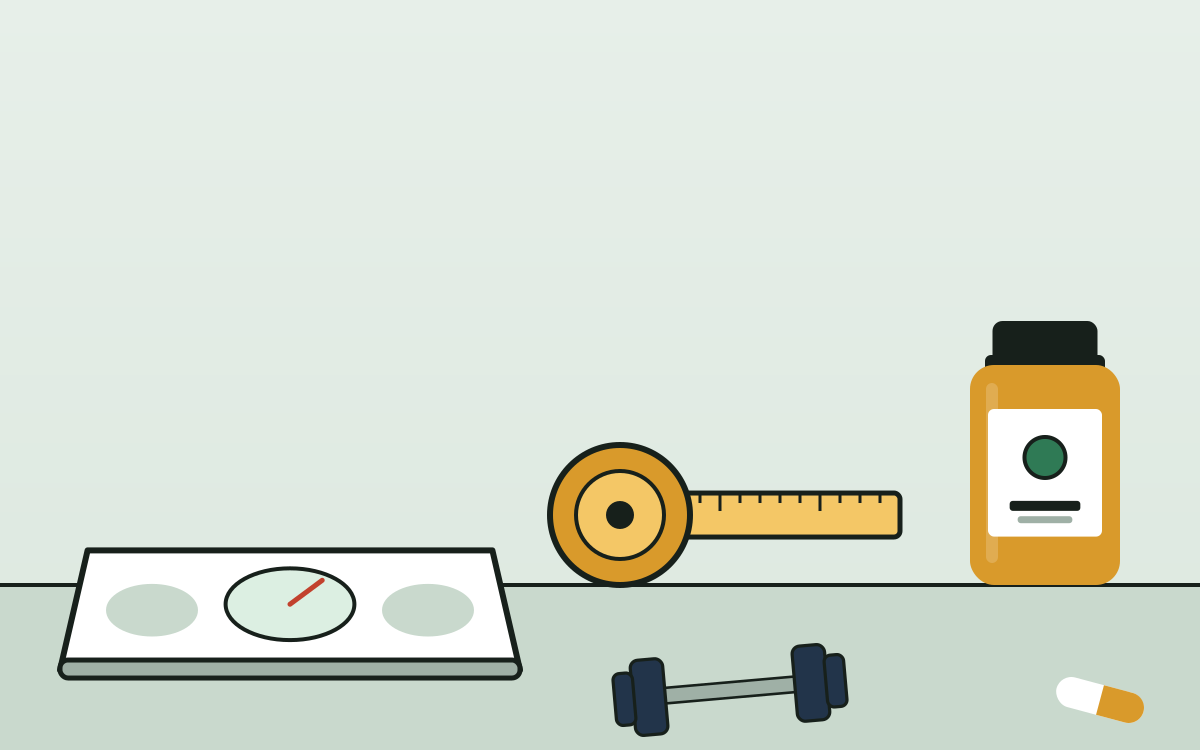
The evidence for training is mixed. In one trial, recreational athletes took 2 g of L-carnitine L-tartrate twice a day for 24 weeks and rated exercise as slightly easier. A 2021 systematic review (11 trials, 203 adults) found a few small trials with gains in high-intensity exercise, but none in which carnitine improved moderate-intensity performance.
If strength and power are your goal, creatine has much better evidence. More options for active people are in the men’s health and sport section.
Acetyl-L-carnitine for memory
Acetyl-L-carnitine has been studied in Alzheimer’s disease and other dementias. In a 2003 Cochrane review (1–3 g a day for 12 to 52 weeks, all trials in Alzheimer’s disease), more people were rated as improved by doctors at 12 and 24 weeks, but not at 52. Memory tests, dementia severity and daily functioning didn’t change, the authors said the positive result may be down to chance, and they didn’t support routine use. Early studies looked better than later, larger ones. If you’re worried about your memory, see your GP.
L-carnitine, TMAO and the heart
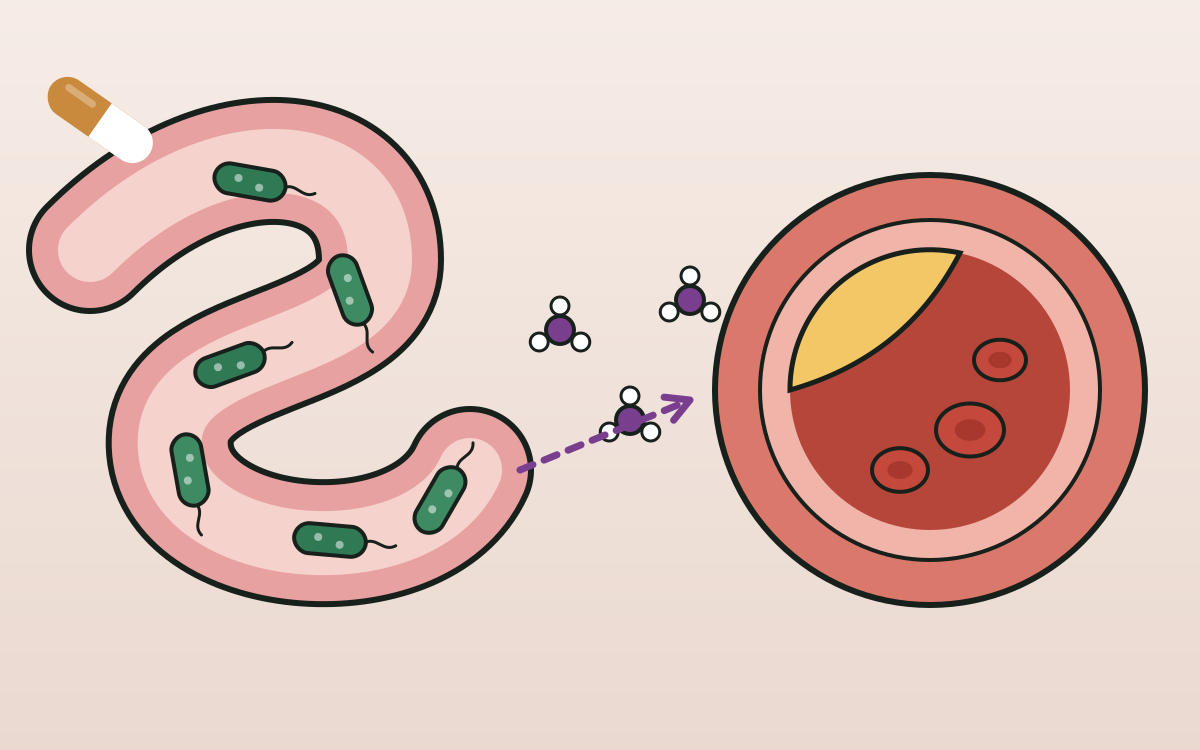
Carnitine that isn’t absorbed reaches your gut bacteria. They turn it into TMAO (trimethylamine N-oxide), which has been linked with hardening of the arteries.
- In a 2013 study, meat eaters produced more TMAO after carnitine than vegans or vegetarians.
- In mice, dietary carnitine increased hardening of the arteries, but only when their gut bacteria were intact.
- Among 2,595 patients having heart tests, higher blood carnitine predicted heart disease and heart attacks only in those who also had high TMAO.
- In a 2022 trial, 157 adults with metabolic syndrome and existing plaque in the neck arteries took 1 g of L-carnitine twice a day or a placebo for 6 months. Plaque volume didn’t differ, but artery narrowing and total and LDL cholesterol rose more on carnitine.
NIH ODS says the meaning of these findings isn’t yet clear and more research is needed. Still, it’s another reason not to take carnitine for years without a clear purpose, especially if you have heart disease.
L-carnitine for vegetarians
Vegetarians get very little carnitine from food, but a healthy body makes up the difference: a person weighing about 75 kg makes roughly 14 mg a day. In one trial a supplement raised muscle carnitine by about 13% in vegetarians but not in meat eaters. That doesn’t show a health benefit. Vegetarians and vegans have more reason to watch vitamin B12.
Side effects, medicines and who should avoid it
No safe upper limit has been set for carnitine. At around 3 g a day, NIH ODS reports:
- nausea, vomiting, stomach cramps and diarrhoea;
- a fishy body odour;
- muscle weakness in people with uraemia (severe kidney failure);
- seizures in people with epilepsy.
Medicine interactions:
- Epilepsy medicines (valproate, phenobarbital, phenytoin, carbamazepine) lower blood carnitine. Whether you need a supplement is for your neurologist to decide.
- Warfarin. MSK warns that carnitine may add to its blood-thinning effect, so tell your anticoagulation clinic before starting.
- Pivalate-containing antibiotics can deplete carnitine with long-term use, although NIH ODS notes no illness from this has been described.
- Chemotherapy. MSK notes that acetyl-L-carnitine can worsen nerve pain caused by chemotherapy, so discuss any carnitine with your cancer team.
- Thyroid hormone. Carnitine works against thyroid hormone inside cells. In a 2001 trial, 2–4 g a day eased symptoms of excess thyroid hormone in 50 women whose levothyroxine dose was deliberately kept high. Nobody has studied whether it weakens a normal replacement dose, but it could in theory. If you take levothyroxine, tell your GP before starting and ask whether to check your thyroid levels.
On kidneys: many people with end-stage kidney failure, especially on haemodialysis, run short of carnitine. Their doctors prescribe it, in trials often as injections, so this isn’t a reason to self-treat.
Don’t take carnitine without medical advice if you have kidney disease or are on dialysis, or if you’re pregnant or breastfeeding. For children, a paediatrician decides the dose. Other combinations are in our vitamin compatibility chart.
Is carnitine OK for you without a doctor?
Tick what applies. Any line you can't tick is a reason to talk to your GP first
0 / 8 ticked
All ticked. Start with 1–2 g a day split into 2 doses: from 3 g, nausea, diarrhoea and a fishy body odour become more likely.
L-carnitine on iHerbHow to take L-carnitine
- Decide why you want it. L-carnitine for weight, L-tartrate for training; for memory there’s no proven benefit.
- Start with 1–2 g a day. Trials used 1–4 g, but side effects become more likely from 3 g.
- Split the dose in two, as many trials did.
- Review after 2–3 months. Track weight, waist size and how training feels.
- Don’t take it for years without a reason. The TMAO question is still open.
Liquid L-carnitine or capsules?
Gyms and sports shops often sell carnitine as a liquid, while iHerb has more capsules and tablets. There’s no evidence that liquid works better, and only 14–18% of carnitine from supplements is absorbed in any case. Dose and ingredients matter more. Liquids may contain sugar, syrups and flavourings, and it’s easy to misjudge a dose in a measuring cap. Capsules make it simpler to know exactly what you took.
How to choose L-carnitine on iHerb
- Pick the form for your goal: L-carnitine, L-carnitine L-tartrate or acetyl-L-carnitine.
- Look at the grams of carnitine per serving, not the weight of the compound.
- With liquids, check for sugar and sweeteners.
- Compare the price per 1 g of carnitine in £ or €, not per tub.
- Not sure you need a supplement at all? Try our vitamin check.
Related amino acids: taurine is a staple of energy drinks, and L-arginine is sold for circulation. For what usually makes sense for men, see our guide to supplements for men.
Bottom line: what to choose
You want to try it for weight loss
L-carnitine
Only alongside a calorie deficit and activity
L-carnitine on iHerbCurious about the acetyl form
Acetyl-L-carnitine
No proven benefit for memory
Acetyl-L-carnitine on iHerbButtons lead to selections of the right form on iHerb. These are affiliate links; your price doesn't change.
FAQ
Does L-carnitine help with weight loss?
A little. In a meta-analysis of 9 trials (911 people), those taking carnitine lost 1.33 kg more on average than those on placebo, and the effect faded over time. Without a calorie deficit, L-carnitine won’t reduce your weight.
What are the benefits of L-carnitine?
Carnitine carries fatty acids into mitochondria, where they’re burned for energy. Your liver and kidneys make it, and you also get it from meat and milk. NIH ODS says healthy people don’t need to get it from food or supplements.
What is acetyl-L-carnitine?
It’s a different form of carnitine, studied mainly for memory and Alzheimer’s disease. In a Cochrane review, a small benefit on doctors’ overall ratings at 12–24 weeks had gone by week 52, memory tests didn’t improve, and the authors didn’t support routine use.
How much L-carnitine should I take?
Weight loss trials used 1.8–4 g a day, often split into 2 doses. Around 3 g a day can cause nausea, diarrhoea and a fishy body odour, so starting with 1–2 g is sensible. Review it after 2–3 months.
Do vegetarians need L-carnitine?
Usually not. A vegan diet provides about 1.2 mg a day, but the body makes its own. In vegetarians a supplement raised muscle carnitine slightly, but that doesn’t show any health benefit.
Is L-carnitine bad for your heart?
It isn’t clear. Gut bacteria turn carnitine into TMAO, which has been linked with hardening of the arteries, and in a 2022 trial in people with metabolic syndrome, 2 g a day for 6 months raised cholesterol more than placebo. NIH ODS says the meaning of these findings is still unclear.
Sources
- NIH ODS. Carnitine – Fact Sheet for Health Professionals
- Pooyandjoo M. et al. The effect of (L-)carnitine on weight loss in adults: a systematic review and meta-analysis of randomized controlled trials. Obesity Reviews, 2016
- Koeth R.A. et al. Intestinal microbiota metabolism of L-carnitine, a nutrient in red meat, promotes atherosclerosis. Nature Medicine, 2013
- Johri A.M. et al. Progression of atherosclerosis with carnitine supplementation: a randomized controlled trial in the metabolic syndrome. Nutrition & Metabolism, 2022
- Hudson S., Tabet N. Acetyl-L-carnitine for dementia. Cochrane Database of Systematic Reviews, 2003
- Memorial Sloan Kettering Cancer Center. Carnitine
- Benvenga S. et al. Usefulness of L-Carnitine, a Naturally Occurring Peripheral Antagonist of Thyroid Hormone Action, in Iatrogenic Hyperthyroidism. J Clin Endocrinol Metab, 2001
L-carnitine at a glance
For adults, based on NIH ODS and meta-analyses
- What it is
- a compound that carries fat into mitochondria
- Where it comes from
- made by the body; found in red meat
- Weight loss
- 1.33 kg more than placebo on average
- Doses in trials
- 1–4 g a day
- Side effects
- around 3 g a day: nausea, diarrhoea, fishy odour
- Ask a doctor first
- warfarin, levothyroxine, epilepsy medicines, dialysis
No safe upper limit has been set for carnitine. Healthy people usually don't need a supplement.
Shop L-carnitine on iHerbCheck how much carnitine is in each serving
Contents
- What L-carnitine is and what it does
- Forms of carnitine and what each is for
- L-carnitine for weight loss: what trials show
- L-carnitine for exercise
- Acetyl-L-carnitine for memory
- L-carnitine, TMAO and the heart
- L-carnitine for vegetarians
- Side effects, medicines and who should avoid it
- How to take L-carnitine
- Liquid L-carnitine or capsules?
- How to choose L-carnitine on iHerb