Vitamin A and vitamin E: what they do, how much you need and when too much is harmful
This article contains affiliate links to iHerb. If you buy through them, we earn a commission at no extra cost to you. It doesn't affect which forms we recommend. Learn more
Vitamins A and E are fat-soluble: your body stores them, so excess builds up. That matters most for preformed vitamin A in pregnancy and for beta-carotene in smokers. You'll also find how to convert IU on a label.
What vitamin A does
Vitamin A helps you see in dim light, keeps your immune system working and keeps skin and the lining of parts of the body, such as the nose, healthy. It’s also involved in cell growth and in forming and maintaining the heart, lungs and eyes. Your body stores vitamin A in the liver, so you don’t need it every day.
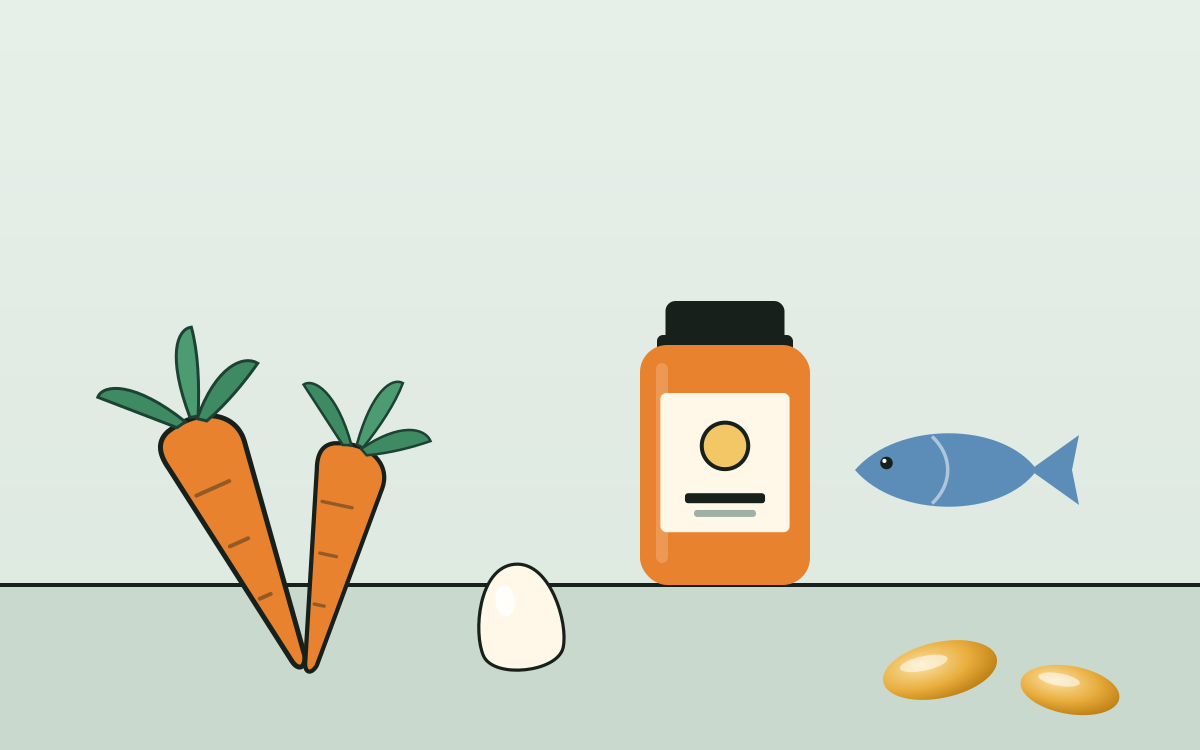
Good sources of preformed vitamin A, according to the NHS:
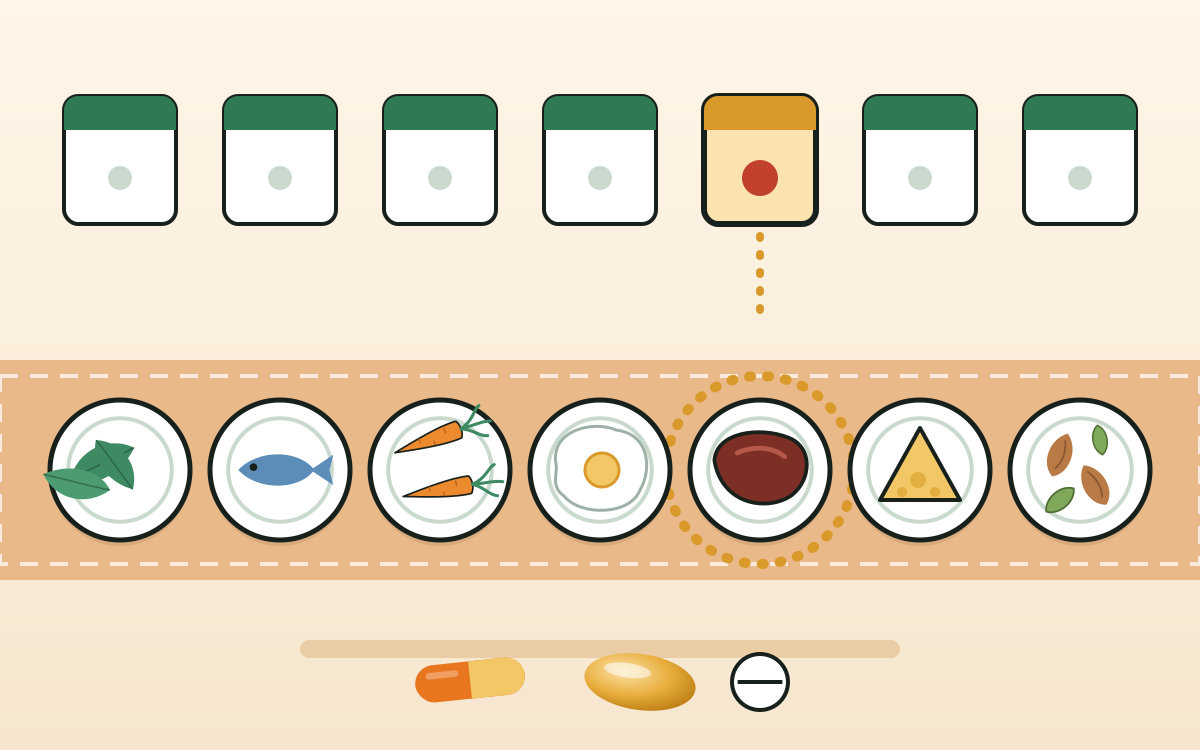
- liver and liver pâté – a particularly rich source;
- oily fish such as salmon, mackerel, herring and sardines;
- cheese, milk, yoghurt and eggs.
Your body also makes vitamin A from beta-carotene, found in carrots, spinach, sweet potatoes, red peppers, mango and apricots. Most adults who eat a varied diet don’t need a vitamin A supplement.
Retinol vs beta-carotene
Two different things appear on labels under the name “vitamin A”.
| Retinol and its esters | Beta-carotene | |
|---|---|---|
| On the label | retinol, retinyl palmitate, retinyl acetate | beta-carotene |
| Found in | animal foods, supplements | vegetables and fruit, supplements |
| Upper limit | 3,000 mcg a day | none set |
| Main risk | birth defects in pregnancy, liver | lung cancer in smokers (high doses) |
| Signs of excess | dry skin, aching muscles and joints, tiredness, abnormal liver tests | harmless yellowing of the skin |
Too much preformed vitamin A (retinol) is toxic. Your body converts beta-carotene into vitamin A, and according to NIH ODS it isn’t known to cause birth defects. But beta-carotene supplements carry their own risk, covered below.
How much vitamin A you need and how much is too much
| Men | Women | |
|---|---|---|
| NHS (UK) need | 700 mcg | 600 mcg |
| NIH (US) need | 900 mcg RAE | 700 mcg RAE |
| Pregnancy (NIH) | – | 770 mcg RAE |
| Upper limit (EFSA, US) | 3,000 mcg | 3,000 mcg |
In 2024 EFSA reviewed the limit and kept it at 3,000 mcg a day for all adults, including pregnant and breastfeeding women and women after the menopause. The limit covers preformed vitamin A from food and supplements combined.
NHS advice is more cautious. Some research suggests that more than 1,500 mcg a day over many years may make bones more likely to fracture. So postmenopausal women and older men should stay at or under 1,500 mcg a day from food and supplements. In practice: eat liver or pâté no more than once a week, and if you do eat it weekly, don’t take supplements containing vitamin A, including fish liver oil.
Vitamin A in pregnancy
Too much preformed vitamin A in pregnancy can cause birth defects of the eyes, skull, lungs and heart. This means:
- Don’t take more than 3,000 mcg (10,000 IU) of preformed vitamin A a day when pregnant or breastfeeding.
- Avoid liver and liver products when planning a pregnancy and during it. Both the NHS and EFSA advise this.
- Get vitamin A only from your pregnancy supplement, without adding more.
- Retinoid medicines such as isotretinoin for acne can also cause birth defects. Discuss them with your doctor before trying to conceive.
For folic acid, the NHS recommends 400 mcg before conception and up to week 12. Read more in our guide to pregnancy vitamins.
Beta-carotene and smokers
Beta-carotene from carrots is safe. High-dose supplements are where the risk lies:
- ATBC. Male smokers took 20 mg of beta-carotene a day for 5–8 years. Lung cancer risk and deaths went up.
- CARET. Smokers and former smokers took 30 mg of beta-carotene plus 7,500 mcg of retinol a day. It was stopped early: lung cancer risk rose by 28% and deaths from lung cancer by 46%.
In 2024 EFSA couldn’t set a safe upper limit for beta-carotene. Its advice: smokers should avoid supplements containing beta-carotene, and everyone else should use them only to meet vitamin A needs. That’s also why beta-carotene was removed from the eye formula – see our guide to eye vitamins and lutein.
How much preformed vitamin A is in your bottle
Choose the unit on your label and enter the amount per serving
1,500 mcg RAE
Preformed vitamin A per serving
50% of the 3,000 mcg daily upper limit (EFSA, NIH)
Within the adult limit. But the NHS advises older people to keep food and supplements together at or under 1,500 mcg a day.
1 IU of retinol = 0.3 mcg RAE. Beta-carotene doesn't count towards this limit. Add up vitamin A from every product, including cod liver oil.
What vitamin E does
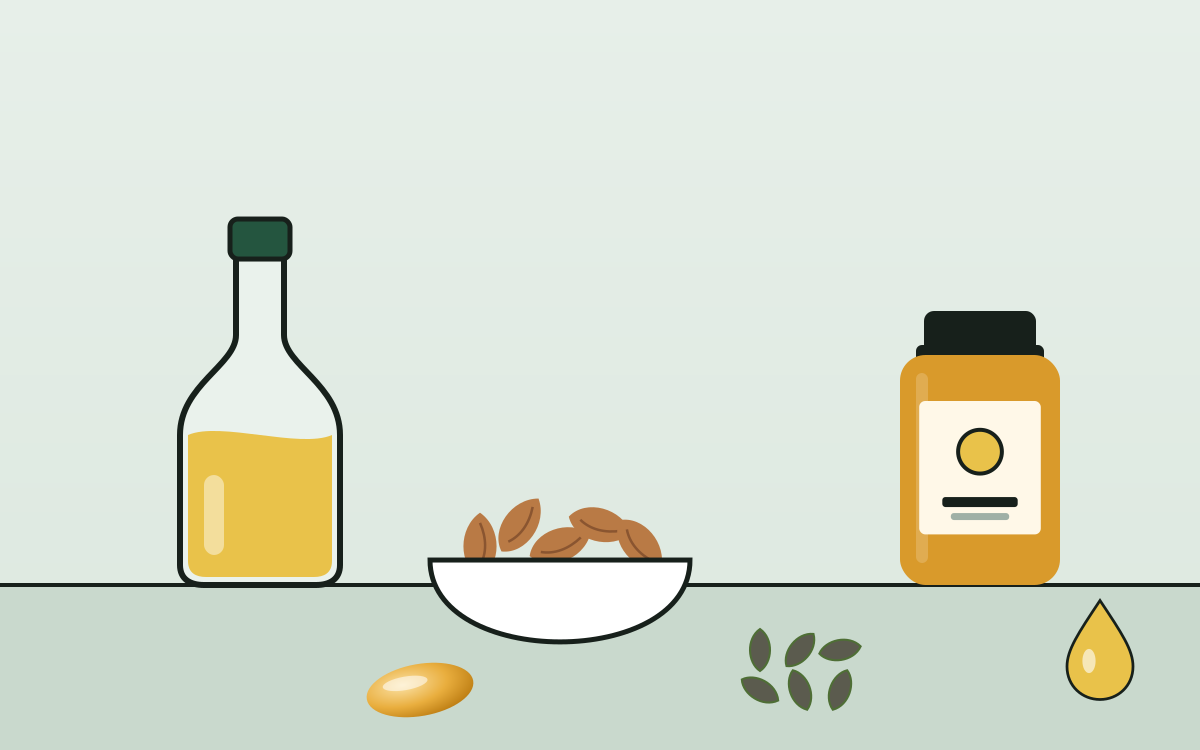
Vitamin E is a fat-soluble antioxidant. The NHS says it helps maintain healthy skin and eyes and supports the immune system. Good sources include plant oils (rapeseed, sunflower, soya, corn and olive), nuts, seeds and wheatgerm. You can usually get all you need from food, and your body stores what it doesn’t use.
| Amount | |
|---|---|
| NHS need | 4 mg for men, 3 mg for women |
| EFSA adequate intake | 13 mg for men, 11 mg for women |
| US need | 15 mg |
| EFSA upper limit | 300 mg |
| US upper limit | 1,000 mg (supplements only) |
EFSA reviewed its vitamin E limit in 2024 and kept it at 300 mg a day for all adults, including in pregnancy and breastfeeding. The concern is bleeding. According to the NHS, 540 mg (800 IU) a day or less from supplements is unlikely to cause harm.
IU, mcg and mg: converting vitamins A and E
Older labels and some products give doses in international units (IU). Here are the conversions:
- Vitamin A as retinol: 1 IU = 0.3 mcg RAE. 10,000 IU = 3,000 mcg – exactly the upper limit.
- Beta-carotene from supplements: 1 IU = 0.3 mcg RAE.
- Beta-carotene from food: 1 IU = 0.05 mcg RAE.
- Natural vitamin E (d-alpha): 1 IU = 0.67 mg. 400 IU = 268 mg.
- Synthetic vitamin E (dl-alpha): 1 IU = 0.45 mg. 400 IU = 180 mg.
Try it on a sample label: tap a line to see what sits behind it.
Vitamins A and E on a label: tap a line
A sample Supplement Facts panel. See how to read the form and the units
Supplement Facts
What it means
Preformed vitamin A
Retinyl palmitate is retinol. 10,000 IU is 3,000 mcg, exactly the upper limit for food and supplements combined. Don't add it on top of a pregnancy supplement.
What it means
A precursor of vitamin A
Beta-carotene doesn't count towards the 3,000 mcg limit. But current and former smokers should avoid it: EFSA couldn't set a safe upper limit.
What it means
Natural vitamin E
1 IU of d-alpha is 0.67 mg, so 400 IU is 268 mg. That's within EFSA's 300 mg, but NIH ODS estimates an effect on clotting is likely above 400 IU a day.
What it means
Synthetic vitamin E
1 IU of dl-alpha is 0.45 mg. This is the dose men took in SELECT, where prostate cancer risk ended up 17% higher than with placebo.
What it means
A blend of tocopherols
A mix of different forms of vitamin E. Still check the dose against 300 mg.
For other vitamins, use our IU to mcg converter.
High-dose vitamin E: bleeding and prostate cancer
Food never provides harmful amounts of vitamin E. Any risk comes from supplements.
- Bleeding. In two large trials, vitamin E raised the risk of haemorrhagic stroke. It interferes with blood clotting, so high doses with warfarin or antiplatelet medicines are risky. NIH ODS estimates a meaningful effect is likely above 400 IU a day.
- Prostate cancer. In the SELECT trial, men took 400 IU (180 mg) of synthetic vitamin E a day. Some years later, their prostate cancer risk was 17% higher than with placebo.
Vitamin E didn’t prevent heart disease in clinical trials. There’s no reason to take high doses “just in case”.
Who should be careful
- Pregnancy or planning one – preformed vitamin A only within normal amounts.
- Isotretinoin, acitretin and other retinoids – combined with vitamin A supplements, they raise the risk of too much vitamin A.
- Current or former smokers – no beta-carotene supplements.
- Warfarin and antiplatelet medicines – high-dose vitamin E only with your GP’s agreement.
- Orlistat – reduces absorption of vitamins A and E and beta-carotene. Its manufacturers recommend a multivitamin.
- Liver disease – retinol supplements only on medical advice.
- Children – doses depend on age and weight, so follow the label and your GP or health visitor; children’s limits for vitamin A are lower.
Check combinations with other supplements in our vitamin compatibility chart.
How to choose vitamins A and E on iHerb
- Decide whether you need a supplement at all: with a varied diet, usually not.
- For vitamin A, check the form: retinyl palmitate or acetate is preformed vitamin A; beta-carotene is a precursor.
- Add up vitamin A across all your products and compare it with 3,000 mcg – or 1,500 mcg if you’re older.
- For vitamin E, stay within 300 mg; d-alpha is the natural form, and mixed tocopherols are a blend.
- Smokers should avoid beta-carotene; pregnant women shouldn’t add vitamin A on top of a pregnancy supplement.
Our Supplement Facts guide explains label units in detail. For more guides, see skin, hair and joints.
Bottom line: what to choose
Few plant oils, nuts or seeds
Vitamin E, low dose
No more than 300 mg a day; food is better
Vitamin E on iHerbNeed vitamin A but you smoke
A multivitamin without beta-carotene
Check the label: no beta-carotene
Multivitamins on iHerbPlanning a pregnancy
A pregnancy multivitamin
Don't add extra vitamin A on top
Prenatal vitamins on iHerbButtons lead to selections of the right form on iHerb. These are affiliate links; your price doesn't change.
FAQ
What are the benefits of vitamin E?
Vitamin E is a fat-soluble antioxidant. The NHS says it helps maintain healthy skin and eyes and supports the immune system. You can usually get enough from plant oils, nuts, seeds and wheatgerm.
How much vitamin A is too much?
The upper limit for preformed vitamin A is 3,000 mcg (10,000 IU) a day from food and supplements combined. The NHS advises postmenopausal women and older men to stay at or under 1,500 mcg a day because of the risk to bones.
What's the difference between retinol and beta-carotene?
Retinol is preformed vitamin A from animal foods and supplements. Beta-carotene is a plant pigment your body turns into vitamin A. Too much retinol is a risk in pregnancy; beta-carotene supplements are a risk for smokers.
How do I convert vitamin E IU to mg?
1 IU of natural vitamin E (d-alpha tocopherol) is 0.67 mg; 1 IU of synthetic (dl-alpha) is 0.45 mg. So 400 IU is 268 mg of natural or 180 mg of synthetic vitamin E.
Can I take vitamin A in pregnancy?
Only within normal amounts, usually as part of a pregnancy supplement. Don’t take more than 3,000 mcg (10,000 IU) of preformed vitamin A a day: it can cause birth defects. Avoid liver and liver products such as pâté.
Sources
- NHS. Vitamin A
- NHS. Vitamin E
- EFSA NDA Panel. Scientific opinion on the tolerable upper intake level for preformed vitamin A and β-carotene, 2024
- EFSA NDA Panel. Scientific opinion on the tolerable upper intake level for vitamin E, 2024
- EFSA NDA Panel. Scientific Opinion on Dietary Reference Values for vitamin E as α-tocopherol, 2015
- NIH ODS. Vitamin A and Carotenoids – Fact Sheet for Health Professionals
- NIH ODS. Vitamin E – Fact Sheet for Health Professionals
Vitamins A and E at a glance
For adults, based on the NHS, NIH ODS and EFSA
- Vitamin A need
- 600–700 mcg (NHS); 700–900 mcg (US)
- Vitamin A upper limit
- 3,000 mcg preformed vitamin A (EFSA, US)
- Pregnancy
- too much retinol can cause birth defects
- Beta-carotene
- smokers should avoid supplements (EFSA)
- Vitamin E need
- 3–4 mg (NHS); 11–13 mg (EFSA)
- Vitamin E upper limit
- 300 mg (EFSA) / 1,000 mg (US)
The vitamin A limit applies to retinol and its esters only. Beta-carotene doesn't count towards it.
Shop vitamin E on iHerbNatural form: d-alpha tocopherol; synthetic: dl-alpha
Contents
- What vitamin A does
- Retinol vs beta-carotene
- How much vitamin A you need and how much is too much
- Vitamin A in pregnancy
- Beta-carotene and smokers
- What vitamin E does
- IU, mcg and mg: converting vitamins A and E
- High-dose vitamin E: bleeding and prostate cancer
- Who should be careful
- How to choose vitamins A and E on iHerb