Vitamins for your immune system: which ones actually matter
You can't strengthen immunity from a bottle. But low vitamin D and zinc do weaken your defences, and fixing that is simple and cheap. This page covers who needs them and how not to overdo it.
Vitamin D tablets: how much D3
How much vitamin D3 to take: NHS advice of 10 mcg (400 IU) in autumn and winter, the 100 mcg limit, D3 vs D2, vitamin D3 and K2, and how to choose vitamin D tablets.
9 min readZinc supplements: form and dose
Choosing a zinc supplement: zinc picolinate vs bisglycinate and citrate, how much zinc to take (NHS: 9.5 mg men, 7 mg women), the 25 mg limit and zinc for colds.
9 min readVitamin C: dose and forms
How much vitamin C per day adults need (NHS, EFSA), when vitamin C tablets make sense, what they do for colds, the best form to choose and the kidney stone risk.
9 min readVitamins by season
Which vitamins to take in winter and autumn in the UK: NHS advice on 10 micrograms of vitamin D, when to start and stop, vitamin C for colds, and food first.
9 min readNAC: medicine or supplement?
NAC (N-acetyl cysteine) is prescription-only in the UK but a supplement in the US. Its legal status, proven NAC benefits, doses, the GTN interaction and asthma risk.
9 min readVitamins for kids: what's needed
Which vitamins kids need under NHS advice: vitamin D for babies and children, vitamins A, C and D for under-5s, Healthy Start, iron poisoning and gummy vitamins.
10 min readQuercetin and quercetin with zinc
Quercetin benefits examined: hay fever and cold evidence, how a quercetin supplement is absorbed, quercetin and zinc or bromelain, kidney cautions and ciclosporin.
9 min readElderberry for colds
Elderberry benefits for colds and flu: what trials show, elderberry syrup vs gummies, why raw berries are toxic, who should avoid sambucus and how to choose it.
8 min readReishi mushroom: evidence and risks
Reishi mushroom benefits vs evidence: what Cochrane reviews found for blood sugar, blood pressure and cancer. Side effects: liver injury, bleeding, interactions.
9 min readPropolis and bee pollen: the facts
Bee propolis benefits checked: small studies on cold sores, alcohol in propolis tinctures, bee pollen, and the real risk of allergy, asthma and anaphylaxis.
9 min read
What actually supports immunity
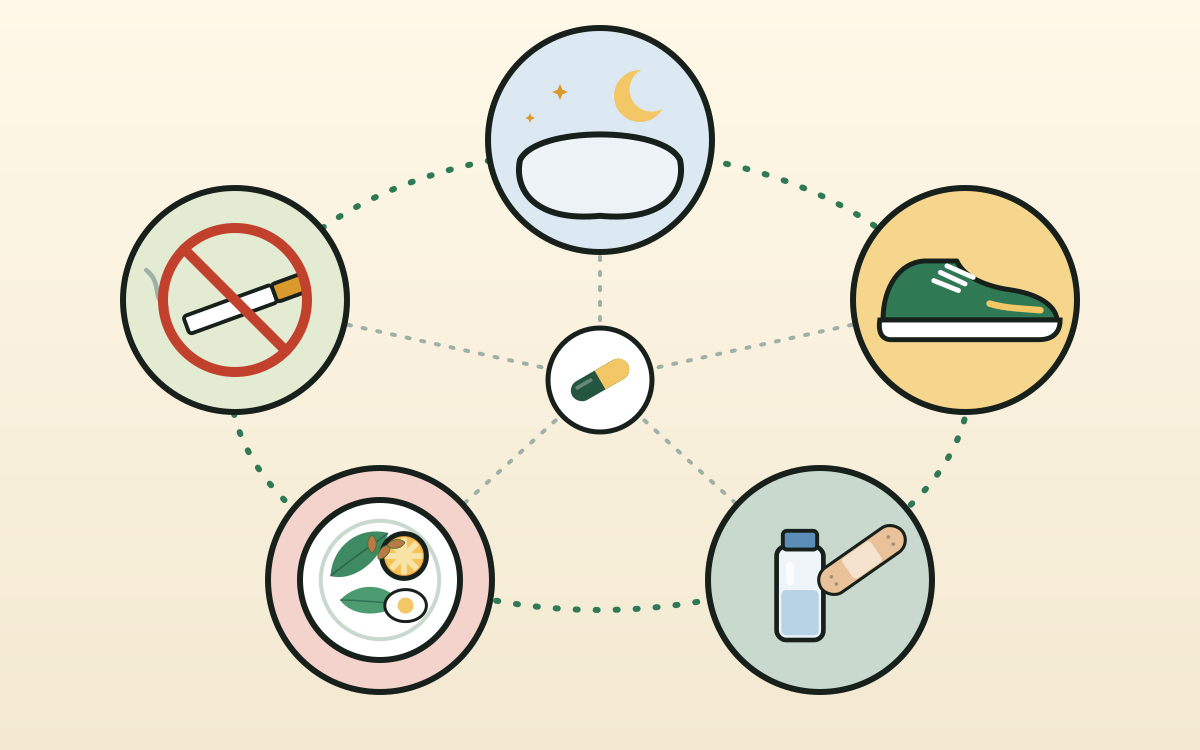
Your immune system needs sleep, physical activity, a healthy weight, no smoking, vaccination and a diet without gaps. Supplements only cover that last point: they fix a shortfall but don’t push immunity above normal.
In the UK and northern Europe, low vitamin D is the most common problem. The NHS notes that most people get enough from sunlight only between late March or early April and September. Vegetarians and people who rarely eat meat or seafood can also run low on zinc.
Find your option: immunity
Pick your situation to see which nutrient makes sense and at what dose
Your situation
What makes sense
Vitamin D3
In a UK or northern European winter, skin makes almost no vitamin D.
Dose: NHS: 10 mcg (400 IU) a day in autumn and winter; no more than 100 mcg
What makes sense
Zinc
Vegetarians and people who rarely eat meat or seafood can run low on zinc.
Dose: 10–15 mg a day
What makes sense
Zinc lozenges
Zinc acetate lozenges started within 24 hours shortened colds in some trials.
Dose: Only while the cold lasts, usually no longer than 1–2 weeks
What makes sense
See your GP
More than 4–6 colds a year as an adult means looking for a cause, not choosing supplements yourself.
Where to start
- Vitamin D3: doses in IU and mcg, the upper limit, and whether you need K2.
- Zinc: forms, safe doses, lozenges for colds and the risk of copper deficiency.
- Vitamins to take in winter: what changes from autumn to spring, and vitamin D in a UK winter.
- Vitamin D from sunlight in the UK: a month-by-month calendar for your city.
If you’re an adult catching more than 4–6 colds a year, or infections hit you hard, book a GP appointment rather than trying to fix it with supplements on your own.
Vitamins for immunity: what works and what doesn’t
This is the evidence for the supplements people most often put in their basket “for immunity”.
| Nutrient | Who it makes sense for | Dose | What’s known |
|---|---|---|---|
| Vitamin D3 | everyone in autumn and winter | 10 mcg (400 IU), NHS advice | slightly lower risk of respiratory infections |
| Zinc | if your diet is low in it | 10–15 mg | a deficiency weakens immunity |
| Zinc lozenges | first day of a cold | per label, briefly | shortened colds in some trials |
| Vitamin C | people under heavy physical stress | 200 mg or more; adults need 40 mg | barely reduces the chance of catching a cold |
| Probiotics | after antibiotics | per strain studied | effects depend on the strain |
| NAC | not for everyday immunity | only with a doctor’s advice | evidence is limited |
| Elderberry | colds and flu | per label, briefly | preliminary evidence; raw or unripe berries are toxic |
| Quercetin | not for everyday immunity | per label | little research in people |
| Reishi mushroom | not for self-treatment | per label | little research in people |
| Propolis | not if you’re allergic to bee products | per label | limited evidence; allergic reactions are possible |
| Children’s vitamins | babies and children under 5 | as the NHS and your GP advise | vitamin D is the main one |
Once a cold has started, the useful options shrink to a couple. Step through them:
A cold is starting: what makes sense
Five steps, from day one to "why do I get ill so often?". Tap a step
Zinc acetate lozenges
In some trials, lozenges started within 24 hours shortened colds.
- Only while the cold lasts, usually no longer than 1–2 weeks
- How many a day: follow the pack
Starting vitamin C now is too late
Reviews found that starting it once you're ill doesn't help. Taken regularly, it may slightly shorten colds but barely changes your chance of catching one.
- The effect is larger in people under heavy physical stress
Elderberry: early evidence only
People take it for colds and flu, per label and briefly.
- Raw or unripe berries are toxic
Check for a shortfall
Most people in the UK get enough vitamin D from sunlight only between late March or early April and September. Vegetarians and people who rarely eat meat or seafood can run low on zinc.
- Vitamin D: NHS advice is 10 mcg (400 IU) a day in autumn and winter, no more than 100 mcg
- Zinc: 10–15 mg a day
More than 4–6 colds a year: see your GP
If you get ill often or badly, you need to find the cause rather than pick supplements on your own.
What helps more than any bottle
These habits do more for your defences than supplements:
- Sleep 7–9 hours a night.
- Stay physically active most days.
- Don’t smoke.
- Keep your vaccinations up to date, including the flu jab if you’re offered it.
- Eat a varied diet with enough protein, fruit and vegetables.
Bottom line: what to choose
Buttons lead to selections of the right form on iHerb. These are affiliate links; your price doesn't change.
FAQ
Does vitamin C help with colds?
Taking vitamin C regularly barely reduces the chance of catching a cold in most people, though it may slightly shorten colds. The effect is larger in people under heavy physical stress. Reviews found that starting it once you’re already ill doesn’t help.
How much vitamin D should I take in winter in the UK?
The NHS advises everyone to consider 10 mcg (400 IU) a day in autumn and winter. Some groups, such as people who rarely go outside or cover most of their skin, should take it all year. Don’t take more than 100 mcg (4,000 IU) a day.
What should I give my child for immunity?
The NHS advises a daily vitamin D supplement for babies and young children. Ask your health visitor, GP or pharmacist about the dose and form. Children don’t need zinc or other supplements without a reason.
What to choose
Goal and the best-supported option
- Autumn and winter in the UK
- vitamin D 10 mcg (400 IU) a day, NHS advice
- Little meat or seafood
- zinc 10–15 mg a day
- First day of a cold
- zinc acetate lozenges
- After antibiotics
- probiotics: modest, strain-specific evidence
- Frequent infections
- see your GP to find the cause