Collagen supplements: types, marine vs bovine, dosage and what the evidence shows
This article contains affiliate links to iHerb. If you buy through them, we earn a commission at no extra cost to you. It doesn't affect which forms we recommend. Learn more
Collagen is one of the best-selling supplements for skin and joints, but the evidence is thinner than the marketing. This page covers the types, sources and trial doses, and an awkward question: who paid for the trials.
Why people take collagen supplements
Collagen is the main protein in connective tissue: skin, bone, tendons and cartilage. Your body makes it from amino acids, and it needs vitamin C to do so. Production slows with age, which is the idea the marketing is built on.
Most people buy it for one of three reasons:
- to make skin more hydrated and elastic, and wrinkles less visible;
- for joint pain, mainly knee osteoarthritis;
- as extra protein in coffee, porridge or smoothies.
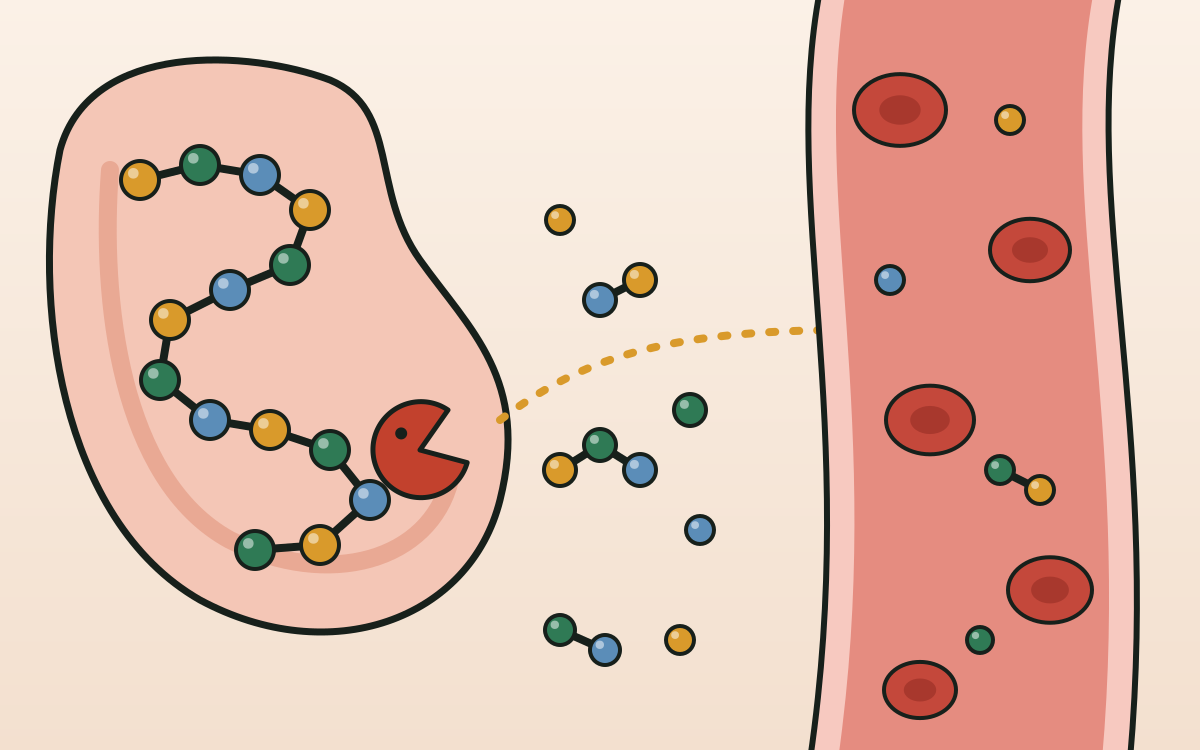
In the gut, collagen peptides are broken down into amino acids and short fragments, and some fragments turn up in the blood. Whether they go on to build collagen in your skin hasn’t been clearly shown. So collagen has to be judged by trial results, not by the logic of “eat collagen, make collagen”.
Collagen types: I, II and III
At least 28 types of collagen have been described, but supplements mainly use three. Type I makes up about 90% of the collagen in your body.
| Type | Where in the body | Which supplements |
|---|---|---|
| I | skin, bone, tendons | peptides from cowhide and fish skin |
| II | joint cartilage | UC-II and hydrolysed chicken cartilage |
| III | skin and blood vessels, alongside type I | bovine peptides labelled “Type I & III” |
“Five types of collagen” on a tub is marketing, not a sign of quality. Peptides from different types are similar in make-up: collagen is rich in glycine, proline and hydroxyproline. Types I and III are used for skin; type II was studied for joints.
Marine vs bovine collagen
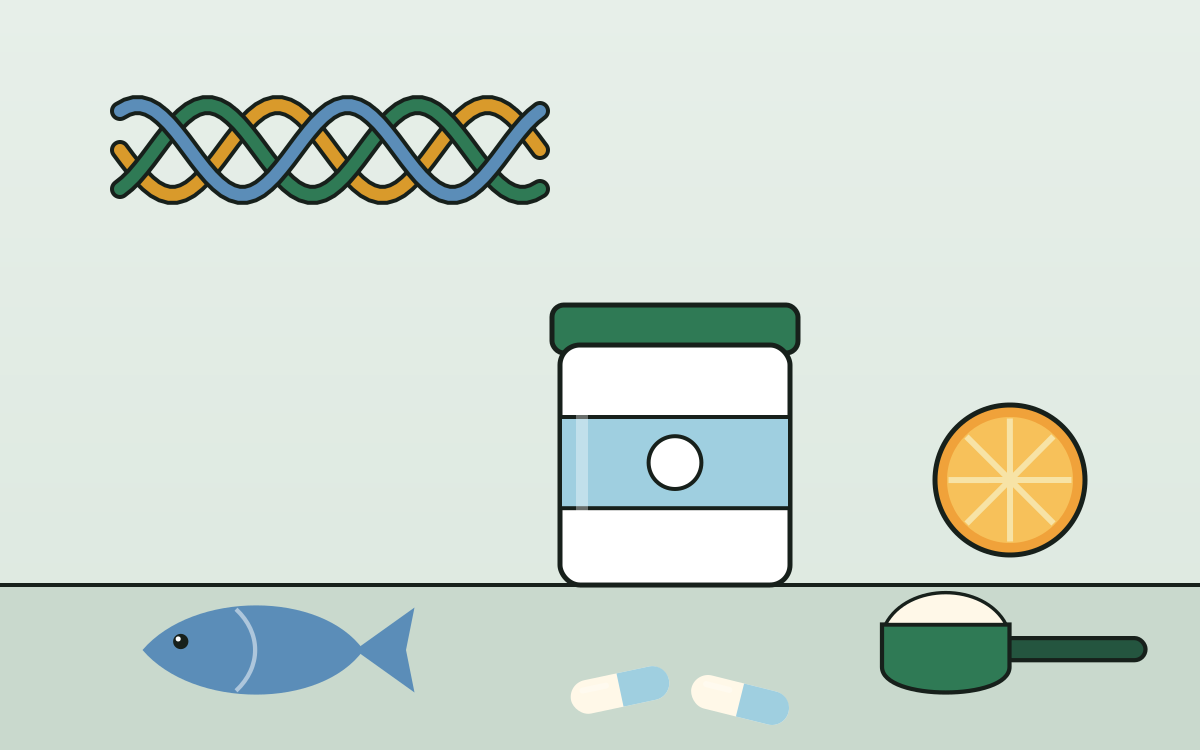
There are almost no head-to-head trials of marine and bovine collagen. In a 2023 meta-analysis, 14 of 26 skin trials used fish collagen, so there’s more data on it. That doesn’t mean fish collagen works better.
| Marine | Bovine | UC-II | |
|---|---|---|---|
| Type | mostly I | I and III | II |
| Dose in trials | 2.5–10 g | 2.5–10 g | 40 mg |
| Studied for | skin | skin | knee osteoarthritis |
| Avoid if | fish allergy | you don’t eat beef | – |
Choose by dietary restrictions, tolerability and price per gram. Peptides (hydrolysed collagen, collagen peptides) dissolve in hot and cold drinks, so powder is the most practical form.
Collagen for skin: what the evidence shows
There are plenty of trials, and the verdict depends heavily on which ones you count.
- A 2021 review (19 trials, 1,125 people, 95% women) found improvements in hydration, elasticity and wrinkles.
- A 2023 review (26 trials, 1,721 people) confirmed effects on hydration and elasticity. The effect on hydration was larger with courses over 8 weeks. The authors flagged several sources of bias.
- A 2025 review (23 trials, 1,474 people) also saw a benefit at first. But trials without funding from manufacturers showed no effect, and neither did high-quality trials.
The authors of the latest review concluded there is currently no clinical evidence that collagen prevents or treats skin ageing. Industry groups dispute their methods. A fair summary: if there’s an effect, it’s small and rests mainly on manufacturer-funded studies.
Sun protection, not smoking and seeing a dermatologist have stronger evidence for skin. See our guide to supplements for skin.
Collagen for joints
The data here is thinner and also mixed.
A 2019 meta-analysis in osteoarthritis found a lower total WOMAC score (a scale of pain, stiffness and function) and lower pain on a visual scale. But the WOMAC pain and function subscales on their own didn’t change significantly.
Undenatured type II collagen (UC-II) was tested in 191 people with knee osteoarthritis. After 180 days, 40 mg a day improved WOMAC scores more than placebo and glucosamine with chondroitin. Two of the three authors worked for the company that makes the ingredient.
For glucosamine, chondroitin and omega-3 compared, see our guide to joint supplements.
Which collagen fits your goal
Tap your situation to see the form, the dose used in studies and what to watch for
What matters most to you?
Best fit
Hydrolysed collagen peptides (types I and III)
Powder or capsules. Reviews that include industry-funded trials show a small effect on hydration and elasticity, but independent, high-quality trials found no difference from placebo.
Dose in studies: 2.5–10 g a day for 8–12 weeks
Don't expect a visible change: the evidence is weak.
Best fit
Undenatured type II collagen (UC-II)
Studied in knee osteoarthritis. The dose is tiny compared with powders: it's thought to act via the gut's immune system rather than as a building material. The main trial was run by the ingredient's manufacturer.
Dose in studies: 40 mg a day; the trial lasted 180 days
Best fit
Marine collagen (from fish)
Made from fish skin and scales. It's also mostly type I collagen. There's no proven advantage over bovine collagen – it's a matter of preference.
Dose in studies: Same as other peptides: 2.5–10 g a day
Not suitable if you're allergic to fish.
Best fit
Bovine collagen
The most common and usually the most affordable option. Check the label: "multi collagen" blends can contain fish or eggshell membrane.
Dose in studies: 2.5–10 g a day
Best fit
There's no true plant collagen
Tubs labelled "vegan collagen" usually contain amino acids, vitamin C and plant extracts, not collagen itself. Getting enough protein and vitamin C from food matters more.
How to take collagen
Most skin trials used 2.5–10 g of hydrolysed peptides a day. UC-II is a different animal: 40 mg a day. That isn’t a typo – it really is milligrams.
Give it 8–12 weeks before you judge the result. There’s no evidence that time of day matters, so take it whenever suits you. Unflavoured powder disappears into a morning coffee, porridge or a smoothie.
Your body uses vitamin C to make its own collagen. If fruit and vegetables turn up on your plate most days, you usually don’t need a separate tub. Read more on how much vitamin C you need.
Counting protein? Collagen goes towards your daily total too.
Powder, capsules or drinks
The form mostly affects convenience and cost per dose, not the result.
- Powder – the easiest way to reach 2.5–10 g. Unflavoured powder dissolves in water, coffee or yoghurt. Usually the lowest price per gram.
- Capsules and tablets – handy for travel, but each holds little collagen. Count how many you’d need for a trial dose.
- Liquid shots and beauty drinks – often contain sugar or sweeteners and less collagen than powder. Higher price per gram.
- Gummies – usually very little collagen, plus sugar.
If the label lists a “proprietary blend” without grams of collagen, you can’t tell the dose. Leave that one on the shelf.
Check the collagen tub before you pay
Tick each point against the label. Your progress is saved in this browser
0 / 6 checked
The tub passes. Judge the result after 8–12 weeks, and stop if you see no difference by 3 months.
Collagen peptides on iHerbWhy reviews look better than the evidence
Skin changes with the seasons, sleep, skincare and even how you look at it. Start collagen in the same week as a new moisturiser and you’ll never know which one did the work. If you’ve paid for a supplement and expect a result, you’re more likely to notice one. That’s why trials compare against placebo and measure skin with instruments, not impressions.
The other reason is money. In the 2025 review, manufacturer-funded trials showed a benefit and independent ones didn’t. That doesn’t prove collagen is useless. But it does mean the confident promises on the tub run ahead of the science.
Who should avoid collagen
- Fish allergy – avoid marine collagen and “multi collagen” blends, which can contain fish.
- Pregnancy and breastfeeding – there’s little safety data, so talk to your midwife or GP first.
- Kidney disease with a protein limit – collagen is protein and counts towards it. Ask your kidney specialist.
- Vegetarian, vegan or religious restrictions – collagen comes from animal hides, bones or fish scales; the source is on the label.
Trials haven’t reported serious side effects. In the UC-II trial, adverse events were as common as with placebo. If collagen comes in a beauty blend, check the rest of the label: these products often contain high-dose biotin, which can skew blood tests.
How to choose collagen on iHerb
- Decide on your goal: hydrolysed peptides for skin, UC-II for joints.
- Check grams of collagen per serving. Capsules contain little: reaching 2.5 g takes several. Powder is better value.
- Choose a source: bovine, fish or mixed. Check allergens under Other ingredients.
- Don’t pay extra for add-ons such as hyaluronic acid, biotin or vitamin C. Judge each on its own evidence.
- Prefer products with independent testing (NSF, USP and similar seals).
Our Supplement Facts guide explains the label in detail. For related guides, see skin, hair and joints.
Bottom line: what to choose
Trying it for skin
Hydrolysed collagen peptides
Powder, 2.5–10 g a day; judge after 8–12 weeks
Peptides on iHerbKnee osteoarthritis
Type II collagen (UC-II)
40 mg a day; diagnosis and exercise come first
UC-II on iHerbButtons lead to selections of the right form on iHerb. These are affiliate links; your price doesn't change.
FAQ
Is marine collagen better than bovine?
There are no convincing head-to-head trials. Fish collagen was used more often in skin studies; bovine is usually cheaper. Both are mostly type I. Choose by allergies, dietary preferences and price per gram.
What is the best collagen supplement in the UK?
There’s no single best product. For skin, choose hydrolysed collagen peptides that give 2.5–10 g per serving; for knee osteoarthritis, UC-II at 40 mg. Prefer independently tested products and check allergens.
What are the different types of collagen?
At least 28 types exist. Supplements use mainly type I (skin, bone, tendons), type III (skin and blood vessels, alongside type I) and type II (joint cartilage). “Five types of collagen” on a label says nothing about quality.
Do collagen supplements actually work?
Pooled studies show a small effect on skin hydration and elasticity, but a 2025 review found no effect in trials without industry funding or in high-quality trials. Evidence for joints is mixed.
Should I take collagen with vitamin C?
Your body needs vitamin C to make its own collagen. If you eat fruit and vegetables, you usually get enough, so you don’t need to pay extra for a collagen and vitamin C combination.
How long does collagen take to work?
Skin trials lasted 8–12 weeks. If you see no difference after 3 months, there’s little point carrying on.
Sources
- Myung SK, Park Y. Effects of Collagen Supplements on Skin Aging: A Systematic Review and Meta-Analysis of Randomized Controlled Trials. Am J Med, 2025
- Pu SY et al. Effects of Oral Collagen for Skin Anti-Aging: A Systematic Review and Meta-Analysis. Nutrients, 2023
- de Miranda RB et al. Effects of hydrolyzed collagen supplementation on skin aging: a systematic review and meta-analysis. Int J Dermatol, 2021
- García-Coronado JM et al. Effect of collagen supplementation on osteoarthritis symptoms: a meta-analysis of randomized placebo-controlled trials. Int Orthop, 2019
- Lugo JP et al. Efficacy and tolerability of an undenatured type II collagen supplement in modulating knee osteoarthritis symptoms. Nutr J, 2016
- Rahimi N, Launico MV. Biochemistry, Collagen Synthesis. StatPearls
- NutraIngredients. Industry pushes back on meta-analysis concluding collagen supplements show no benefit for skin aging (2025)
Collagen at a glance
For adults, based on clinical trials and systematic reviews
- Main types
- I and III – skin; II – cartilage
- Dose studied for skin
- 2.5–10 g peptides a day for 8–12 weeks
- Dose studied for joints
- UC-II 40 mg a day
- Evidence
- weak; many trials industry-funded
- Vitamin C
- needed to make collagen; food usually covers it
- Caution
- fish allergy; little data in pregnancy
Collagen is a protein, not a vitamin. There's no recommended intake or upper limit for it.
Shop collagen on iHerbCompare grams of collagen per serving, not tub size