Reishi mushroom: what the evidence shows, side effects and who should avoid it
This article contains affiliate links to iHerb. If you buy through them, we earn a commission at no extra cost to you. It doesn't affect which forms we recommend. Learn more
Reishi, or lingzhi, is sold for "immunity" and long life. There are few good human trials, and they've found little benefit. Meanwhile, cases of liver injury and drug interactions have been reported. This page sets out the evidence and who should not take it.
What is reishi mushroom?
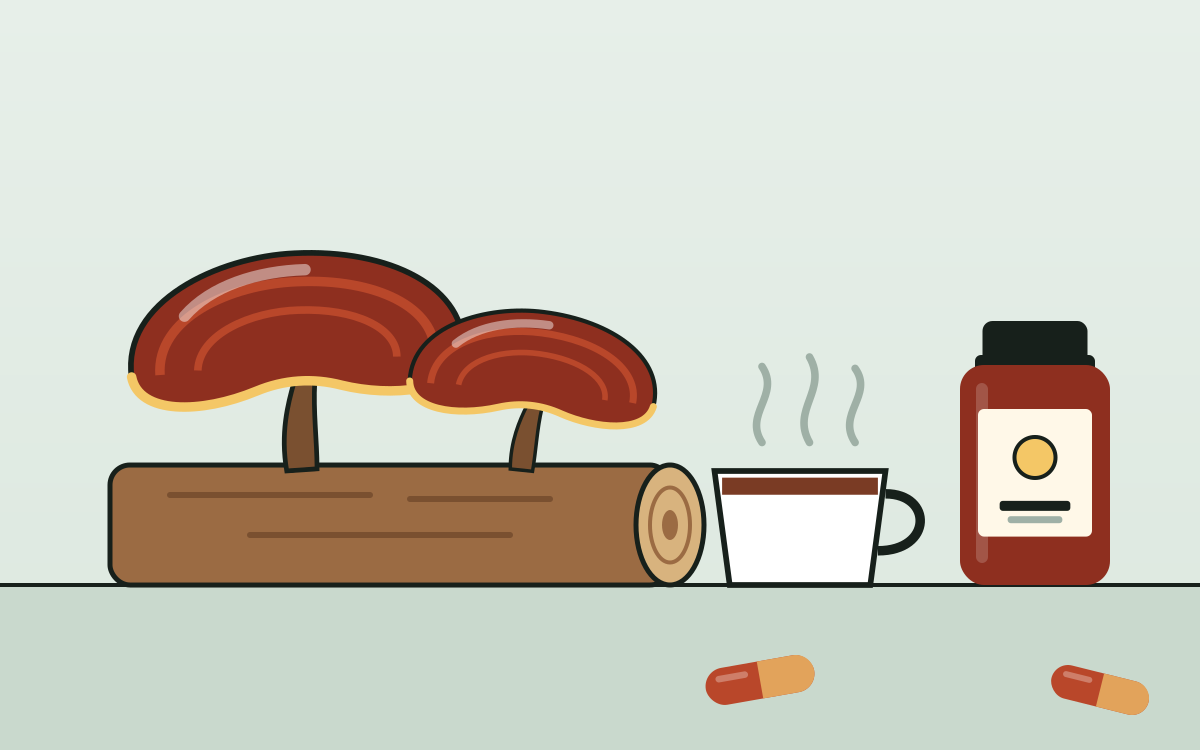
Reishi (Ganoderma lucidum) is a wood-growing mushroom with a glossy red-brown cap. In China it’s called lingzhi, and one of its folk names is “mushroom of immortality”. It has a long history in traditional medicine in China, Japan and Korea.
You can eat the whole mushroom, but powders and extracts are used far more often. Reishi is sold as capsules, tablets, extracts, powders and tea, and there’s also a separate spore powder. Its active compounds are thought to be polysaccharides (including beta-glucans) and triterpenes.
Reishi benefits: what the research shows
In cell and animal studies, reishi extracts affected immune cells, protected the liver and kidneys and slowed the growth of tumour cells. In people, these results have largely not held up. According to the MSD Manual, the studies are few, many are small and poor quality, and some contradict others.
| Sold for | What human studies found | Verdict |
|---|---|---|
| Blood sugar and cholesterol | 2015 Cochrane review: 5 trials, 398 people; the trials with usable data were in type 2 diabetes. No fall in HbA1c or cholesterol | No benefit found |
| Blood pressure | The same review and a 2025 meta-analysis of 17 trials: blood pressure didn’t change | No benefit found |
| Cancer | 2016 Cochrane review: 5 low-quality trials | No grounds to treat cancer with it; effect on survival unknown |
| “Immunity” | In people with cancer, some immune cell counts rose by 2–4% | What this means for health is unclear |
| Alzheimer’s disease | A 6-week pilot study of spore powder | No benefit found |
| Urinary symptoms in men, anxiety | Small studies suggest a possible benefit | Little data |
A 2025 meta-analysis pooled 17 randomised trials. It found a small fall in body mass index and heart rate, but no effect on blood pressure, blood sugar, cholesterol, inflammation or liver enzymes. Its authors rated the certainty of the evidence as very low for every outcome.
Before you buy, bear in mind:
- there are no strong trials with a clear result for reishi;
- products vary widely: mushroom powder, extract, spore powder;
- no health claim for reishi has been authorised in the UK or EU;
- the MSD Manual concludes that most people have no compelling reason to take it.
Reishi side effects and risks
Liver
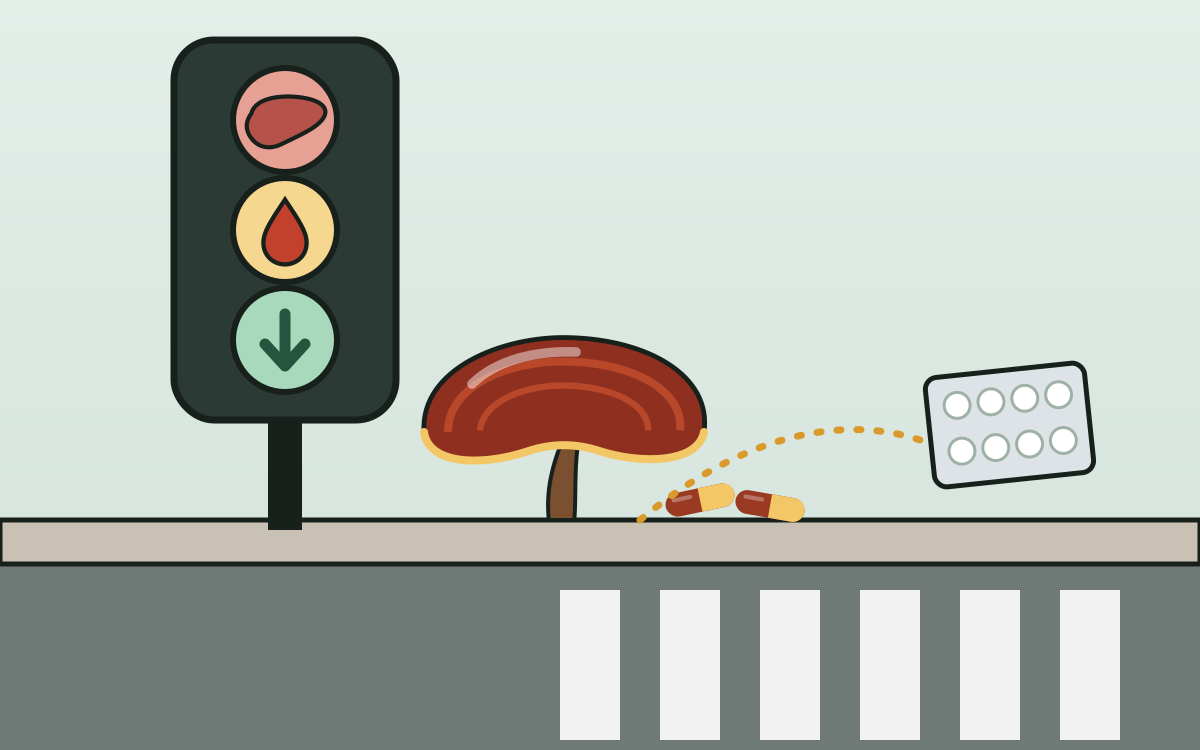
The most serious risk is liver injury. A first case was described in Hong Kong in 2004, and a second in Thailand in 2005 ended in death from fulminant hepatitis. Both patients had drunk boiled reishi before without problems, and both were also taking other medicines. Liver damage developed 1–2 months after they switched to reishi powder.
Memorial Sloan Kettering (MSK), a US cancer centre, lists further cases: hypereosinophilia (too many of one type of white blood cell) with liver nodules, and acute liver injury in a man who also drank alcohol. Results usually returned to normal after stopping the mushroom. The MSD Manual says extract taken for up to a year might be safe, but powder taken for over a month could damage the liver.
Bleeding
MSK warns that reishi may raise the risk of bleeding with anticoagulants and antiplatelet medicines. Its extracts may prolong clotting tests such as INR, PT and APTT. Yet in a trial of 20 healthy volunteers, 1.5 g a day for 4 weeks didn’t change clotting. There’s no data in people already on blood thinners, so it’s not worth the risk.
Blood pressure
According to the MSD Manual, reishi might lower blood pressure, so with blood pressure medicines it could make it too low. In controlled trials, blood pressure didn’t change on reishi. So the risk is mostly theoretical, but if your blood pressure is low or you take tablets for it, talk to your GP first.
Other side effects
Trials and case reports describe:
- nausea, upset stomach, diarrhoea or constipation;
- insomnia, dizziness, headache;
- dry mouth, itching and rash;
- nosebleeds.
Don’t take reishi if:
- you’re pregnant or breastfeeding: its safety hasn’t been studied;
- you have low blood pressure or a bleeding disorder, including a low platelet count;
- you have surgery coming up;
- you have liver disease, given the reported cases of liver injury.
Talk to your GP or pharmacist first if you take:
- warfarin, clopidogrel, heparin, or regular ibuprofen or naproxen;
- blood pressure medicines;
- immunosuppressants, because reishi may boost the immune response;
- chemotherapy, as it may interact with some cancer medicines.
Reishi spore powder can raise the tumour marker CA72-4 in blood tests. Before any tumour marker test, tell your doctor you take it.
Safety check before buying reishi
Tick each line that's true for you. If any line stays unticked, speak to your GP or pharmacist first
0 / 7 ticked
All ticked. If you decide to try it, choose an extract rather than powder, and stop if you notice dark urine or yellowing skin.
Reishi extract on iHerbDark urine, yellowing of the skin or eyes, itching, unexplained bruising or bleeding gums are reasons to stop at once and see a doctor. Taking several supplements and medicines? Check our vitamin compatibility chart.
How to take reishi
There’s no official dose. Trials used:
| Trial | Dose | Duration |
|---|---|---|
| People with type 2 diabetes (Cochrane review) | 1.4–3 g a day | 12–16 weeks |
| Healthy volunteers, blood clotting | 1.5 g a day | 4 weeks |
Powder, extract or spores?
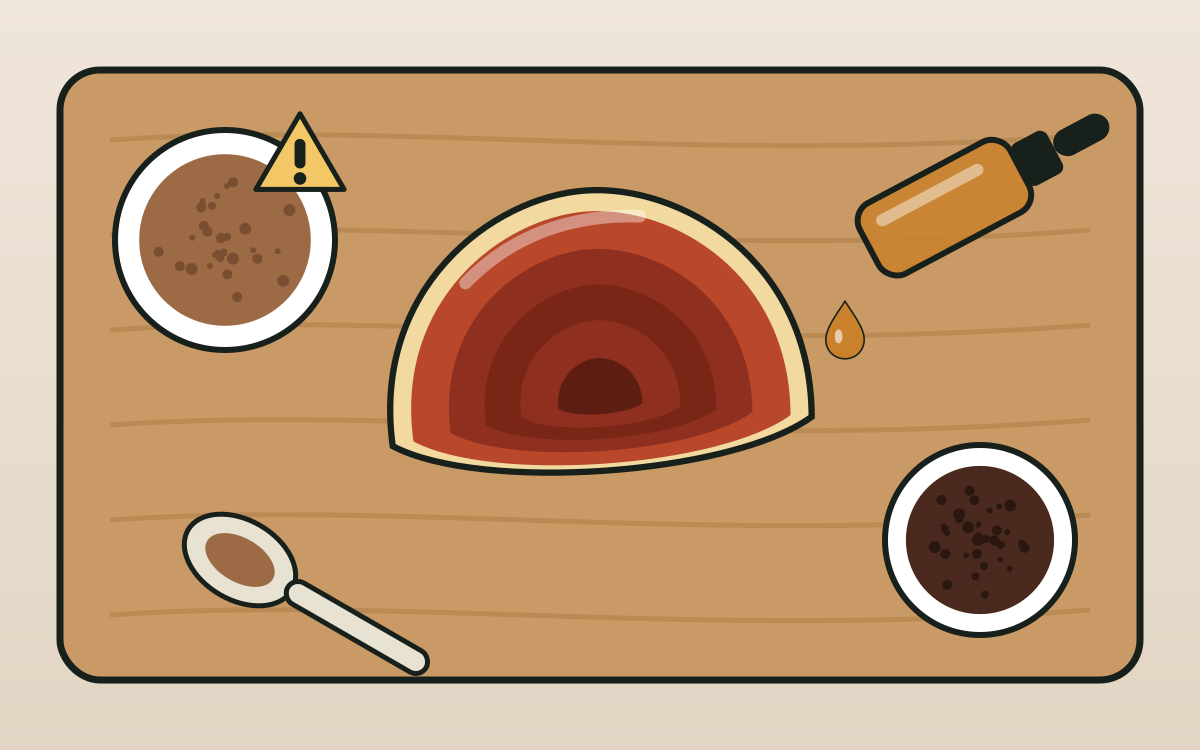
iHerb sells three kinds of product, and their risks differ:
- Mushroom powder is dried, ground reishi. Reported cases of liver injury were linked to powder.
- Extract contains compounds drawn out of the mushroom with water or alcohol. It’s easier to dose, and a good label states the beta-glucan or triterpene content.
- Spore powder is made from the mushroom’s spores rather than the cap. It can raise the CA72-4 tumour marker and showed no benefit in a pilot study in Alzheimer’s disease.
If your GP agrees:
- Choose an extract rather than raw mushroom powder, since the liver cases mostly involved powder.
- Don’t exceed the label dose. If you do choose raw powder, don’t take it for longer than a month, as the MSD Manual advises.
- Don’t combine it with alcohol.
- If you have surgery coming up, stop in good time and tell your surgeon, who will say how far ahead.
Better-studied options for immunity
Supplements “for immunity” mainly help when you’re short of something. Start with what’s better studied:
- vitamin D: the NHS advises 10 mcg a day in autumn and winter;
- zinc, if your diet is low in it;
- sleep, physical activity and the vaccines offered to you on the NHS.
You’ll find more options in our immunity section. Not sure what you need? Try our vitamin check. For another popular mushroom, read about lion’s mane.
How to choose reishi on iHerb
Open the product page and find what it’s made from. Then pick that line below:
What kind of reishi is in your basket?
Pick what the label says to see what's known about the risk
The label says
What we know
Raw powder: linked to the liver cases
This is dried, ground reishi. The reported cases of liver injury, including one death, mostly involved powder.
The MSD Manual says powder taken for more than a month could damage the liver.
What we know
Fruiting body extract: the clearer choice
Compounds are drawn out with water or alcohol. It's easier to dose, and the MSD Manual says extract taken for up to a year might be safe.
Reference: trials used 1.4–3 g a day for 4–16 weeks
What we know
Spore powder: a different product
It's made from spores rather than the cap. It showed no benefit in a pilot study in Alzheimer's disease.
It can raise the CA72-4 tumour marker. Tell your doctor before any blood test for it.
What we know
A useful line on the label
If beta-glucans or triterpenes are stated, not only "polysaccharides", it's easier to know what you're getting.
What we know
Pick a single-ingredient product
If you react to a blend, you won't know which mushroom caused it.
- Check the lists above for medicines and conditions that rule it out.
- Look for Ganoderma lucidum and “fruiting body extract” on the label.
- Prefer products that state beta-glucans or triterpenes rather than only “polysaccharides”.
- Avoid raw mushroom powder for long-term use.
- Pick a single-ingredient product rather than a mushroom blend, so you know what caused any reaction.
- Look for independent quality testing (USP, NSF or similar seals).
Bottom line: what to choose
Your GP agrees and you take no medicines
Reishi fruiting body extract
Extract rather than raw powder; no alcohol
Reishi on iHerbAutumn and winter in the UK
Vitamin D 10 mcg (400 IU)
The NHS daily advice from October to March
Vitamin D3 on iHerbButtons lead to selections of the right form on iHerb. These are affiliate links; your price doesn't change.
FAQ
What are the benefits of reishi mushroom?
It’s sold for immunity, energy, cholesterol and blood pressure. A Cochrane review found no benefit for blood sugar, cholesterol or blood pressure in people with type 2 diabetes, and there’s not enough evidence to use it to treat cancer. Small studies suggest possible benefits for urinary symptoms in men and for anxiety.
What are the side effects of reishi?
Reported side effects include nausea, upset stomach, diarrhoea or constipation, insomnia, dizziness, headache, dry mouth, itching, rash and nosebleeds. Rare cases of serious liver injury have been reported, mostly with reishi powder, including one death.
Is reishi bad for your liver?
Rare but severe liver injury has been described, mainly with powdered reishi. The MSD Manual says taking the powder for more than a month could damage the liver, while extract taken for up to a year might be safe. Avoid it if you have liver disease.
Can I take reishi with blood thinners?
Only if your doctor agrees. MSK warns that reishi may raise the risk of bleeding with anticoagulants and antiplatelet medicines. In healthy volunteers, 1.5 g a day for 4 weeks didn’t affect clotting, but there’s no data in people already taking blood thinners.
Who should not take reishi?
People who are pregnant or breastfeeding, have low blood pressure or a bleeding disorder, or have surgery coming up. Check with your GP first if you take blood thinners, blood pressure medicines or immunosuppressants, are having chemotherapy, or have liver disease.
Sources
- Memorial Sloan Kettering Cancer Center. Reishi Mushroom – About Herbs
- MSD Manual Consumer Version. Reishi (2025)
- Klupp NL et al. Ganoderma lucidum mushroom for the treatment of cardiovascular risk factors. Cochrane Database Syst Rev, 2015
- Jin X et al. Ganoderma lucidum (Reishi mushroom) for cancer treatment. Cochrane Database Syst Rev, 2016
- Jafari A et al. The Nutritional Significance of Ganoderma lucidum on Human Health: A GRADE-Assessed Systematic Review and Meta-Analysis. Food Sci Nutr, 2025
- Wanmuang H et al. Fatal fulminant hepatitis associated with Ganoderma lucidum (Lingzhi) mushroom powder. J Med Assoc Thai, 2007
- Kwok Y et al. Platelet and global hemostatic effects of Ganoderma lucidum (Ling-Zhi) in healthy volunteers. Anesth Analg, 2005
Reishi at a glance
Based on MSK, the MSD Manual and Cochrane reviews
- What it is
- the mushroom Ganoderma lucidum (lingzhi)
- Sold for
- immunity, energy, cholesterol, blood pressure
- What reviews found
- no benefit for blood sugar, cholesterol or blood pressure
- Trial doses
- 1.4–3 g a day for 4–16 weeks
- Main risks
- liver injury (powder), bleeding
- Avoid
- pregnancy, breastfeeding, before surgery, with blood thinners unless your doctor agrees
Reishi doesn't treat cancer or replace medical treatment. The MSD Manual says most people have no compelling reason to take it.
Shop reishi on iHerbNot with blood thinners, in pregnancy or with liver disease