Bone health over 50: calcium and vitamin D for bones, which osteoporosis supplements help, and preventing falls
 Reviewed by
This article contains affiliate links to iHerb. If you buy through them, we earn a commission at no extra cost to you. It doesn't affect which forms we recommend. Learn more
Strong bones after 50 depend on three things: enough calcium and vitamin D, muscles that keep you steady, and fewer falls. Supplements cover only the first part, and often only half of it. Below: what to buy, what to skip, and what to ask your GP about falls and fracture risk.
What your bones need after 50: calcium, vitamin D and protein
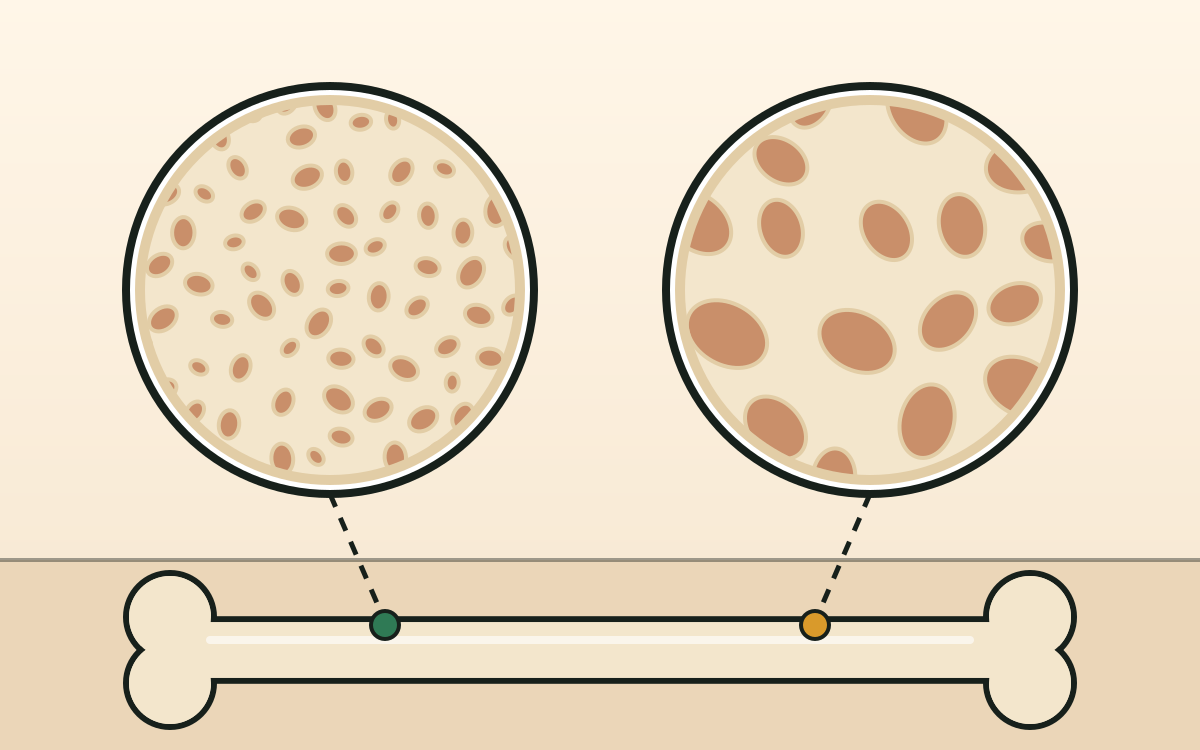
Bone is broken down and rebuilt all the time, and after 50 (for women, after the menopause) the breaking down starts to win. Food and supplements supply the raw material. Exercise does the rest: it loads your bones and keeps you steady on your feet.
| What | How much | Best source | Supplement? |
|---|---|---|---|
| Calcium | 700 mg a day (NHS) | milk, yoghurt, cheese, tofu, leafy greens, sardines with bones | only for the gap your diet leaves |
| Vitamin D | 10 mcg (400 IU) a day | sunlight from April to September, oily fish, eggs | yes, October to March; all year if you rarely go out |
| Protein | at least 0.75 g per kg of body weight (the reference intake NOGG quotes) | fish, eggs, dairy, beans, meat | only if you can’t eat enough |
The UK osteoporosis guideline (NOGG) says at least 700 mg of calcium a day, preferably from food. For people with osteoporosis, NOGG says 800–2,000 IU of vitamin D a day may be appropriate. That’s a decision for your GP, not a reason to buy a 5,000 IU bottle. More on everyday doses is in our guide to vitamin D3 tablets.
Protein matters more than people expect. In NOGG’s review, higher protein intake went with better bone density in one trial and fewer hip fractures in observational studies. After a hip fracture, protein supplements cut infections and shortened hospital stays. Muscle loss is part of the same story, covered in our page on sarcopenia and protein after 60.
Calcium supplements: when they make sense
Most people can reach 700 mg from food. A pot of yoghurt, a glass of milk and a slice of cheese already get you most of the way. Our calcium and vitamin K2 guide has a fuller food list and compares carbonate with citrate.
NOGG suggests supplements mainly for people who can’t get enough calcium from food:
- people who are housebound or live in a care home;
- people with poor absorption, for example inflammatory bowel disease or after weight-loss surgery;
- anyone whose diet has little dairy or fortified food.
There’s one more group. If your GP prescribes an osteoporosis medicine, you’ll often be given calcium and vitamin D alongside it. Most trials of these medicines gave calcium and vitamin D together with the drug, and NOGG says people on treatment should have enough vitamin D.
Pick your situation:
Do you need a calcium tablet?
Pick the situation closest to yours, or to your parent's
Your situation
What to do
You probably don't need calcium tablets
A pot of yoghurt, a glass of milk and a slice of cheese cover most of the 700 mg. Vitamin D from October to March is enough.
Guide: Vitamin D 10 mcg (400 IU); calcium from food
What to do
Top up the gap, not the whole amount
Work out your calcium from food and cover the shortfall. Split anything over 500 mg into two doses with meals.
Guide: Often 250–500 mg elemental calcium
What to do
Vitamin D all year; ask your GP about calcium
NOGG names people who are housebound or in a care home among those who need supplements most.
Guide: Vitamin D 10 mcg (400 IU) all year
What to do
Calcium and D usually come on prescription with it
Don't add your own calcium on top without asking. With alendronic acid, one NHS leaflet advises waiting at least 3–4 hours before calcium.
Alendronic acid first, on an empty stomach; calcium later
What to do
Ask first
Calcium and vitamin D supplements may raise the risk of kidney stones. With kidney disease, check every supplement with your kidney team.
Calcium tablets and the heart: what the evidence says
Some trial analyses from around 2010 found slightly more heart attacks in people taking calcium supplements. Other analyses found no link, and the debate went on for years.
NOGG has weighed it up. Its conclusion, at the highest evidence level: calcium and vitamin D supplements may increase the risk of kidney stones, but not of heart disease or cancer. In practice that means:
- get as much calcium as you can from food;
- take a supplement only for the shortfall, often 250–500 mg;
- split anything over 500 mg into two doses with meals;
- don’t stop a prescribed calcium tablet on your own; ask your GP first.
Vitamin K2 for bones: modest evidence
Vitamin K helps activate osteocalcin, a protein in bone. That’s why K2 often sits next to D3 in combination products. The evidence is mixed, according to NIH ODS:
- in Japan, MK-4 at 45 mg a day is used as an osteoporosis treatment, and a 2006 review of mostly Japanese trials found fewer fractures with it;
- 180 mcg a day of MK-7 for 3 years improved bone strength in post-menopausal women;
- later trials in older men and women found no effect on bone density.
NIH ODS concludes it is unclear whether any form of vitamin K lowers the risk of osteoporosis. K2 is optional. If you take warfarin, don’t start it without your doctor: vitamin K changes how warfarin works.
Preventing falls in older adults
Bone tablets can’t help much if you keep falling. That’s why the NICE falls guideline (NG249, April 2025, which replaced CG161) matters as much as any tablet. It covers everyone over 65, and people aged 50–64 at higher risk.
Your GP or nurse should ask whether you’ve fallen in the past year. NICE offers a full falls assessment if you fell and were injured, couldn’t get up on your own, blacked out, fell twice or more, or are frail. That assessment looks at:
- gait, balance and muscle strength;
- your medicines, especially sleeping tablets, antidepressants and other mind-acting drugs;
- lying and standing blood pressure and dizziness;
- eyesight (cataracts are referred), hearing, feet and footwear;
- bladder control, memory and mood, alcohol;
- osteoporosis risk.
What actually helps, according to NICE and NOGG:
- A strength and balance programme. Progressive, tailored, run by a trained instructor. NOGG notes programmes of 3 hours or more a week work best.
- A medicine review. Some medicines can be reduced or stopped. Bring a full list: our medicines list for your GP helps.
- Regular eye tests. The NHS lists them in its top five tips.
- A home hazard check, ideally by an occupational therapist: loose rugs, poor lighting at night, clutter on the floor, trailing dressing gowns and loose slippers.
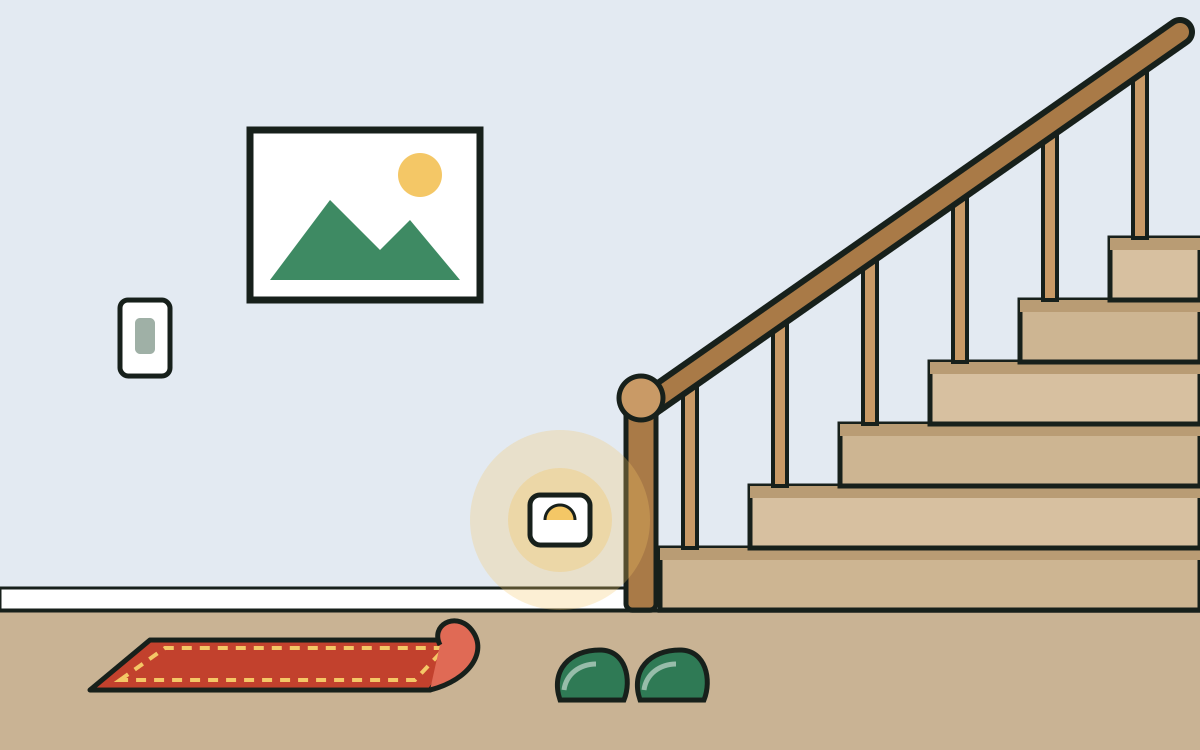
Tick what’s already done at home:
A fall-proof home: what's already done
Tick what's in place for you or your parent. Ticks are saved only in this browser
0 / 9 done
All ticked. If falls still happen, tell your GP: after an injury, two or more falls, or not being able to get up, NICE advises a full falls assessment.
Vitamin D and falls. NICE found too little evidence to take vitamin D specifically to lower the risk of falls. Take it for your bones and muscles at the NHS dose. NOGG warns against large one-off doses of 60,000 IU or more: they were linked to more falls and fractures.
If you do fall and aren’t hurt, the NHS advises getting up slowly: roll onto all fours, hold a sturdy chair with both hands and rise in stages. If you’re hurt or can’t get up, call for help, keep warm and change position about every 30 minutes. Tell your GP about any fall.
Fracture risk: FRAX and bone scans
NICE suggests a fracture risk assessment for all women from 65 and all men from 75. Younger people qualify if they have risk factors:
- a previous fragility fracture (a break from a fall at standing height or less);
- current or frequent steroid tablets;
- a history of falls or a parent who broke a hip;
- a body mass index below 18.5;
- smoking, or more than 14 units of alcohol a week.
Your GP uses FRAX (ages 40–90) or QFracture (ages 30–84) to estimate your 10-year fracture risk. A DXA bone scan comes next only if your risk is close to the treatment threshold. You can’t buy your way around this step: no supplement tells you whether you need treatment.
Alendronic acid and calcium: getting the timing right
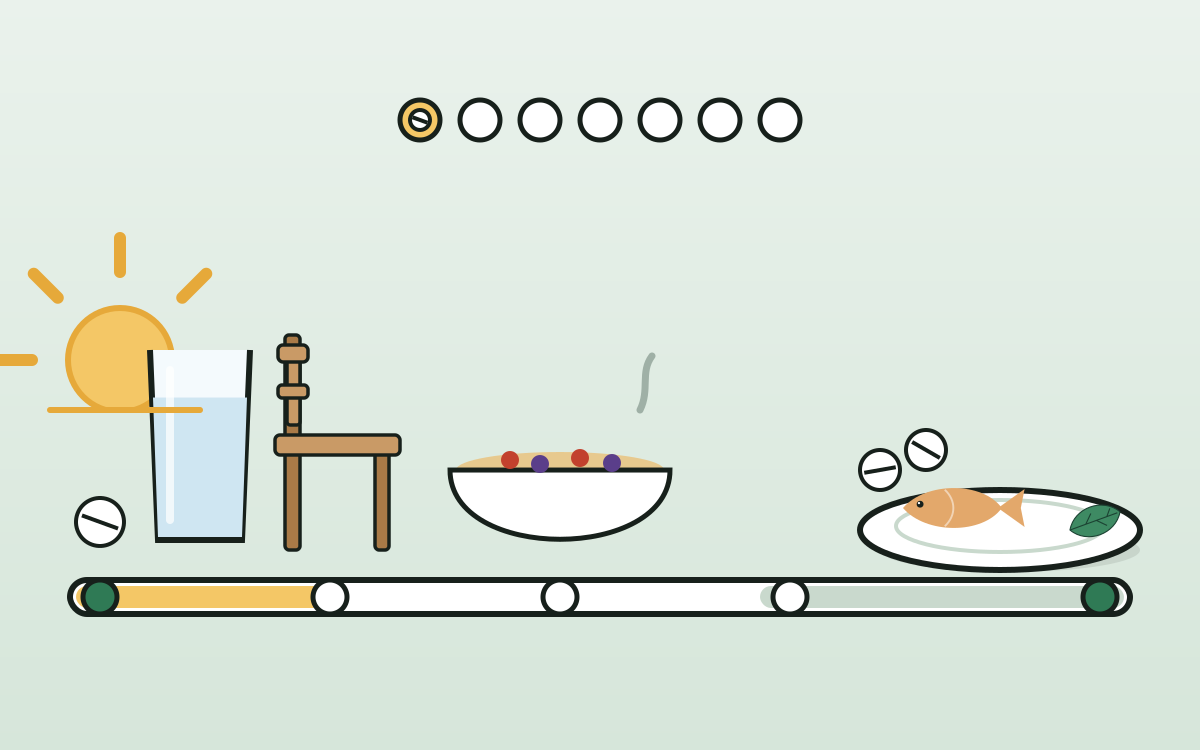
Alendronic acid and similar bisphosphonates are absorbed only on an empty stomach. Calcium blocks their absorption. One NHS trust’s patient leaflet sets out the routine:
| When | What to do |
|---|---|
| Waking, once a week on the same day | alendronic acid with plain tap water only |
| Next 30 minutes | stay upright; no food, other drinks or medicines |
| After 30 minutes | breakfast and your other morning tablets |
| At least 3–4 hours later | calcium supplement, for example with lunch |
Leaflets differ slightly, so follow the one in your pack. Space magnesium out from bisphosphonates too, as our magnesium guide notes.
Who should be careful
- Kidney stones or kidney disease. Ask before taking calcium; see our page on supplements with kidney disease.
- Thiazide water tablets (bendroflumethiazide, indapamide) together with calcium and vitamin D can push blood calcium too high.
- Levothyroxine. Take calcium at least 4 hours apart.
- Warfarin. No K2 without your doctor.
- Several medicines at once. Write them all down before you buy anything, and point an unsure parent to our vitamin check.
How to choose bone supplements on iHerb
- Work out your calcium from food first. Buy a supplement only for the gap.
- Choose citrate if you take it between meals or use acid-reducing tablets; carbonate if you take it with food.
- Check the elemental calcium per serving and the number of tablets in it.
- For vitamin D, 10 mcg (400 IU) is the NHS dose. Add up D3 from every product you take.
- K2 is optional, and never with warfarin unless your doctor agrees.
- If you’re on an osteoporosis medicine, ask your pharmacist how to time everything.
More pages for this age group are in our 50+ section.
Bottom line: what to choose
Little dairy or fortified food
Calcium citrate 250–500 mg
Top up the gap, don't double it
Calcium on iHerbRarely outdoors, or it's winter
Vitamin D3 10 mcg (400 IU)
All year if you're mostly indoors
Vitamin D3 on iHerbButtons lead to selections of the right form on iHerb. These are affiliate links; your price doesn't change.
FAQ
Do calcium supplements cause heart attacks?
Some trial analyses from around 2010 found slightly more heart attacks in people given calcium tablets, while others found no link. The UK osteoporosis guideline (NOGG) concludes that calcium and vitamin D supplements may raise the risk of kidney stones but not of heart disease. The sensible middle ground: get calcium from food first and take tablets only for the gap.
What is the best supplement for osteoporosis?
No supplement treats osteoporosis. Calcium and vitamin D give your bones the raw material, and doctors usually prescribe them with osteoporosis medicines such as alendronic acid. The treatment itself is the medicine, plus exercise and falls prevention.
Does vitamin D prevent falls in older adults?
NICE says there isn’t enough evidence to take vitamin D specifically to lower the risk of falls. It still advises following NHS vitamin D advice for bone and muscle health: 10 mcg (400 IU) a day. Large single doses of 60,000 IU or more are not advised: they were linked to more falls and fractures.
How long after alendronic acid can I take calcium?
Take alendronic acid first thing in the morning with plain tap water, then wait at least 30 minutes before food, drink or other medicines, staying upright. One NHS trust leaflet advises leaving at least 3–4 hours before a calcium supplement. Follow the leaflet in your own pack.
What is a FRAX score?
FRAX is an online tool that estimates your chance of a hip fracture or other major fracture over the next 10 years. It uses your age, sex, weight, past fractures, steroid use, smoking, alcohol and other risk factors, with or without a bone density result. NICE suggests it or QFracture for women from 65 and men from 75.
Which exercises are good for osteoporosis?
A mix of muscle-strengthening and weight-bearing exercise, plus balance training if you’re at risk of falls. The NHS lists press-ups, weights, dancing and skipping among the options. If you already have osteoporosis or a spinal fracture, ask your GP or a physiotherapist before increasing intensity.
Sources
- NHS. Osteoporosis – Prevention
- NOGG. Clinical guideline for the prevention and treatment of osteoporosis – Section 5: Non-pharmacological management
- NICE NG249. Falls: assessment and prevention in older people and in people 50 and over at higher risk (2025)
- NICE CG146. Osteoporosis: assessing the risk of fragility fracture – Recommendations
- NIH ODS. Vitamin K – Fact Sheet for Health Professionals
- Royal Berkshire NHS Foundation Trust. Osteoporosis drug treatment: alendronate (patient leaflet, 2025)
- NHS England North West. NHS tips to prevent falls and avoid hospital admissions (2025)
Bones after 50 at a glance
For adults, based on NHS, NICE and NOGG
- Calcium
- 700 mg a day, mostly from food (NHS)
- Vitamin D
- 10 mcg (400 IU) a day, at least October to March
- Calcium tablets
- to fill a gap in your diet, or with osteoporosis medicine
- Vitamin K2
- evidence for bones is mixed
- Falls
- strength and balance training, medicine review, eye tests
- Fracture risk
- FRAX or QFracture: women 65+, men 75+ (NICE)
NICE found too little evidence to take vitamin D specifically to prevent falls. Take it for bones and muscles, at the NHS dose.
Shop calcium on iHerbCheck the mg of elemental calcium per serving
Contents
- What your bones need after 50: calcium, vitamin D and protein
- Calcium supplements: when they make sense
- Vitamin K2 for bones: modest evidence
- Preventing falls in older adults
- Fracture risk: FRAX and bone scans
- Alendronic acid and calcium: getting the timing right
- Who should be careful
- How to choose bone supplements on iHerb