Best supplements for women: what you actually need in your 20s and 30s, over 40 and over 50
This article contains affiliate links to iHerb. If you buy through them, we earn a commission at no extra cost to you. It doesn't affect which forms we recommend. Learn more
Most women don't need a shelf of bottles. The usual list is short: vitamin D in winter, folic acid if you could get pregnant, and iron only when a blood test shows you're low. Over 40 and over 50 the list shifts a little, mostly towards blood tests and bones.
Best supplements for women: where to start
If you’re healthy and eat a varied diet, you need very little from a bottle. Three names come up again and again:
- vitamin D in autumn and winter – the NHS advises 10 mcg (400 IU) a day for all adults from October to early March;
- folic acid 400 mcg a day if you could get pregnant, not only if you’re planning;
- iron, but only for heavy periods or a deficiency confirmed by a blood test.
Everything else depends on your diet and age. Vegans need B12; if you don’t eat fish, think about omega-3; if you have little dairy, check calcium and iodine. You’ll find the numbers in the table, and the age sections below cover what changes.
| Nutrient | NHS (UK) daily need | NIH (US) daily need | When a supplement usually makes sense |
|---|---|---|---|
| Iron | 14.8 mg to age 49; 8.7 mg from 50 | 18 mg to 50; 8 mg from 51 | heavy periods, deficiency on a test |
| Folic acid | 400 mcg supplement before pregnancy | 400–800 mcg (USPSTF) | you could get pregnant |
| Vitamin D | 10 mcg in autumn and winter | 15 mcg (600 IU) | little sun, darker skin, covered skin |
| Calcium | 700 mg | 1,000 mg; 1,200 mg from 51 | little dairy or fortified food |
| Vitamin B12 | 1.5 mcg | 2.4 mcg | vegan diet, over 50, metformin |
| Iodine | 140 mcg | 150 mcg | little milk, fish or seafood |
US values are higher than UK ones because they’re worked out differently. Neither is wrong, and your diet and blood results matter more than the gap between the two tables.
Supplements for women in their 20s and 30s
At this age, iron is the main question. The NHS says women up to 49 need 14.8 mg of iron a day, compared with 8.7 mg for men. NIH ODS lists heavy menstrual bleeding among the main causes of iron deficiency, along with pregnancy and frequent blood donation.
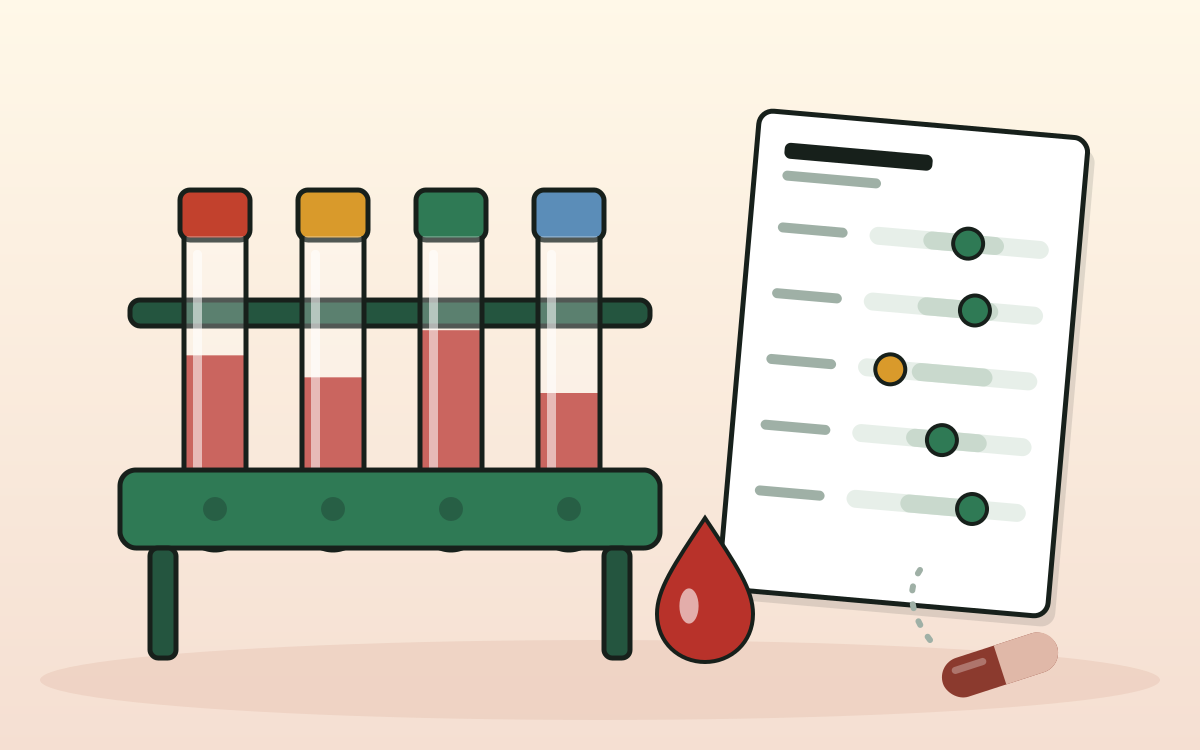
So the order is: test first, supplement second. Ask your GP for a ferritin test and a full blood count. If you’re low, they’ll set the dose and how long to take it. If your results are normal, iron tablets add nothing except a risk of constipation. Our guide to iron tablets and ferrous bisglycinate compares the forms, and the article on ferritin levels explains the numbers.
Two more things at this stage:
- Vitamin D. At UK latitudes the winter sun is too weak to make enough. Our vitamin D3 guide covers doses and forms.
- Folic acid. The NHS advises 400 mcg a day for anyone who could get pregnant. The baby’s neural tube forms in the first weeks, often before you know you’re pregnant.
If you’re trying to get pregnant
Here the rules get stricter: folic acid 400 mcg a day from before conception to week 12, vitamin D 10 mcg a day, and no supplements containing vitamin A (retinol) or cod liver oil. Your GP decides on the higher 5 mg dose of folic acid – for example, if you have diabetes or take anti-epilepsy medicine. Our guide to pregnancy vitamins has the full timeline.
Which supplements fit your life stage
Pick your situation to see what's usually needed and what you can skip
Your stage
What's usually needed
Vitamin D in winter and folic acid
If you could get pregnant, the NHS advises 400 mcg of folic acid a day. Iron only for heavy periods or low ferritin on a blood test.
Dose: D3 10 mcg (400 IU) in autumn and winter; folic acid 400 mcg
What's usually needed
Folic acid 400 mcg and vitamin D
Start folic acid before conception and continue to the end of week 12. Stop retinol supplements and herbal remedies. The 5 mg dose is prescription only.
Dose: Folic acid 400 mcg + D3 10 mcg a day
What's usually needed
The same basics, plus a blood test check
If your periods have got heavier, check ferritin. On metformin or heartburn tablets, ask for a B12 test. Omega-3 if you eat oily fish less than once a week.
Dose: EPA+DHA 250–500 mg a day if you eat little fish
What's usually needed
Bones: calcium from food, vitamin D, B12
You need 8.7 mg of iron a day instead of 14.8 mg, so skip iron without a deficiency. Food first for calcium; the NHS advises no more than 1,500 mg a day from supplements.
Dose: Calcium in doses of 500 mg or less; D3 10 mcg
Check the retinol in your multivitamin: more than 1.5 mg of vitamin A a day for years may weaken bones.
What's usually needed
B12 is a must; the rest depends on your diet
Plant foods contain no B12, so you need a supplement or fortified foods. Consider algae omega-3, iodine, and calcium if you don't use fortified drinks.
Dose: B12 as labelled; algae DHA 250 mg
Supplements for women over 40
Over 40, the basics barely change. What changes is how often it’s worth booking a blood test:
- periods in the run-up to the menopause often become irregular and sometimes heavier – a reason to check ferritin, not to start iron blindly;
- if you’ve taken metformin or heartburn medicines such as omeprazole (proton pump inhibitors) for years, you absorb B12 less well;
- if oily fish turns up less than once a week, consider omega-3: EFSA considers 250 mg of EPA+DHA a day adequate. See how to choose fish oil for reading the label;
- it’s a good moment to add up your calcium from food. If it comes to under 700 mg, start with dairy, hard cheese, calcium-set tofu or fortified plant drinks.
Over 50 and after the menopause
According to NIH ODS, women lose about 1% of their bone mineral density a year after the menopause. That’s why calcium, vitamin D and weight-bearing exercise move to the top of the list.
What changes:
- You need less iron – 8.7 mg a day instead of 14.8 mg. Without a confirmed deficiency, skip the supplement.
- Calcium. The NHS says 700 mg a day is enough; the US figure for women over 50 is 1,200 mg. The NHS advises no more than 1,500 mg a day from supplements. Calcium is absorbed best in doses of 500 mg or less: take carbonate with food, citrate at any time. Our article on calcium and vitamin K2 covers the popular pairing.
- The risk of low B12 rises with age: NIH ODS cites 3–43% in older adults, depending on the definition. Ask for a test, especially if you take metformin.
- High-dose vitamin A is bad for bones: according to the NHS, more than 1.5 mg a day on average over many years may weaken bones. Check the retinol in your multivitamin and don’t combine it with fish liver oil.
To check the numbers on your bottle against the needs and limits:
Vitamins don’t treat hot flushes or other menopause symptoms. If symptoms affect your daily life, talk to your GP about treatment options, including HRT.
Is a multivitamin for women worth it?
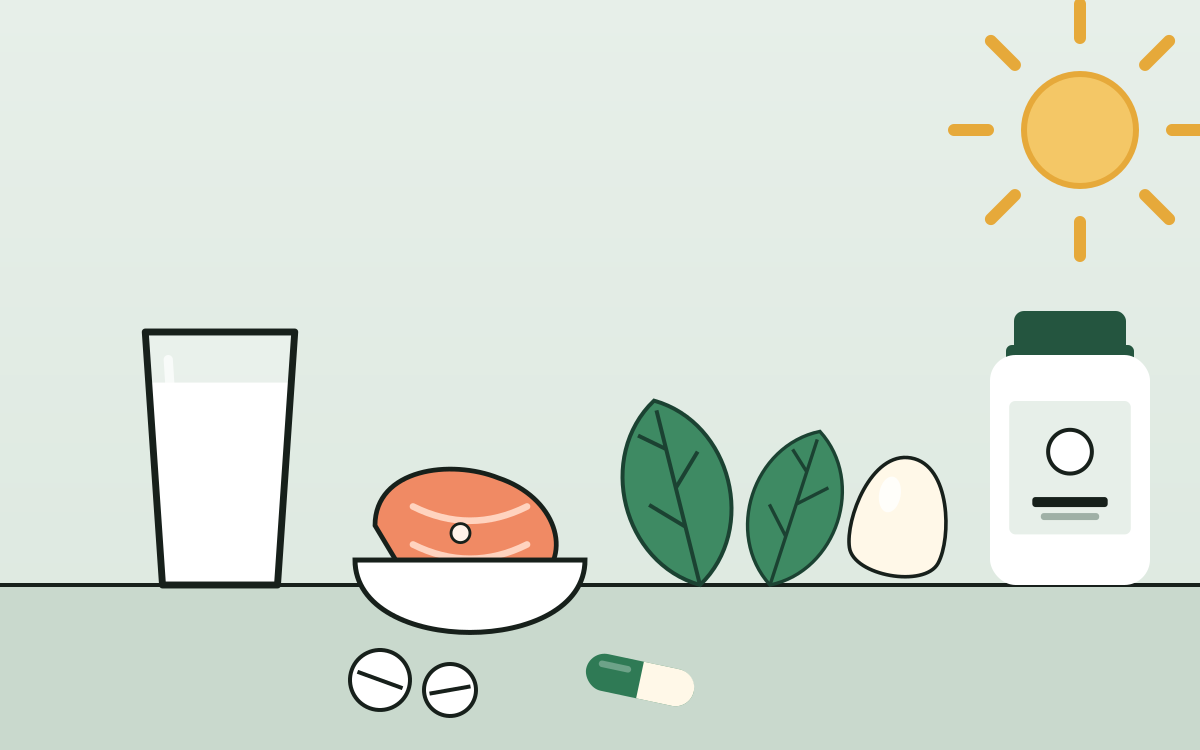
A multivitamin is handy if your diet is limited: one tablet instead of five bottles. NIH ODS says multivitamins may help people who could get pregnant (for the folic acid), adults over 50 (for B12) and anyone on a restrictive diet.
But multivitamins have weak spots:
- in 2022 the US Preventive Services Task Force found too little evidence that multivitamins prevent heart disease or cancer;
- in one US cohort, 10–15% of multivitamin users went over the upper limit for iron;
- many formulas contain iron you don’t need after the menopause; NIH ODS notes that formulas for older adults often contain little or no iron;
- high-dose beta-carotene raised the risk of lung cancer in women and men who smoked or used to smoke.
If you go for one, match it to your stage: before the menopause, with iron and folic acid; over 50, with little or no iron.
What not to take without a reason
- Iron after the menopause or with normal ferritin. The body can’t get rid of excess iron. In people with haemochromatosis (an inherited condition most common in people of northern European background, including in Ireland, Scotland and Wales), iron builds up and damages the liver, joints and heart.
- High-dose vitamin A (retinol). Bad for bones and harmful in pregnancy. Beta-carotene doesn’t carry these risks.
- High-dose B6. Europe’s limit is 12 mg a day for long-term use. More in our guide to B vitamins.
- Biotin for hair. The FDA warns that biotin can distort lab results, including troponin, the blood test used when a heart attack is suspected. Tell your doctor if you take it before any blood test.
- DHEA and herbal “hormone balance” blends. NIH ODS notes that months of DHEA raise testosterone in women, which can cause acne and facial hair.
Who should check with a GP or pharmacist first
- If you’re pregnant or breastfeeding, the plan is different, so start with our pregnancy vitamins guide.
- With a thyroid condition, remember that iron and calcium reduce levothyroxine absorption: take them at least 4 hours apart.
- With kidney disease, take calcium, vitamin D and magnesium only on medical advice.
- On warfarin, talk to your doctor before taking anything with vitamin K.
- With polycystic ovary syndrome (PCOS), inositol is the usual question; our article on inositol and PCOS explains what the evidence shows.
How to choose on iHerb
- Decide what you actually need: vitamin D, folic acid, or something your blood test points to. A multivitamin only if your diet is limited.
- Read the doses, not the list of vitamins: iron, vitamin A (retinol), B6, calcium.
- Don’t double up: add up the iron, D3 and B6 already in your multivitamin.
- Take iron and calcium at different times of day.
- Prefer products with independent quality testing (USP, NSF or similar marks).
Our supplement label guide shows how to read a Supplement Facts panel line by line.
Bottom line: what to choose
Trying to get pregnant
Folic acid 400 mcg
Start before you conceive and continue to week 12
Folic acid on iHerbHeavy periods, low ferritin
Iron bisglycinate
Your GP sets the dose and duration from blood tests
Iron on iHerbButtons lead to selections of the right form on iHerb. These are affiliate links; your price doesn't change.
FAQ
What are the best supplements for women over 40?
The basics stay the same: 10 mcg of vitamin D in autumn and winter, and iron only if periods have become heavier and a ferritin test confirms you’re low. It’s a good time to check B12 if you’re vegan or take metformin or heartburn tablets. Get calcium and omega-3 from food first.
What supplements should women take over 50?
After the menopause, the NHS iron requirement drops from 14.8 mg to 8.7 mg a day, so iron isn’t needed without a deficiency. Bones become the focus: calcium from food, vitamin D and weight-bearing exercise. The risk of low B12 rises with age, so it’s worth a test.
Is a multivitamin for women worth it in the UK?
It’s optional. A 2022 US Preventive Services Task Force review found too little evidence that multivitamins prevent heart disease or cancer. A multivitamin can be convenient if your diet is limited, but check the iron, vitamin A and B6 doses before you buy.
Should I take iron tablets just in case?
Better not. The NHS says up to 17 mg a day from supplements is unlikely to cause harm, but iron brings no benefit when your stores are normal, and doses over 20 mg can cause constipation, nausea and stomach pain. Ask your GP for a ferritin test first.
Which vitamins should I take when trying to conceive?
Folic acid 400 mcg a day, from before conception until week 12, and vitamin D 10 mcg a day. Avoid supplements with vitamin A (retinol) and fish liver oil. Your GP or midwife decides on anything else. See our pregnancy vitamins guide for the full timeline.
Do I need calcium tablets after the menopause?
You need calcium, but not necessarily as a tablet. The NHS says adults need 700 mg a day, which most people get from food. A supplement makes sense if you eat little dairy or fortified food; take no more than 500 mg at a time.
Sources
- NHS. Vitamins and minerals – Iron
- NHS. Vitamins and minerals – Calcium
- NHS. Vitamins and minerals – Vitamin D
- NHS. Vitamins and minerals – Vitamin A
- NIH ODS. Multivitamin/mineral Supplements – Fact Sheet for Health Professionals
- NIH ODS. Iron – Fact Sheet for Health Professionals
- NIH ODS. Calcium – Fact Sheet for Health Professionals
Women's supplements at a glance
For adults, based on NHS and NIH ODS
- Almost everyone
- vitamin D in autumn and winter
- If you could get pregnant
- folic acid 400 mcg a day
- Iron
- for heavy periods or a deficiency on a blood test
- Calcium
- food first; no more than 1,500 mg from supplements
- Over 50
- less iron, keep an eye on B12 and bones
- Skip without a reason
- iron after the menopause, high-dose A and B6, biotin
A multivitamin doesn't fix a deficiency: low iron or B12 is treated separately, at different doses.
Shop vitamin D3 on iHerbAutumn and winter for almost everyone; all year if you rarely get sun
Contents
- Best supplements for women: where to start
- Supplements for women in their 20s and 30s
- If you’re trying to get pregnant
- Supplements for women over 40
- Over 50 and after the menopause
- Is a multivitamin for women worth it?
- What not to take without a reason
- Who should check with a GP or pharmacist first
- How to choose on iHerb