Do I need a multivitamin? Who benefits, what the big trials found and how to choose the best multivitamin in the UK
This article contains affiliate links to iHerb. If you buy through them, we earn a commission at no extra cost to you. It doesn't affect which forms we recommend. Learn more
Large trials haven't shown that a daily multivitamin helps well-fed adults live longer or avoid cancer and heart disease. But it can be a sensible backstop if your diet is limited, you're over 50 or you could get pregnant. Read on for who benefits and how to read the label so you don't pay for things you don't need.
Do I need a multivitamin?
If you’re healthy and eat a varied diet, you probably don’t. A multivitamin won’t replace food or protect you from disease. But sometimes it fills real gaps:
- your diet is limited, you eat very little or you’re on a strict diet;
- you’re vegan and don’t eat fortified foods;
- you’re over 50, when B12 from food is absorbed less well;
- you could get pregnant or are planning to, so you need folic acid;
- your doctor has told you that you don’t absorb nutrients well.
Not sure where to start? Our quick vitamin check shows whether you need a multivitamin or just one or two single supplements.
Multivitamin benefits: what the large trials found
Multivitamins have been tested in tens of thousands of people, and the result is sobering: no clear protection against the major diseases.
| Study | Who took part | How long | What it found |
|---|---|---|---|
| COSMOS, US | 21,442 people: men 60+ and women 65+ | median 3.6 years | no fall in total cancer, cardiovascular events or deaths |
| COSMOS memory sub-studies (three) | over 5,000 people, average age 69–73 | 2–3 years | small improvement in global cognition and episodic memory |
| Physicians’ Health Study II | 14,641 male doctors aged 50 and over | median 11.2 years | 8% less cancer; no effect on heart disease |
| Cohort of 390,124 adults, 2024 | healthy US adults | up to 27 years | daily use not linked to lower risk of death |
| USPSTF review, 2022 | randomised trials | – | not enough evidence to recommend multivitamins against cancer or heart disease |
The COSMOS memory results are interesting, but the effect was small and the people were older. They’re no reason to take a multivitamin “for your brain” at 30. Figures are taken from the NIH ODS review.
Who might benefit from a multivitamin
NIH ODS lists several groups that may gain from one:
- women who could get pregnant, for the folic acid. The dose matters, though – see our folic acid guide;
- people over 50, for vitamin B12, which is absorbed better from supplements than from food;
- vegans and strict vegetarians, for B12 and sometimes iron, zinc, iodine and vitamin D;
- people with conditions that affect absorption, on medical advice.
If your gap is one nutrient, a single supplement is usually more precise. Vegans need a B12 supplement first, and in the UK the NHS advises vitamin D for everyone in autumn and winter.
If you do want a multivitamin, the right formula depends on who you are. Pick the option that fits:
Which multivitamin fits you
Pick what applies to you to see what to look for on the label
About you
What to look for
An iron-free formula
Men need 8.7 mg of iron a day, and food usually covers it. Your body has almost no way to get rid of excess iron, so look for "iron-free".
On the label: vitamin D 10–25 mcg, B6 no more than 10 mg
What to look for
With iron and folic acid
Women aged 19–50 need 14.8 mg of iron a day. A good women's formula gives around 14 mg of iron and 200–400 mcg of folic acid, with no mega-doses.
On the label: iron around 14 mg, folic acid 200–400 mcg
What to look for
A 50+ formula with B12 and vitamin D
B12 from food is absorbed less well as you get older, while B12 from supplements is absorbed better. 50+ formulas usually have little or no iron.
On the label: B12 2.5 mcg or more, vitamin D 10–25 mcg
What to look for
No beta-carotene
In two large trials in smokers, 20–30 mg of beta-carotene a day raised lung cancer risk by 18% and 28%. EFSA says smokers should avoid supplements containing it.
Check the vitamin A line: no beta-carotene, or only a little vitamin A.
What to look for
You need a pregnancy formula
A standard multivitamin may contain retinol, and too much of it in pregnancy can cause birth defects. You want folic acid and no retinol.
On the label, retinol appears as retinyl palmitate or retinyl acetate.
What to look for
B12 first, then the rest
Vegans need B12 first, and sometimes iron, zinc, iodine and vitamin D. If your gap is one nutrient, a single supplement is more precise than a multivitamin.
Who doesn’t need one, or needs a different product
- If you have a confirmed deficiency. Multivitamin doses are for prevention, and low iron, B12 or vitamin D is treated separately.
- If you’re pregnant: a standard multivitamin may contain retinol. You need a pregnancy formula; see our guide to pregnancy vitamins.
- If your bathroom cabinet already holds three or four single supplements. A multivitamin on top tends to cause overlap rather than benefit.
- Children. Adult formulas aren’t suitable. Children’s doses depend on age and weight, so follow the label and your GP or health visitor.
What to look for: doses vs NRV
UK and EU labels show the share of the NRV (nutrient reference value for adults). US bottles on iHerb show % DV, a similar figure based on US values. A good everyday multivitamin gives about 100% of the reference for most vitamins. More isn’t better without a reason.
| Nutrient | UK/EU NRV | What to look for | Limit or caution |
|---|---|---|---|
| Vitamin A | 800 mcg | partly or fully as beta-carotene | retinol: 3,000 mcg (EFSA); no beta-carotene if you smoke |
| Vitamin D | 5 mcg | 10–25 mcg (400–1,000 IU) | 100 mcg a day (EFSA) |
| Folic acid | 200 mcg | 200–400 mcg | 1,000 mcg from all supplements (EFSA) |
| Vitamin B12 | 2.5 mcg | 2.5 mcg or more | no upper limit set |
| Vitamin B6 | 1.4 mg | 1.4–5 mg | NHS: 10 mg from supplements; EFSA: 12 mg in total |
| Iron | 14 mg | women before the menopause; men iron-free | NHS: 17 mg or less from supplements unlikely to harm |
| Zinc | 10 mg | 5–15 mg | 25 mg in total (EFSA) |
| Selenium | 55 mcg | 30–100 mcg | 255 mcg in total (EFSA) |
| Iodine | 150 mcg | up to 150 mcg | 600 mcg (EFSA); thyroid conditions – ask your GP |
Calcium and magnesium are almost always low in a one-a-day tablet, because the full amount simply won’t fit. If you need them, count them separately. Tap the lines of a typical label below to see what to check.
Decoding a multivitamin label
A typical US one-a-day formula. Tap a line to see what to check
Supplement Facts
What to check
Serving size
Every dose below is per tablet. For gummies, a serving is often 2–3 pieces, so check that line.
What to check
% DV vs NRV
% DV is the share of the US daily value. UK and EU labels show % NRV, with slightly different figures: the NRV for B12 is 2.5 mcg, for example. For iron, vitamin A, zinc and B6, check the upper limits, not the percentages.
What to check
Vitamin A: retinol vs beta-carotene
Half of this is beta-carotene and half is preformed retinol. In pregnancy you need a formula with no retinol. EFSA advises smokers to avoid supplements containing beta-carotene.
What to check
Vitamin D
A sensible autumn and winter dose; the NHS advises 10 mcg a day. If you also take a separate D3, add them up: EFSA's limit from all sources is 100 mcg (4,000 IU) a day.
What to check
Folate in DFE
400 mcg DFE is only 240 mcg of actual folic acid. Before pregnancy the NHS advises 400 mcg of folic acid, so this formula falls short. The limit from all supplements is 1,000 mcg.
What to check
B12: a big percentage is fine
Only a small share of an oral dose is absorbed, so B12 is added generously. No upper limit has been set. Vegans and over-50s often take a separate B12 as well.
What to check
Vitamin B6
Fine: within the NHS advice of 10 mg a day from supplements and EFSA's 12 mg limit. Check for more B6 in magnesium B6 products or a B complex.
What to check
Iron
Suits women who have periods. Men and women after the menopause need 8.7 mg a day, and extra iron without a deficiency isn't useful, so choose an iron-free formula.
What to check
Zinc
With the zinc from food, you'll usually stay under EFSA's 25 mg daily limit. A second zinc product (immune blends, lozenges) would tip you over.
What to check
Calcium and magnesium
A full day's amount doesn't fit in one tablet. If you need these minerals, take them separately and count food too. Magnesium from supplements: 250 mg a day or less (EFSA).
Iron, vitamin A and beta-carotene: three common traps
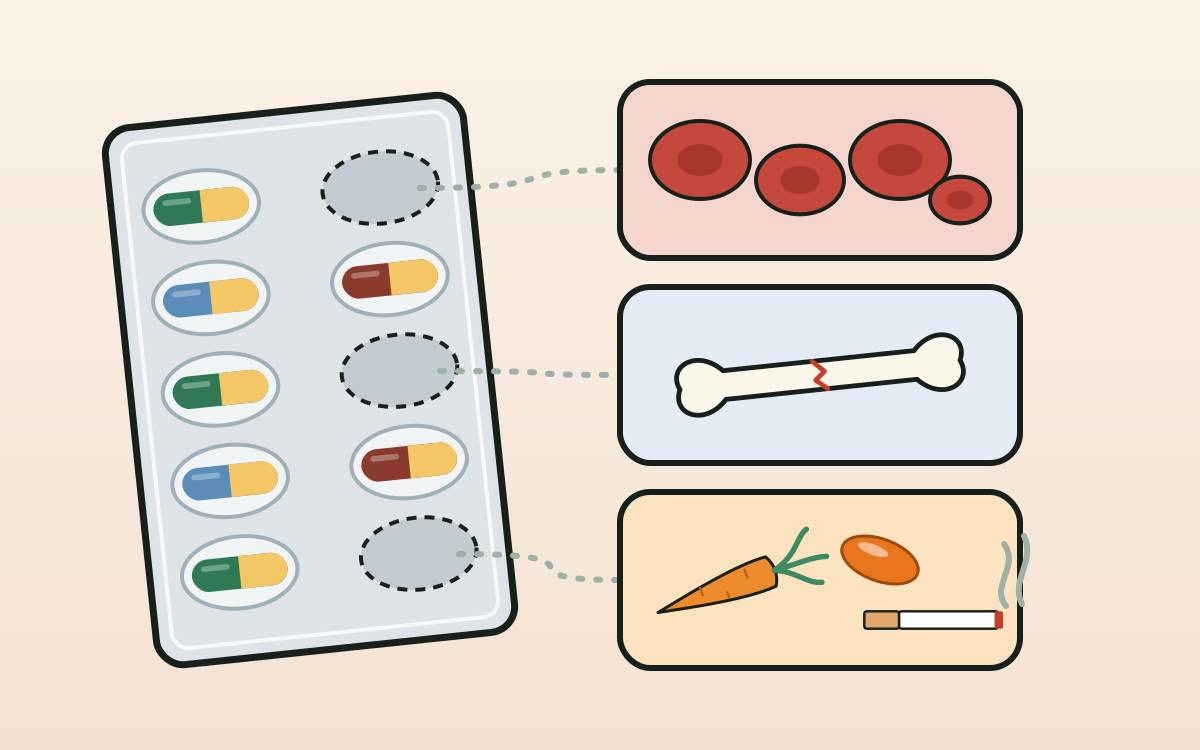
Iron. Men and women over 50 need 8.7 mg of iron a day; women aged 19–50 need 14.8 mg (Food Standards Scotland). Your body has almost no way to get rid of excess iron. So men and post-menopausal women without a deficiency should choose an iron-free formula. If you do need iron, our guide to iron tablets compares the forms.
Vitamin A (retinol). The NHS warns that more than an average of 1.5 mg (1,500 mcg) of vitamin A a day over many years may affect your bones. In pregnancy, too much preformed vitamin A can cause birth defects. On the label, retinol appears as retinyl palmitate or retinyl acetate.
Beta-carotene. This plant form of vitamin A doesn’t carry the bone and pregnancy risks of retinol. But if you smoke, avoid it in supplements. In two large trials in smokers (one also included people exposed to asbestos), 20–30 mg of beta-carotene a day raised lung cancer risk by 18% and 28%. One of the trials added retinol. EFSA says smokers should avoid supplements containing beta-carotene. The NHS says the same for anyone exposed to asbestos, and advises everyone else to take no more than 7 mg a day from supplements unless a doctor suggests more.
What this means when you choose:
- if you don’t smoke and aren’t planning a pregnancy, a mix of retinol and beta-carotene is fine;
- in pregnancy, choose a formula with no retinol;
- if you smoke or used to, pick a formula without beta-carotene, or with little vitamin A.
Multivitamin gummies
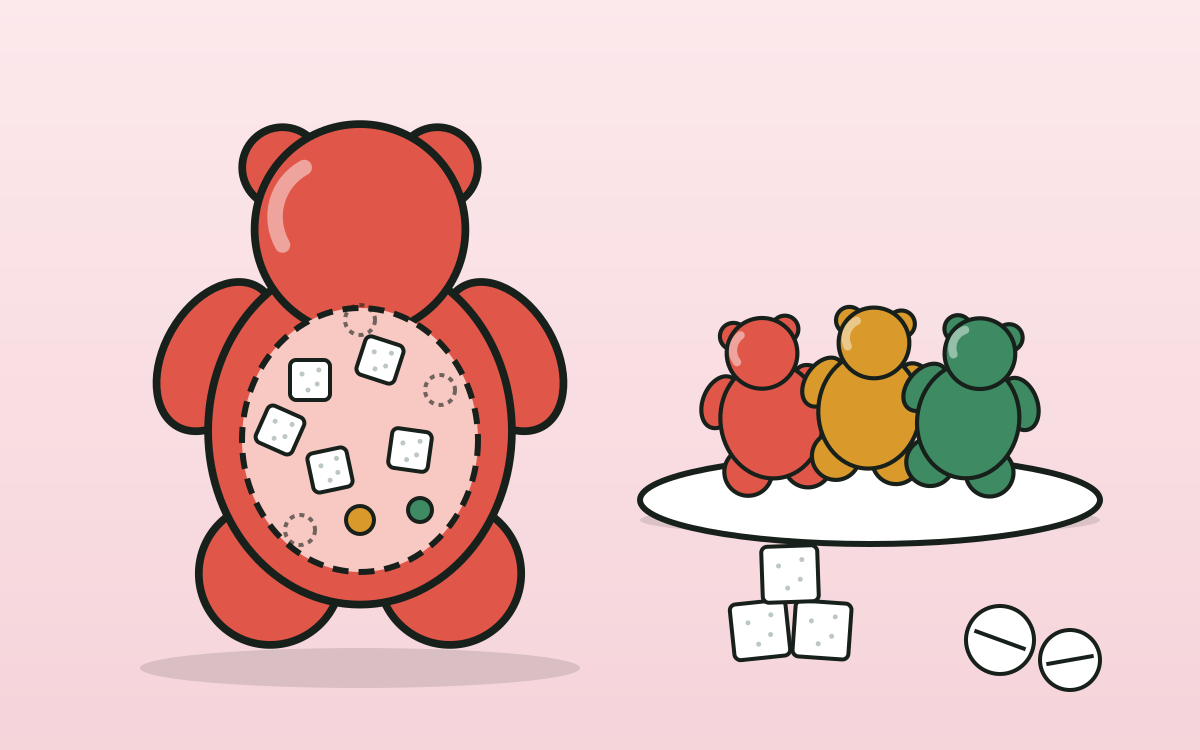
Gummies suit people who struggle to swallow tablets. But they have their downsides:
- they often contain fewer minerals – iron, zinc, calcium and magnesium may be missing altogether;
- a serving usually contains sugar or sugar alcohols – check the Total Sugars line;
- a serving is often 2–3 gummies, and the label doses refer to that serving;
- they look like sweets, so keep the jar out of children’s reach.
If you mainly want vitamins D and B12, gummies are fine. If you need minerals, compare the label with a tablet.
Multivitamins and medicines: when to ask your GP
- Levothyroxine. The NHS lists calcium and iron supplements among the products that affect it. A gap of at least 4 hours is the usual advice; check with your pharmacist.
- Warfarin. Vitamin K affects clotting. Don’t start or stop a multivitamin without advice.
- With kidney disease, take magnesium, potassium and vitamins A and D only on medical advice.
- In pregnancy and breastfeeding the formula and doses are different, so agree them with your midwife or GP.
- If you take several supplements at once, check the pairs in our vitamin compatibility chart.
How to choose the best multivitamin on iHerb
- Decide whether you need a multivitamin at all, or just one supplement (B12, vitamin D, folic acid).
- Choose a formula that fits you: men’s or women’s, under or over 50. See supplements for women and supplements for men for the details.
- Compare doses with the table above: about 100% NRV, B6 no more than 10 mg, vitamin D 10–25 mcg.
- Men and post-menopause: iron-free. Smokers: no beta-carotene. Pregnancy: no retinol.
- Add up the doses across all your bottles, especially vitamin D, zinc, iron and B6.
- Look for independent quality marks (USP, NSF or similar).
How to read Supplement Facts and tell % DV from NRV is covered in our guide to supplement labels.
Bottom line: what to choose
Men and post-menopause
An iron-free multivitamin
Look for "iron-free" on the label
Iron-free on iHerbWomen before the menopause
A formula with iron and folic acid
Around 14 mg iron, no mega-doses
Women's formulas on iHerbButtons lead to selections of the right form on iHerb. These are affiliate links; your price doesn't change.
FAQ
Do I need a multivitamin?
Probably not, if you eat a varied diet. In COSMOS (21,442 older adults) and a study of 390,124 US adults, a daily multivitamin didn’t lower deaths, cancer or heart disease. It can help if your diet is limited, you’re vegan, over 50 or could get pregnant.
What is the best multivitamin in the UK?
The one that matches your sex, age and diet. Look for around 100% NRV for most nutrients, 10–25 mcg vitamin D and no more than 10 mg B6. Men and women after the menopause need an iron-free formula; smokers one without beta-carotene. An independent quality mark (USP, NSF) is a plus.
What are the benefits of a multivitamin?
Mainly filling gaps: B12 for older adults and vegans, folic acid if you could get pregnant, vitamin D in winter. In older adults, COSMOS found a small benefit for memory. There’s no good evidence that a multivitamin prevents heart disease or cancer in well-fed adults.
Are multivitamin gummies as good as tablets?
Not always. Gummies often contain fewer minerals and some sugar, and a serving can be 2–3 gummies. Compare the label line by line. Keep them away from children, because they look like sweets.
When is the best time to take a multivitamin?
With a meal, often breakfast or lunch. Vitamins A, D, E and K are absorbed better with food, and you’re less likely to feel sick. If you take levothyroxine, ask your pharmacist how far apart to take it from a multivitamin with iron or calcium: a gap of at least 4 hours is the usual advice.
Can I take a multivitamin and vitamin D together?
Yes, but add up the doses. Many multivitamins already contain 10–25 mcg of vitamin D. The NHS advises 10 mcg a day in autumn and winter, and EFSA’s upper limit is 100 mcg (4,000 IU) a day.
Sources
- NIH ODS. Multivitamin/mineral Supplements – Fact Sheet for Health Professionals
- EFSA. Overview on Tolerable Upper Intake Levels (version 11, 2025)
- Regulation (EU) 1169/2011, Annex XIII: Nutrient Reference Values (FSAI)
- NHS. Vitamins and minerals – Vitamin A
- NHS. Vitamins and minerals – Others (beta-carotene)
- Food Standards Scotland. Iron
Multivitamins at a glance
For adults, based on NIH ODS, EFSA and NHS
- Preventing disease
- not shown (USPSTF 2022; COSMOS)
- May help if
- limited diet, over 50, vegan, could get pregnant
- Doses
- around 100% NRV; more only with a reason
- Iron
- men and post-menopause: iron-free formula
- Vitamin A
- no retinol in pregnancy; no beta-carotene if you smoke
- Folic acid
- no more than 1 mg a day from all supplements
A multivitamin doesn't treat a deficiency. Low iron, B12 or vitamin D needs a separate supplement at a dose your GP sets.
Shop multivitamins on iHerbCheck iron, vitamin A and B6 against the limits
Contents
- Do I need a multivitamin?
- Multivitamin benefits: what the large trials found
- Who might benefit from a multivitamin
- Who doesn’t need one, or needs a different product
- What to look for: doses vs NRV
- Iron, vitamin A and beta-carotene: three common traps
- Multivitamin gummies
- Multivitamins and medicines: when to ask your GP
- How to choose the best multivitamin on iHerb