Supplements and medication interactions after 50: what to avoid, what to space out and how to get a medicines review
 Reviewed by
This article contains affiliate links to iHerb. If you buy through them, we earn a commission at no extra cost to you. It doesn't affect which forms we recommend. Learn more
Most people over 60 take at least one prescribed medicine, and many add vitamins on top. A few pairs are risky, a few only need spacing out, and some medicines quietly drain a vitamin. The table below sorts them by medicine group, so you know what to ask your GP or pharmacist before buying.
Why supplement and medicine interactions matter more after 50
Picture a kitchen drawer in Leeds: blood pressure tablets, a statin, omeprazole for heartburn, and a tub of “joint support” a neighbour recommended. Each made sense when it arrived. Nobody has looked at them together.
That’s polypharmacy (taking several medicines at once), and it’s the norm later in life. According to the MSD Manual, about 90% of older adults take at least one prescription medicine regularly, and 43% take five or more. Add vitamins and herbal products and the numbers climb higher.
Age also changes how the body handles medicines:
- there’s less water and muscle in the body and more fat, so some medicines reach higher levels;
- the kidneys clear medicines into urine less well;
- the liver breaks many medicines down more slowly.
So medicines stay in the body longer, and side effects become more likely. A supplement that was harmless at 40 can tip the balance at 75.
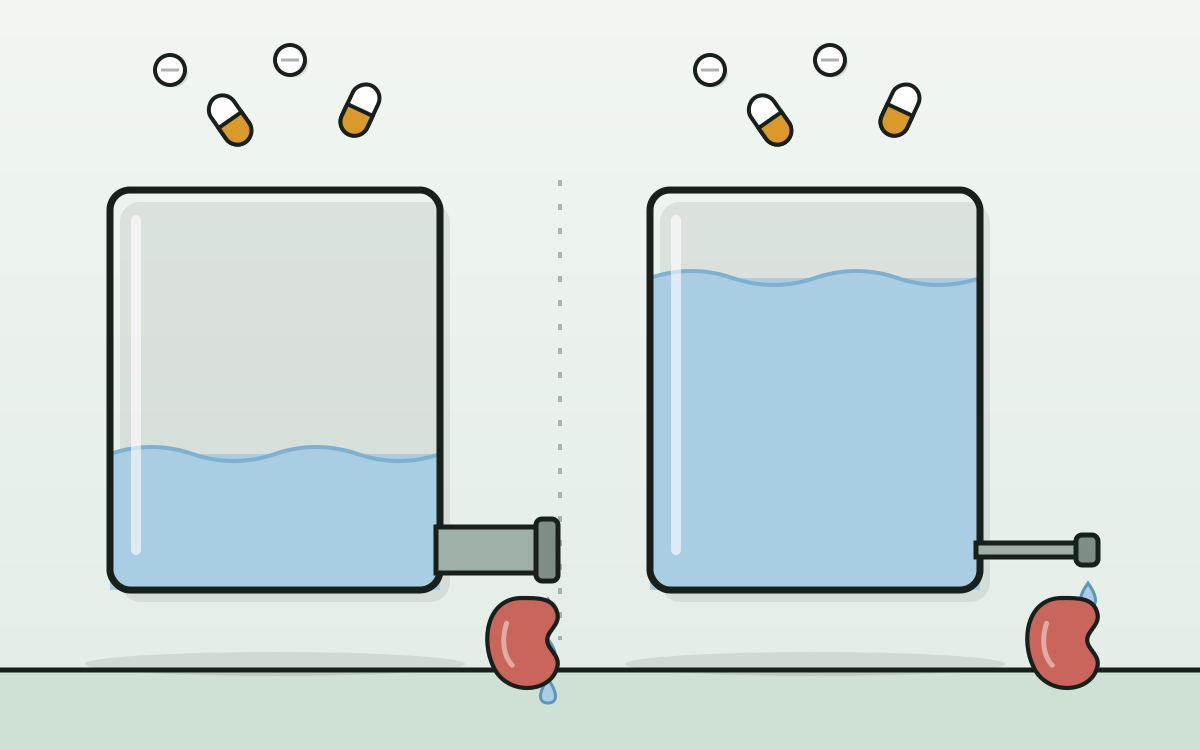
Supplements get in the way of medicines in four main ways:
- They block absorption. Calcium, iron, magnesium and zinc bind some medicines in the gut: levothyroxine, certain antibiotics and bisphosphonates.
- They add to the effect. Ginkgo with blood thinners raises bleeding risk. Berberine with diabetes medicines can push blood sugar too low.
- They weaken the medicine. St John’s wort lowers the effect of warfarin and many other medicines. Vitamin K works against warfarin.
- The medicine drains a nutrient. Metformin and long-term proton pump inhibitors (PPIs, such as omeprazole) lower B12. PPIs taken for more than a year can lower magnesium.
Supplements and medicines: a table by medicine group
The table covers the medicines most often prescribed after 50. “Avoid” means don’t combine unless your doctor says so. “Space out” means take them at different times. “Ask” means the pair can work, but your GP or pharmacist should know about it.
| Medicine | Supplement | What to do | Why |
|---|---|---|---|
| Warfarin | Ginkgo, St John’s wort | Avoid | Ginkgo raises bleeding risk; St John’s wort weakens warfarin |
| Warfarin | Vitamin K | Ask; keep intake steady | Vitamin K changes how warfarin works |
| Warfarin | Omega-3, high-dose vitamin E, curcumin, CoQ10 | Ask | May add to bleeding risk; CoQ10 may weaken warfarin |
| Apixaban, rivaroxaban, dabigatran | Ginkgo | Avoid | Higher bleeding risk |
| Apixaban, rivaroxaban, dabigatran | Curcumin, St John’s wort | Ask | Limited evidence, possible effect on the medicine |
| Aspirin, clopidogrel | Ginkgo, St John’s wort | Ask | Ginkgo may add to bleeding; St John’s wort may strengthen the effect of clopidogrel |
| Statins | Red yeast rice | Avoid | Contains a statin-like substance |
| Statins | St John’s wort | Ask | Can stop statins working properly or add to side effects |
| Metformin | Vitamin B12 | Ask about a blood test | Metformin lowers B12 over time |
| Metformin, insulin, other diabetes medicines | Berberine, chromium | Ask | Blood sugar may fall too low |
| Levothyroxine | Calcium, iron | Space out: at least 4 hours | They block absorption of the hormone |
| Levothyroxine | Magnesium, multivitamins with minerals | Space out by a few hours | Same mechanism |
| Levothyroxine | Biotin | Ask | Can upset thyroid blood tests |
| PPIs (omeprazole, lansoprazole) | B12, magnesium | Ask about tests | Long-term use lowers both |
| Thiazides (bendroflumethiazide, indapamide) | Calcium, high-dose vitamin D | Ask about dose and tests | Blood calcium can rise |
| Ramipril, losartan and similar; spironolactone | Potassium supplements, potassium salt substitutes | Avoid unless prescribed | Blood potassium can rise dangerously |
| Alendronic acid and other bisphosphonates | Calcium, magnesium, iron | Space out: the tablet on an empty stomach with plain water, minerals at least 2 hours later (one NHS leaflet says 3–4 hours for calcium) | Food, drinks and minerals reduce absorption |
| Doxycycline, ciprofloxacin | Calcium, iron, magnesium, zinc | Space out: antibiotic 2 hours before or 4–6 hours after | Minerals weaken the antibiotic |
| Antidepressants (sertraline, fluoxetine) | St John’s wort, 5-HTP | Avoid | Risk of serotonin syndrome |
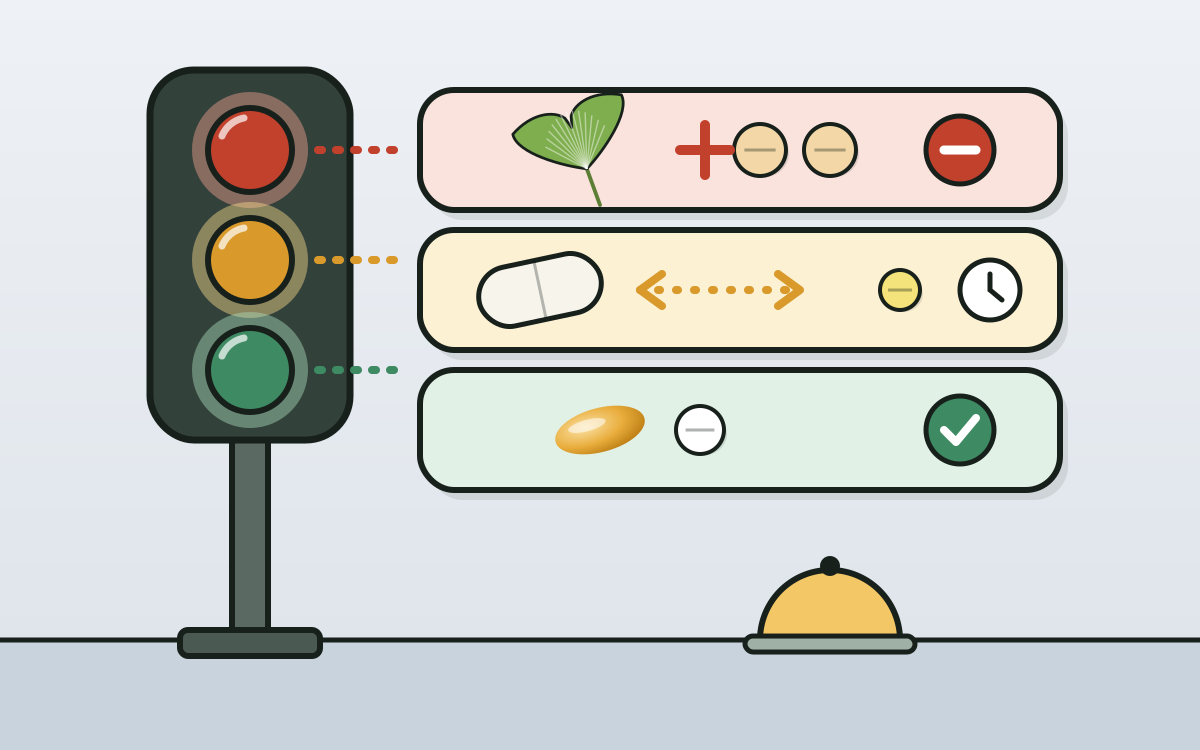
If you’d rather look up one group at a time, pick it here:
Your medicine: which supplements to ask about
Pick a medicine group to see which supplements to avoid, which to space out and what to ask your GP or pharmacist
You take
What to know
No ginkgo or St John's wort without your doctor
With warfarin, apixaban, rivaroxaban or dabigatran, ginkgo raises bleeding risk and St John's wort changes medicine levels. With aspirin or clopidogrel, ask about ginkgo too. Omega-3, high-dose vitamin E, curcumin and CoQ10 need a conversation first.
Warfarin: don't start or stop vitamin K without your anticoagulation clinic, and keep your intake steady.
What to know
Red yeast rice and a statin don't mix
Red yeast rice contains a statin-like substance, so you'd be doubling up. St John's wort and grapefruit can also stop statins working properly or add to side effects.
What to know
Metformin is a reason to check B12
Metformin lowers B12 over time, so ask whether a blood test is due. Berberine or chromium with diabetes medicines can push your blood sugar too low.
Berberine with metformin or insulin only if your doctor agrees.
What to know
Levothyroxine away from minerals
Calcium and iron block the hormone: keep them at least 4 hours apart. Move magnesium and multivitamins with minerals to later in the day as well. Biotin can upset thyroid blood tests.
Timing: tablet first thing with water, minerals at lunch or in the evening
What to know
A year or more on omeprazole? Ask about tests
Long-term proton pump inhibitors reduce B12 absorption and can lower blood magnesium. A blood test shows whether you need a supplement.
What to know
Potassium and salt substitutes only if prescribed
With ramipril, losartan or spironolactone, potassium supplements or potassium salt substitutes can push blood potassium dangerously high. Thiazides such as bendroflumethiazide plus calcium or high-dose vitamin D can raise blood calcium.
On a thiazide, ask about your calcium and vitamin D doses and a blood test.
For the timing of minerals, our vitamin compatibility chart gives the gaps pair by pair.
Supplements and statins
Statins are among the most common medicines after 50, and most everyday vitamins sit alongside them without trouble. Two products need care. Red yeast rice contains a substance that works like a statin, so taking both doubles up. St John’s wort, like grapefruit juice, can stop a statin working properly or make side effects more likely, says the NHS.
CoQ10 is sold for aching muscles on statins. The trials disagree, so see our CoQ10 and statins guide before you spend money on it.
Blood thinners: the combinations to take most seriously
Warfarin and the newer anticoagulants (apixaban, rivaroxaban, dabigatran) are where a supplement can do real harm. The NHS says not to take St John’s wort or vitamin K supplements with warfarin. Ginkgo raises bleeding risk with anticoagulants; our ginkgo side effects guide has the details.
Know the warning signs of bleeding listed by the NHS:
- blood in your pee or poo;
- unexplained bruising or nosebleeds;
- coughing up or vomiting blood;
- a sudden bad headache with confusion, slurred speech or weakness in an arm or leg – call 999.
For the other signs, the NHS advises calling 111 straight away.
Food matters too. Leafy greens are rich in vitamin K. You can still eat them on warfarin, but keep the amount fairly steady and ask your anticoagulation clinic.
Before you add a supplement
These steps take ten minutes and save most of the trouble:
Before you add a supplement
Five steps if you already take medicines. Tap a step
Write down everything you take
Prescribed medicines, anything bought over the counter, herbal remedies, vitamins and powders. Add the dose and the time of day for each.
- Include things you take only now and then
- For prescriptions, note who prescribed them and why
Look for doubling up
Your multivitamin may already contain calcium, iron, zinc or vitamin D. Two products with the same active ingredient is a common slip.
- Add up the dose from every bottle
- Compare it with what your GP prescribed
Ask your pharmacist or GP
The question is simple: "Will this mix with my medicines?" Show your list and the supplement's label.
- Use one pharmacy if you can
- Show the list to every clinician who treats you
Space out the clashing pairs
Levothyroxine first thing, calcium and iron at least 4 hours later. A bisphosphonate on an empty stomach with plain water. Antibiotics away from minerals.
- Sketch your day on paper
- If it won't fit, ask your pharmacist
Start one supplement at a time
That way you can tell what helps and what causes a side effect. Write down anything unusual and tell your GP.
- Never stop a prescribed medicine on your own
- Take an updated list to every appointment
Two common slips are easy to miss. A multivitamin often already holds calcium, iron, zinc and vitamin D, so a separate tub doubles the dose. And “natural” doesn’t mean it can’t interact. The NIA warns that combining some prescription medicines with supplements can be dangerous.
Metformin users and people on long-term acid reducers should read our vitamin B12 guide before buying. Berberine and chromium are covered in berberine side effects and chromium picolinate.
How to get a medicines review (NHS structured medication review)
NICE describes a structured medication review as a careful look at everything you take, aimed at agreeing what’s worth continuing. It covers prescribed medicines, things bought over the counter and complementary products. NICE suggests reviews for people taking several medicines, people with long-term conditions and older people. The review may be led by a pharmacist.
How to get one:
- Ask your GP surgery for a structured medication review. Many practices have a pharmacist who runs them.
- Bring every box and bottle, or a full list with doses, times and who prescribed each one. Our printable medicines list for your GP does this and flags pairs worth asking about.
- Say what bothers you: side effects, too many tablets, trouble swallowing, cost.
- Ask the key question: “Do I still need all of these?”
- After the review, update your list and your weekly pill chart.
Between reviews, use one pharmacy if you can, so the pharmacist sees your whole record. If you use several, show your list at each one, as the NIA advises.
When to speak to a doctor straight away
- Signs of bleeding on a blood thinner (see above).
- Muscle weakness, tiredness, numbness or an irregular heartbeat on spironolactone or an ACE inhibitor: these can be signs of high potassium.
- Signs of low blood sugar on diabetes medicines after starting berberine or chromium.
- Any new problem with your medicines after starting a supplement. The NIA advises calling your doctor right away rather than waiting.
If you have kidney disease, minerals such as magnesium and potassium can build up. See supplements and kidney disease before taking any.
How to choose supplements on iHerb if you take medicines
- Choose single-ingredient products. They’re easier to time and easier to stop if something goes wrong.
- Skip “complexes” that hide ginkgo, St John’s wort or turmeric among vitamins.
- Add up calcium, iron, zinc and vitamin D from every bottle, including your multivitamin.
- Look for an independent quality mark such as USP Verified.
- Show the label to your pharmacist before the first dose.
For what’s generally worth taking after 50, see vitamins for over 50s, or take our vitamin check.
Bottom line: what to choose
Metformin or a PPI for years, low B12 on a test
Vitamin B12 tablets
Your GP sets the dose; injections if absorption is the problem
B12 on iHerbOn levothyroxine and need calcium
Calcium on its own, not in a multi
Take it at least 4 hours after the thyroid tablet
Calcium on iHerbWant fewer surprises in the bottle
Single-ingredient supplements
Skip blends with ginkgo, St John's wort or turmeric
Browse on iHerbButtons lead to selections of the right form on iHerb. These are affiliate links; your price doesn't change.
FAQ
Which vitamins interact with medication?
The ones that cause most trouble after 50 are vitamin K (with warfarin), calcium, iron and magnesium (with levothyroxine, some antibiotics and bisphosphonates) and potassium (with ramipril, losartan or spironolactone). Herbal products such as ginkgo and St John’s wort interact with even more medicines.
Can I take supplements with statins?
Most everyday vitamins are fine with a statin. Don’t take red yeast rice: it contains a statin-like substance. St John’s wort and grapefruit can also stop statins working properly or add to side effects. CoQ10 is often sold for statin muscle aches, but the evidence is mixed.
Can I take vitamin D with blood pressure tablets?
Usually yes at everyday doses. The exception is thiazide diuretics such as bendroflumethiazide or indapamide: with calcium or high-dose vitamin D they can raise blood calcium. Ask your GP about the dose and whether a blood test is needed.
What is a structured medication review?
It’s an appointment where a clinician, often a practice pharmacist, goes through everything you take: prescribed, over-the-counter and complementary products. NICE suggests it for people on several medicines, people with long-term conditions and older people. Ask your GP surgery for one.
What is polypharmacy in older adults?
Polypharmacy means taking several medicines at once. It’s common after 65 because many people have more than one long-term condition. The more medicines you take, the higher the chance of interactions and side effects.
Should I stop my supplements before an operation?
Tell the surgical team about every supplement you take, at the pre-op assessment or earlier. Some, like ginkgo, can affect bleeding. Don’t stop prescribed medicines unless the team tells you to.
Sources
- NICE NG5. Medicines optimisation: the safe and effective use of medicines – Recommendations (1.4 Medication review)
- MSD Manual Consumer Version. Aging and Medications
- National Institute on Aging. Taking Medicines Safely as You Age
- NIH ODS. Magnesium – Fact Sheet for Health Professionals
- NIH ODS. Calcium – Fact Sheet for Health Professionals
- NHS. Warfarin
- NHS. Spironolactone
Supplements and medicines at a glance
For adults over 50, based on NICE, NHS, NIH ODS and the MSD Manual
- Five or more prescription medicines
- 43% of older adults (MSD Manual)
- Don't combine without your doctor
- ginkgo with blood thinners; red yeast rice with a statin
- Keep 4 hours apart
- levothyroxine and calcium or iron
- Ask about a B12 test
- metformin, long-term acid reducers (PPIs)
- Potassium
- not with ramipril, losartan or spironolactone unless prescribed
- Medicines review
- ask your GP surgery or pharmacist
Never stop or change a prescribed medicine because of a supplement. Ask first.
Shop vitamin B12 on iHerbFor metformin or PPI users whose blood test shows low B12
Contents
- Why supplement and medicine interactions matter more after 50
- Supplements and medicines: a table by medicine group
- Supplements and statins
- Blood thinners: the combinations to take most seriously
- Before you add a supplement
- How to get a medicines review (NHS structured medication review)
- When to speak to a doctor straight away
- How to choose supplements on iHerb if you take medicines