Supplements and kidney disease: what builds up, which herbs to avoid, and why vitamins for CKD come on prescription
 Reviewed by
This article contains affiliate links to iHerb. If you buy through them, we earn a commission at no extra cost to you. It doesn't affect which forms we recommend. Learn more
Healthy kidneys quietly clear the extra magnesium, potassium and vitamin C you swallow. When they work less well, the same tablets can build up to harmful levels. This page explains what builds up and why, which herbs kidney charities warn about, and what to take to your kidney team. It gives no doses, because with kidney disease the dose is your kidney team's call.
Why some supplements build up when kidneys are weak
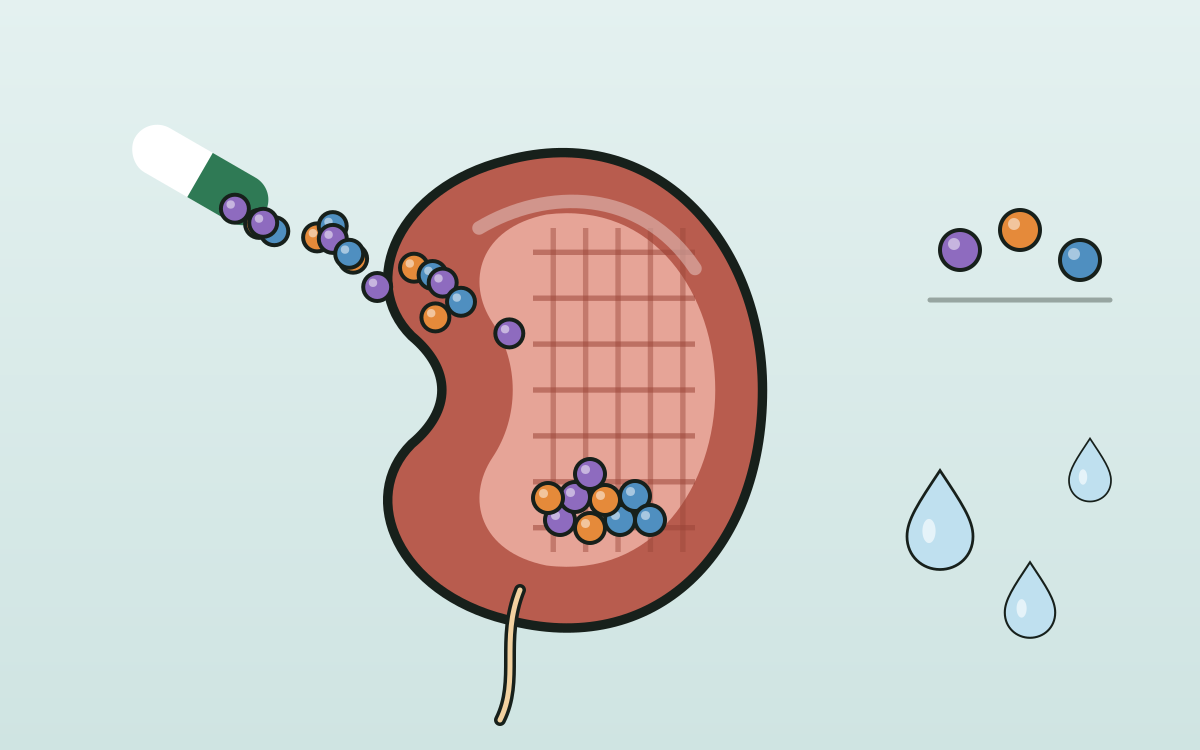
Your kidneys filter the blood and send what the body doesn’t need into the urine. That includes extra minerals, water-soluble vitamins and many plant compounds. The US National Kidney Foundation (NKF) points out that some herbal supplements leave the body through the kidneys, so levels can become toxic when the kidneys work poorly. Labels rarely mention this.
Kidney problems become more common with age, and chronic kidney disease (CKD) is usually picked up on a blood test rather than by how you feel. If you buy supplements for a parent, ask whether their GP has ever mentioned “kidney function” or “eGFR”.
| What | Why it’s a problem with CKD | Where it hides |
|---|---|---|
| Magnesium | risk of toxicity rises when kidney function is impaired (NIH ODS) | magnesium tablets, laxatives, antacids, sleep and cramp blends |
| Potassium | may not be cleared well; some people must limit it, especially on dialysis | herbal products, “electrolyte support” drinks, green powders, potassium salt substitutes |
| Phosphorus | your kidney team may ask you to limit it | some herbal products (NKF keeps a list) |
| Vitamins A and E | stored in the body and can build up | multivitamins, cod liver oil, skin and eye formulas |
| High-dose vitamin C | the kidneys may not remove large amounts; raises the risk of calcium oxalate stones | immune and “cold season” products, effervescent tablets |
| Vitamin D | levels need regular checks; the right form is prescribed | D3 drops and tablets, combination products |
Kidney Care UK specifically says not to take supplements containing vitamins A or E, and not to buy vitamin D yourself: the kidney team checks levels and may prescribe a form such as alfacalcidol.
eGFR basics: what your kidney numbers mean
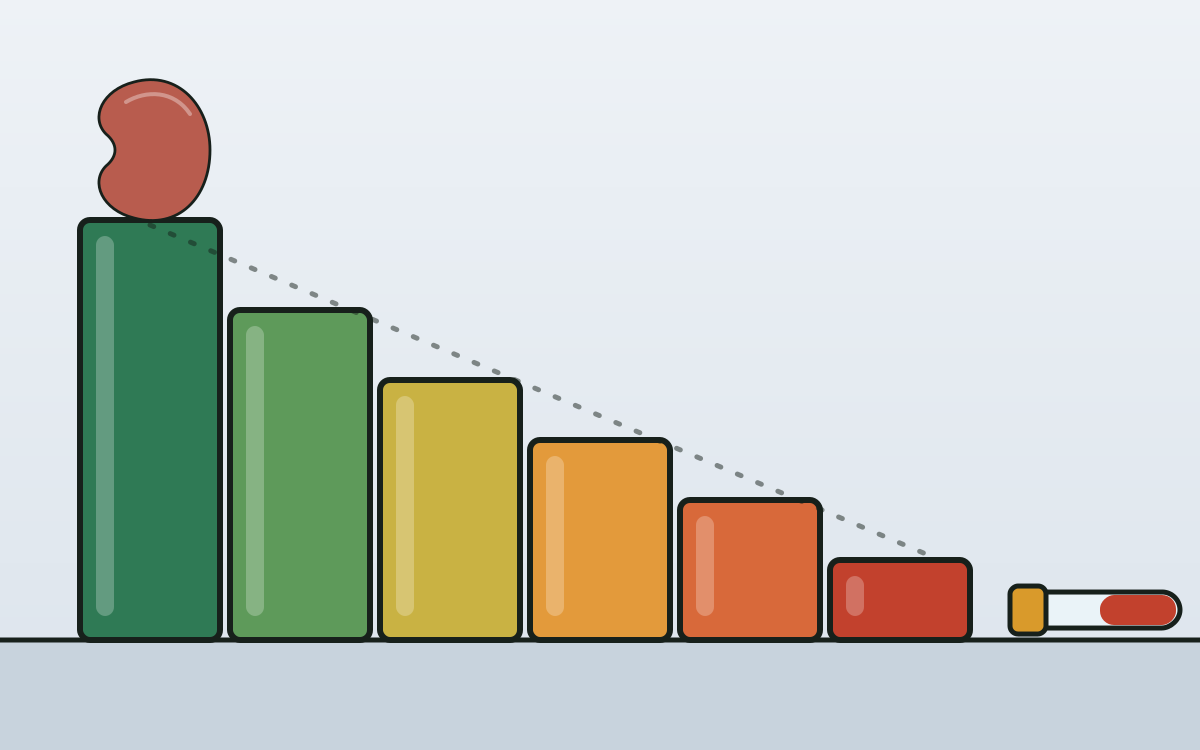
Your GP estimates kidney function with a blood test called eGFR (estimated glomerular filtration rate). It shows roughly how many millilitres of blood your kidneys filter per minute. A urine test, ACR (albumin:creatinine ratio), shows whether protein is leaking into the urine. Together they set the stage.
| Stage | eGFR, ml/min | What it means |
|---|---|---|
| G1 | 90 or more | normal filtering, but other tests show kidney damage |
| G2 | 60–89 | slightly reduced, with other signs of damage |
| G3a | 45–59 | mildly to moderately reduced |
| G3b | 30–44 | moderately to severely reduced |
| G4 | 15–29 | severely reduced |
| G5 | below 15 | kidney failure |
For ACR, A1 is under 3 mg/mmol, A2 is 3–30 and A3 is over 30. A higher stage on either scale means more serious disease. Find your result to see what it means for supplements:
Your eGFR: what it means for supplements
Find your result on your blood test. There are no doses here: your doctor sets them
Your result
What it means
Your kidneys cope with ordinary doses
If your GP has found no sign of kidney damage, ordinary supplement doses are cleared without trouble. Stay within upper limits.
What it means
Stage G1–G2: this is already CKD
Filtering is close to normal, but tests found signs of damage, such as protein in the urine. Discuss new supplements with your GP.
What it means
Stage G3: magnesium, potassium and herbs only with your doctor
Your kidneys clear less. Check vitamins A and E, high-dose vitamin C, magnesium, potassium and herbs with your kidney team or GP.
Don't buy vitamin D yourself: the form and dose are prescribed
What it means
Stages G4–G5: nothing without your kidney team
Even ordinary mineral doses can build up. If you need vitamins, your kidney team prescribes them.
Tell your team about every supplement, herbal teas included
What it means
Every supplement is a question for your kidney team
On dialysis, potassium and phosphorus are often limited. After a transplant, herbs can interact with anti-rejection medicines.
What it means
Ask your GP
eGFR is worked out from creatinine on a routine blood test. If you take creatine, say so before the test.
One trap: creatine. eGFR is calculated from creatinine, a breakdown product of creatine. A creatine supplement raises creatinine and can make your kidneys look worse than they are. Our creatine guide explains more.
Herbal remedies: why “natural” doesn’t mean safe for kidneys
The best-known warning comes from Belgium. In the early 1990s, young women who took slimming pills with Chinese herbs from one Brussels clinic developed fast-progressing kidney damage. The cause was aristolochic acid, which had got into the pills by mistake. About 30–45% of those affected later developed cancer of the urinary tract.
Aristolochic acid is now classed as a human carcinogen and banned in many countries. NKF notes it still turns up in some traditional remedies, and Kidney Care UK warns that products bought online may contain it, as well as lead and mercury.
Herbs that NKF lists as high risk for people with kidney disease include:
- liquorice root, which Kidney Care UK says can raise blood pressure and affect potassium;
- aristolochia (birthwort, wild ginger);
- astragalus, bearberry (uva ursi), cat’s claw, chaparral and comfrey;
- horsetail, stinging nettle, parsley root and Java tea;
- St John’s wort, yohimbe and creatine.
After a kidney transplant the stakes are higher. Herbs can interact with anti-rejection medicines and, as Kidney Care UK puts it, increase the chance of your body rejecting the kidney. Its examples include CBD with tacrolimus and schisandra. It also warns that taking lots of turmeric over a long time raises the chance of kidney stones.
NKF advises avoiding anything sold as a “kidney detox” or “kidney cleanse”, and blends that don’t state the amount of each ingredient.
Prescribed renal vitamins vs a shop multivitamin
People with CKD sometimes need vitamins, because a kidney diet that limits protein, potassium or phosphorus can also cut vitamin intake. NKF notes that products combining B vitamins and vitamin C for people with CKD are available on prescription. Kidney Care UK says B vitamins and vitamin C are usually safe, but warns that vitamin C doses over 500 mg can cause harm because the chance of kidney stones goes up.
An ordinary multivitamin is a different thing. It usually contains vitamin A, often vitamin E, minerals such as magnesium and phosphorus, and sometimes herbal extracts. Tap the lines on a typical label to see what your kidney team would look at:
A multivitamin label through a kidney doctor's eyes
A sample label of an ordinary multivitamin. Tap a line to see what your kidney team would check
Supplement Facts
Why it matters
One tablet per serving
Every amount below is for one tablet. If a serving is two tablets, double everything.
Why it matters
Vitamin A is stored
Kidney Care UK advises against supplements with vitamin A in kidney disease, because it can build up.
Why it matters
A large dose of vitamin C
The kidneys may not clear this much, and the risk of calcium oxalate stones rises. Kidney Care UK warns that doses over 500 mg can cause harm.
Why it matters
Vitamin D comes on prescription
With CKD your levels are checked and a form such as alfacalcidol may be prescribed. Don't buy your own.
Why it matters
Vitamin E is stored too
Like vitamin A, it's not advised as a supplement with kidney disease.
Why it matters
B vitamins
Usually considered safe. Combinations of B vitamins and C for people with CKD come on prescription.
Why it matters
Magnesium
NIH ODS: the risk of magnesium toxicity rises when kidney function is impaired.
Why it matters
Potassium
With CKD potassium may not be cleared well, and on dialysis it's often limited.
Why it matters
A herb blend without amounts
You can't tell how much of each herb is inside. NKF advises avoiding blends like this.
What to ask your kidney team
The 2024 KDIGO guideline (the international standard for CKD care) asks clinicians to review and limit over-the-counter medicines and herbal or dietary remedies that may be harmful. It also asks for regular medicine reviews, including when your care changes. You can make that easy:
- Bring every bottle, or a photo of each label, to your next appointment. NKF suggests this so the team can check the ingredients.
- Include sleep aids and painkillers. Kidney Care UK warns that diphenhydramine in some sleep aids can build up with kidney disease and raise the risk of falls.
- Ask which supplements to stop, which to keep, and whether anything should be prescribed instead.
- Ask the renal dietitian about potassium, phosphorus and protein before changing your diet.
- Write the answers down. Our medicines list for your GP works for the kidney clinic too.
A weekly pill organiser helps keep prescribed tablets and any approved supplements in order.
Who should be especially careful
- anyone with CKD stage 3 or above, or with protein in the urine;
- people on dialysis or with a kidney transplant;
- people taking blood pressure tablets that affect potassium, such as ramipril, losartan or spironolactone;
- older people taking several medicines at once;
- anyone with a history of kidney stones.
For this group, even common products such as magnesium, electrolyte drinks and calcium need a yes from the kidney team first.
How to use iHerb safely if you have kidney disease
- Don’t add anything new until your kidney team has seen the label.
- Use the Supplement Facts photo on the product page to show the team exactly what’s inside.
- Skip proprietary blends and “kidney detox” products.
- Avoid products with vitamin A, vitamin E, potassium or high-dose vitamin C unless prescribed.
- If you’re unsure where to start, our vitamin check flags kidney disease, and the 50+ section covers other medicine questions.
FAQ
What supplements should I avoid with kidney disease?
Kidney charities warn most about vitamins A and E, high-dose vitamin C, magnesium, potassium and many herbal remedies, including liquorice root and anything that may contain aristolochic acid. Kidney Care UK’s advice is to check with your kidney team before taking anything, even if it seems harmless.
Can I take magnesium with kidney disease?
Only if your kidney team agrees. NIH ODS notes that the risk of magnesium toxicity rises when kidney function is impaired, because the kidneys are the main route out. Watch for hidden magnesium in laxatives, antacids and sleep or cramp blends too.
What vitamins are good for kidney disease?
There’s no supplement that improves kidney function. B vitamins and vitamin C are usually considered safe, and products combining them for people with CKD are available on prescription. Vitamin D in CKD is usually a prescribed form such as alfacalcidol, with blood tests.
Is potassium in supplements dangerous for kidneys?
With chronic kidney disease, potassium may not be cleared well, and some people need to limit it, especially on dialysis. Potassium hides in herbal products, green powders and salt substitutes. Never take it unless your kidney team prescribes it.
Why does creatine affect kidney blood tests?
Creatinine, which labs use to estimate eGFR, is a breakdown product of creatine. Taking creatine can raise creatinine and make kidney function look worse than it is. With kidney disease, don’t take creatine unless your kidney specialist agrees.
Sources
- Kidney Care UK. Vitamins and supplements with CKD or a kidney transplant
- National Kidney Foundation. Herbal Supplements and Kidney Disease
- National Kidney Foundation. Vitamins and Minerals in Chronic Kidney Disease
- NHS. Chronic kidney disease – Diagnosis
- NephJC. The KDIGO 2024 CKD Guidelines, part 2 (summary of practice points)
- NIH ODS. Magnesium – Fact Sheet for Health Professionals
- Koulouridis I et al. Herbal nephropathy and Balkan endemic nephropathy: the pathogenic role of aristolochic acid. Medical Research Archives, 2024
Kidneys and supplements at a glance
Based on Kidney Care UK, NKF, KDIGO and NIH ODS
- Main rule
- ask your kidney team before any supplement
- Can build up
- magnesium, potassium, phosphorus, vitamins A and E
- High-dose vitamin C
- oxalate and kidney stones
- Herbs
- liquorice root, aristolochia, "kidney detox" blends
- Vitamin D
- a prescribed form, checked by blood tests
- Vitamins for CKD
- B vitamins and C, on prescription
This page has no doses on purpose. With chronic kidney disease, what is safe depends on your blood results, stage and treatment.
Contents
- Why some supplements build up when kidneys are weak
- eGFR basics: what your kidney numbers mean
- Herbal remedies: why “natural” doesn’t mean safe for kidneys
- Prescribed renal vitamins vs a shop multivitamin
- What to ask your kidney team
- Who should be especially careful
- How to use iHerb safely if you have kidney disease