Eye vitamins: who needs lutein and zeaxanthin, and what the AREDS2 formula is
This article contains affiliate links to iHerb. If you buy through them, we earn a commission at no extra cost to you. It doesn't affect which forms we recommend. Learn more
Eye vitamins have proven benefit for one group of people: those with intermediate age-related macular degeneration. This page explains what the AREDS2 formula contains, who doesn't need it, why beta-carotene is risky for smokers and what actually helps tired eyes at a screen.
Who needs eye vitamins
Eye vitamins are for people with intermediate age-related macular degeneration (AMD), or late AMD in one eye. In the AREDS and AREDS2 trials, a specific formula lowered their risk of progressing to late AMD by about 25%.
AMD is a condition of the retina that affects central vision. The risk rises with age, especially after 65. An optometrist or ophthalmologist decides the stage by examining the back of your eye; you can’t tell it from symptoms. If you’ve been told you have AMD, ask which stage it is and whether the AREDS2 formula is right for you.
Eye vitamins won’t help in these cases:
- Healthy eyes. Supplements didn’t prevent AMD from developing.
- Early AMD. The risk of progression is low, and the gain is tiny.
- Cataracts. Neither AREDS formula had any effect on them.
- Tired eyes from screens. It isn’t a lutein shortage.
Lutein and zeaxanthin: what they are
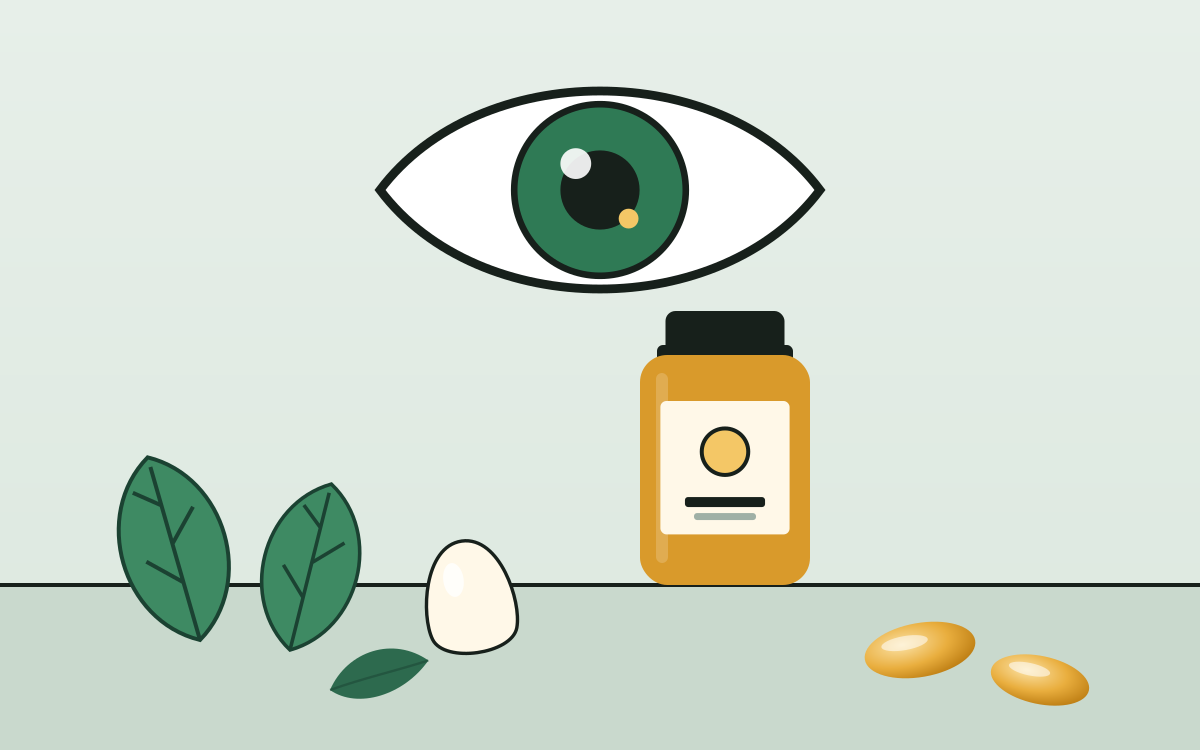
Lutein and zeaxanthin are carotenoids – yellow plant pigments. They build up in the retina, in the part damaged by AMD. Unlike beta-carotene, they aren’t turned into vitamin A.
You’ll find them mostly in:
- dark green leafy vegetables such as spinach and kale;
- eggs – carotenoids from the yolk are well absorbed;
- pistachios.
Carotenoids dissolve in fat, so you absorb more from a salad with dressing or from eggs. Cooking methods also affect absorption, so a variety of dishes with greens beats a single “superfood”. A 2017 review showed that 5–10 mg of lutein and zeaxanthin a day is achievable from ordinary food if you eat greens and eggs regularly.
The AREDS2 formula: what’s in it
The formula was tested in two large trials by the US National Eye Institute (NEI). Version one contained beta-carotene; version two replaced it with lutein and zeaxanthin.
| Nutrient | AREDS | AREDS2 |
|---|---|---|
| Vitamin C | 500 mg | 500 mg |
| Vitamin E | 400 IU | 400 IU |
| Beta-carotene | 15 mg | – |
| Lutein | – | 10 mg |
| Zeaxanthin | – | 2 mg |
| Zinc | 80 mg | 80 mg |
| Copper | 2 mg | 2 mg |
Copper is added to prevent the high zinc dose causing copper deficiency. The original AREDS formula with beta-carotene isn’t recommended for current or former smokers.
What AREDS and AREDS2 found
AREDS. The trial included people with intermediate AMD or late AMD in one eye. In this group, the formula lowered the risk of late AMD by about 25% and the risk of vision loss by 19%. It had no effect on cataracts.
AREDS2. The trial enrolled 4,203 people aged 50–85. Adding omega-3 or lutein with zeaxanthin to the original formula had no extra effect overall. But the version that swapped beta-carotene for lutein and zeaxanthin did slightly better than the original. That’s the AREDS2 formula. Omega-3 had no effect on AMD or cataracts.
A 2023 Cochrane review pooled 26 trials. In early AMD, supplements prevent about 4 cases of late AMD per 1,000 people. In intermediate AMD, about 78 per 1,000.
Do you need eye vitamins?
Pick your situation to see what the AREDS trials and Cochrane reviews found
Your situation
What the evidence shows
You don't need supplements
AREDS and AREDS2 didn't prevent macular degeneration from developing and had no effect on cataracts. Get lutein from leafy greens and eggs.
Have regular sight tests, especially as you get older.
What the evidence shows
It isn't a lutein shortage
Blue light from screens doesn't damage your eyes. Strain comes from blinking less. Try the 20-20-20 rule: every 20 minutes, look about 6 metres away for 20 seconds.
There's no reliable evidence that lutein relieves screen-related eye strain.
What the evidence shows
Little benefit
In early age-related macular degeneration (AMD), the risk of progression is low. A Cochrane review estimates supplements prevent about 4 cases of late AMD per 1,000 people.
Decide together with your optometrist or ophthalmologist.
What the evidence shows
The AREDS2 formula
This is the group that benefited: the risk of progressing to late AMD fell by about 25%. Take it on your eye specialist's advice.
Formula: lutein 10 mg, zeaxanthin 2 mg, vitamin C 500 mg, vitamin E 400 IU, zinc 80 mg, copper 2 mg
80 mg of zinc is over three times EFSA's 25 mg limit. It's a treatment dose for medical supervision only.
What the evidence shows
Only without beta-carotene
The original AREDS formula contained beta-carotene, which raises lung cancer risk in smokers and former smokers. The AREDS2 formula doesn't contain it.
Lutein alone or the full formula?
iHerb sells plenty of products with only lutein and zeaxanthin, without zinc or vitamins. In AMD, they’re less well studied than the full formula. According to the Cochrane review, the risk of progression with them is similar or slightly lower than without, but the certainty is low. If you don’t have AMD, you don’t need these capsules: you can get 5–10 mg from greens and eggs.
Omega-3 for eyes
Omega-3 is often added to eye formulas. In AREDS2, 1 g of omega-3 a day (EPA and DHA) had no effect on AMD or cataracts. For dry eyes, NIH ODS reports no consistent link either. If you take omega-3 for other reasons, see our guide on how to choose fish oil.
Beta-carotene and smokers
Beta-carotene was dropped for a reason. In AREDS2, lung cancer was found more often in the groups taking beta-carotene: 23 cases against 11. Of the 34 people affected, 31 were former smokers. Even 5 years after the trial ended, the higher risk was still there.
This matches earlier research. In the ATBC and CARET trials, high doses of beta-carotene (20–30 mg a day) raised lung cancer risk in smokers. EFSA advises smokers to avoid supplements containing beta-carotene. More in our guide to vitamins A and E.
80 mg of zinc: why it’s a treatment dose
Both formulas contain 80 mg of zinc a day. That’s more than three times EFSA’s 25 mg upper limit for adults. It’s taken as treatment under medical supervision, not as prevention.
Long-term high-dose zinc pushes out copper, which is why copper is added. Copper deficiency can lead to anaemia and nerve damage. If you already take a multivitamin or a separate zinc supplement, don’t add AREDS2 without checking with your doctor. Our zinc guide explains how zinc and copper compete.
Some “lighter” eye products contain lutein but no zinc or lower doses. That isn’t the AREDS2 formula: those combinations weren’t tested in the AREDS trials.
Screens, blue light and eye vitamins: the myths
A popular pitch goes: “screens tire your eyes, so you need lutein”. The evidence says otherwise:
- Blue light from screens doesn’t damage your eyes. The American Academy of Ophthalmology says there’s no scientific evidence of such harm. Screens give off less blue light than the sun.
- Eyes get tired because we blink less. That causes dryness and strain, but no lasting damage.
- The 20-20-20 rule helps. Every 20 minutes, look at something about 6 metres (20 feet) away for 20 seconds.
- You don’t need blue-light glasses. A 2023 Cochrane review of 17 trials found no difference in eye strain compared with standard lenses.
- Lutein for eye strain. There’s no reliable evidence it helps with computer use.

Who shouldn’t take the AREDS2 formula
- Anyone without an AMD diagnosis. Healthy eyes don’t need it, and the zinc dose is a treatment dose.
- Smokers and former smokers – avoid any product with beta-carotene, including the original AREDS formula.
- People on warfarin. High-dose vitamin E can raise the bleeding risk, and the formula has 400 IU. Talk to your GP or pharmacist first.
- People already taking zinc or a multivitamin – add up the doses.
- Children and pregnant or breastfeeding women – the formula was studied in people over 50.
When to see an optometrist or eye doctor
Get your eyes checked urgently in these cases:
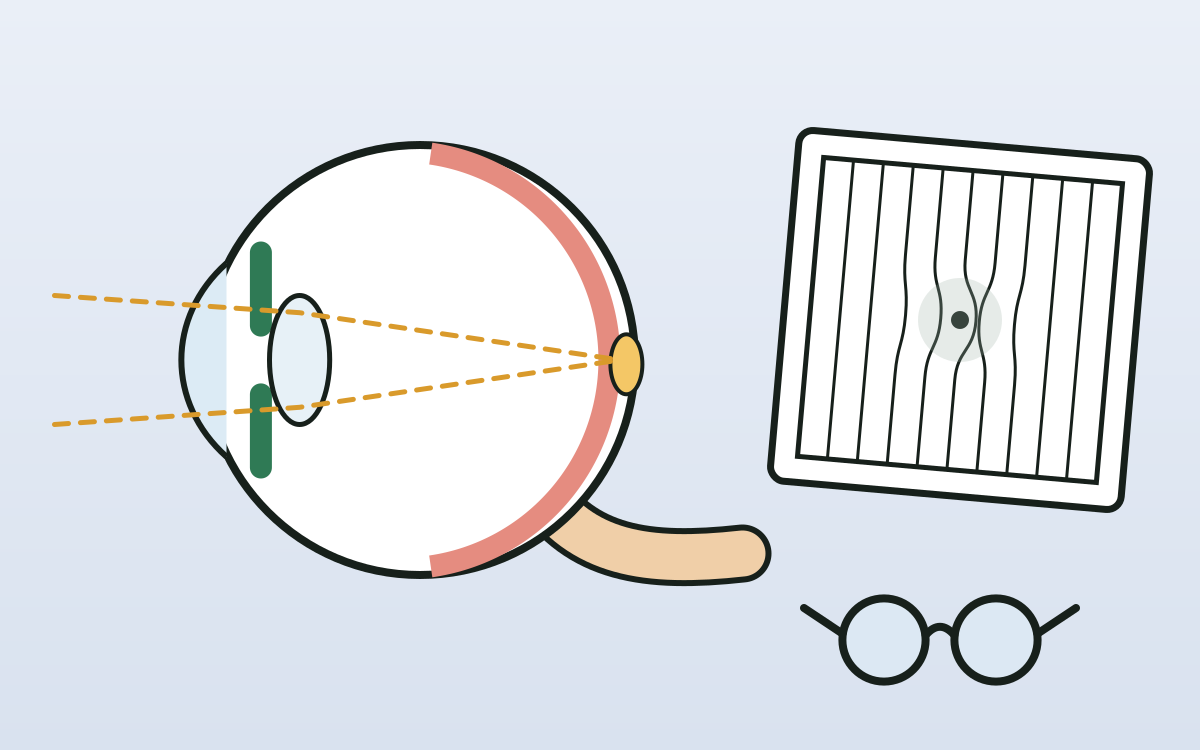
- Straight lines look wavy or bent.
- Objects look smaller than they are.
- Your central vision has become blurred.
- Your sight has suddenly got worse.
Have regular sight tests as you get older, even if nothing seems wrong: the stage of AMD can only be seen during an eye examination.
How to choose eye vitamins on iHerb
- Find out your AMD stage from your optometrist or ophthalmologist. Don’t buy the formula without a diagnosis.
- Look for the AREDS2 make-up: lutein 10 mg, zeaxanthin 2 mg, vitamin C 500 mg, vitamin E 400 IU, zinc 80 mg, copper 2 mg.
- If you’ve ever smoked, make sure there’s no beta-carotene.
- Check how many capsules make up the daily dose: the formula is often split into 2 doses.
- Don’t combine it with other zinc supplements unless your doctor agrees.
Check the label against the AREDS2 formula
This is what a daily serving of the formula looks like. Tap a line to see what to check
Supplement Facts
What to check
Serving size
The formula is often split into 2 doses. Make sure the figures below cover the whole daily serving, not one capsule.
What to check
Amount per serving
Check every line against the AREDS2 trial formula. "Lighter" lutein products aren't AREDS2.
What to check
Vitamin C
The same dose as in the original AREDS formula.
What to check
Vitamin E
If you take warfarin, check the formula with your GP or pharmacist: high-dose vitamin E can raise the bleeding risk.
What to check
Lutein
With zeaxanthin, it replaced beta-carotene in the second version of the formula.
What to check
Zeaxanthin
A carotenoid that builds up in the retina alongside lutein. It isn't turned into vitamin A.
What to check
Zinc – a treatment dose
More than three times EFSA's 25 mg limit. Take it under supervision and don't add other zinc or a multivitamin.
What to check
Copper
Copper is added so the high zinc dose doesn't cause copper deficiency. If there's no copper, it isn't the AREDS2 formula.
What to check
There should be no beta-carotene
It was in the original AREDS formula. In smokers and former smokers it raised lung cancer risk.
Our Supplement Facts guide explains how to read the label. For more topics, see skin, hair and joints.
Bottom line: what to choose
Intermediate AMD diagnosed
AREDS2 formula
No beta-carotene; 80 mg zinc needs supervision
AREDS2 on iHerbFew leafy greens in your diet
Lutein with zeaxanthin
Doesn't treat or prevent AMD; food is better
Lutein on iHerbTired eyes at a screen
The 20-20-20 rule, not capsules
Look into the distance every 20 minutes and blink
Browse on iHerbButtons lead to selections of the right form on iHerb. These are affiliate links; your price doesn't change.
FAQ
Do eye vitamins work?
Only one formula has good evidence, and only for one group: AREDS2 lowers the risk of late AMD by about 25% in people with intermediate AMD. If your eyes are healthy, eye vitamins won’t prevent AMD or cataracts.
What do lutein and zeaxanthin do?
They’re carotenoids that build up in the retina. Unlike beta-carotene, they aren’t turned into vitamin A. Leafy greens, eggs and pistachios are good sources, and they’re absorbed better with some fat.
How much lutein should I take a day?
There’s no official recommended intake. The AREDS2 formula has 10 mg lutein and 2 mg zeaxanthin. Diet models aiming to protect the retina use 5–10 mg a day, which is achievable from food.
Do eye vitamins help with screen time?
There’s no reliable evidence they do. Blue light from screens doesn’t damage your eyes; strain comes from blinking less. Breaks using the 20-20-20 rule help, and a Cochrane review found blue-light glasses don’t reduce eye strain.
Can smokers take eye vitamins?
Only formulas without beta-carotene. In trials, beta-carotene raised lung cancer risk in smokers and former smokers, so the AREDS2 formula is the one to use, not the original AREDS.
Sources
- National Eye Institute. Age-Related Eye Disease Studies (AREDS/AREDS2)
- Evans JR, Lawrenson JG. Antioxidant vitamin and mineral supplements for slowing the progression of age-related macular degeneration. Cochrane Database Syst Rev, 2023
- NIH ODS. Vitamin A and Carotenoids – Fact Sheet for Health Professionals
- Eisenhauer B et al. Lutein and Zeaxanthin – Food Sources, Bioavailability and Dietary Variety in Age-Related Macular Degeneration Protection. Nutrients, 2017
- American Academy of Ophthalmology. Should You Be Worried About Blue Light?
- Singh S et al. Blue-light filtering spectacle lenses for visual performance, sleep, and macular health in adults. Cochrane Database Syst Rev, 2023
- EFSA. Summary of Tolerable Upper Intake Levels
Eye vitamins at a glance
Based on the NEI AREDS and AREDS2 trials and Cochrane
- Who benefits
- intermediate AMD, or late AMD in one eye
- Effect
- about 25% lower risk of late AMD
- Lutein and zeaxanthin
- 10 mg and 2 mg in the AREDS2 formula
- No benefit for
- preventing AMD, cataracts
- Smokers and ex-smokers
- only formulas without beta-carotene
- Zinc in the formula
- 80 mg – a treatment dose, under supervision
Take the AREDS2 formula on your eye specialist's advice. Healthy eyes don't need it.
Shop AREDS2 on iHerbCheck it matches the formula: lutein 10 mg, zeaxanthin 2 mg
Contents
- Who needs eye vitamins
- Lutein and zeaxanthin: what they are
- The AREDS2 formula: what’s in it
- What AREDS and AREDS2 found
- Beta-carotene and smokers
- 80 mg of zinc: why it’s a treatment dose
- Screens, blue light and eye vitamins: the myths
- Who shouldn’t take the AREDS2 formula
- When to see an optometrist or eye doctor
- How to choose eye vitamins on iHerb