Elderberry (Sambucus) for colds and flu: what the evidence shows, how to take the syrup and why raw berries are toxic
This article contains affiliate links to iHerb. If you buy through them, we earn a commission at no extra cost to you. It doesn't affect which forms we recommend. Learn more
Black elderberry syrup is one of the most popular supplements in cold season. Small trials hint that it might shorten a cold, but the evidence is uncertain, and for flu the results contradict each other. We set out the evidence, the safety picture and how to read a label.
Black elderberry (Sambucus nigra): what it is
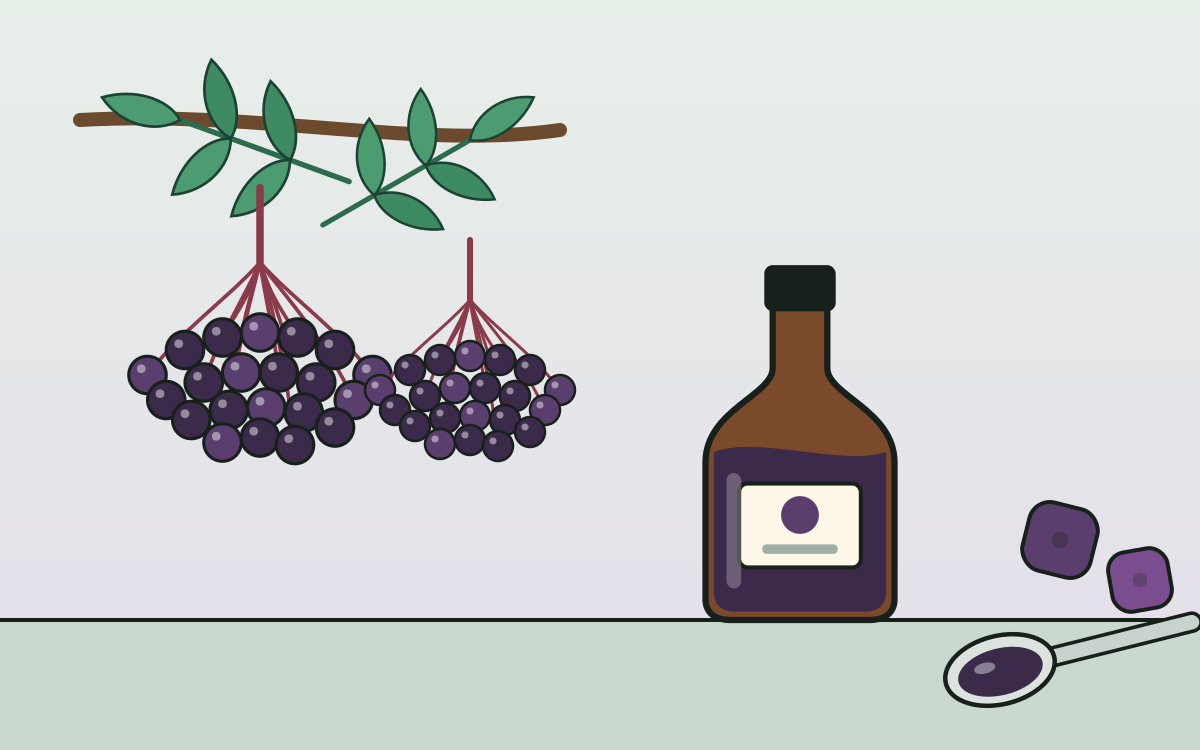
Black elder is a shrub or small tree with flat clusters of dark purple berries. It grows across Europe, Western Asia, North Africa and North America. Folk medicine has long used the berries for colds and flu.
Elderberry supplements are made from berry extract. On iHerb you’ll find:
- syrups – the most common form, usually with sugar or honey;
- gummies – easy to take, but also sugary;
- capsules and tablets – no sugar;
- lozenges – often combined with zinc and vitamin C.
Elderflower is a different ingredient. The European Medicines Agency (EMA) accepts it as a traditional remedy for early cold symptoms from the age of 12. It advises seeing a doctor if symptoms worsen or last more than a week. For the berries, the EMA couldn’t draw up a monograph in 2014, because data on dosing and traditional use were missing.
Elderberry benefits for colds: what the trials show
According to NCCIH, only a small number of studies have looked at elderberry for colds, flu and other upper respiratory infections. A 2021 systematic review, the most rigorous recent summary, included 5 randomised trials.
| Question | What was found | How reliable |
|---|---|---|
| Does it stop you catching a cold? | Possibly not | Uncertain evidence |
| Does it shorten a cold? | May make it shorter and milder | Uncertain evidence |
| Does it shorten flu? | Possibly, but a 2020 trial found no benefit | Conflicting results |
| Does it help with COVID-19? | No good evidence | – |
The air travellers trial
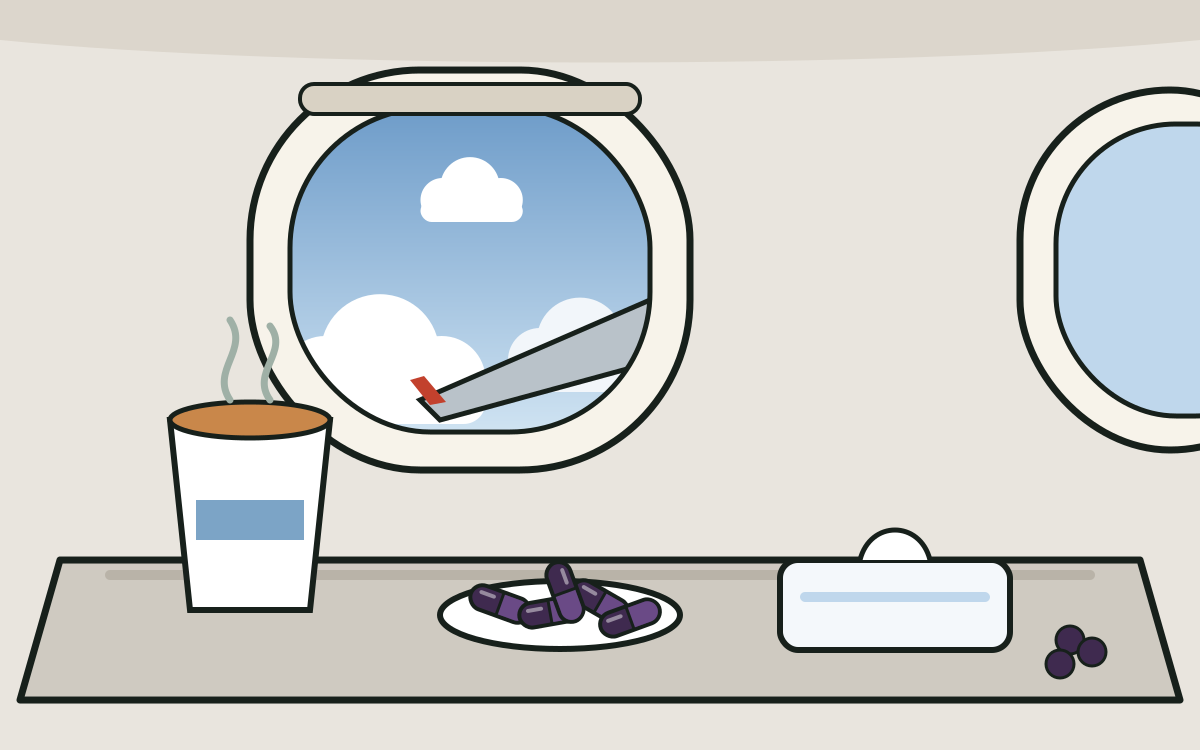
One of the larger elderberry cold trials was published in 2016. It involved 312 economy-class passengers flying from Australia overseas, who took a standardised elderberry extract or a placebo.
- Similar numbers caught colds: 12 on elderberry and 17 on placebo, not a significant difference.
- Fewer days ill: 57 cold days in total on elderberry versus 117 on placebo.
- Milder symptoms: a total symptom score of 247 versus 583.
Even the authors say the result needs confirming. One trial in one group of people is a reason for interest, not proof.
Elderberry for flu: mixed results
A few early small trials found elderberry syrup cut flu by about 4 days. In 2020, though, a stricter US trial enrolled 87 people aged 5 and over with confirmed flu, within 48 hours of their first symptoms. They took elderberry extract or a placebo.
It found no benefit: symptoms became mild after 5.3 days on elderberry and 4.9 days on placebo. Adults and children over 12 took 15 mL four times a day for 5 days. Its authors note that the results contradict the earlier studies.
Both trials side by side:
Elderberry and COVID-19
Elderberry has also been marketed for COVID-19, but NCCIH says there’s no good evidence for this. US regulators, the FDA and the Federal Trade Commission, have acted against companies that made unproven COVID-19 claims for elderberry products. Don’t rely on it to prevent or treat COVID-19.
If you have flu, elderberry doesn’t replace antiviral medicines your GP may prescribe. The proven way to lower your risk of flu is the vaccine, not a supplement, and the NHS offers it free to eligible groups each autumn.
Elderberry syrup: how to take it
There’s no standard elderberry dose, because products differ in extract and strength. Some practical rules:
- Start within the first 1–2 days of symptoms, as in the trials.
- Follow the label and stop when the cold is over; in the flu trial, the course lasted 5 days.
- Compare products by the amount of extract in mg per serving.
- Count the sugar: 2–4 doses of syrup a day add up.
- If the syrup contains zinc, add it to any other zinc you take – see our guide to zinc.
Tap the lines on this sample label to see what to compare:
How to read an elderberry syrup label
A sample Supplement Facts panel. Tap a line to see what to look for
Supplement Facts
What it means
Serving – 10 mL
Every number below is for 2 teaspoons. In one flu trial, adults took 15 mL of syrup four times a day for 5 days.
What it means
Amount per serving
Compare products by the amount of extract per serving, not by bottle size.
What it means
Sugar
Syrups are usually sweet. Count the sugar if you have diabetes. For children aged 4 and under, the NHS advises avoiding food and drinks with added sugar, honey included.
What it means
Black elderberry extract
Look for the Latin name Sambucus nigra and the word fruit. Elderflower is a different ingredient with different evidence.
What it means
Added vitamins
If the syrup contains zinc, add it to zinc from other supplements: EFSA's upper limit for adults is 25 mg a day from all sources, food included.
What it means
Honey
Don't give honey to babies under 1: it can cause infant botulism. This kind of syrup isn't for babies.
What it means
Children's doses
There are no reliable children's doses. Only use a product with a children's dose on the label, and check with your GP or pharmacist first.
Raw elderberries are toxic
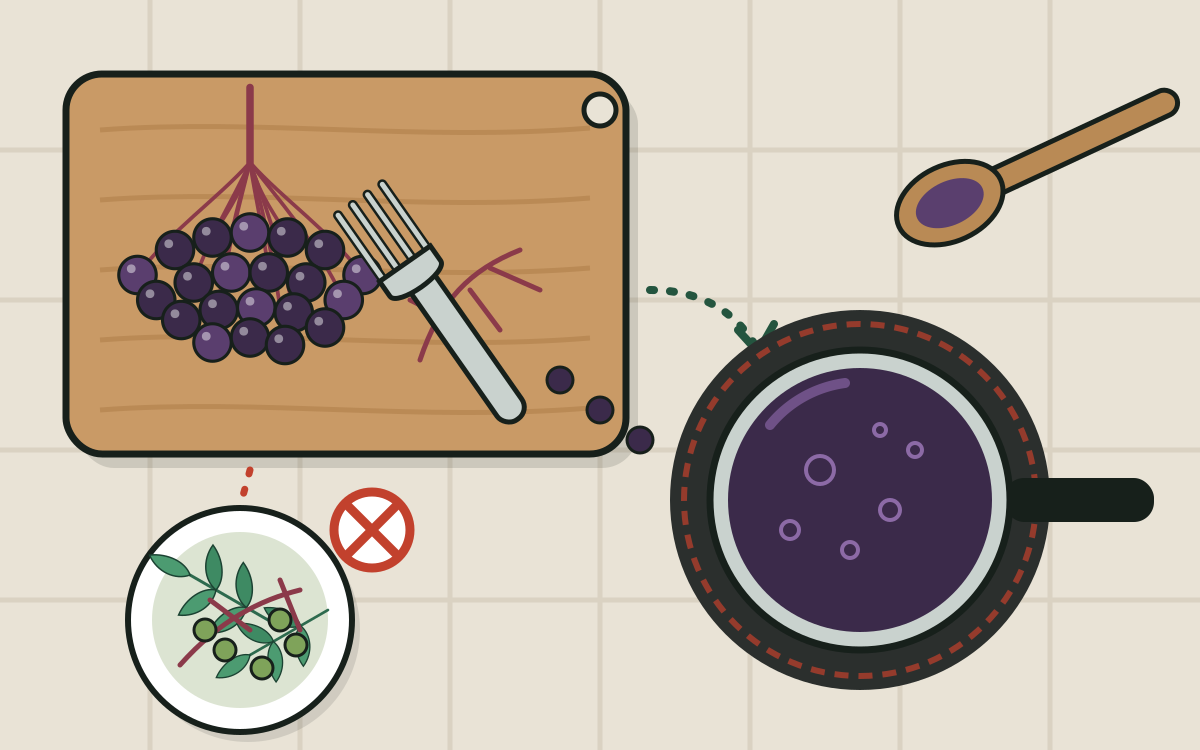
NCCIH warns that raw or unripe elderberries, and the leaves and stems, contain substances that produce cyanide in the body. They cause nausea, vomiting and severe diarrhoea, and large amounts can make you seriously ill. Cooking destroys the toxin.
- Don’t eat raw elderberries or let children pick and eat them.
- Don’t make juice or tinctures from fresh berries with the stalks and leaves.
- For homemade syrup, cook ripe berries with the stems removed.
Elderberry side effects and who should avoid it
- Pregnancy and breastfeeding. NCCIH says little is known about safety.
- Babies under 1. Many syrups contain honey, which can cause infant botulism. For children aged 4 and under, the NHS also advises avoiding food and drinks with added sugar, honey included.
- Older children. There are no reliable children’s doses: only use a product with a children’s dose on the label, after checking with your GP or pharmacist. Our guide to vitamins for kids covers the basics.
- Autoimmune conditions and immunosuppressants. There’s been concern that elderberry could overstimulate the immune system. The 2021 review found no evidence of this, but data are limited, so talk to your doctor.
- Diabetes. Count the sugar in syrups and gummies, or choose capsules.
- Regular medicines. NCCIH advises talking to your doctor before using any herb if you take medicines.
For vitamin and mineral combinations, see our compatibility chart.
When to see a GP about a cold
Colds usually get better on their own. The NHS recommends rest, plenty of fluids and simple remedies for symptoms. Antibiotics don’t help, because colds are caused by viruses. See a GP if:
- you have a high temperature for more than 3 days, or feel hot, cold or shivery;
- you feel short of breath or have chest pain;
- your symptoms get worse or haven’t improved after 10 days;
- you’ve had a cough for more than 3 weeks;
- you have a long-term condition (diabetes, heart, lung or kidney disease) or a weakened immune system;
- you’re worried about your child’s symptoms.
How to choose elderberry on iHerb
- Make sure it’s suitable: not pregnant, no autoimmune condition without your doctor’s agreement, a children’s dose for a child.
- Look for Sambucus nigra and the word fruit on the label, not only “elder”.
- Compare products by extract in mg per serving.
- Choose the form: syrup or gummies for children and people who can’t swallow capsules; capsules if sugar matters.
- Check the extras: zinc, vitamin C, honey.
For other cold-season options, read our guide to vitamin C for colds and the immunity section. Not sure what you need? Try our vitamin check.
Bottom line: what to choose
Adult, first days of a cold
Black elderberry syrup
Start within 48 hours and follow the label
Elderberry syrup on iHerbWatching your sugar
Elderberry capsules
No sugar or honey, easy to travel with
Elderberry capsules on iHerbChild over 1
Children's elderberry syrup or gummies
Only with a children's dose on the label, after checking with your GP or pharmacist
Kids' elderberry on iHerbButtons lead to selections of the right form on iHerb. These are affiliate links; your price doesn't change.
FAQ
What are the benefits of elderberry?
It may make a cold shorter and milder, according to a 2021 systematic review, but the evidence is uncertain because the trials were few and small. It probably doesn’t stop you catching a cold.
Does elderberry syrup work for flu?
The evidence conflicts. Early small trials found flu cleared about 4 days sooner. A stricter 2020 trial in people with confirmed flu found no effect on how long or how badly they were ill.
Are elderberry gummies as good as syrup?
We found no trials comparing them. What matters is the amount of black elderberry extract per serving, so compare labels. Gummies and syrups both usually contain sugar.
Can you eat raw elderberries?
No. Raw and unripe berries, leaves and stems contain substances that release cyanide, causing nausea, vomiting and severe diarrhoea. Cooking destroys the toxin.
Is elderberry safe for children?
There are no reliable children’s doses, so only use a product with a children’s dose on the label and check with your GP or pharmacist. Never give syrups containing honey to babies under 1.
Who should avoid elderberry?
Pregnant or breastfeeding women, because little is known about safety, and babies under 1 if the product contains honey. With an autoimmune condition or immunosuppressant medicines, talk to your doctor first.
Sources
- NCCIH. European Elder
- Wieland LS et al. Elderberry for prevention and treatment of viral respiratory illnesses: a systematic review. BMC Complement Med Ther, 2021
- Tiralongo E et al. Elderberry supplementation reduces cold duration and symptoms in air-travellers: a randomized trial. Nutrients, 2016
- Macknin M et al. Elderberry extract outpatient influenza treatment: a randomized, double-blind, placebo-controlled trial. J Gen Intern Med, 2020
- EMA/HMPC. Public statement on Sambucus nigra L., fructus, 2014
- NHS. Common cold
- NHS. Foods to avoid giving babies and young children
Elderberry at a glance
For adults, based on NCCIH, the EMA and a 2021 systematic review
- What it is
- berries of the black elder (Sambucus nigra)
- Colds
- may be shorter and milder; uncertain evidence
- Flu
- conflicting results
- Prevention
- may not lower your chance of catching a cold
- Raw berries
- toxic; must be cooked
- Pregnancy, breastfeeding
- little is known about safety
Elderberry doesn't replace the flu vaccine or treatment. See a GP if a high temperature lasts more than 3 days or you feel short of breath.
View elderberry on iHerbCompare extract in mg per serving, and the sugar