Supplements by goal: where to start when choosing vitamins
Choosing vitamins is easier when you start from the goal, not the bottle. Find your situation below: each section covers what's best studied, with doses, limits and links to iHerb selections.
Sleep and stress
Supplements for sleep and stress that have actually been studied: magnesium, glycine, L-theanine, melatonin. UK rules, doses, who shouldn't take them, what to buy.
Immunity
Vitamins for the immune system worth taking in the UK: vitamin D3 and zinc, NHS advice, doses, the risks of too much, and whether vitamin C or probiotics help.
Energy and heart
Vitamins for energy and heart health: who needs omega-3 and how much EPA+DHA, who needs B12, why some B complexes are risky, and what to check if you're tired.
- Do you need a multivitamin?
- Best omega-3 supplement: how to choose
- Vitamin B complex
- Vitamin B12 supplements
- CoQ10 and ubiquinol
- Selenium and iodine supplements
- Chromium picolinate: the evidence
- Berberine: benefits and risks
- Resveratrol and trans-resveratrol
- Spirulina: benefits and risks
- Taurine: benefits and side effects
- Alpha lipoic acid and R-lipoic acid
- Weight loss supplements: honestly
Skin, hair and joints
Supplements for skin, hair and joints without the hype: collagen, biotin, glucosamine, lutein, vitamins A and E. What's studied and who should avoid them.
Women's health
Best supplements for women: folic acid before pregnancy, iron after a test, calcium and vitamin D over 50. NHS doses, upper limits and how to choose on iHerb.
Men's health and sport
Best supplements for men: zinc within the limit, omega-3, vitamin D, B12 over 50 and creatine for training. UK doses, who should avoid them and how to choose.
Tests and deficiencies
Vitamin deficiency tests explained: ferritin, vitamin D (25(OH)D) in nmol/L, B12 and why a magnesium test says little. UK thresholds and what distorts results.
Brain and memory
Brain supplements without the hype: what's known about omega-3, B12, ginkgo, lion's mane and nootropics in the UK, which tests to ask about and when to see your GP.
Gut health
Gut health supplements without the hype: fibre and psyllium, probiotics after antibiotics and for IBS, lactase, milk thistle. NHS advice, risks and when to see a GP.
How to choose vitamins by goal
Start with “what do I want to change”, not “what’s popular right now”. Then three steps: find out if you’re actually short of something, pick a form that’s been studied, and check the safe dose. Each section below is built the same way.
We don’t publish “best vitamin” rankings. Our guides give daily needs and upper limits from the NHS and EFSA, who shouldn’t take a supplement, and how to find the right form on iHerb.
What's your goal?
Pick your situation to see which section to open first
What's bothering you
Where to start
Sleep and stress
Start with a regular schedule and morning daylight. Melatonin is the best-studied option for a shifted body clock, but it's prescription-only in the UK. Magnesium makes sense if your diet is low in it.
Most often needed: magnesium 100–200 mg
Where to start
Immunity
Supplements don't make your immune system stronger than normal, but they can fix a shortfall. Vitamin D in winter and zinc on a low-meat diet are the usual gaps.
Most often needed: vitamin D 10 mcg (400 IU) in autumn and winter (NHS)
Where to start
Tests and deficiencies
Tiredness without a clear cause is a reason to get a blood test, not to buy an "energy" formula. Low iron, B12 or vitamin D are common findings.
If you've felt exhausted for weeks, see your GP first.
Where to start
Skin, hair and joints
Lots of marketing, little strong evidence. We look at collagen, biotin, glucosamine and lutein honestly: where there's research and where there isn't.
Where to start
Women's health
Iron for heavy periods, folic acid when trying for a baby, calcium and vitamin D after the menopause.
Most often needed: folic acid 400 mcg before conception and up to week 12
Where to start
Men's health and sport
Creatine for strength training, omega-3 if you rarely eat fish, zinc within the limit. Most men don't need iron unless a test shows they're low.
Most often needed: creatine 3–5 g a day
Supplements by goal at a glance
| Goal | Best-studied options | Where to read |
|---|---|---|
| Poor sleep, stress | magnesium if your diet is low in it; melatonin is prescription-only in the UK | sleep and stress |
| Frequent colds | vitamin D in winter, zinc on a low-meat diet | immunity |
| Tiredness, heart | omega-3 if you eat little fish, B12 for vegans | energy and heart |
| Skin, hair, joints | little strong evidence; find the cause first | supplements for skin, hair and joints |
| Women’s health | folic acid, iron after a test, calcium and vitamin D after 50 | best supplements for women |
| Men’s health and sport | creatine, omega-3, zinc within the limit | best supplements for men |
| Memory and focus | sleep, B12 if you’re low, fish in your diet | brain supplements |
| Digestion | fibre, probiotics for specific problems | gut health supplements |
| Not sure what you lack | ferritin, vitamin D (25(OH)D), B12 | vitamin deficiency tests |
If a label term puzzles you (“chelate”, “RAE”, “% NRV”), check the supplement glossary. Every guide is listed alphabetically in our supplements A–Z.
Not sure where to start? Take our vitamin check: up to 9 questions show what official advice says for someone like you.
What to check before you buy
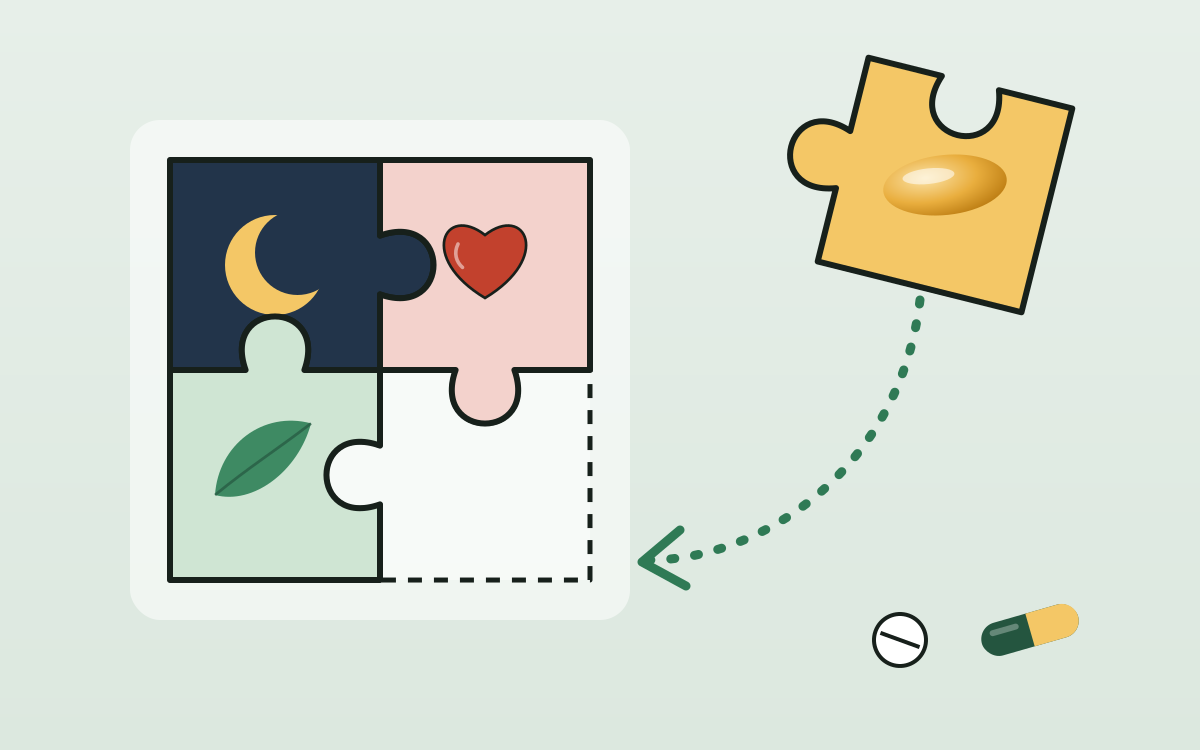
Think of a supplement as a jigsaw piece: it belongs where there’s a gap. Before a bottle goes in your basket, check four things:
- Are you really short? Check your diet, lifestyle and blood tests.
- How much you already get from food and other bottles.
- Which form was used in studies, not which one is advertised hardest.
- The upper limit: it’s easy to exceed for vitamin D, zinc, B6, vitamin A and iron.
When not to choose supplements on your own
- Pregnancy and breastfeeding: avoid vitamin A (retinol) supplements and fish liver oil.
- Kidney or liver disease: minerals and fat-soluble vitamins can build up.
- Regular medicines: anticoagulants, levothyroxine, antibiotics, blood pressure tablets.
- Children: doses depend on age and weight, so follow the label and your GP or health visitor.
- Symptoms lasting more than a few weeks, such as exhaustion, hair loss or pain. See your GP before buying anything.
How to choose on iHerb
- Pick your goal and open its section.
- Choose a form that’s been studied: D3 rather than D2, or magnesium glycinate if your stomach is sensitive.
- Check the amount of the active nutrient per serving, not the number in the product name.
- Add it to what’s already in your multivitamin and compare with the upper limit.
- Where you have a choice, pick a product with independent testing (USP, NSF, IFOS for fish oil).
Our guide to Supplement Facts labels explains each line of the panel.
From goal to bottle
The five steps every section follows. Tap a step
What you want to change
Start there, not with what's popular this month, and open the section for your goal.
- Sleep, immunity, energy, skin, women's and men's health
- No idea where to start? Take the vitamin check
Are you actually short?
Look at your diet and lifestyle. If you're unsure, ask your GP about a blood test.
- Always test before taking iron
- Common tests: ferritin, 25(OH)D, B12
A form that's been studied
Pick what was used in trials, not what's advertised hardest.
- D3 rather than D2
- Magnesium glycinate if your stomach is sensitive
How much per serving
Look for the amount of active nutrient per serving, not the number in the product name. Add your multivitamin and compare with the upper limit.
- Easiest to overdo: vitamin D, zinc, B6, vitamin A, iron
Independent testing
Where you have a choice, prefer a USP or NSF mark, or IFOS for fish oil.
Bottom line: what to choose
Oily fish less than once a week
Omega-3: 250–500 mg EPA+DHA
Count EPA+DHA, not fish oil
Omega-3 on iHerbButtons lead to selections of the right form on iHerb. These are affiliate links; your price doesn't change.
FAQ
What supplements should adults take every day in the UK?
The NHS advises everyone to consider 10 mcg of vitamin D a day in autumn and winter, and all year for some groups. Vegans need B12. Beyond that, there’s no universal list: base it on your diet and, where relevant, a blood test.
Can I take several supplements at once?
Usually yes, but check two things: whether the same nutrient appears in more than one bottle, and whether any pair competes for absorption (iron and calcium, or high-dose zinc and iron). See our vitamin compatibility chart.
Do I need a blood test before taking vitamins?
Not for standard doses of vitamin D, omega-3 or B12 on a vegan diet. Before taking iron, yes: too much is harmful, and tiredness has many causes. See tests and deficiencies.
Is a multivitamin better than single supplements?
A multivitamin is convenient if your diet is limited. Single supplements are more precise: you take only what you lack, at the dose you need. If you take both, add up zinc, vitamin A, B6 and iron and compare them with the upper limits.