Types of magnesium compared: glycinate vs citrate, how much to take and the best supplement for you
This article contains affiliate links to iHerb. If you buy through them, we earn a commission at no extra cost to you. It doesn't affect which forms we recommend. Learn more
Glycinate or citrate? The best type of magnesium depends on how well your gut copes with it and how much actual magnesium each capsule holds. Yet the front of the tub often shows the weight of the whole compound. This page compares the types, gives the doses and lists what to check before you buy.
What magnesium does and who needs more
Hundreds of enzymes rely on magnesium. Your muscles and nerves need it, and so do energy metabolism and protein synthesis. The NHS puts the daily need at 300 mg for men and 270 mg for women. Nuts, seeds, beans, wholegrains and leafy greens are the richest sources.
You’re more likely to fall short if:
- Your diet is low in nuts, beans and wholegrains.
- You’ve taken proton pump inhibitors (omeprazole and similar) or diuretics for a long time.
- You have type 2 diabetes or a gut condition, or you drink heavily.
- You’re over 65.
A blood test says little about your stores. Almost all magnesium sits in bone and cells, and the body holds the blood level steady until late. So decisions usually rest on your diet, symptoms and medical advice, not on one number. Signs and food sources are covered in our guide to magnesium deficiency symptoms.
Magnesium for leg cramps. Night cramps send more people to the supplement aisle than almost anything else, but the evidence doesn’t back magnesium for them. A 2020 Cochrane review (11 trials, 735 people) found magnesium unlikely to give older adults meaningful protection from ordinary night cramps. In pregnancy the results conflict. If cramps are frequent or severe, or started after a new medicine, see your GP rather than raising the dose.
Types of magnesium compared
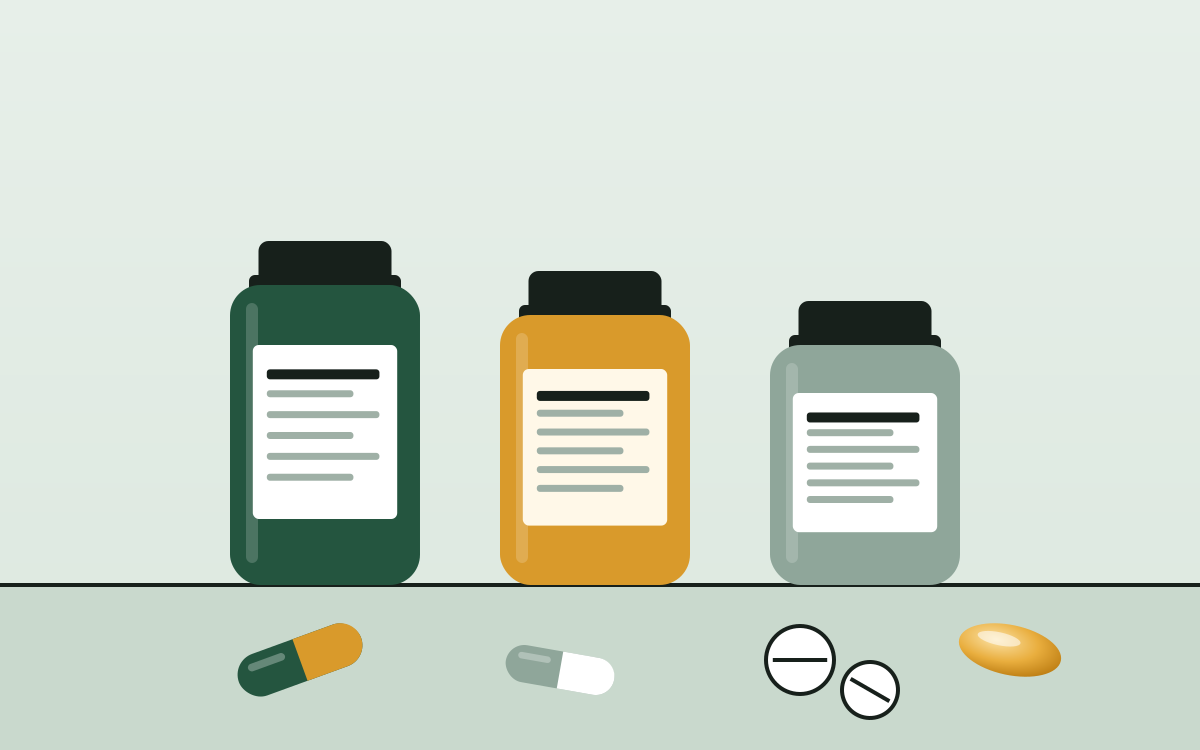
The forms differ mainly in two things: how well your gut tolerates them and how much of their weight is actual magnesium. Human absorption studies are few and small. Tolerability is the more practical guide.
| Form | Magnesium share, approx. | Notes |
|---|---|---|
| Glycinate (bisglycinate) | 14% | Usually gentle on the gut; popular for evening use |
| Citrate | 11–16% | Dissolves well; laxative at higher doses |
| Malate | about 15% | Gentle daytime option; little data |
| Oxide | about 60% | Lots of magnesium per tablet, but poorly tolerated and laxative |
| L-threonate | about 8% | Studied for memory; limited human data; expensive |
| Taurate | about 9% | Magnesium plus taurine; no proven advantage |
| Chloride, lactate | about 10–12% | Less common; average tolerability |
Elemental magnesium is the number that matters. That’s why “magnesium glycinate 1000 mg” in big print doesn’t mean 1,000 mg of magnesium. A serving like that holds about 140 mg, a seventh of the headline figure. Good labels list elemental magnesium and give the form in brackets: “Magnesium (as magnesium bisglycinate chelate) 200 mg”.
Which magnesium fits your situation
Tap your situation to see the form, dose and a selection on iHerb
What matters most to you?
Best fit
Magnesium glycinate (bisglycinate)
Usually the gentlest form on the gut. It's less likely to loosen stools, so it's the usual pick if citrate or oxide cause discomfort.
Dose: 100–200 mg elemental magnesium a day, with food
Best fit
Magnesium glycinate
Glycinate is often taken in the evening: it's gentle, and glycine itself has been studied for sleep. The sleep evidence is modest, though.
Dose: 100–200 mg 1–2 hours before bed
Best fit
Magnesium citrate
Citrate dissolves well and has a mild laxative effect. If it's too strong, lower the single dose or split it.
Dose: 100–200 mg elemental magnesium, powder works well
Best fit
Magnesium citrate
Citrate balances price and tolerability. Oxide is even cheaper but noticeably laxative and not for everyone.
Dose: Compare price per 100 mg of elemental magnesium
Best fit
Check the B6 dose
A typical magnesium-B6 tablet has 5–10 mg of B6. A few tablets a day can easily exceed 12 mg, EFSA's safe limit for long-term use.
If you take it for months, count all your B6, including multivitamins.
Glycinate: the gentle option
This is magnesium bound to the amino acid glycine. It’s the usual pick for evening use and for people whose stomach reacts to other forms. Watch for “buffered” on the label. Buffered glycinate has magnesium oxide added to raise the magnesium per capsule. That’s fine, but it’s more likely to loosen stools. Doses, timing and side effects are covered in our magnesium glycinate guide.
Citrate: affordable and soluble
Citrate dissolves well in water and comes as capsules, tablets and powders. It’s a sensible choice if you don’t need glycinate for tolerability. If it loosens your stools, lower the single dose. More on its use for constipation in our magnesium citrate guide.
Magnesium glycinate vs citrate: which should you take?
Both are well absorbed. There’s no solid evidence that one gets into the body better than the other. The difference is in how they feel:
| Glycinate | Citrate | |
|---|---|---|
| Gut effect | Gentle; least likely to loosen stools | Mild laxative, stronger at higher doses |
| Best for | Evening use, sensitive stomach | Budget, powders, tendency to constipation |
| Magnesium per gram | about 14% | about 11–16% |
| Price | Higher | Lower |
Choose glycinate if other forms upset your stomach. Choose citrate if price matters or a mild laxative effect would suit you. Oxide vs citrate is a simpler call: oxide is cheaper per milligram but harder on the gut.
Oxide: lots of magnesium, not for everyone
Oxide packs the most magnesium into one tablet and costs the least. But much of it isn’t absorbed and stays in the gut. That’s why it often works as a mild laxative.
Threonate, malate, taurate
These are niche forms. L-threonate drew interest because it raised brain magnesium in animal studies. Convincing human data is scarce, and it costs several times more. Malate and taurate are well tolerated but have no proven advantage over glycinate.
How much magnesium per day
Start with how much you already get from food. If you eat nuts, beans and wholegrains most days, you may not need a supplement at all.
- A typical supplement dose is 100–200 mg of elemental magnesium a day.
- EFSA sets 250 mg a day as the limit for supplements. The NHS says 400 mg or less is unlikely to cause harm, and the US limit is 350 mg. Magnesium from food doesn’t count towards any of them.
- Take it with food, and split doses above 200 mg into two to spare your gut.
- Timing has little effect on absorption. Glycinate is often taken in the evening, citrate earlier in the day.
Count every source. Magnesium also turns up in multivitamins, ZMA, electrolyte mixes and fizzy tablets. Products that pair it with B6 add a second nutrient with its own limit, explained in our magnesium and vitamin B6 guide.
If the tub only gives the compound weight, work it out yourself: pick the form and type in the milligrams from the label.
How much magnesium your serving really holds
Pick the form and enter the compound weight from the tub – we'll work out the elemental magnesium
140 mg magnesium
Elemental magnesium in this serving
56% of EFSA's 250 mg limit for magnesium from supplements
Within the EU limit. A supplement usually needs only 100–200 mg a day
Glycinate on iHerbShares are approximate, from the forms table above. If the label has a Magnesium line, trust it: that's already elemental magnesium. Food magnesium doesn't count towards the limit.
Is magnesium good for sleep?
Glycinate is the usual pick for sleep. It’s gentle, and glycine itself has been studied for sleep. Overall, though, the evidence for magnesium is modest. A 2021 systematic review in older adults with insomnia found only a small cut in the time it took to fall asleep, and the studies were of low quality. If you’re not low in magnesium, don’t expect much.
If poor sleep has lasted more than three months, the first-line treatment is cognitive behavioural therapy for insomnia (CBT-I). Ask your GP about it. For other options, see our guide to sleep supplements.
Side effects, who should avoid it and interactions
- Kidney disease. Your kidneys clear excess magnesium. When they don’t work well, it can build up. Take it only under medical supervision.
- Tetracycline and quinolone antibiotics (doxycycline, ciprofloxacin and others). Magnesium blocks their absorption. Take the antibiotic at least 2 hours before or 4–6 hours after magnesium.
- Bisphosphonates for osteoporosis. Keep at least 2 hours apart.
- Levothyroxine for the thyroid. Minerals reduce its absorption, so separate by 4 hours.
In practice, start from the medicine: note when you take it, then move magnesium the right number of hours away.

In pregnancy, check with your midwife or GP before you start. Nausea, severe diarrhoea, weakness or an irregular heartbeat mean you should stop and see a doctor. Which supplements clash with each other is shown in our vitamin compatibility chart.
How to choose the best magnesium supplement in the UK
- Pick the form: glycinate for a sensitive gut, citrate as an all-rounder.
- Check elemental magnesium per serving and how many capsules make that serving. It’s often 2–4 capsules.
- Compare the price per 100 mg of elemental magnesium, not per bottle.
- Prefer products with independent testing (USP, NSF and similar seals).
- Before you order, check iHerb delivery to the UK and any import charges.
More on reading labels in our Supplement Facts guide.
Bottom line: what to choose
Evening use or a sensitive stomach
Magnesium glycinate (bisglycinate)
100–200 mg elemental magnesium a day
Glycinate on iHerbOn a budget or prone to constipation
Magnesium citrate
Capsules or powder; keep single doses under 200 mg
Citrate on iHerbButtons lead to selections of the right form on iHerb. These are affiliate links; your price doesn't change.
FAQ
What is the best type of magnesium to take?
For most people, glycinate or citrate. Both are well absorbed. Glycinate is gentler on the gut, and citrate is cheaper and mildly laxative. Pick by tolerability and by elemental magnesium per serving, not by marketing claims.
Is it safe to take magnesium every day?
Yes, within limits. EFSA considers up to 250 mg of elemental magnesium a day from supplements safe, and the NHS says 400 mg or less is unlikely to cause harm. With kidney disease, magnesium can build up, so take it only under medical supervision.
Why does magnesium cause diarrhoea?
Unabsorbed magnesium draws water into the gut. Oxide, citrate and sulphate do this more, and so do large single doses. Switching to glycinate, lowering the dose or splitting it into two usually helps.
Which type of magnesium is best absorbed?
Small studies found that forms which dissolve well, such as citrate, lactate and chloride, are absorbed more completely than oxide and sulphate. Glycinate is well tolerated, but head-to-head data is limited. For most people, tolerability and the elemental dose matter more than the form.
What is the best time to take magnesium?
Timing matters less than taking it regularly and with food. Many people take glycinate in the evening and citrate earlier in the day. Keep it apart from some medicines: tetracycline and quinolone antibiotics (take them 2 hours before or 4–6 hours after), bisphosphonates (2 hours) and levothyroxine (4 hours).
How much magnesium is in 1,000 mg of magnesium glycinate?
About 140 mg of elemental magnesium, because magnesium makes up roughly 14% of bisglycinate by weight. The Supplement Facts panel lists elemental magnesium per serving, so check that line.
Sources
- NHS. Vitamins and minerals – Others (magnesium)
- NIH ODS. Magnesium – Fact Sheet for Health Professionals
- EFSA. Scientific Opinion on Dietary Reference Values for magnesium (2015)
- EFSA. Tolerable Upper Intake Levels for Vitamins and Minerals (2006)
- Mah J, Pitre T. Oral magnesium supplementation for insomnia in older adults: a systematic review and meta-analysis. BMC Complement Med Ther, 2021
- Garrison SR et al. Magnesium for skeletal muscle cramps. Cochrane Database of Systematic Reviews, 2020
Magnesium at a glance
For adults, based on NHS, EFSA and NIH ODS
- Daily need (NHS)
- 300 mg for men, 270 mg for women
- Limit from supplements
- 250 mg (EFSA); 350 mg (US)
- Gentlest form
- glycinate (bisglycinate)
- More laxative
- oxide, citrate, sulphate
- When to take
- with food; split doses above 200 mg
- Caution
- kidney disease, some antibiotics, bisphosphonates
The limit applies only to magnesium from supplements and medicines, not from food. The NHS says 400 mg or less a day from supplements is unlikely to cause harm.
Shop glycinate on iHerbCompare elemental magnesium per serving