Digestive enzymes: when lactase and alpha-galactosidase help, and when to see your GP
This article contains affiliate links to iHerb. If you buy through them, we earn a commission at no extra cost to you. It doesn't affect which forms we recommend. Learn more
Tubs of digestive enzymes promise comfort after any meal. The evidence covers two enzymes for narrow jobs: lactase for dairy and alpha-galactosidase for beans. We go through what works, what doesn't, and which symptoms need a GP rather than a supplement.
What digestive enzymes are
Enzymes are proteins that break food down into pieces small enough to absorb. Amylase handles starch, proteases handle protein, lipase handles fat and lactase handles milk sugar. Most of them come from your pancreas and small intestine.
Supplement enzymes come from three sources:
- microbes – fungal lactase, alpha-galactosidase, amylase and proteases;
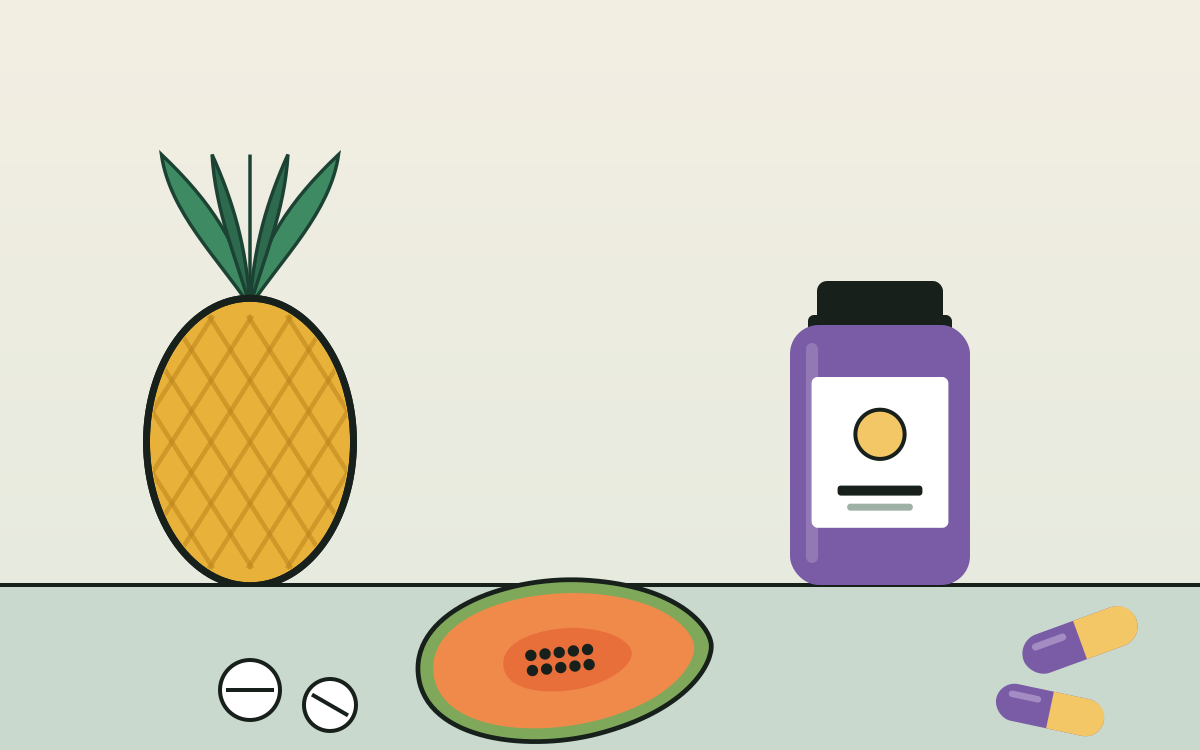
- plants – bromelain from pineapple, papain from papaya;
- animals – pancreatin from animal pancreas, used in medicines.
An enzyme only helps with the food it breaks down. If your own enzymes are working, extra ones change little. So “enzymes for digestion” in general is a weak idea, while an enzyme matched to one food can make sense. For other gut supplements, see our gut health section.
Digestive enzymes benefits: what’s been studied
| Enzyme | Breaks down | Used for | Strength of evidence |
|---|---|---|---|
| Lactase | Lactose in milk | Lactose intolerance | Good; authorised UK/EU claim |
| Alpha-galactosidase | Sugars in beans and cabbage | Wind after beans | Small trials, modest effect |
| Bromelain | Protein | “Heaviness after meat” | Hardly any digestion studies |
| Papain | Protein | Same | We found no reliable human data |
| Enzyme blend | A bit of everything | “Digestive support” | Weak |
| Pancreatin | Fat, protein, carbs | Pancreatic insufficiency | A medicine your doctor manages |
Lactase supplements: the one enzyme with an authorised claim
Lactase breaks down lactose, the sugar in milk. If you make too little, lactose reaches the large bowel and ferments. Usual symptoms, according to the NHS: tummy pain and rumbling, bloating, wind, diarrhoea or constipation and feeling sick. They start from a few minutes to a few hours after dairy.
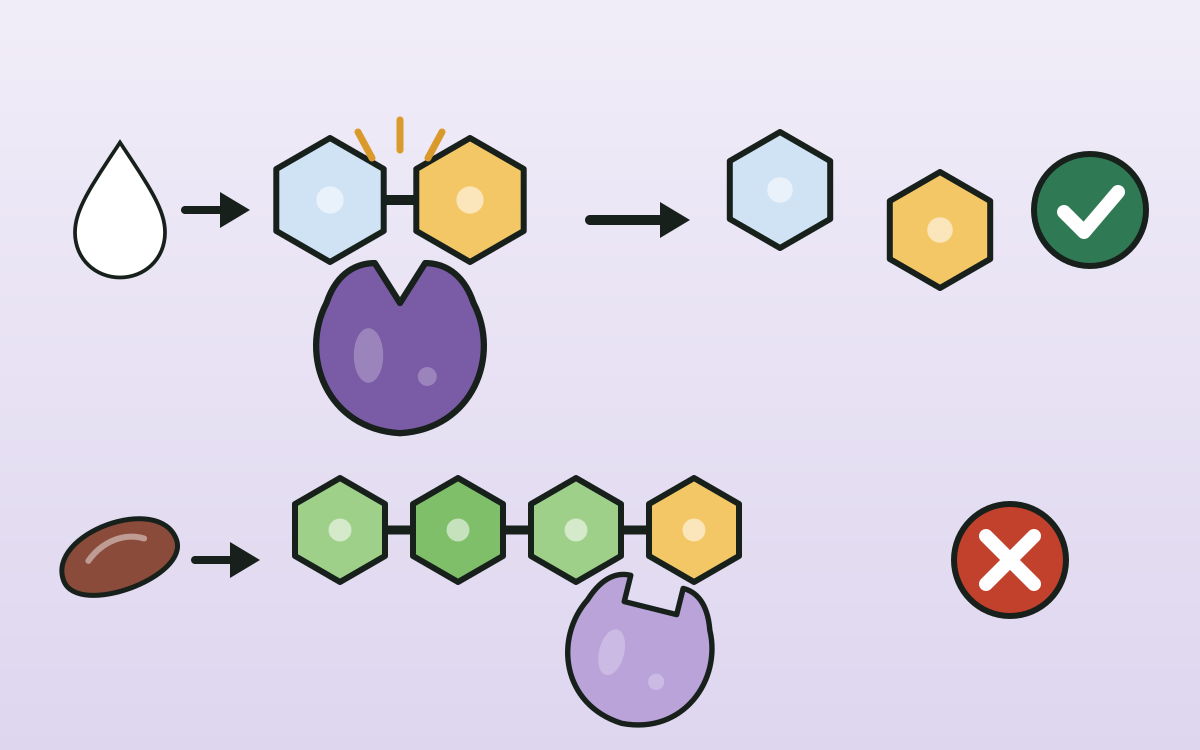
In the UK and EU, lactase may carry this claim: it “improves lactose digestion in individuals who have difficulty digesting lactose”. Conditions of use:
- food supplements only, at 4,500 FCC units (Food Chemicals Codex) or more;
- taken with each meal that contains lactose;
- the pack must say that lactose tolerance varies.
The NHS agrees that a lactase supplement before food or drink containing lactose may reduce or prevent symptoms for some people. Live yoghurt cultures carry an authorised claim for lactose digestion too: more in our guide to probiotics.
For children, ask your GP or health visitor before using lactase, as the amount depends on age and diet.
How to tell if it’s lactose
Bloating after milk isn’t a diagnosis. The NHS suggests seeing a GP if symptoms keep coming back and often follow meals. Your GP may suggest:
- a lactose-free trial – cutting out dairy for a while to see if symptoms ease;
- a hydrogen breath test – it measures how well you digest lactose;
- blood tests, and a gastroscopy if symptoms are severe.
Lactose intolerance can also be a result of coeliac disease or inflammatory bowel disease. That’s why persistent symptoms get checked first, before you pick an enzyme. Once it’s confirmed, most people manage with smaller dairy portions or lactase for the trickier meals. The NHS advises against cutting foods out completely without advice from a GP or dietitian.
Alpha-galactosidase for wind after beans
Beans, lentils and cabbage contain sugars that humans can’t break down. Bacteria in the large bowel ferment them instead, and that’s where the wind comes from. Alpha-galactosidase breaks them down before the bacteria get the chance.
What the trials found:
- 1994, 19 people, a bean chilli. Wind was less frequent with the enzyme, but bloating and pain didn’t change.
- 2007, 8 volunteers, 420 g of beans. A dose of 1,200 GalU reduced hydrogen production and how bad the wind felt.
- 2016, 125 people with IBS, 12 weeks. The authors found no support for routine use. More people stopped taking the enzyme because of tummy pain and diarrhoea.
If beans and lentils are regulars on your plate, alpha-galactosidase is worth a try for wind. In IBS, there’s more evidence for soluble fibre such as psyllium husk, a low-FODMAP diet and probiotics. The enzyme only works at the meal, so take it with the first mouthful.
What’s inside an enzyme blend
Most tubs labelled Digestive Enzymes are blends: amylase, proteases, lipase, lactase, sometimes cellulase, bromelain and papain. It looks impressive, but there’s very little research on blends like these in healthy people.
If you want to try one, treat it as an experiment. Note what you ate and how you felt. If nothing changes after a couple of weeks, you don’t need it.
Bromelain and papain: pineapple and papaya enzymes
Bromelain is a group of protein-digesting enzymes from the stem and fruit of the pineapple plant. According to NCCIH, it’s been studied by mouth for sinusitis and after wisdom tooth removal, and the evidence is thin. As a topical product, it’s approved in the US and EU for removing dead tissue from severe burns.
People often take bromelain for digestion, but Memorial Sloan Kettering notes that studies are lacking. Papain from papaya has even less behind it: we found no reliable human trials for digestion.
What’s known about bromelain safety:
- the most common side effects are stomach upset and diarrhoea (NCCIH);
- allergic reactions have been reported (MSK);
- it may raise blood levels of tetracycline antibiotics;
- lab studies suggest it may raise the risk of bleeding, so don’t combine it with warfarin or other blood thinners;
- little is known about its safety in pregnancy or breastfeeding.
Pancreatin is a medicine, not a supplement
Pancreatic enzyme capsules (pancreatin) are medicines, used under a doctor’s care. They’re used when the pancreas doesn’t make enough enzymes, for example in chronic pancreatitis or cystic fibrosis.
The NHS lists signs that can point to a pancreas problem:
- very smelly poo that floats and is hard to flush away;
- feeling bloated or passing a lot of wind;
- losing weight without trying;
- feeling thirsty or needing to pee a lot.
These need a GP appointment and tests. Your doctor sets the pancreatin dose. Supplement enzymes from iHerb aren’t a substitute, even if they contain lipase.
Which enzyme fits your problem
Pick what's bothering you to see whether an enzyme makes sense and when to see a GP
What's bothering you
What may help
Lactase before food with lactose
It's the only digestive enzyme with an authorised UK and EU claim: lactase improves lactose digestion in people who have difficulty digesting it.
Dose: at least 4,500 FCC units with each meal containing lactose
If symptoms keep coming back, last 3 weeks or you're losing weight, see your GP first: coeliac disease can feel similar.
What may help
Alpha-galactosidase is worth a try
In small trials it reduced wind after a bean meal. It did little for bloating or pain, and a 12-week IBS trial found no clear benefit.
Dose: with the first bite, as the label says
What may help
Bromelain and papain: little evidence
Pineapple and papaya enzymes are sold for digestion, but there are hardly any human studies for this use. Smaller portions and less fatty food tend to help more.
Avoid bromelain if you take warfarin or other blood thinners, or tetracycline antibiotics.
What may help
Enzymes won't help here
Heartburn is about acid, not missing enzymes. A pharmacist can suggest an antacid or alginate. If it keeps happening, see your GP.
What may help
See a GP, not a supplement shop
Very smelly stools that float and are hard to flush, plus weight loss, can mean your pancreas isn't making enough enzymes. That's treated with pancreatin, a medicine, at a dose your doctor sets.
Never swap prescribed pancreatin for an over-the-counter enzyme blend.
What may help
Start with diet and your GP
In IBS, soluble fibre, a low-FODMAP diet and probiotics have more evidence. An enzyme blend isn't the first step.
When to see a GP about digestion
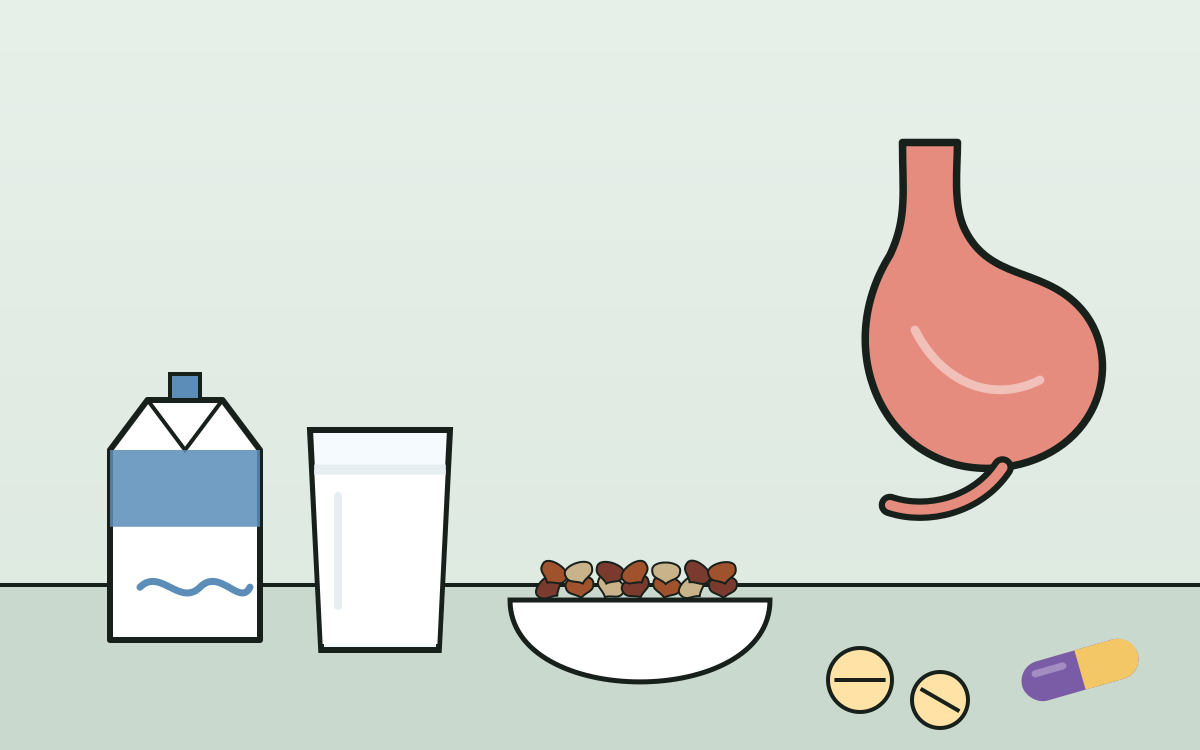
Heartburn, fullness and burping after meals are usually down to stomach acid, not missing enzymes. For heartburn, the NHS suggests asking a pharmacist about antacids or alginates. But some signs need a GP:
- you keep getting indigestion or it’s very painful;
- you’ve lost a lot of weight without meaning to;
- you have difficulty swallowing or keep being sick;
- you have iron deficiency anaemia;
- you notice blood in your vomit or poo;
- you can feel a lump in your stomach;
- changes in your poo, bloating or discomfort last 3 weeks or more.
Before you buy, run through this quick check:
Try an enzyme, or see your GP first?
Tick the statements that are true for you. Ticks are saved only in this browser
0 / 7 ticked
All ticked. Try an enzyme matched to one food and note how you feel. If nothing changes in a couple of weeks, stop and see your GP.
Lactase on iHerbWho should avoid digestive enzymes
- Blood thinners (warfarin and others): avoid bromelain.
- Tetracycline antibiotics: bromelain may raise their levels.
- Allergy: allergic reactions to bromelain have been reported. If you’re allergic to pineapple or papaya, avoid enzymes made from them.
- Pregnancy and breastfeeding: there’s little safety data for bromelain or blends, so ask your midwife or GP.
- Pancreatic disease or cystic fibrosis: only the pancreatin your doctor prescribes.
- Children: any enzyme only after talking to your GP or pharmacist.
To check combinations with other supplements, see our vitamin compatibility chart.
How to choose digestive enzymes on iHerb
- Start with which food sets off your symptoms. Dairy points to lactase, beans to alpha-galactosidase.
- Look at activity units, not milligrams: FCC for lactase, GalU for alpha-galactosidase.
- For lactase, choose at least 4,500 FCC per meal.
- In blends, check for bromelain or papain if you take blood thinners.
- If nothing improves in a couple of weeks, stop and see your GP.
Our label-reading guide shows where to find activity units on a Supplement Facts panel. Not sure what you need? Start with our vitamin check.
Bottom line: what to choose
Dairy doesn't agree with you
Lactase supplement
4,500 FCC or more before food with lactose
Lactase on iHerbWind after beans and cabbage
Alpha-galactosidase
Take with the first mouthful
Alpha-galactosidase on iHerbWant to try a blend
Enzyme blend with activity units listed
No change in a couple of weeks? Stop
Enzyme blends on iHerbButtons lead to selections of the right form on iHerb. These are affiliate links; your price doesn't change.
FAQ
Do digestive enzymes actually work?
For specific jobs, yes. Lactase improves lactose digestion, and that claim is authorised in the UK and EU. Alpha-galactosidase reduced wind after beans in small trials. For broad blends sold for “bloating after meals”, there’s very little good research.
How do I take a lactase supplement?
Take it just before food or drink containing lactose, with every such meal. The authorised claim applies to doses of at least 4,500 FCC units. Tolerance to lactose varies, so you may need to adjust the amount.
What are the best digestive enzymes in the UK?
There’s no single best product, because each enzyme suits a different food. Choose lactase for dairy and alpha-galactosidase for beans, and look for activity units (FCC, GalU) rather than milligrams. For ongoing symptoms, see your GP before buying anything.
What is bromelain used for?
Bromelain is a protein-digesting enzyme from pineapple. It’s been studied by mouth for sinusitis and after wisdom tooth removal, with limited evidence, and there are hardly any studies for digestion. It may add to the effect of blood thinners.
Can digestive enzymes replace prescribed pancreatin?
No. Pancreatin is a medicine for people whose pancreas doesn’t make enough enzymes, and your doctor sets the dose. Over-the-counter blends aren’t a substitute and shouldn’t be used to treat pancreatic problems.
Sources
- Commission Regulation (EU) No 432/2012 as retained in GB law, Annex: permitted health claims (lactase enzyme)
- NHS. Lactose intolerance
- NHS. Indigestion
- NHS. Chronic pancreatitis
- NCCIH. Bromelain: Usefulness and Safety
- Memorial Sloan Kettering. Bromelain – About Herbs
- Hillilä M et al. Does oral α-galactosidase relieve irritable bowel symptoms? Scand J Gastroenterol, 2016
Digestive enzymes at a glance
For adults, based on EFSA, NHS, NCCIH and MSK
- Authorised claim (UK/EU)
- lactase only, 4,500 FCC or more with food
- Alpha-galactosidase
- less wind after beans in small trials
- Bromelain and papain
- barely studied for digestion
- Pancreatin
- a medicine; your doctor sets the dose
- Heartburn
- usually acid, not enzymes; ask a pharmacist
- Caution
- warfarin, tetracyclines, allergy
An enzyme only works on the food it breaks down. There's no all-purpose "digestion" enzyme.
Shop lactase on iHerbLook for FCC units per serving
Contents
- What digestive enzymes are
- Digestive enzymes benefits: what’s been studied
- Lactase supplements: the one enzyme with an authorised claim
- How to tell if it’s lactose
- Alpha-galactosidase for wind after beans
- What’s inside an enzyme blend
- Bromelain and papain: pineapple and papaya enzymes
- Pancreatin is a medicine, not a supplement
- When to see a GP about digestion
- Who should avoid digestive enzymes
- How to choose digestive enzymes on iHerb