Calcium supplements and vitamin K2: which calcium to choose, D3 + K2, and who should avoid K2
This article contains affiliate links to iHerb. If you buy through them, we earn a commission at no extra cost to you. It doesn't affect which forms we recommend. Learn more
Calcium is often bought "for bones", yet many people get enough from food. This guide covers who really needs a calcium supplement, how carbonate and citrate differ, what the evidence says about vitamin K2, and why it needs care if you take warfarin.
Calcium: food first, then a supplement
Calcium is needed for bones, teeth, muscles and nerves. How much you need depends on whose guidance you follow. The NHS says 700 mg a day for adults. US guidance is about 1,000 mg, rising to 1,200 mg for women over 50 and everyone over 70.
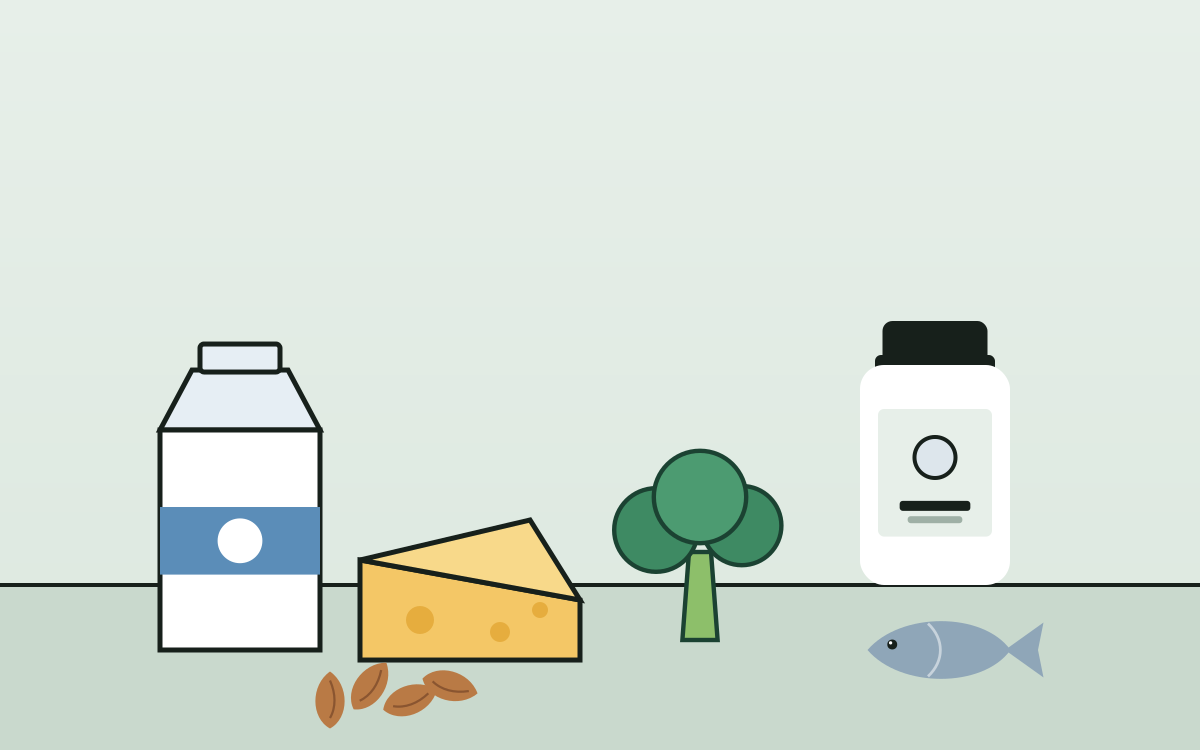
Most people get much of their calcium from food. Good sources, according to the NHS:
- milk, yoghurt and cheese;
- green vegetables such as kale and broccoli (but not spinach: its calcium is poorly absorbed);
- calcium-fortified soya drinks and bread made with fortified flour;
- small fish eaten with the bones, such as sardines.
As a rough guide from NIH ODS: 227 g of plain yoghurt gives about 415 mg of calcium, 42 g of mozzarella 333 mg and 85 g of tinned sardines with bones 325 mg. A pot of yoghurt at breakfast and sardines on toast at lunch cover most of the NHS figure.
You may need a calcium supplement if you eat little dairy or fortified food, or if your GP recommends one, for example for osteoporosis. Then the dose is the gap between your needs and what food gives you.
Calcium carbonate vs calcium citrate
The forms differ mainly in calcium content and how to take them. Labels show elemental calcium, with the form in brackets: “Calcium (as calcium citrate) 250 mg”.
| Form | Calcium share | How to take | Notes |
|---|---|---|---|
| Carbonate | 40% | with food | more calcium per tablet and cheaper; more bloating and constipation |
| Citrate | 21% | with or without food | suits low stomach acid; bigger or more tablets |
For example, a 1,250 mg calcium carbonate tablet gives about 500 mg of elemental calcium. Getting the same 500 mg from citrate takes about 2,400 mg of the compound, which means several capsules.
NIH ODS notes that calcium from supplements is absorbed best in doses of 500 mg or less. If your GP advises 1,000 mg, split it into two doses: one tablet with breakfast and one with your evening meal, for example.
Who should choose citrate. Carbonate needs stomach acid to dissolve. If your stomach acid is low, including from long-term heartburn medicines, citrate is the better fit.
Upper limit for calcium
EFSA’s limit for adults is 2,500 mg a day, and it covers all calcium: food, fortified products and supplements. The US limit is the same up to age 50 and 2,000 mg after that. The NHS looks only at supplements: 1,500 mg or less a day is unlikely to cause harm, while more can cause stomach pain and diarrhoea.
Work out how much elemental calcium one dose of your product gives, and whether it’s time to split it:
How much calcium you take in one go
Pick the form and enter the compound weight per dose, e.g. "calcium carbonate 1,250 mg"
500 mg calcium
Elemental calcium in one dose
100% of 500 mg, the dose NIH ODS says is absorbed best
Fine to take in one go. Take carbonate with food
Calcium citrate on iHerbIf the label says "Calcium (as calcium citrate) 250 mg", 250 mg is already elemental calcium. EFSA's limit for all calcium is 2,500 mg a day.
Extra calcium from supplements carries other risks too. NIH ODS says higher intakes of supplemental calcium might increase the risk of kidney stones. In one large trial, calcium with vitamin D raised that risk by 17% over 7 years. Evidence on calcium supplements and heart disease is mixed: some studies found higher risk, others found none. So don’t take large doses just in case.
Side effects of calcium supplements:
- wind, bloating and constipation, more often with carbonate than citrate;
- stomach pain and diarrhoea above 1,500 mg a day;
- kidney stones with high intakes from supplements.
Calcium and vitamin D3
Vitamin D helps your body absorb calcium, which is why the two are often sold together. If you already take D3 separately, add the doses up: the adult upper limit is 100 mcg (4,000 IU) a day. Our IU to mcg converter does the maths.
For D3 doses and when testing helps, see how much vitamin D3 to take and our vitamin D test guide.
Calcium with D3 and K2 label: tap a line
A sample Supplement Facts panel for a combined product. Each line explains what to look for
Supplement Facts
What it means
Serving is 2 tablets
Every number below is for 2 tablets. If you take one, halve it.
What it means
Amount per serving
This shows the elemental amount of each nutrient. The compound is named in brackets and in the ingredients.
What it means
Elemental calcium
500 mg is the calcium itself. Carbonate is 40% calcium, so the serving holds 1,250 mg of the compound. Take carbonate with food.
What it means
Vitamin D3
1 mcg = 40 IU, so 25 mcg = 1,000 IU. Add up D3 from other products: the adult limit is 100 mcg (4,000 IU) a day.
What it means
Vitamin K2 (MK-7)
MK-7 is the K2 form found in natto. K2 has no upper limit, but don't take it with warfarin unless your doctor agrees: it changes how the drug works.
What it means
How to take it
Calcium is absorbed best in doses of 500 mg or less. One tablet with two different meals is the right pattern.
What it means
Other ingredients
Fillers and coating. Check here for allergens and the K2 source: natto is made from soya.
What vitamin K2 does
Vitamin K is a group of compounds. K1 (phylloquinone) comes mostly from green leafy vegetables and vegetable oils. K2 (menaquinones, such as MK-4 and MK-7) is found in fermented foods, meat, dairy and eggs. Natto, a Japanese fermented soya bean dish, is by far the richest source of MK-7: about 850 mcg in 85 g.
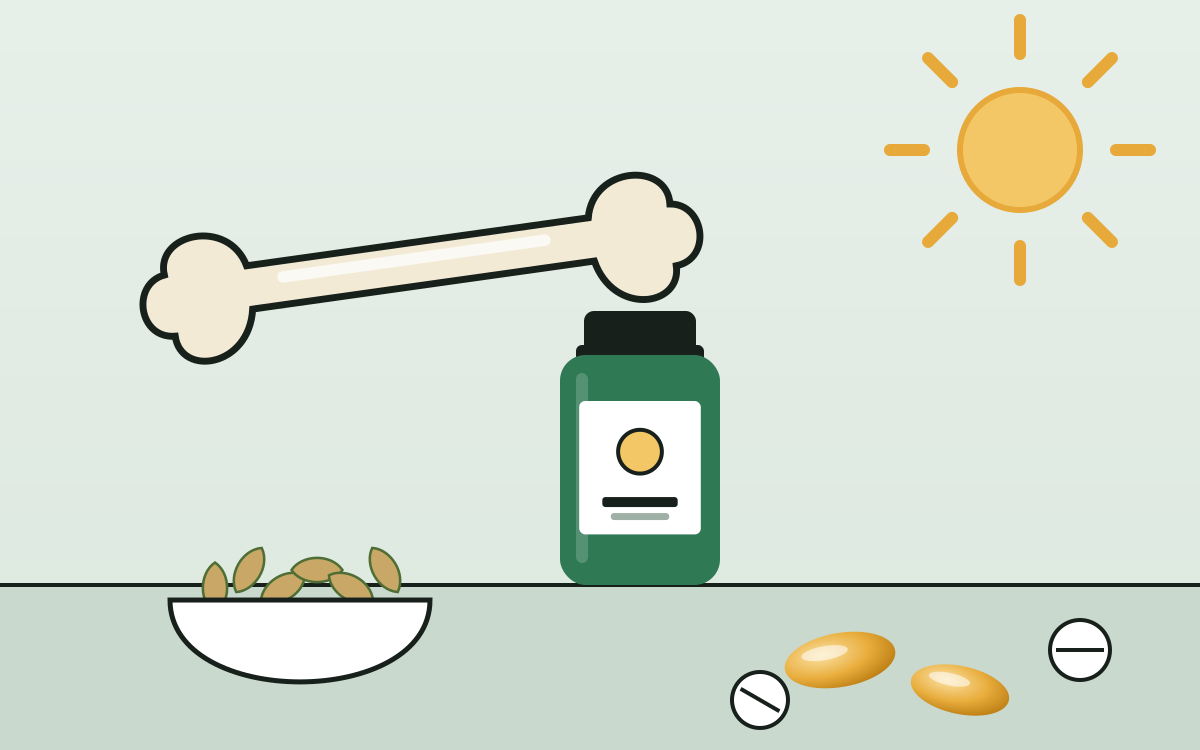
Vitamin K is needed for blood clotting and for proteins involved in calcium handling in bone. That’s where the idea of pairing K2 with calcium and D3 comes from.
What the evidence says about K2 for bones and arteries
- Bones. In Japan, MK-4 at 45 mg a day is used to treat osteoporosis. A 2006 meta-analysis found fewer fractures with MK-4. In a trial of MK-7 at 180 mcg a day for 3 years, postmenopausal women had better bone strength. Other trials in older adults found no benefit for bone density.
- Arteries. In observational studies, people with more menaquinones in their diet had less calcification of the arteries. Clinical trials of supplements have been inconclusive.
So K2 is a reasonable extra, and skipping it is fine too: there’s little evidence that D3 + K2 beats D3 alone at ordinary doses.
Dose. Vitamin K has no upper limit: NIH ODS says it has low potential for toxicity. The NHS says 1 mg or less a day of vitamin K from supplements is unlikely to cause harm. Adults need roughly 1 mcg per kilogram of body weight a day.
Interactions and who should avoid them
Vitamin K and warfarin. Vitamin K can have a serious and potentially dangerous interaction with warfarin and other vitamin K antagonists. If you take one, keep your vitamin K intake steady. Don’t start or stop K2 without your doctor or anticoagulation clinic.
Calcium reduces the absorption of several medicines. According to NIH ODS, keep it apart from:
- levothyroxine (for an underactive thyroid): leave 4 hours;
- quinolone antibiotics (ciprofloxacin and similar): take the antibiotic 2 hours before or after;
- dolutegravir (an HIV medicine): take it 2 hours before or 6 hours after calcium.
If you take lithium, ask your doctor first: long-term use with calcium may raise the risk of high blood calcium.
Calcium may reduce iron absorption, so take iron tablets at a different time. Thiazide diuretics with vitamin D can push blood calcium too high.
Don’t take calcium supplements without medical advice if you have kidney stones, kidney disease or high blood calcium. In pregnancy, discuss calcium and vitamin D with your midwife or GP (see pregnancy vitamins). For other pairs, use the vitamin compatibility chart.
How to choose calcium and K2 on iHerb
- Count the calcium in your diet. A supplement only needs to cover the gap, usually 250–500 mg.
- Pick the form: citrate if you take it without food or have low stomach acid; carbonate if price matters and you take it with meals.
- Check elemental calcium per serving and how many tablets make up that serving.
- If you need more than 500 mg, split it into two doses.
- In D3 + K2 combinations, add up vitamin D from all your supplements.
- If you take warfarin, take K2 only with your doctor’s agreement.
For an overview by age, see supplements for women.
Bottom line: what to choose
Little dairy in your diet
Calcium citrate 250–500 mg
Can be taken without food; split larger doses
Citrate on iHerbBudget, taken with meals
Calcium carbonate
More calcium per tablet, but more bloating
Carbonate on iHerbButtons lead to selections of the right form on iHerb. These are affiliate links; your price doesn't change.
FAQ
What does vitamin K2 do?
Vitamin K is needed for blood clotting and for proteins involved in calcium handling in bone. K2 (menaquinones) is the group of vitamin K forms found in fermented foods, meat, dairy and eggs. Evidence on K2 supplements for bones and arteries is mixed.
Which calcium supplement is best: carbonate or citrate?
Both are absorbed well with food. Citrate can be taken on an empty stomach and suits people with low stomach acid. Carbonate is cheaper and packs more calcium per tablet, but it needs food and more often causes bloating and constipation.
Should I take vitamin D3 and K2 together?
You can, but you don’t have to. There’s little evidence that the combination beats D3 alone at ordinary doses. If you take warfarin, don’t take K2 without your doctor’s agreement.
How much calcium is too much?
EFSA’s upper limit is 2,500 mg a day from all sources; the US limit is 2,500 mg up to 50 and 2,000 mg after. The NHS says 1,500 mg or less a day from supplements is unlikely to cause harm. A supplement only needs to cover the gap between your diet and your needs.
Can I take calcium with iron?
Not at the same time. Calcium may reduce iron absorption, so take them at different times of day.
Sources
Calcium and K2 at a glance
For adults, based on the NHS and NIH ODS
- Calcium a day
- 700 mg (NHS) / 1,000–1,200 mg (US)
- Upper limit
- 2,500 mg from all sources (EFSA); US 2,000 mg over 50
- Calcium share
- carbonate 40%, citrate 21%
- How to take
- 500 mg or less at a time; carbonate with food
- Vitamin K2
- no upper limit; NHS: up to 1 mg from supplements
- Caution
- warfarin, levothyroxine, quinolones, thiazides
Count the calcium from your food first: a supplement only needs to cover the gap.
Shop calcium on iHerbCompare mg of elemental calcium per serving