Vitamin B12 supplements: who needs one, methylcobalamin vs cyanocobalamin, and the signs of B12 deficiency
This article contains affiliate links to iHerb. If you buy through them, we earn a commission at no extra cost to you. It doesn't affect which forms we recommend. Learn more
Vitamin B12 is almost absent from plant foods, and it's absorbed less well as you age and on some medicines. Deficiency builds up over years and can affect your nerves before it shows up as anaemia. Below: who needs a B12 supplement, which form to choose and why tablets hold so many micrograms.
Who needs a B12 supplement
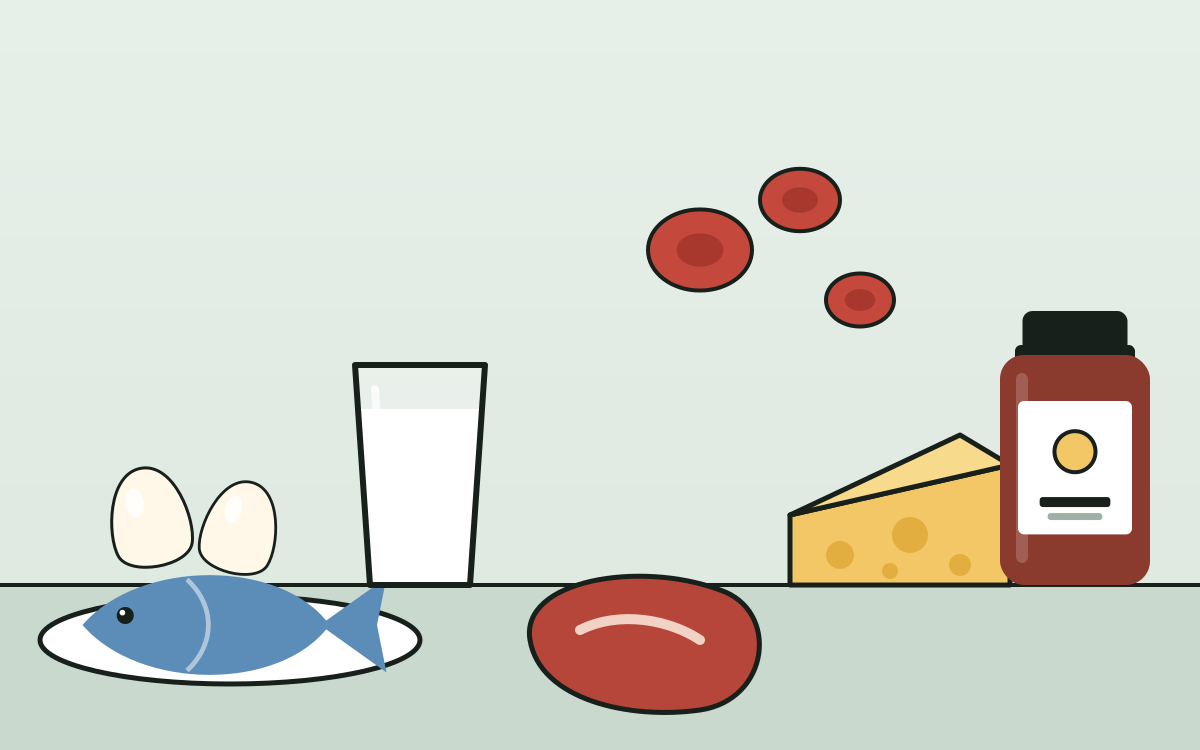
Vitamin B12 is needed to make red blood cells and to keep your nerves working. It comes almost only from animal foods: meat, fish, eggs, milk and cheese. Your body stores 1–5 mg, so deficiency builds up slowly, sometimes over years.
You’re most likely to need a supplement or fortified foods if:
- you’re vegan – plant foods don’t contain B12, and many vegetarians are short too;
- you’re over 50 – atrophic gastritis affects 2% of adults overall but 8–9% of over-65s. It makes B12 from food harder to absorb, while B12 from supplements is absorbed better;
- you’ve taken metformin or heartburn medicines for a long time – proton pump inhibitors (PPIs such as omeprazole) and H2 blockers;
- you have a stomach or bowel condition: autoimmune gastritis, coeliac disease, or stomach or bowel surgery, including weight-loss surgery;
- you’re pregnant or breastfeeding and don’t eat animal foods.
NICE’s 2024 guideline adds other medicines to the risk list: colchicine, topiramate, pregabalin, phenobarbital and primidone. It also flags recreational nitrous oxide (“laughing gas”), which inactivates B12.
B12 deficiency symptoms
Low B12 is easy to miss because many signs are vague. NICE and NIH ODS list these:
- unexplained tiredness, pale skin, a racing heartbeat;
- pins and needles or numbness in your hands and feet;
- problems with balance and walking;
- memory and concentration problems, “brain fog”;
- a sore, smooth tongue (glossitis);
- blurred vision and other optic nerve problems;
- anaemia or large red blood cells on a full blood count.
Nerve symptoms can appear without anaemia. If you have them, don’t start B12 on your own: get tested first, because a supplement will skew the result.
B12 blood tests: what the numbers mean
The first test is total serum B12 or active B12 (holotranscobalamin). In pregnancy, NICE prefers active B12. If the result is borderline, your GP may order methylmalonic acid (MMA), which rises when B12 is low.
| Test (NICE NG239) | Deficiency confirmed | Indeterminate | Deficiency unlikely |
|---|---|---|---|
| Total B12 | below 180 ng/L (133 pmol/L) | 180–350 ng/L | above 350 ng/L (258 pmol/L) |
| Active B12 | below 25 pmol/L | 25–70 pmol/L | above 70 pmol/L |
Some labs report in pg/mL, which is the same as ng/L. Cut-offs vary a little between labs, so go by your report and your GP. Homocysteine also rises when B12 is low, but NIH ODS notes it’s less specific because folate and kidney function affect it.
Pick your test and range to see what to raise with your GP:
What your B12 result may mean
Pick the test and the range on your report. NICE NG239 cut-offs for adults, not a diagnosis
Your result
What it may mean
Deficiency confirmed
Under NICE guidance, total B12 below 180 ng/L (133 pmol/L) confirms deficiency. pg/mL gives the same number: 1 pg/mL = 1 ng/L.
Next step: Show the result to your GP, who will look for the cause and choose tablets or injections
Pins and needles, numbness or balance problems are a reason not to wait.
What it may mean
Indeterminate
Deficiency is possible but not proven. Your GP may add a methylmalonic acid (MMA) test, which rises when B12 is low.
Next step: Ask your GP about MMA and mention any symptoms
What it may mean
Deficiency unlikely
Above 350 ng/L (258 pmol/L), B12 deficiency is unlikely. If you take B12, tell your GP: supplements raise the blood level.
What it may mean
Deficiency confirmed
Active B12 (holotranscobalamin) below 25 pmol/L confirms deficiency under NICE guidance. In pregnancy, NICE prefers this test.
Next step: See your GP, who sets the form and dose
What it may mean
Indeterminate
As with total B12, the next step is a methylmalonic acid test and a look at your symptoms.
Next step: Ask your GP about MMA
What it may mean
Deficiency unlikely
For prevention in vegans and over-50s, a 500–1,000 mcg tablet is, by our estimate, more than enough.
Methylcobalamin vs cyanocobalamin: which form of B12 is best
| Form | What it is | Pros | Cons |
|---|---|---|---|
| Cyanocobalamin | the most common form in supplements | cheap, stable, best studied | not an active form, so your body converts it first |
| Methylcobalamin | one of the two active forms | many people prefer an “active” form | usually costs more |
| Adenosylcobalamin | the other active form | often paired with methylcobalamin | costs more, fewer studies |
| Hydroxocobalamin | mainly the injection form | stays in the body longer | rarely needed for self-care |
NIH ODS says there’s no evidence that absorption differs by form. Your body converts cyanocobalamin and hydroxocobalamin into the active forms. For diet-related deficiency, NICE advises supplements containing cyanocobalamin, methylcobalamin or adenosylcobalamin – any of the three is fine.
Sublingual lozenges, drops and sprays suit people who find tablets hard to swallow, such as an older parent. Choose them for convenience: there’s no good evidence they work noticeably better than a plain tablet.
How much B12 you absorb from a tablet
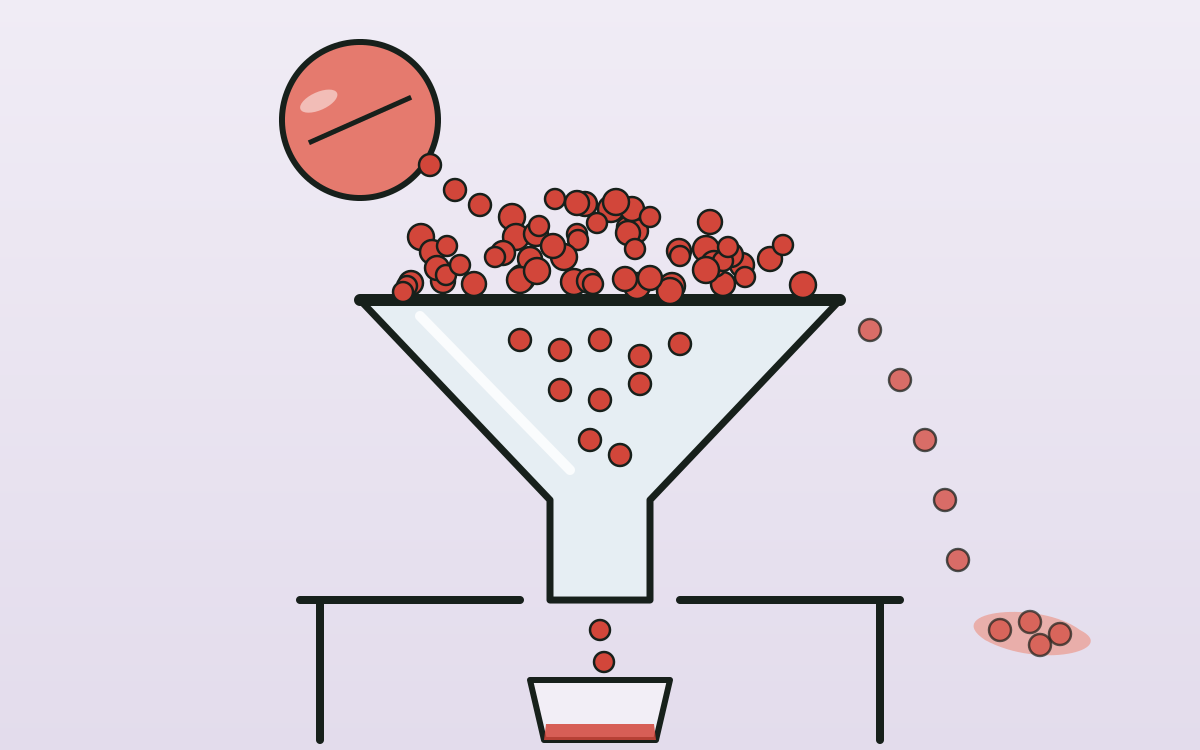
B12 is absorbed with the help of intrinsic factor, a protein made in the stomach. It’s saturated at doses of just 1–2 mcg, and above that the share absorbed drops sharply. That’s why tablets hold so many micrograms: from 1,000 mcg you absorb about 13 mcg. Compare the doses on the chart.
What this means in practice is our own reading of the NIH ODS figures, not an official dose. About 2% of a 500 mcg tablet is absorbed, roughly 10 mcg, which is several times the daily need. So for prevention in healthy people, 500–1,000 mcg a day looks like plenty, and a 5,000 mcg product adds little. No upper limit has been set for B12, and the NHS says 2 mg (2,000 mcg) or less a day from supplements is unlikely to cause harm.
Vegans need B12 for life, not in courses. Besides tablets, fortified foods help: plant milks, breakfast cereals, yeast extracts and nutritional yeast with added B12. On a carton of oat milk at the supermarket, look for B12 in the ingredients.
B12 injections are prescribed
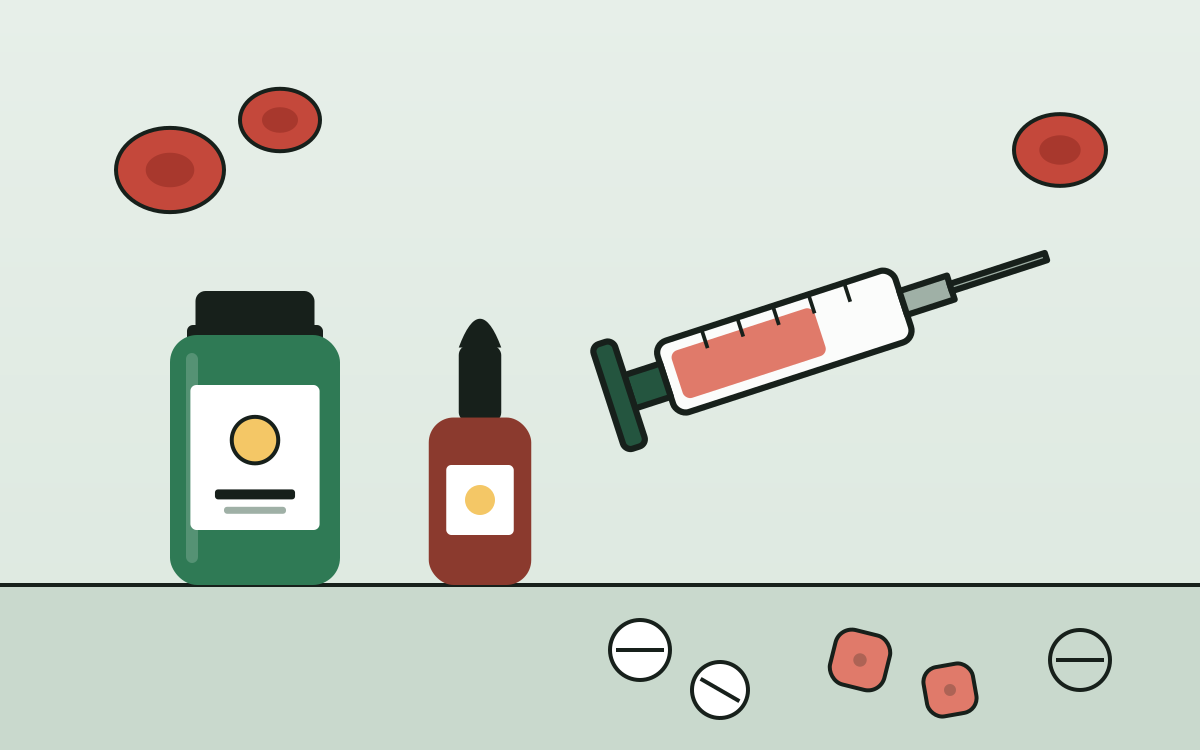
If B12 can’t be absorbed from the gut, tablets work less well, and your GP will prescribe injections. NICE advises lifelong injections for autoimmune gastritis (once called pernicious anaemia), after total removal of the stomach and after removal of the end of the small bowel (terminal ileum).
- The usual injection is hydroxocobalamin: the NHS notes it stays in the body longer than cyanocobalamin.
- At first, injections are given every other day. If the cause isn’t your diet, you’ll then usually need one every 2–3 months for life.
- For diet-related deficiency, the NHS says you may take B12 tablets every day between meals or have an injection twice a year.
- For other absorption problems, NICE advises oral doses of at least 1 mg a day, or injections.
A 2018 Cochrane review (3 trials, 153 people) found that 1,000–2,000 mcg by mouth raised blood B12 about as well as injections. But the evidence was weak, so your GP decides the form and dose if you’re deficient.
Cautions and interactions
- High-dose folic acid improves the blood count but doesn’t protect your nerves. The NHS warns that more than 1 mg of folic acid a day can mask B12 deficiency. More in our folic acid guide.
- Metformin and heartburn medicines: don’t stop them yourself. Ask your GP to check your B12 if you’ve taken them for years.
- Blood tests: B12 supplements raise your blood level. Tell your GP what you take, or a deficiency may be missed.
- A known allergy to cobalamin or cobalt is rare, but if you have one, ask your GP before taking B12.
B12 is often combined with other B vitamins. If you’re considering a complex, first read vitamin B complex: what to choose and why to watch B6. For women over 50 and vegans, B12 is part of the core set in our guide to supplements for women.
How to choose a B12 supplement on iHerb
- Work out if you’re preventing low B12 (vegan diet, over 50, metformin) or treating a deficiency. For a deficiency, your GP sets the form and dose.
- Choose a form: cyanocobalamin is the best studied and cheapest; methylcobalamin if you prefer an active form.
- For prevention, a 500–1,000 mcg tablet is, by our estimate, more than enough for most people. Don’t go above 2,000 mcg a day without advice.
- Check whether your multivitamin or B complex already contains B12, so you don’t double up.
- If you also take folic acid, keep it to 1 mg a day or less from all supplements.
Not sure what else you need besides B12? Try our vitamin check, and read about all-in-one formulas in do I need a multivitamin.
Bottom line: what to choose
Vegans and vegetarians
Cyanocobalamin tablets
The best-studied, most stable form
Cyanocobalamin on iHerbIf you prefer an active form
Methylcobalamin lozenges or drops
Not better absorbed, but works too
Methylcobalamin on iHerbYou also need folate
B12 with folic acid
No more than 1 mg folic acid from supplements
B12 with folate on iHerbButtons lead to selections of the right form on iHerb. These are affiliate links; your price doesn't change.
FAQ
Methylcobalamin or cyanocobalamin: which is better?
NIH ODS finds no evidence that absorption depends on the form. Cyanocobalamin is cheaper, more stable and the best studied. Methylcobalamin is one of the active forms and is mostly a matter of preference. For diet-related deficiency, NICE accepts cyanocobalamin, methylcobalamin or adenosylcobalamin.
What are the symptoms of B12 deficiency?
Unexplained tiredness, pale skin, a sore smooth tongue, pins and needles or numbness in the hands and feet, balance problems, memory problems or brain fog, and blurred vision. Nerve symptoms can appear without anaemia. If you have them, get a blood test before you start a supplement.
How much B12 should I take a day?
Adults need about 1.5 mcg a day (NHS); EFSA puts it at 4 mcg. Tablets usually hold 500–5,000 mcg because only a small share of a large dose is absorbed: about 2% of 500 mcg and 1.3% of 1,000 mcg. If you’re deficient, your GP sets the dose.
Is it OK to take B12 every day?
Yes. Vegans need B12 for life, not in courses. No upper limit has been set, and the NHS says 2 mg (2,000 mcg) or less a day from supplements is unlikely to cause harm. Tell your GP you take it before a blood test.
What blood test shows low B12?
Usually total serum B12 or active B12 (holotranscobalamin). Under NICE guidance, total B12 below 180 ng/L confirms deficiency and above 350 ng/L makes it unlikely. In between, your GP may add a methylmalonic acid test.
When are B12 injections needed?
When B12 can’t be absorbed from the gut: autoimmune gastritis (pernicious anaemia), after removal of the stomach or the end of the small bowel, and sometimes with severe nerve symptoms. Your GP prescribes them, usually hydroxocobalamin.
Sources
- NICE NG239. Vitamin B12 deficiency in over 16s: diagnosis and management (2024)
- NHS. Vitamin B12 or folate deficiency anaemia – Treatment
- NHS. Vitamins and minerals – B vitamins and folic acid
- NIH ODS. Vitamin B12 – Fact Sheet for Health Professionals
- EFSA. Overview on Tolerable Upper Intake Levels (version 11, 2025)
Vitamin B12 at a glance
For adults, based on NHS, NICE and NIH ODS
- Daily need
- 1.5 mcg (NHS); 4 mcg (EFSA)
- Most likely to need it
- vegans, over-50s, metformin or PPI users
- Forms
- all absorbed alike (NIH ODS)
- Absorbed from 1,000 mcg
- about 1.3%, roughly 13 mcg
- Upper limit
- none set; NHS: 2 mg a day or less unlikely to harm
- Injections
- prescribed, for example for autoimmune gastritis
Numbness, pins and needles, unsteady walking or memory problems are a reason to get tested, not to start B12 on your own: taking it first can hide the result.
Shop B12 on iHerbCyanocobalamin or methylcobalamin – your choice