Gut health supplements and supplements for digestion: what's studied and how to choose
Fibre, fluids and activity do the most for your gut. Supplements help in specific situations: constipation, a course of antibiotics, IBS or lactose intolerance. This page shows where the evidence is, and where it isn't.
Probiotics: which ones and when
The best probiotic depends on strain and purpose: what's proven for antibiotic-associated diarrhoea and IBS, what isn't, how to read CFU and strains, and storage.
11 min readPsyllium husk: how to take it
Psyllium husk is a soluble fibre supplement. How to take it for constipation and IBS, how much water it needs, how to avoid bloating and medicine timing.
11 min readDigestive enzymes: what works
Which digestive enzymes work: lactase for lactose intolerance, alpha-galactosidase for wind, bromelain and papain. Why pancreatin is a medicine, not a supplement.
10 min readLiquid chlorophyll: benefit or trend
Liquid chlorophyll: what's really in the bottle, what studies show for odour, detox and skin, how to take chlorophyll water, and why it turns your poo green.
9 min readMilk thistle and silymarin
Milk thistle for the liver: what silymarin trials found in fatty liver, alcohol and hepatitis, EMA dosing, side effects, drug interactions and why it isn't a detox.
9 min read
How this section works
You won’t find “gut cleanse” or “microbiome reset” promises here. Each guide covers what the studies showed, for which problem, and who should avoid the supplement. Links to iHerb go to a selection of the right form, not to a particular brand.
Find your option: gut health
Pick your situation to see what's been studied and when to see a doctor
What bothers you?
Where to start
Fibre and fluids
The NHS recommends 30 g of fibre a day. If food alone doesn't get you there, psyllium (ispaghula husk) absorbs water and softens stools. It usually takes 2–3 days to work.
Rule of thumb: with a large glass of water, 30 minutes apart from other medicines
If constipation doesn't improve or you see blood in your poo, see your GP.
Where to start
A probiotic with a studied strain
Some strains lower the risk of antibiotic-associated diarrhoea, especially if started within 2 days of the first dose. One strain's results don't carry over to another.
Rule of thumb: check the strain and CFU at expiry
If your immune system is weakened or you're seriously ill, ask your doctor first.
Where to start
Probiotics and peppermint oil are worth a try
Some probiotics ease IBS symptoms, but results vary. The NHS suggests taking one product for 4 weeks to see if it helps. Enteric-coated peppermint oil capsules help in the short term.
Peppermint oil isn't suitable if you have reflux (GORD) or a hiatus hernia.
Where to start
Lactase before dairy
A lactase supplement taken before dairy may reduce symptoms of lactose intolerance for some people. Don't cut out dairy completely without advice from your GP or a dietitian.
Where to start
Milk thistle: conflicting results
Trials of milk thistle in liver disease gave conflicting results, and some products contained different amounts of silymarin from the label.
Allergic reactions are possible if you react to ragweed, daisies, marigolds or chrysanthemums.
Where to start
This isn't a supplement question
Blood in your poo, changes in your bowel habits, losing weight without trying, ongoing tummy pain or bloating: see your GP rather than buying anything.
Black or dark red poo, or bloody diarrhoea: ask for an urgent appointment or call NHS 111.
Gut health: where to start before supplements
These steps work for most people:
- Aim for 30 g of fibre a day from vegetables, fruit, wholegrains and pulses. Most people in the UK eat less.
- Drink a glass of water with every meal: without enough fluid, fibre can’t do its job and constipation can follow.
- If cereals and grains make you bloated, get your fibre from fruit and vegetables instead.
- Don’t cut out dairy or other food groups without advice from your GP or a dietitian.
Supplements for digestion: topics in this section
| Topic | What’s known | Guide |
|---|---|---|
| Fibre and psyllium | helps constipation, works in 2–3 days | how to take psyllium husk |
| Probiotics | some strains lower the risk of antibiotic-associated diarrhoea; mixed results for IBS | best probiotic in the UK |
| Enzymes and lactase | lactase helps some people with lactose intolerance | digestive enzymes |
| Peppermint oil | enteric-coated capsules ease IBS in the short term | – |
| Milk thistle | conflicting results in liver disease | milk thistle for the liver |
| Chlorophyll | little evidence for digestion | liquid chlorophyll |
Prebiotics (ingredients that feed gut bacteria) haven’t shown clear benefits for IBS. Large amounts, over 20 g a day, can cause wind, bloating and cramps. So add fibre gradually and see how you feel.
If you’ve bought psyllium for constipation, this is how to start:
How to start psyllium so it actually works
Five steps if you're taking fibre for constipation. Tap a step
Plain psyllium husk
Ispaghula husk without sugar or flavourings. Start with a small dose and build up gradually.
At least 150 ml of cold water
Stir a dose in and drink it straight away, ideally after a meal. Without enough fluid, fibre can't do its job and constipation can follow.
In the evening, at least an hour before bed
Leave 30 minutes between psyllium and any other medicine.
It usually takes 2–3 days
The overall target is 30 g of fibre a day, mostly from vegetables, fruit, wholegrains and pulses.
When a supplement isn't the answer
Blood in your poo, a change in bowel habits, tummy pain that doesn't go away or weight loss without trying: see your GP.
- Black or dark red poo, or bloody diarrhoea: get an urgent appointment or call NHS 111
If digestion is just one of your goals, take our vitamin check: it looks at your diet and medicines too.
Probiotics: how to read the label
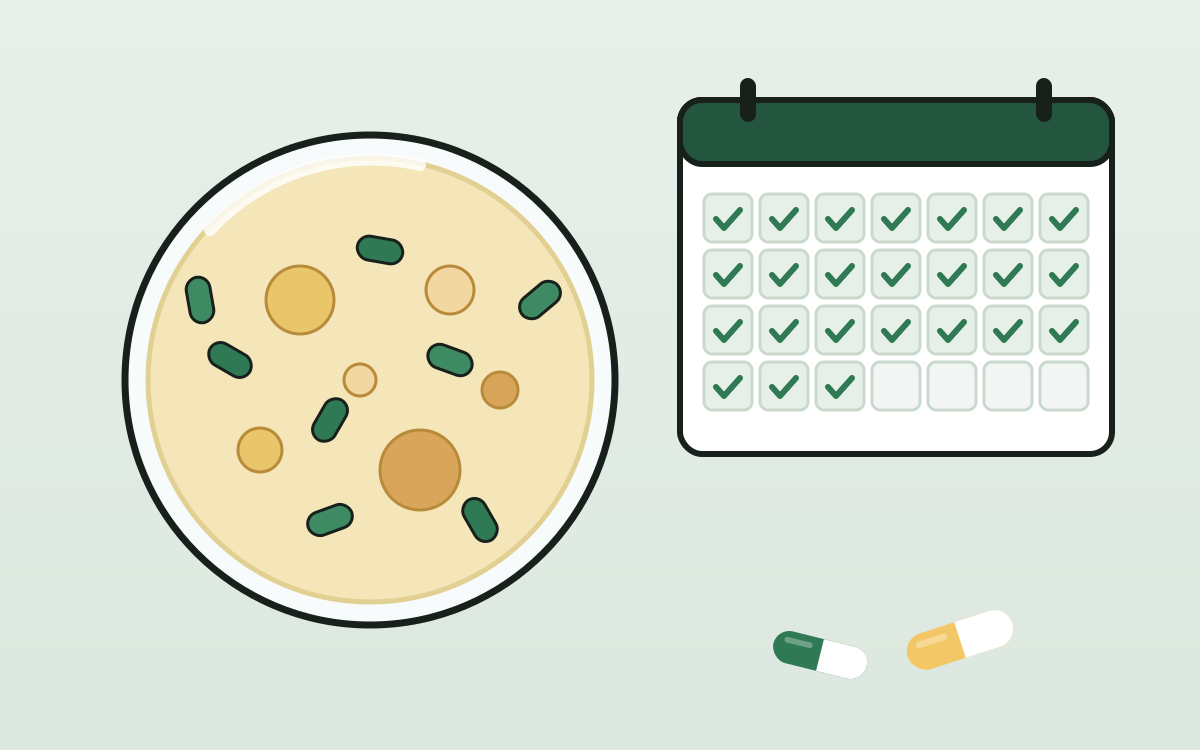
- The strain as well as the species. Look for the genus, species and code, such as Lactobacillus rhamnosus GG. One strain’s results don’t apply to another.
- CFU at expiry. The number of live bacteria falls over time, so it’s better when the label gives CFU “at expiration”.
- More CFU isn’t better. Look for the dose that was studied for your problem.
- A fair trial. The NHS suggests taking one product every day for at least 4 weeks before deciding whether it works.
Who should take care
- With a weakened immune system or serious illness, and for premature babies, probiotics are for use only if a doctor agrees: serious infections have been reported.
- Peppermint oil isn’t suitable if you have reflux (GORD) or a hiatus hernia.
- Take psyllium at least 30 minutes before or after your regular medicines, and check our vitamin compatibility chart.
- If you’re allergic to ragweed, daisies or chrysanthemums, you may react to milk thistle.
- Little is known about milk thistle’s safety in pregnancy and breastfeeding.
How to choose on iHerb
- Name your problem: constipation, antibiotics, IBS or dairy.
- For fibre, choose plain psyllium husk without sugar or flavourings.
- For a probiotic, check the strain and the CFU at expiry.
- Give it 4 weeks, and don’t start several new supplements at once.
Bottom line: what to choose
On antibiotics
A probiotic with a named strain
Start within 2 days of the first dose
Probiotics on iHerbButtons lead to selections of the right form on iHerb. These are affiliate links; your price doesn't change.
FAQ
What is the best gut health supplement in the UK?
It depends on the problem. Fibre, including psyllium (ispaghula husk), has the best evidence for constipation. Specific probiotic strains can lower the risk of diarrhoea on antibiotics. For IBS, some people find probiotics or peppermint oil help. There’s no evidence for gut ‘detox’ or ‘cleanse’ products.
Do healthy people need probiotics?
Probably not. The NHS says probiotics may help with some conditions, such as IBS, but there’s little evidence for many other claims. Fibre and a varied diet do more for a healthy gut.
How do I take psyllium husk?
Stir a dose into at least 150 ml of cold water and drink it straight away, ideally after a meal. Take an evening dose at least an hour before bed. Leave 30 minutes between it and any other medicine. It usually takes 2–3 days to work.
Do digestive enzymes work?
Lactase taken before dairy may reduce symptoms of lactose intolerance for some people. There’s little evidence for enzyme blends sold to improve digestion in healthy people. See our guide to digestive enzymes.
When should I see a GP about my gut?
If you notice blood in your poo, a change in bowel habits that isn’t usual for you, tummy pain or bloating that doesn’t go away, weight loss without trying or unusual tiredness. Black or dark red poo, or bloody diarrhoea, needs an urgent appointment or a call to NHS 111.
Sources
What to choose
Goal and the best-supported option
- Constipation
- up to 30 g of fibre a day; psyllium with water
- On antibiotics
- a probiotic with a studied strain
- IBS, bloating
- a probiotic for 4 weeks; peppermint oil
- Lactose intolerance
- lactase before dairy
- Blood in poo, weight loss
- your GP, not a supplement