Resveratrol benefits: what human studies show, the red wine myth and how to take trans-resveratrol
This article contains affiliate links to iHerb. If you buy through them, we earn a commission at no extra cost to you. It doesn't affect which forms we recommend. Learn more
Resveratrol became famous through mouse studies and the "French paradox". In people the effects have been small, a glass of wine contains almost none, and it can interact with blood thinners and several other medicines.
What resveratrol is and why people take it
Resveratrol is a polyphenol that plants make to defend themselves against fungi and stress. It’s found in grape skins, red wine, peanuts, cocoa and berries such as blueberries and cranberries. It isn’t a vitamin: your body doesn’t need it, and there’s no recommended intake.
Resveratrol made headlines in the 1990s. It was found in red wine and put forward as the explanation for the “French paradox” – relatively low rates of heart disease in France despite a rich diet. Later, studies in yeast, worms and mice linked it to longer life.
Today people buy it to:
- “protect blood vessels” and lower blood pressure;
- improve blood sugar;
- “slow ageing”.
Trans-resveratrol: which form to choose
Resveratrol comes in two shapes, trans and cis. Most studies used trans-resveratrol. That’s also the form EFSA assessed in 2016 and judged safe for adults at up to 150 mg a day.
On iHerb you’ll see three kinds of product:
- Japanese knotweed root extract (Polygonum cuspidatum). Most supplement resveratrol is made from it.
- Synthetic trans-resveratrol of high purity. This is the type EFSA evaluated as a novel food.
- Grape and red wine extracts. They’re rich in other polyphenols but usually contain little resveratrol.
The key rule: look on the label for the amount of trans-resveratrol in milligrams. The weight of the extract tells you little if half of it is something else.
Finding the trans-resveratrol on a label
A sample label for a Japanese knotweed extract. Tap a line
Supplement Facts
What it means
One capsule per serving
Every number below is per capsule. The Suggested Use line tells you how many the maker expects you to take.
What it means
This is the extract's weight
That's the weight of the whole knotweed extract, not of resveratrol. If half the extract is something else, this number tells you little.
What it means
The line that matters
Look for trans-resveratrol itself, in milligrams. EFSA considers up to 150 mg a day safe for adults.
What it means
Wine or grape extract
Rich in other polyphenols but usually low in resveratrol. For comparison, a glass of red wine holds about 0.3 mg on average.
What it means
Work out the daily dose
Two 150 mg capsules make 300 mg a day, twice EFSA's safe intake. One capsule a day keeps you within it.
What it means
Medicines and pregnancy
Warfarin, heparin, clopidogrel, aspirin and other NSAIDs, and drugs broken down by the CYP2C9 and CYP3A4 enzymes: only with your doctor's agreement. Avoid it in pregnancy and while breastfeeding.
Why mouse studies aren’t proof
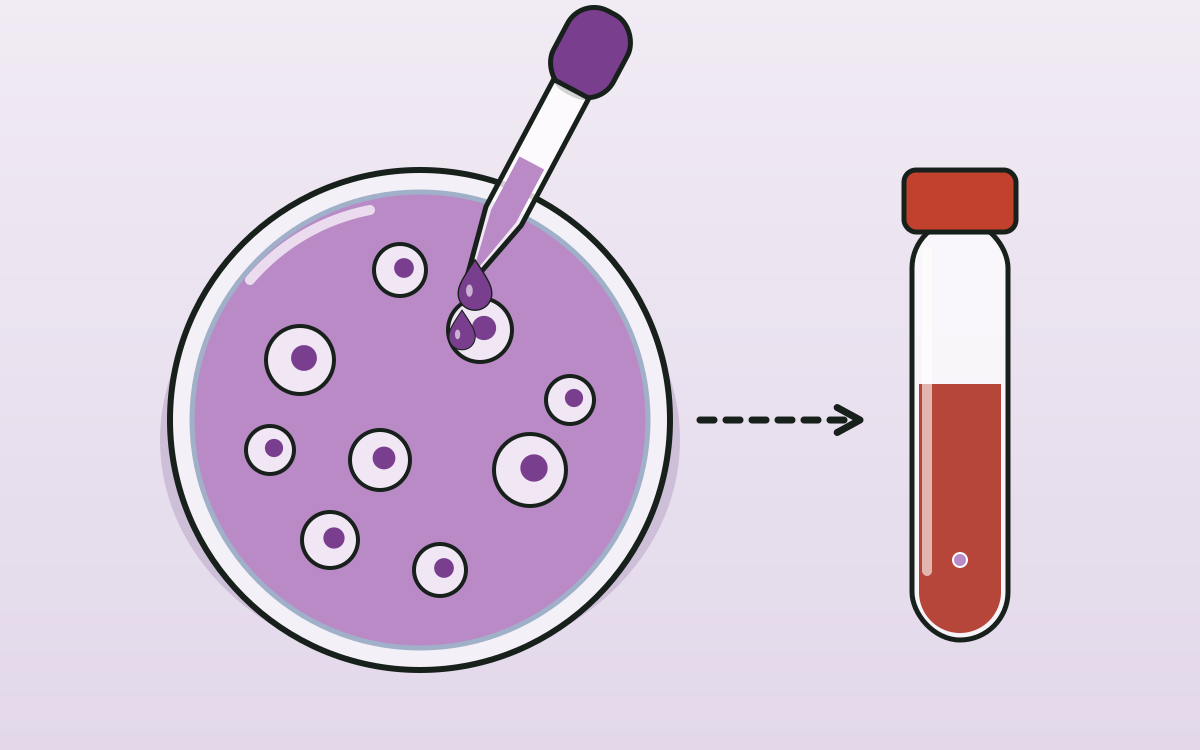
Resveratrol is well absorbed, but the gut and liver process it almost at once. After a single 25 mg dose, only traces of unchanged resveratrol turned up in the blood. Even after 5 g, levels stayed below those used in most lab experiments.
The Linus Pauling Institute at Oregon State University points out that cell studies used concentrations up to 100 times higher than those found in human blood. Animals received doses you couldn’t get from food. So striking results in mice can’t simply be applied to people.
Resveratrol in humans: what trials found
| Goal | What trials found | How reliable |
|---|---|---|
| Blood sugar in type 2 diabetes | lower HbA1c in short trials (under 12 weeks) | moderate, few trials |
| Blood pressure in type 2 diabetes | 8/3.5 mmHg lower in a 2026 umbrella review; a 2021 review rated the evidence weak | reviews disagree |
| Weight and waist | waist about 0.8 cm smaller on average | hardly noticeable |
| Blood vessels | 100 mg a day improved artery function in 34 people with metabolic syndrome, but the capsule held other ingredients too, and the effect was gone 3 months after stopping | small studies |
| Memory | 500 mg increased blood flow in the brain but didn’t improve task performance | small studies |
| Longevity | not studied in humans | no data |
A 2021 umbrella review in the American Journal of Clinical Nutrition pooled meta-analyses in type 2 diabetes, metabolic syndrome and fatty liver disease. For almost every outcome, its authors found the effect was trivial or the evidence weak. They concluded that current evidence doesn’t support resveratrol for managing these risk factors.
A 2026 umbrella review of 45 systematic reviews is more upbeat. It rated four findings as high certainty: a waist 0.8 cm smaller, total cholesterol 0.19 mmol/L lower in people with overweight, and lower blood pressure in people with type 2 diabetes. Certainty for the other effects was moderate or lower. Even the best results are small shifts in test numbers, not fewer heart attacks or strokes.
A study following 783 older people in Chianti, Italy, for 9 years didn’t find a benefit either. Urine resveratrol, a marker of intake from food and wine, wasn’t linked to deaths, heart disease or cancer.
The red wine myth
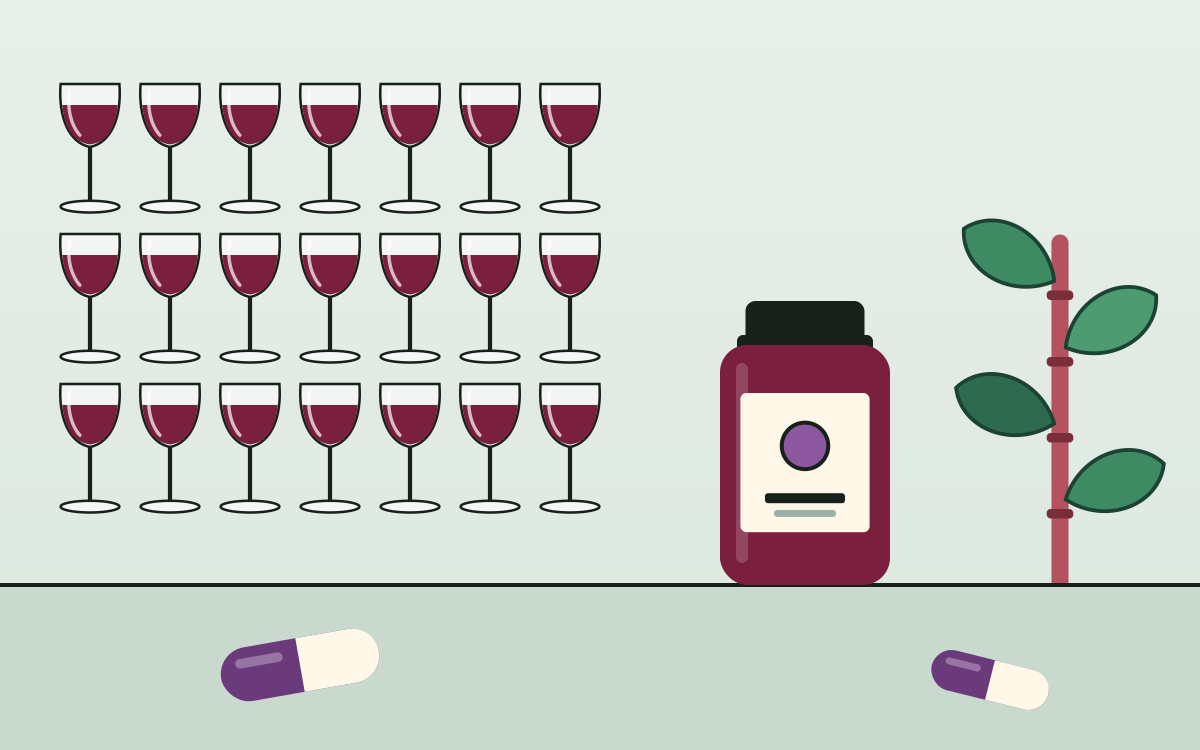
Red wine is the best-known source, but a poor one. According to the Linus Pauling Institute, red wine contains about 1.9 mg of resveratrol per litre on average. That’s roughly 0.3 mg in a 150 ml glass. Even the richest Pinot Noirs give under 2 mg a glass.
Compare that with the 100–1,000 mg a day used in human trials. Reaching EFSA’s 150 mg safe intake would take around 500 glasses.
If moderate drinking has any heart benefit, resveratrol doesn’t explain it. And it’s no reason to start drinking: the amount of resveratrol in wine is far too small to matter, and the NHS advises not drinking at all if you’re pregnant or trying for a baby.
How to take resveratrol
- For adults, staying within 150 mg of trans-resveratrol a day is sensible: that’s the amount EFSA considers safe.
- Above 1 g a day, nausea, stomach pain, wind and diarrhoea become more common.
- With or without food, the data conflict: one study found food only delayed absorption, another found fatty meals reduced it. If a capsule upsets your stomach, take it with a light snack.
- Trials lasted from a few weeks to a year. If you see no change in your tests or how you feel after 2–3 months, there’s little point carrying on.
Resveratrol is often paired with CoQ10 or “longevity” supplements such as NMN and NAD+. Start them one at a time so you can tell which one helps or causes side effects.
Resveratrol interactions with medicines
- Warfarin, heparin, clopidogrel, aspirin and other NSAIDs. In lab studies, resveratrol stops platelets clumping together. With these medicines, the risk of bruising and bleeding could rise.
- Warfarin and other drugs broken down by the enzyme CYP2C9. EFSA notes that a resveratrol metabolite may inhibit this enzyme.
- Medicines broken down by CYP3A4: some statins, calcium channel blockers, ciclosporin, tacrolimus, sildenafil and midazolam. In volunteers, resveratrol reduced this enzyme’s activity, so drug levels could rise.
Tell your doctor or dentist that you take resveratrol before any procedure. You can check supplement combinations in our vitamin compatibility chart.
Who should avoid resveratrol
- Pregnancy and breastfeeding. Safety hasn’t been established.
- Oestrogen-sensitive cancers (breast, ovarian, uterine), now or in the past. Resveratrol’s structure resembles oestrogen, so the Linus Pauling Institute advises avoiding supplements.
- Children. Don’t give it unless a doctor recommends it.
- Anyone on anticoagulants – only with your doctor’s agreement.
How to choose resveratrol on iHerb
- Decide why you want it. For blood pressure or blood sugar, talk to your GP about treatment first. For a general steer, try our vitamin check.
- Look for “trans-resveratrol” on the label and its amount in mg.
- Stay at or below 150 mg a day. 500 mg capsules are designed for doses above EFSA’s safe intake.
- Compare the price per 100 mg of trans-resveratrol, not per bottle.
- Prefer products with independent quality testing (USP, NSF and similar seals).
Our guide to reading a supplement label explains the Supplement Facts panel. Other supplements for circulation and metabolism are in our energy and heart section. A related polyphenol from onions and apples is covered in our guide to quercetin.
Bottom line: what to choose
If you want to try a safe dose
Trans-resveratrol 100–150 mg
Within EFSA's safe intake for adults
Trans-resveratrol on iHerbIf you prefer a plant source
Japanese knotweed extract
Check mg of trans-resveratrol, not of extract
Resveratrol on iHerbIf you take anticoagulants
Skip it until your doctor agrees
Bleeding risk and possible warfarin effects
Browse on iHerbButtons lead to selections of the right form on iHerb. These are affiliate links; your price doesn't change.
FAQ
What are the benefits of resveratrol?
Resveratrol is a plant polyphenol found in grape skins, peanuts and berries. People take it for circulation, blood sugar and longevity. In human trials, though, the effects have been small and inconsistent, and no one has shown it extends human lifespan.
What is trans-resveratrol?
It’s the form of the molecule used in most studies, and the form EFSA judged safe at up to 150 mg a day for adults. On the label, look for the amount of trans-resveratrol itself, in milligrams.
How much resveratrol should I take?
There’s no set dose. EFSA considers up to 150 mg a day safe for adults. Trials used 100–1,000 mg. Above 1 g a day, nausea, stomach pain and diarrhoea become more common.
Can you get resveratrol from red wine?
Not in useful amounts. A glass of red wine contains about 0.3 mg on average. Reaching 150 mg would take around 500 glasses, so drinking wine for resveratrol makes no sense.
Can I take resveratrol with warfarin?
Only if your doctor agrees. In lab studies, resveratrol stops platelets clumping, and it may affect an enzyme that breaks down warfarin. With anticoagulants, that could raise the risk of bleeding.
Sources
- Linus Pauling Institute, Oregon State University. Resveratrol – Micronutrient Information Center
- EFSA NDA Panel. Safety of synthetic trans-resveratrol as a novel food pursuant to Regulation (EC) No 258/97. EFSA Journal, 2016
- Zeraattalab-Motlagh S et al. The effects of resveratrol supplementation in patients with type 2 diabetes, metabolic syndrome, and nonalcoholic fatty liver disease: an umbrella review. Am J Clin Nutr, 2021
- Sun JN et al. Effects of resveratrol supplementation on multiple health outcomes: an umbrella review of systematic reviews and meta-analyses. Nutr J, 2026
- Semba RD et al. Resveratrol levels and all-cause mortality in older community-dwelling adults. JAMA Intern Med, 2014
- NCCIH. Antioxidant Supplements: What You Need To Know
Resveratrol at a glance
For adults, based on EFSA, the Linus Pauling Institute and meta-analyses
- Daily need
- none set: it isn't a vitamin
- EFSA safe intake
- up to 150 mg trans-resveratrol a day
- Doses in studies
- 100–1,000 mg a day
- Benefit in humans
- small and inconsistent
- Glass of red wine
- about 0.3 mg on average
- Caution
- warfarin and other anti-clotting medicines
Resveratrol doesn't treat heart disease or diabetes. If you take regular medicines, check with your GP or pharmacist first.
Shop resveratrol on iHerbCheck the mg of trans-resveratrol per capsule