Bee propolis and bee pollen: what they're used for, what studies show and who should avoid them
This article contains affiliate links to iHerb. If you buy through them, we earn a commission at no extra cost to you. It doesn't affect which forms we recommend. Learn more
Propolis and bee pollen are sold as natural protection against colds. The research is thin and mostly small, while the allergy risk is real, up to anaphylaxis. If you have allergies or asthma, bee products are best avoided.
What bee propolis is
Propolis is a sticky mix of pollen, beeswax and resin that honeybees collect from the buds and sap of trees and plants. It has a long history in folk medicine, food and drinks.
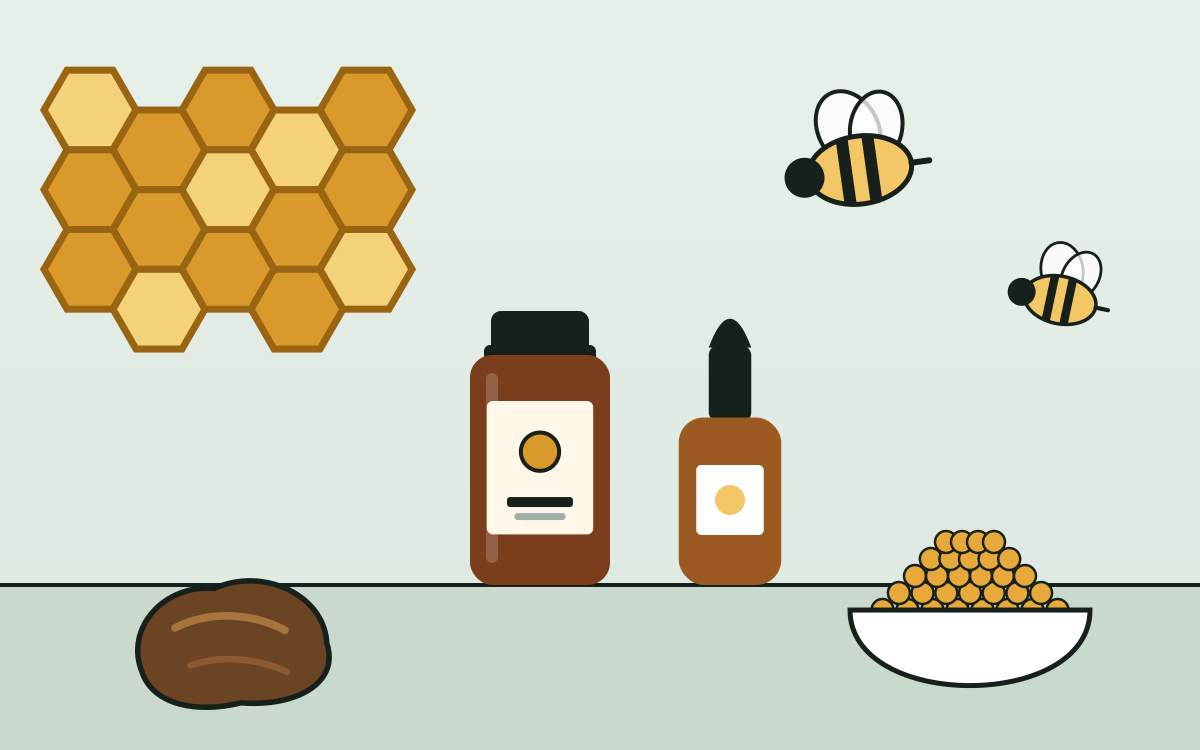
Bee pollen is a different product. It’s flower pollen gathered by bees, sold as granules or capsules. Both are easy to find in UK health shops and on iHerb, in several forms:
| Form | How it’s used | What to check |
|---|---|---|
| Tincture | Drops by mouth or as a gargle | Contains alcohol |
| Alcohol-free extract | Drops by mouth | What the extract is made with |
| Capsules | By mouth | Milligrams of extract per capsule |
| Throat spray | On the throat | Whether it contains alcohol or honey |
| Lip balm | On the lips | Propolis concentration |
| Bee pollen | Granules or capsules | High allergy risk |
Propolis benefits: what studies show
MSK, a leading US cancer hospital, puts it plainly in its herbs database: propolis has many properties in lab studies, but evidence that it can treat any condition is lacking. The human evidence is modest:
- Cold sores. In a 2018 trial of 379 people, a lip balm with 0.5% of the propolis extract GH 2002 was compared with 5% aciclovir cream. Crusting or healing came at a median of 4 days versus 5. The result applies to this one extract, and independent confirmation is limited.
- Mouth inflammation after chemotherapy. Small studies give mixed results.
- Gums. Small trials found fewer bacteria and milder symptoms after gum disease treatment.
- Wounds. Small trials of propolis on diabetic foot ulcers look promising.
- Ear infections in children. In one trial, a propolis and zinc liquid reduced episodes of acute ear infection.
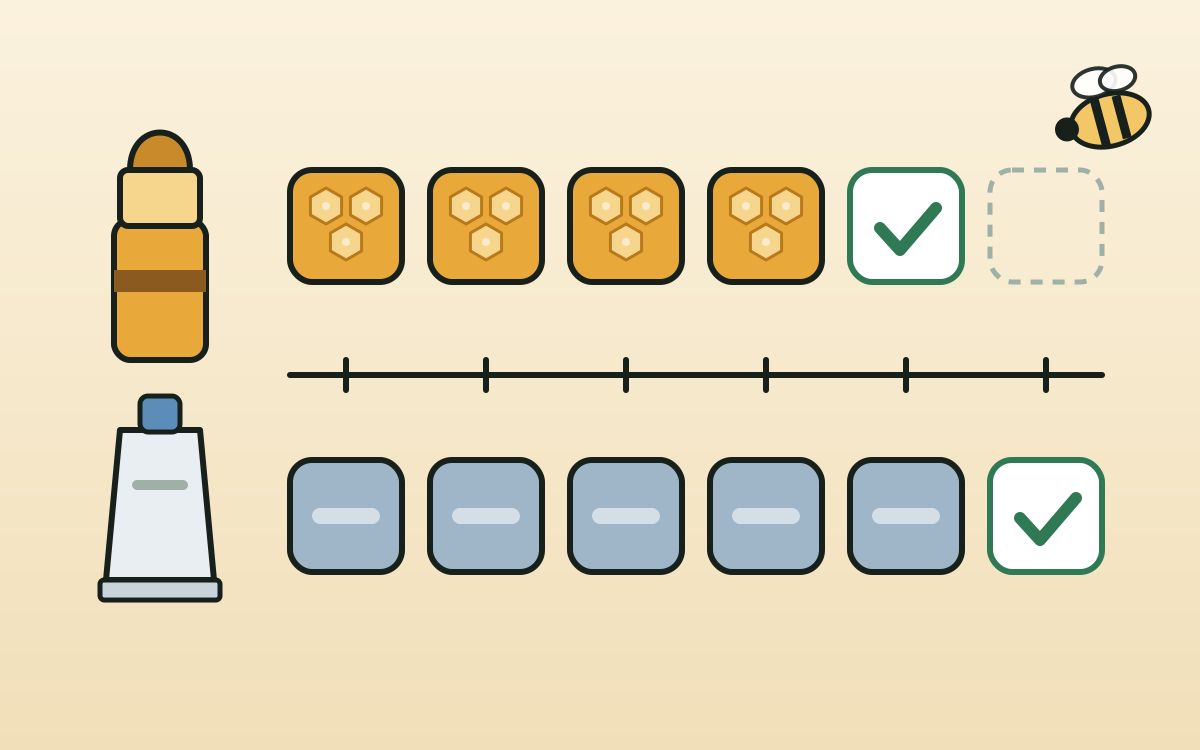
There’s no reliable research showing that propolis prevents colds or supports immunity. Vitamin C and zinc have been studied far more for colds, and even their effects are modest.
Pick what you’re looking at propolis for:
Propolis: what are you looking for
Pick your goal to see what's known and which form fits
Goal
What's known
A propolis lip balm is worth a try
In a 2018 trial of 379 people, sores crusted or healed at a median of 4 days with the balm and 5 days with aciclovir cream. The result applies to one extract, GH 2002.
In the trial: lip balm with 0.5% propolis extract
Don't use it if your skin has reacted to propolis or propolis cosmetics.
What's known
No reliable evidence
No trials show propolis prevents colds or supports immunity. Vitamin C and zinc have been studied far more, and even their effects are modest.
What's known
No allergies? An alcohol-free extract
No benefit is proven, while the allergy risk is real. Choose an alcohol-free extract or capsules and start with a small amount.
Swollen lips or tongue, a rash or wheezing: call 999 straight away.
What's known
Spray: check for alcohol and honey
Products used in the mouth can trigger allergy too: tongue swelling, mouth ulcers, lip swelling and rashes around the mouth have been reported.
A sore throat lasting more than a week, a fever or a rash: see your GP or pharmacist.
What's known
No benefit found, risks documented
Anaphylaxis has been reported in people with pollen allergy, and the US FDA found hidden sibutramine in bee pollen slimming capsules in 2012.
What's known
Only after talking to your GP or pharmacist
Never give children an alcohol tincture. Children with allergies, eczema or asthma are better off without bee products.
Bee pollen: benefits and risks
Bee pollen is marketed as a superfood packed with protein, vitamins and antioxidants. We found no convincing clinical evidence of health benefits. It does have two well-documented risks:
- Allergy. Pollen is an allergen. A 2015 case report and review of earlier cases found that half of the people with whole-body reactions to bee pollen were sensitised to ragweed pollen.
- Fake products. In 2012 the US FDA found hidden sibutramine in “bee pollen” slimming capsules. Sibutramine is a weight-loss medicine withdrawn over heart risks. Read more in our guide to weight loss supplements.
Allergy, asthma and anaphylaxis
This is the main risk with all bee products. Figures from safety monitoring:
- Italy, 2002–2007: 18 reports of reactions to propolis products. Sixteen were allergic, with skin or breathing symptoms. Six people needed hospital or emergency care, and two cases were life-threatening.
- France, ANSES, 2018: three severe reactions to supplements with pollen, royal jelly or propolis, including bronchospasm and an anaphylactic reaction.
- Canada, 2012: a case of anaphylaxis from a bee pollen supplement. The authors advise warning everyone with pollen allergies about this risk.
Who is at higher risk:
- people allergic to bee stings, honey, ragweed or chrysanthemum;
- people with asthma or a tendency to allergies (atopy);
- people with pollen allergy, which ANSES calls a risk factor for reactions to hive products;
- anyone whose skin has reacted to propolis cosmetics: MSK describes propolis as a strong contact allergen.
Go through this short checklist before you buy.
Is propolis or bee pollen safe for you?
Tick the statements that are true for you. Ticks are saved in this browser only
0 / 6 ticked
All ticked. Start with a small amount. Swollen lips or tongue, a rash, wheezing or difficulty breathing: call 999 straight away.
Propolis on iHerbPropolis tincture: why the alcohol matters
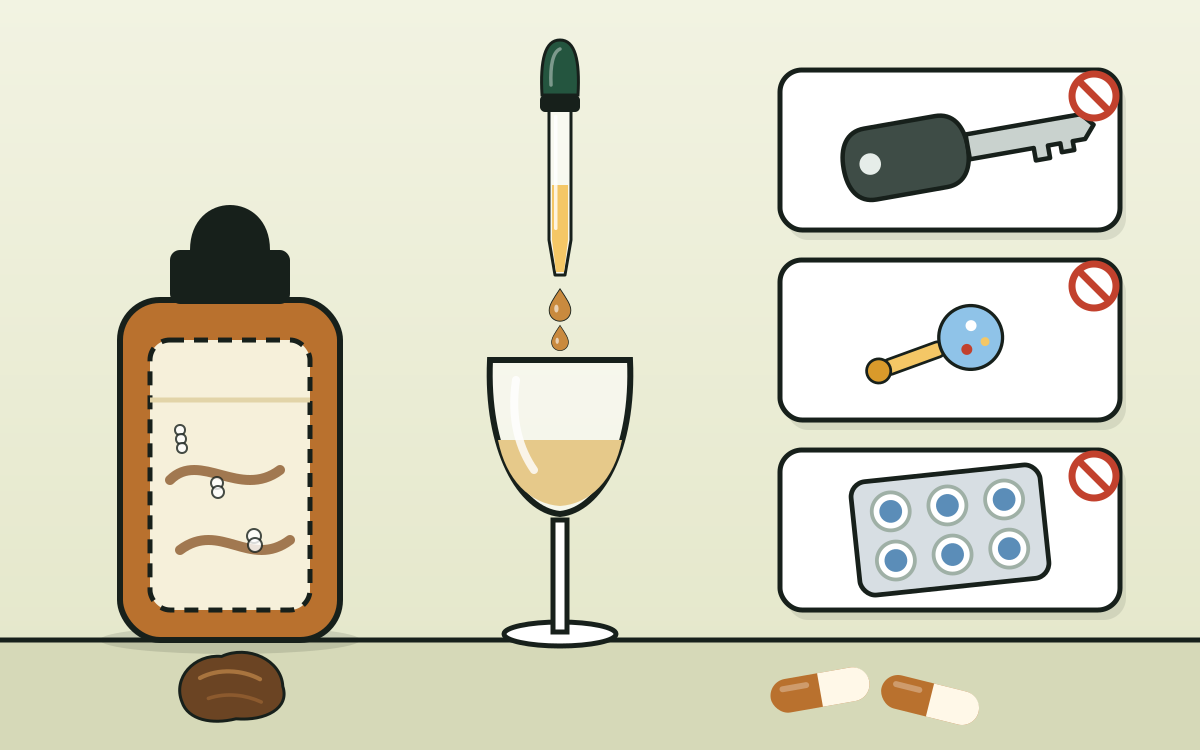
A tincture is an alcohol extract. Even a few drops a day means alcohol, which matters for:
- children;
- pregnant and breastfeeding women;
- people with alcohol dependence or in recovery;
- anyone taking medicines that don’t mix with alcohol (ask your pharmacist);
- anyone about to drive.
If you want to take propolis by mouth, an alcohol-free extract or capsules are simpler. With allergies, using it on the skin or in the mouth is risky too. ANSES describes tongue swelling and mouth ulcers after propolis chewing gums, and MSK lists lip swelling and rashes around the mouth.
Propolis for children
There are no established safe doses of propolis for children: it depends on age, weight and the product. What parents should know:
- never give children an alcohol tincture;
- children were among the people with allergic reactions to propolis in Italian reports;
- children with allergies, eczema or asthma are better off without bee products.
The decision belongs to your GP or pharmacist. For what children genuinely need, see our guide to vitamins for kids.
Interactions and who should avoid propolis
MSK flags two more risks:
- Warfarin. A probable interaction with bee pollen raised INR, and propolis may lengthen blood clotting time.
- Kidneys and liver. Single cases of acute kidney failure after two weeks of use, and of raised liver enzymes with long-term heavy use of propolis sweets, have been reported.
There’s little safety data for pregnancy and breastfeeding, so don’t take propolis or bee pollen then without your GP’s or midwife’s advice.
Avoid propolis and bee pollen if you’re allergic to bee products, if you have asthma, or if you take anticoagulants without your doctor’s agreement. Vitamin and mineral combinations can be checked in our compatibility chart.
How to choose propolis on iHerb
- Go through the checklist above. If you’re allergic to bees, honey or pollen, or have asthma, don’t buy it.
- Decide what it’s for. A lip balm for cold sores, or an alcohol-free extract or capsules by mouth.
- Check the label for alcohol, honey and other allergens.
- Look for milligrams of extract per serving, not only the word “propolis”.
- Start with a small amount. With swollen lips or tongue, a rash or difficulty breathing, call 999 straight away.
More supplements people take in the cold season are in our immunity section. Not sure what you need? Try our vitamin check.
Bottom line: what to choose
No allergies and you'd like to try propolis
Alcohol-free propolis extract
Start small and watch for any reaction
Propolis on iHerbYou get cold sores
Propolis lip balm
Don't use it if your skin has reacted to propolis
Propolis lip balm on iHerbYou're curious about bee pollen
Plain bee pollen granules
Not if you have hay fever-type pollen allergy or asthma
Bee pollen on iHerbButtons lead to selections of the right form on iHerb. These are affiliate links; your price doesn't change.
FAQ
What are the benefits of bee propolis?
Propolis has been studied for cold sores, mouth inflammation, gum disease and wound healing. Almost all the studies are small. MSK, a leading US cancer hospital, says evidence that propolis can treat any condition is lacking. There’s no reliable evidence that it prevents colds.
What is bee pollen good for?
There’s no convincing evidence that bee pollen benefits health. Serious allergic reactions, including anaphylaxis, have been reported, especially in people with pollen allergies. The US FDA has also found hidden sibutramine in bee pollen slimming capsules.
Can I take propolis if I have allergies?
No. MSK advises against propolis and bee pollen if you’re allergic to bee stings, honey, ragweed or chrysanthemum. France’s food safety agency ANSES advises people with asthma or a tendency to allergies to avoid hive products.
Does propolis tincture contain alcohol?
Yes. A tincture is an alcohol extract, so it isn’t suitable for children, in pregnancy or while breastfeeding, for anyone avoiding alcohol, or with medicines that don’t mix with alcohol. Alcohol-free extracts and capsules are available.
Is propolis safe for children?
Only after talking to a GP or pharmacist, and never as an alcohol tincture. The dose depends on age and weight. Children were among the people with allergic reactions to propolis in Italian safety reports.
Sources
- Memorial Sloan Kettering Cancer Center. Propolis (About Herbs)
- Arenberger P et al. Propolis (GH 2002) lip balm vs aciclovir cream in herpes labialis. Curr Ther Res Clin Exp, 2018
- ANSES. Opinion on three cases of allergy to food supplements containing pollen or hive products, 2018
- Menniti-Ippolito F et al. Surveillance of suspected adverse reactions to natural health products: the case of propolis. Drug Safety, 2008
- Choi JH et al. Bee pollen-induced anaphylaxis: a case report and literature review. Allergy Asthma Immunol Res, 2015
- Jagdis A, Sussman G. Anaphylaxis from bee pollen supplement. CMAJ, 2012
- FDA. Public Notification: Zi Xiu Tang Bee Pollen Capsules contains hidden drug ingredient, 2012
Propolis at a glance
Based on MSK, ANSES and published studies
- What it is
- a resin mix bees collect from tree buds and sap
- Best evidence
- lip balm for cold sores: trials of one extract
- Colds and immunity
- no reliable evidence
- Main risk
- allergy, including anaphylaxis; a strong contact allergen
- Avoid or take care
- allergy to bees, honey or pollen; asthma; warfarin
- Tinctures
- contain alcohol: not for children or in pregnancy
Propolis doesn't treat infections. See your GP or pharmacist if a sore throat lasts more than a week, or if you have a fever or rash.
View propolis on iHerbGo through the safety checklist on this page