Inositol and PCOS: what myo-inositol can and can't do, doses used in studies, and safety
This article contains affiliate links to iHerb. If you buy through them, we earn a commission at no extra cost to you. It doesn't affect which forms we recommend. Learn more
Myo-inositol is the most popular supplement for polycystic ovary syndrome. The 2023 international guideline says it can be considered, but is honest that benefits for periods, weight and hair growth are limited. You'll find what's known, the doses studied and where to take care.
What is inositol? Myo-inositol and D-chiro-inositol
Inositol is a vitamin-like compound. It isn’t a true vitamin: your body makes it, and you also get some from ordinary food.
You’ll see two forms on labels:
- myo-inositol – the main form in the body and in supplements;
- D-chiro-inositol (DCI) – added to combination products, most often in a 40:1 ratio.
Interest in it comes from insulin: inositol is thought to improve how cells respond to insulin. Insulin resistance is common in polycystic ovary syndrome (PCOS), hence the idea of a supplement.

What inositol has been studied for
Nearly all the research on inositol in women falls into three areas:
- PCOS – periods, ovulation, metabolism, excess hair growth (hirsutism) and acne;
- preparing for IVF in women with PCOS;
- pregnancy – preventing gestational diabetes.
Outside these areas – for “hormone balance” without a diagnosis, for example – there’s no reliable evidence of benefit.
Inositol and PCOS: what the 2023 guideline says
The 2023 International Evidence-based Guideline for PCOS (polycystic ovary syndrome) was developed with the European Society of Human Reproduction and Embryology (ESHRE), the Endocrine Society and the American Society for Reproductive Medicine. A systematic review was done for it: 30 trials with 2,230 women, half of them run in Italy. Its authors concluded that the evidence for inositol is limited and inconclusive, with low to very low certainty.
What the guideline itself says:
- inositol in any form can be considered, based on individual preferences – harm is limited and metabolic measures may improve, but clinical benefit for ovulation, hair growth and weight is limited;
- metformin should be considered over inositol for hirsutism and central fat, although metformin causes more stomach side effects;
- no specific type, dose or combination can be recommended yet, because of a lack of quality evidence;
- women taking inositol or other complementary therapies are encouraged to tell their health professional;
- supplements aren’t regulated like medicines, so doses and quality can vary.
So inositol isn’t a PCOS treatment. It’s an option you can try with your doctor, with modest expectations. For other women’s health topics, see supplements for women.
What's known about inositol for your goal
Pick why you're considering inositol to see what the research shows
Your goal
What studies show
Limited benefit, but little harm
The 2023 guideline says inositol can be considered based on your preferences, but describes its clinical benefit for ovulation as limited. D-chiro-inositol may help ovulation; the evidence is weak.
In studies: myo-inositol 2 g twice a day
What studies show
Some metabolic measures may improve
In the 2024 review, myo-inositol and D-chiro-inositol improved some metabolic measures. The evidence is low certainty, and treatment of insulin resistance belongs with your doctor.
In studies: myo-inositol 1–4 g a day
If you have diabetes, anything that affects insulin needs glucose monitoring with your diabetes team.
What studies show
Ask about metformin first
The guideline says metformin should be considered over inositol for hirsutism and belly fat. Metformin causes more stomach side effects.
That's a decision for your doctor.
What studies show
Only with your fertility team
The guideline doesn't recommend any specific form or dose. In one small study, egg quality got worse as the D-chiro-inositol dose went up, though the journal later raised concerns about the paper.
Don't take high-dose D-chiro-inositol before IVF without medical advice.
What studies show
Not enough evidence
A 2023 Cochrane review found a possible drop in gestational diabetes, but the evidence was low to very low certainty. Take it only if your doctor agrees.
What studies show
No good reason to take it
There's no reliable evidence of benefit for "hormone balance" without a diagnosis. If your periods are irregular, start with your GP.
Where inositol fits in PCOS care
Inositol isn’t first-line in the 2023 guideline. Here’s the main framework:
| Goal | What the guideline recommends | Where inositol sits |
|---|---|---|
| Metabolic health and weight | healthy eating and physical activity for all women with PCOS; metformin mainly for metabolic features | can be considered as an add-on |
| Irregular periods, acne, hirsutism | the combined pill is first-line drug treatment | limited clinical benefit |
| Hirsutism and belly fat | metformin should be considered over inositol | less effective than metformin |
| Fertility | letrozole is first-line for inducing ovulation | no specific regimen can be recommended |
Compared head to head with metformin, the 2024 review found:
- stomach side effects: probably fewer with myo-inositol;
- hirsutism and waist-to-hip ratio: metformin may work better;
- BMI: the evidence is very uncertain;
- pregnancy and ovulation: probably no difference.

Myo-inositol or 40:1: forms and doses used in studies
| Form | Doses used in studies | What’s known |
|---|---|---|
| Myo-inositol | about 1–4 g a day, often 2 g twice daily | the most studied; gentle on the gut |
| Myo-inositol + folic acid | inositol + 200–400 mcg folic acid | a common pairing in trials |
| Myo- + D-chiro-inositol 40:1 | e.g. 550 mg + 13.8 mg twice daily | the ratio is called “physiological”, but it isn’t proven better |
| D-chiro-inositol alone | 600 or 1,200 mg a day (2 trials) | high doses are questionable before IVF |
D-chiro-inositol comes with a specific caution. In a small 2012 study of 54 women with PCOS having IVF, egg quality and ovarian response got worse as the DCI dose went up. The journal later published an expression of concern about this paper, so treat the finding with care. Still, it’s a reason not to take high-dose DCI before IVF without medical advice.
How to take myo-inositol
- Get a diagnosis first. Under the 2023 guideline, adults are diagnosed with PCOS if they have two of three features. These are irregular ovulation (cycles shorter than 21 or longer than 35 days, or fewer than 8 a year), excess androgens on examination or blood tests, and polycystic ovaries on a scan or a raised AMH level. Other causes, such as thyroid problems, are ruled out first.
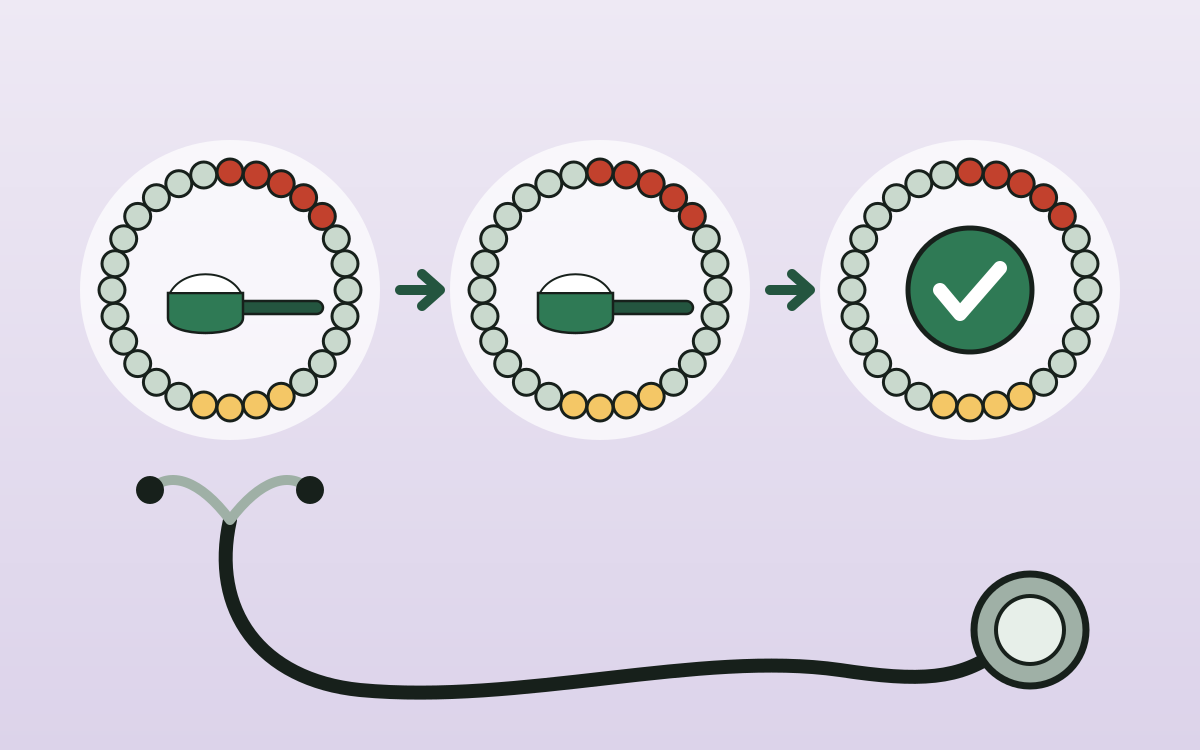
- Agree the dose. Studies most often used 2 g of myo-inositol twice a day, but the guideline doesn’t recommend a specific dose.
- Count the folic acid. Many inositol products contain 200–400 mcg of folic acid. NIH ODS sets the upper limit at 1,000 mcg a day from supplements and fortified foods, so add it to what’s in your multivitamin.
- Review it with your doctor after a few months: your cycle, blood tests and how you feel. If nothing has changed, there’s little point continuing.
What not to expect from inositol
To avoid spending months and money on false hopes, keep the guideline and review findings in mind:
- inositol doesn’t replace healthy eating and physical activity, which the guideline recommends for all women with PCOS;
- it isn’t a substitute for the combined pill if you need to regulate periods or reduce acne and hair growth;
- it doesn’t treat infertility: letrozole, prescribed by a specialist, is first-line for inducing ovulation;
- its effect on weight is very uncertain on current evidence;
- for teenagers, the guideline doesn’t recommend a specific type or dose either, so decide with a paediatric specialist.
Inositol side effects and safety
Inositol is usually well tolerated. A 2011 safety review found mild gut symptoms – nausea, wind and diarrhoea – only at the highest dose studied, 12 g of myo-inositol a day. The authors added that safety data are still scarce.
In the 2024 review, myo-inositol caused fewer stomach side effects than metformin, and those it did cause were mild and settled on their own.
Inositol in pregnancy and when trying to conceive
A 2023 Cochrane review pooled 7 small trials with 1,319 pregnant women, six of them in Italy. The pooled data suggested myo-inositol may lower the risk of gestational diabetes, but the certainty was low to very low. Doses and timing varied, and it’s unclear how far the results apply elsewhere. No side effects in mothers were found in the five trials that looked. Its authors call for larger trials before firm conclusions.
What that means for you:
- in pregnancy, take inositol only if your doctor or midwife agrees;
- if you took inositol before getting pregnant, mention it at your booking appointment;
- you still need folic acid 400 mcg – see our pregnancy vitamins guide.
Who should check with a doctor first
- You take metformin, hormonal contraception or other PCOS medicines. The guideline specifically advises telling your health professional about supplements.
- You’re preparing for IVF. Ask whether inositol makes sense and in which form, especially if the product contains D-chiro-inositol.
- You have diabetes: anything that may affect insulin sensitivity needs your glucose checked with your diabetes team.
- You’re pregnant or breastfeeding. Evidence is thin, so it’s your doctor’s call.
How to choose on iHerb
Before you add it to your multivitamin, work out how much folic acid the inositol itself brings:
How much folic acid your inositol adds
Pick the folic acid per serving on your label and how many servings you take a day
400 mcg folic acid a day
From the inositol product alone
40% of the 1,000 mcg daily upper limit (NIH ODS)
Within the limit. Now add the folic acid in your multivitamin or pregnancy vitamin: no more than 1,000 mcg in total unless prescribed.
Myo-inositol on iHerbMany inositol products contain 200–400 mcg of folic acid per serving. The NIH ODS limit counts folic acid from supplements and fortified foods together.
- Agree the form with your doctor: usually plain myo-inositol.
- Check how much inositol is in one serving: a scoop for powders, often several capsules for capsules.
- For a 40:1 blend, check the D-chiro-inositol dose.
- Add up the folic acid from this and your other supplements.
- Prefer products with independent quality testing (USP, NSF or similar marks): the guideline notes that supplement quality varies.
Our supplement label guide shows how to read a Supplement Facts panel. More articles are collected in our women’s health section.
Bottom line: what to choose
PCOS, agreed with your doctor
Myo-inositol powder
Easy to measure 2 g; dissolves in water
Myo-inositol on iHerbYour doctor suggested a combination
Myo- and D-chiro-inositol 40:1
Not proven better than myo-inositol alone
40:1 blends on iHerbYou'd rather not mix powder
Myo-inositol capsules
Work out how many capsules make 2 g
Capsules on iHerbButtons lead to selections of the right form on iHerb. These are affiliate links; your price doesn't change.
FAQ
Does inositol help with PCOS?
Possibly a little. The 2023 international PCOS guideline says inositol can be considered, noting limited harm and possible improvements in metabolic measures, but limited clinical benefit for ovulation, hair growth or weight. The underlying evidence is low to very low certainty.
How much myo-inositol should I take for PCOS?
Studies most often used 2 g twice a day (4 g in total), sometimes with 200–400 mcg of folic acid. The guideline doesn’t recommend a specific dose because the evidence isn’t good enough, so agree the dose with your doctor.
Myo-inositol or a 40:1 blend with D-chiro-inositol?
There’s no direct evidence that a 40:1 blend works better than myo-inositol alone, and the guideline doesn’t recommend any particular type, dose or combination. In one small study, higher doses of D-chiro-inositol were linked with poorer egg quality, though the journal later raised concerns about that paper.
Can I take inositol while pregnant?
Only if your doctor agrees. A 2023 Cochrane review (7 trials, 1,319 pregnant women) found a possible drop in gestational diabetes, but the evidence was low to very low certainty and the authors call for larger trials. No side effects in mothers were reported in the five trials that checked.
Inositol or metformin for PCOS?
The 2023 guideline says metformin should be considered over inositol for excess hair growth and belly fat, although it causes more stomach side effects. That’s a decision for your doctor. If you take both, make sure they know about the inositol.
Sources
- Teede HJ et al. International Evidence-based Guideline for the Assessment and Management of Polycystic Ovary Syndrome 2023. Monash University
- Inositol for Polycystic Ovary Syndrome: A Systematic Review and Meta-analysis to Inform the 2023 Update of the International Evidence-based PCOS Guidelines. J Clin Endocrinol Metab, 2024
- Motuhifonua SK et al. Antenatal dietary supplementation with myo-inositol for preventing gestational diabetes. Cochrane Database Syst Rev, 2023
- Carlomagno G, Unfer V. Inositol safety: clinical evidences. Eur Rev Med Pharmacol Sci, 2011
- Isabella R, Raffone E. CONCERN: Does ovary need D-chiro-inositol? J Ovarian Res, 2012 (expression of concern issued 2018)
- NIH ODS. Folate – Fact Sheet for Health Professionals
Inositol at a glance
Based on the 2023 PCOS guideline and systematic reviews
- What it is
- a vitamin-like compound the body makes itself
- Studied for
- mainly PCOS
- 2023 guideline view
- can be considered; limited clinical benefit
- Doses in studies
- myo-inositol 1–4 g a day, often 2 g twice daily
- Side effects
- mild gut symptoms, mainly at 12 g a day
- Pregnancy
- little evidence; only with your doctor's agreement
Inositol doesn't treat PCOS. Diagnosis and treatment belong with your GP or specialist – and tell them you're taking it.
Shop myo-inositol on iHerbStudies most often used 2 g twice a day
Contents
- What is inositol? Myo-inositol and D-chiro-inositol
- What inositol has been studied for
- Inositol and PCOS: what the 2023 guideline says
- Where inositol fits in PCOS care
- Myo-inositol or 40:1: forms and doses used in studies
- How to take myo-inositol
- What not to expect from inositol
- Inositol side effects and safety
- Inositol in pregnancy and when trying to conceive
- Who should check with a doctor first
- How to choose on iHerb