Constipation in older adults: common causes, what helps first and when a laxative or a GP is the next step
 Reviewed by
This article contains affiliate links to iHerb. If you buy through them, we earn a commission at no extra cost to you. It doesn't affect which forms we recommend. Learn more
Constipation gets more common after 65, and the reasons are usually ordinary: not enough fluid or fibre, less walking, and medicines such as codeine, iron or calcium. Simple changes often work within days. This guide covers what to try first, how psyllium and magnesium fit in, and which signs mean a GP appointment rather than another sachet.
Why constipation in elderly people is so common
The NHS lists being over 65 as one of the situations when constipation is more likely. According to the NIA, about one in three older adults has symptoms now and then. Most of the time it’s uncomfortable rather than dangerous, and it responds to simple changes.
It’s likely to be constipation if:
- you haven’t had a poo at least 3 times in the last week, or you’re going less often than usual;
- the poo is dry, hard or lumpy, or unusually large or small;
- you strain or it hurts;
- you feel you haven’t fully emptied your bowels.
There’s no “right” number. For some people twice a day is normal, for others three times a week. What matters is a change from your own usual pattern.
If you look after a parent, watch for changes in behaviour. The NHS notes that in older people, and especially in someone with dementia, constipation is easy to miss. New confusion can be a sign of pain or discomfort.
Common causes: medicines, fluids, fibre and moving less
Often several small things add up. A person drinks less to avoid getting up at night, eats softer food, walks less after a fall, and has just started calcium tablets.
| Cause | Examples | What helps |
|---|---|---|
| Medicines | Codeine, morphine and other opioids; some antidepressants and antihistamines; some blood pressure tablets; diuretics; Parkinson’s medicines | Ask your GP if the medicine or dose can change; laxatives are sometimes prescribed alongside |
| Supplements | Iron; calcium, including calcium antacids | Ask about a different dose, form or timing |
| Not enough fluid | Drinking little to avoid night-time toilet trips | Spread drinks through the day |
| Not enough fibre | White bread, few vegetables, soft diet | Increase fibre gradually |
| Moving less | Illness, after surgery, long periods sitting or lying | A daily walk, even a short one |
| Health conditions | Stroke, Parkinson’s disease, diabetes, dementia | Treatment of the condition; talk to your GP |

Don’t stop a prescribed medicine on your own, even if you suspect it. The NHS says to speak to your GP first. If iron is the problem, our guide to iron tablets covers gentler forms; for calcium, see calcium and vitamin K2.
If a medicine is the cause
Painkillers containing codeine or morphine are the classic example. The NHS says to see a GP if you’re taking a medicine that’s causing constipation. Your GP may change the dose or prescribe a laxative to take alongside it. If you take opioids, check with a pharmacist before choosing a laxative yourself.
Iron and calcium are easier to adjust. Your GP may suggest a different form or a lower dose. NIH ODS says spreading calcium through the day and taking it with meals can ease gas, bloating and constipation. Chewable tablets and calcium antacids count too, so add up all your calcium for the day.
What helps first: fluids, fibre and a daily walk
These are the NHS’s first steps, and they’re safe for almost everyone. You may notice a difference within a few days, although sometimes it takes a few weeks.
Fluids. The NHS Eatwell Guide suggests 6–8 cups or glasses of fluid a day. Water, lower-fat milk and lower-sugar drinks, including tea and coffee, all count. If night-time trips to the toilet worry you, drink more in the morning and early afternoon rather than less overall. If your doctor has told you to limit fluids, for example because of heart failure or kidney disease, keep to that limit.

Fibre. Add it gradually, or wind and bloating get worse. Good choices:
- porridge oats, wholemeal bread, bran or linseed sprinkled on cereal;
- beans, lentils and vegetables with main meals;
- fruits that contain sorbitol, such as apples, apricots, grapes, raisins, raspberries and strawberries.
Adults should aim for 30 g of fibre a day, says the NHS; our psyllium and fibre guide shows how close most people get.
Moving. A daily walk helps the bowels work more regularly. If walking is hard, any extra movement through the day counts.
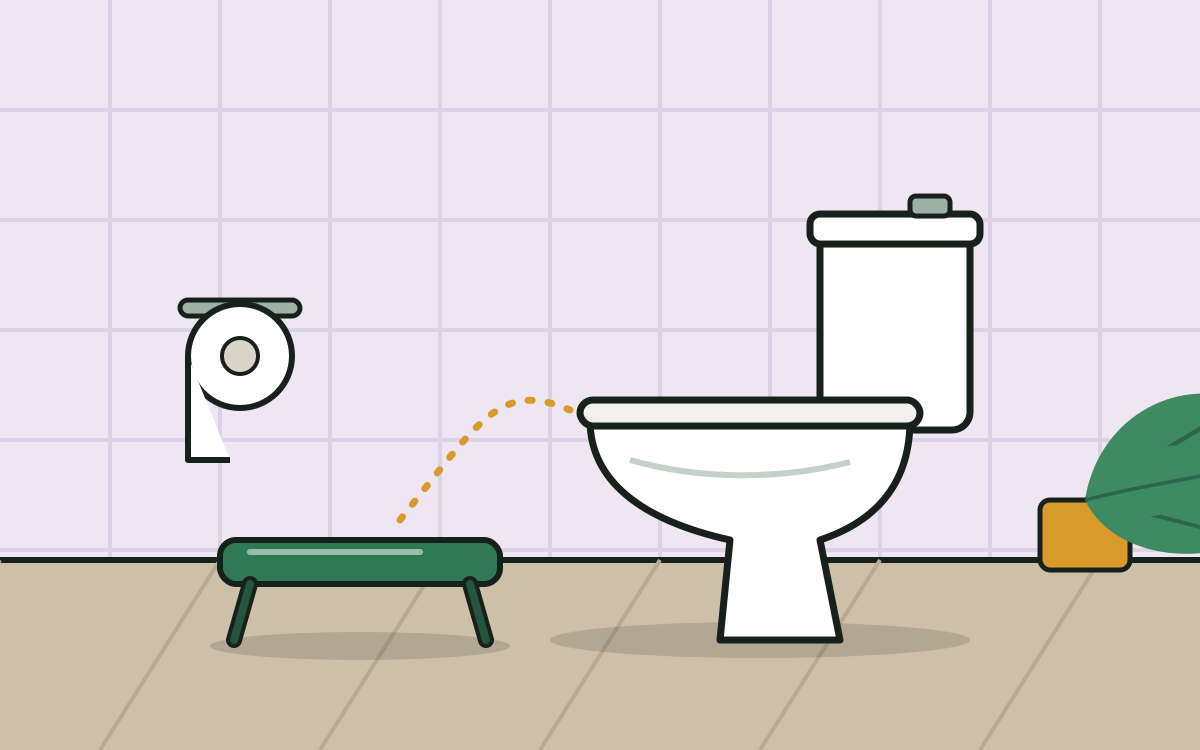
Toilet routine. Go when you feel the urge, at a regular time, and give yourself plenty of time. Rest your feet on a low stool so your knees sit higher than your hips.
Tick off what you already do:
What to try before laxatives
Tick what you already do. You may notice a difference within a few days, sometimes a few weeks
0 / 6 done
If none of this helps, constipation keeps coming back or you notice warning signs, see your GP. A pharmacist can help you choose a laxative.
Fibre for constipation: where psyllium fits
If diet changes aren’t enough and you’re buying a laxative without a prescription, the NHS says a bulk-forming one is usually best to try first. In UK pharmacies that’s ispaghula husk; on iHerb it’s sold as psyllium husk. It makes stools bigger and softer and takes up to 3 days to work.
Three rules matter more after 60:
- Each dose goes into a full glass of water, and you drink more through the day.
- Not if swallowing is difficult: the gel can stick in the throat. See trouble swallowing pills for alternatives.
- Keep other medicines at least an hour away from it, and don’t take it just before bed.
For frail or older people, the product information for ispaghula husk advises medical supervision, so mention it to your GP or pharmacist.
Magnesium for constipation, and why kidneys matter
Magnesium citrate and magnesium hydroxide are osmotic laxatives: unabsorbed magnesium holds water in the bowel. They work, but part of the magnesium does get into the blood.
The MSD Manual warns that laxatives containing magnesium can harm older adults, people with kidney disease and people on medicines that affect the kidneys. Those include diuretics, ACE inhibitors such as ramipril and ARBs such as losartan. NIH ODS adds that very large doses of magnesium laxatives and antacids, usually over 5,000 mg of magnesium a day, have caused magnesium toxicity, including a death in an older man. The risk rises when the kidneys work less well.
Signs of too much magnesium include low blood pressure, nausea, vomiting, flushing, trouble passing urine and drowsiness, then muscle weakness and an irregular heartbeat. Stop and get medical help if they appear.
Short courses are fine for many people with healthy kidneys. Ask your GP or pharmacist first if you’re over 65 or take any of the medicines above. More in our guides to magnesium citrate for constipation and supplements and kidney disease.
Laxative types in brief
There are four main types of laxative, according to the NHS; magnesium salts belong with the osmotic ones. Pick one to compare:
Laxative types: how they work and how long they take
Pick a type to see how it works and who needs to take care
Type
How it works
Ispaghula (psyllium) husk
Adds bulk and softness to stools. If you're buying without a prescription, this is usually the type to try first.
Works in: up to 3 days
Every dose needs a full glass of water; not if you have trouble swallowing.
How it works
Macrogol, lactulose
Draw water into the bowel so stools become softer.
Works in: 2–3 days
Drink plenty of fluids to avoid dehydration.
How it works
Magnesium citrate, magnesium hydroxide
Also osmotic: unabsorbed magnesium holds water in the bowel.
Some magnesium is absorbed. With kidney disease, diuretics, ACE inhibitors or ARBs, only on medical advice.
How it works
Docusate, arachis oil
Let more water and fat into stools, making them softer and more slippery.
Works in: 12 hours to 3 days
How it works
Senna, bisacodyl
Make the bowel muscles contract and push stools out.
Works in: 6–12 hours
Long-term use with frequent diarrhoea can lower blood potassium.
How quickly each type works, according to the NHS:
- bulk-forming (ispaghula husk): up to 3 days;
- osmotic (macrogol, lactulose): 2–3 days;
- stool softeners (docusate, arachis oil): 12 hours to 3 days;
- stimulant (senna, bisacodyl): 6–12 hours.
General rules from the NHS:
- if you bought a laxative without a prescription, stop when constipation improves and don’t use it for more than 7 days;
- if 3 days of a laxative haven’t helped, speak to a pharmacist or doctor;
- with bulk-forming or osmotic laxatives, drink plenty to avoid dehydration;
- check with a pharmacist first if you have heart failure, difficulty swallowing or take opioid painkillers.
Used too often or for too long, laxatives can cause dehydration, low potassium and, rarely, a bowel blockage.
When to see a doctor: red flags
See a GP if you:
- are constipated and treatment isn’t helping, or it keeps coming back;
- are regularly bloated or have tummy pain;
- notice blood in your poo;
- have lost weight without trying or feel tired all the time;
- notice a sudden change in how you poo;
- take a medicine that causes constipation, such as an opioid painkiller.
Get help quickly if constipation comes with severe tummy pain, vomiting, fever or you can’t pass wind. Lower back pain is on the NIA’s list of these signs too.
One more sign for carers: watery poo leaking in someone who has been constipated can mean faecal impaction, a build-up of hard poo in the rectum. It needs treatment from a GP or nurse, so don’t treat it as ordinary diarrhoea.
How to choose a fibre supplement on iHerb
- Start with plain psyllium husk, not a “detox” or “cleanse” blend with senna or several herbs.
- Check the grams of psyllium per serving on the label.
- Powder is easier to adjust; capsules mean several per dose, which matters if swallowing is hard.
- Look for sugar or sweeteners if you have diabetes.
- Treat magnesium as a short-term option only, and only with healthy kidneys.
For everyday supplements after 50, see vitamins for over 50s; for other gut topics, see our gut health section.
Bottom line: what to choose
Fine with powders, no swallowing problems
Psyllium husk powder
Start with half a serving in a full glass of water
Psyllium on iHerbWant more fibre at breakfast
Ground linseed (flaxseed)
A spoonful on porridge or yoghurt, with extra fluid
Linseed on iHerbHealthy kidneys, GP or pharmacist agrees
Magnesium citrate, short course
Not with kidney disease or without advice on diuretics
Magnesium citrate on iHerbButtons lead to selections of the right form on iHerb. These are affiliate links; your price doesn't change.
FAQ
What helps constipation in older people?
Start with more fluids, a gradual rise in fibre and a daily walk. Keep a regular toilet time and rest your feet on a low stool. If that isn’t enough, a pharmacist can suggest a laxative, usually a bulk-forming one such as ispaghula husk first.
Is psyllium good for constipation in the elderly?
It’s the type of laxative the NHS suggests trying first when you buy one without a prescription. It takes up to 3 days to work and must go down with plenty of water. People with swallowing problems or a bowel blockage shouldn’t take it without medical advice.
Is magnesium safe for constipation over 60?
Magnesium laxatives work, but some magnesium is absorbed. The MSD Manual warns they can harm older adults, people with kidney disease and those on diuretics, ACE inhibitors or ARBs. Check with your GP or pharmacist first.
Can iron or calcium tablets cause constipation?
Yes. Iron supplements and calcium, including antacids that contain calcium, are common causes. Don’t stop a prescribed one yourself: ask your GP whether the dose, form or timing can change.
How long can an older person go without a bowel movement?
There’s no single normal number: for some people three times a week is usual. It’s likely to be constipation if you’ve gone fewer than 3 times in a week, or less often than usual. If someone hasn’t been for several days and has tummy pain, vomiting or can’t pass wind, get medical help.
When should I worry about constipation?
See a GP if you notice blood in your poo, lose weight without trying, feel tired all the time, have tummy pain or a sudden change in bowel habit, or if treatment isn’t working. These signs are rarely serious, but they need checking.
Sources
- NHS. Constipation
- NHS. Laxatives
- NHS. Water, drinks and your health
- National Institute on Aging. Concerned About Constipation?
- MSD Manual Consumer Version. Constipation in Adults
- NIH ODS. Magnesium – Fact Sheet for Health Professionals
- NIH ODS. Calcium – Fact Sheet for Consumers
- EMC. Fybogel Hi-Fibre Orange (ispaghula husk) – Summary of Product Characteristics
Constipation after 60 at a glance
For adults, based on NHS, NIA, NIH ODS and the MSD Manual
- More common
- after 65 (NHS); about 1 in 3 older adults now and then (NIA)
- Try first
- fluids, more fibre, a daily walk, a regular toilet time
- Fluids
- 6–8 glasses a day (NHS Eatwell Guide)
- First laxative to try
- bulk-forming, such as ispaghula (psyllium) husk
- Magnesium laxatives
- caution with kidney disease, diuretics, ACE inhibitors
- See a GP
- blood in poo, weight loss, a sudden change in bowel habit
Bought a laxative without a prescription? Stop when things improve and don't use it for more than 7 days.
Shop psyllium husk on iHerbA bulk-forming fibre; every dose needs a full glass of water
Contents
- Why constipation in elderly people is so common
- Common causes: medicines, fluids, fibre and moving less
- What helps first: fluids, fibre and a daily walk
- Fibre for constipation: where psyllium fits
- Magnesium for constipation, and why kidneys matter
- Laxative types in brief
- When to see a doctor: red flags
- How to choose a fibre supplement on iHerb