Trouble swallowing pills: two techniques that help, liquid and chewable vitamins for adults, and whether you can crush tablets
 Reviewed by
This article contains affiliate links to iHerb. If you buy through them, we earn a commission at no extra cost to you. It doesn't affect which forms we recommend. Learn more
Large tablets are hard to swallow for a lot of people, at any age. Usually it's a matter of size, shape and technique. Sometimes it's dysphagia, a swallowing problem that needs a GP. Below: how to tell the two apart, two simple techniques from a study, and which easier forms to choose without swapping one problem for another.
Pill trouble or dysphagia: which is it?
Most people who struggle with pills swallow food and drink without a problem. The trouble is the tablet itself: large, rough, oval, or a capsule that floats. Worry about choking can make it harder still. This is common and usually fixable with technique or a different form.
Dysphagia is different. It’s a swallowing problem that affects food and drink as well, and it usually has a cause: a stroke, dementia or another neurological condition, acid reflux, or some medicines.
| Sign | Hard-to-swallow pills | Possible dysphagia |
|---|---|---|
| Food and drink | swallowed normally | coughing, choking or food sticking |
| What’s difficult | big tablets and capsules | certain foods or drinks, sometimes everything |
| Voice after eating | normal | wet or gurgly |
| Over time | no change in weight | weight loss, chest infections |
| What helps | technique, smaller or liquid forms | GP, speech and language therapist |
The NHS advises an urgent GP appointment, or NHS 111, if you or someone you care for has:
- swallowing difficulties with food or drink;
- frequent chest infections;
- shortness of breath after eating or drinking.
Your GP may refer you to a speech and language therapist, who tests the swallow and suggests safe food textures and drinks.
Two techniques that make swallowing pills easier
In 2014, German researchers tested two simple methods on 151 adults, with and without swallowing difficulties. Each technique matched one type of pill.
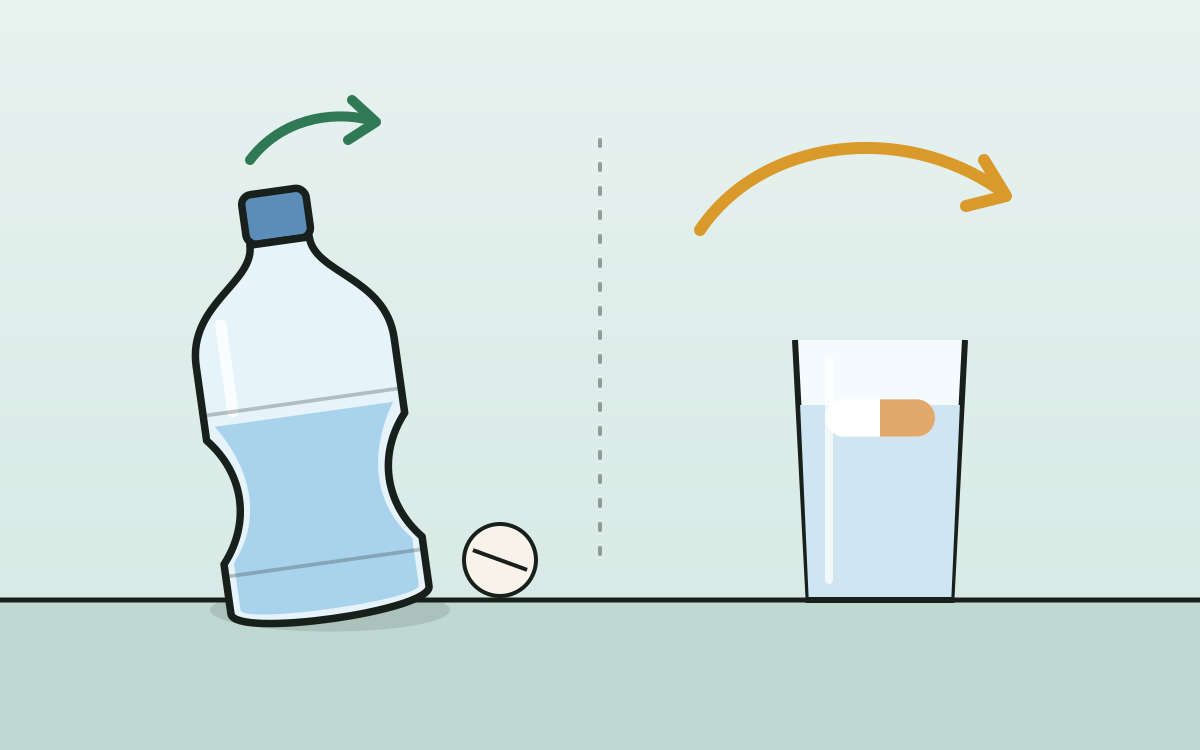
The pop-bottle method, for tablets. It made swallowing easier in 59.7% of attempts with large tablets.
- Fill a soft plastic water bottle.
- Put the tablet on your tongue.
- Close your lips tightly around the bottle’s opening.
- Drink with a quick sucking motion, keeping your lips sealed, and swallow straight away.
The lean-forward method, for capsules. It helped in 88.6% of attempts. Capsules are light and float, so tipping your head back pushes them away from your throat.
- Put the capsule on your tongue.
- Take a medium sip of water, without swallowing yet.
- Tilt your head forward, chin towards your chest.
- Swallow with your head bent forward.
The authors note that tilting the head back while swallowing may raise the risk of liquid or food going down the wrong way. If you have dysphagia, check with your GP or speech and language therapist before trying either method.
Liquid, chewable and other easier forms
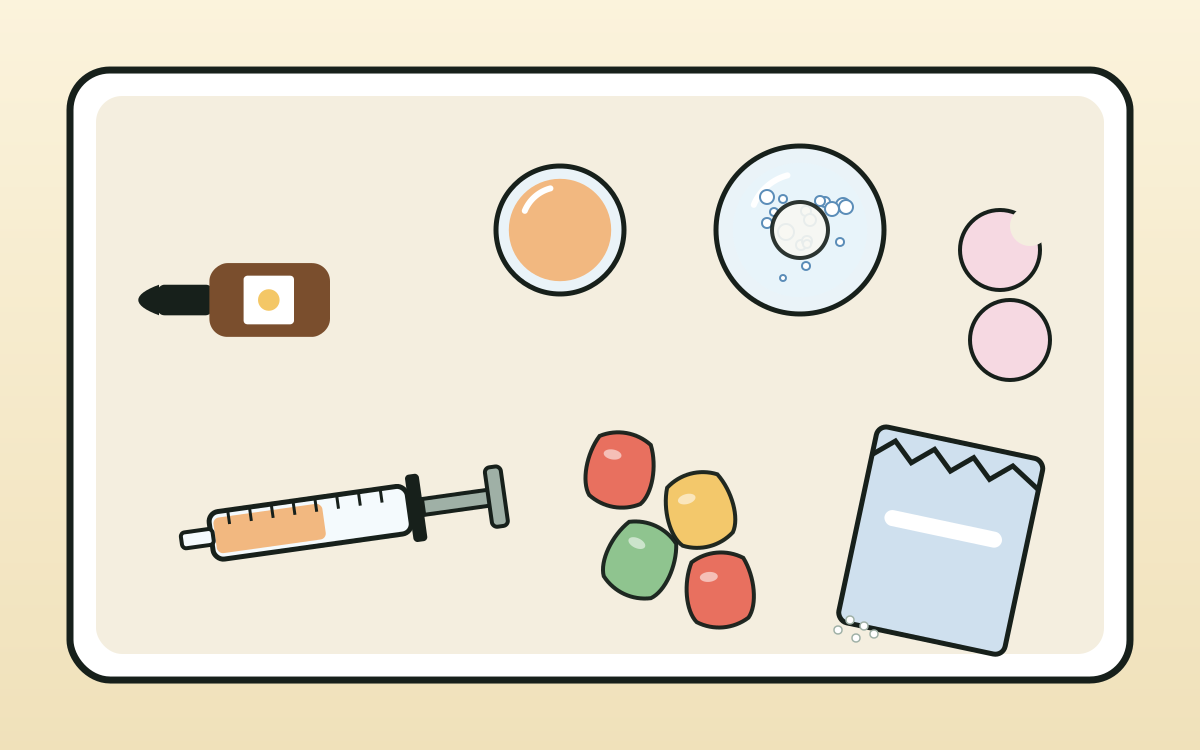
When technique isn’t enough, change the form. The Specialist Pharmacy Service (SPS) lists the same options for medicines: smaller tablets, dispersible or effervescent tablets, chewables, orodispersible tablets that melt in the mouth, and liquids. Each has a catch.
| Form | Works well for | Drawbacks |
|---|---|---|
| Drops | vitamin D, B12, other small doses | dose per drop varies; check mcg or IU |
| Liquids | multivitamins, iron, magnesium | measure with a syringe, not a kitchen spoon; may contain sugar; short shelf life once opened |
| Chewable tablets | multivitamins, calcium | often sugar or sweeteners; check the mineral amounts |
| Gummies | vitamins in small amounts | sugar; little room for calcium or magnesium; easy to eat too many |
| Powders | magnesium, creatine, protein, fibre | you need a full glass of liquid; fibre isn’t for people with swallowing problems |
| Effervescent tablets | vitamin C, multivitamins | sodium; not for people watching their salt |
Sodium in fizzy tablets. Many effervescent tablets get their fizz from sodium salts. A 2013 BMJ study of 1.29 million UK patients found that sodium-containing effervescent, dispersible and soluble medicines went with 16% higher odds of heart attack, stroke or vascular death. The odds of high blood pressure were about 7 times higher. If you have high blood pressure, heart failure or kidney disease, check the Sodium line on the label first.
Pick your situation:
Which form to choose if pills are hard to swallow
Pick what you take or what's difficult
Your situation
What to try
Drops
Vitamin D or B12 drops: one drop on a spoon or a piece of bread. Check the dose per drop.
What to try
Chewable or liquid multivitamin
Compare sugar and mineral amounts with your usual tablet. Measure liquids with an oral syringe.
What to try
A powder in a drink
A large dose is easier to drink than to swallow as several capsules. You'll need a full glass of liquid.
What to try
Skip effervescent tablets
Many effervescent tablets contain sodium. In a BMJ study, sodium-containing medicines went with higher odds of heart attack and stroke.
Check the Sodium line on the label
What to try
Careful with gummies and syrups
Gummies, chewables and syrups often contain sugar. Drops or sugar-free powders are easier to fit in.
What to try
See your GP first, not a shop
Coughing or choking when eating, food sticking and weight loss are signs of dysphagia. A speech and language therapist will advise on forms.
The NHS advises an urgent GP appointment
Most adult chewables are multivitamins. Read the label for sugar and for the mineral amounts, then compare with your usual tablet. Our guide to multivitamins explains what to look for, and our page on vitamin D3 covers drops.
Can you crush tablets or open capsules?
Sometimes, but never by default. SPS, which advises NHS pharmacists, lists the types that are usually unsuitable:
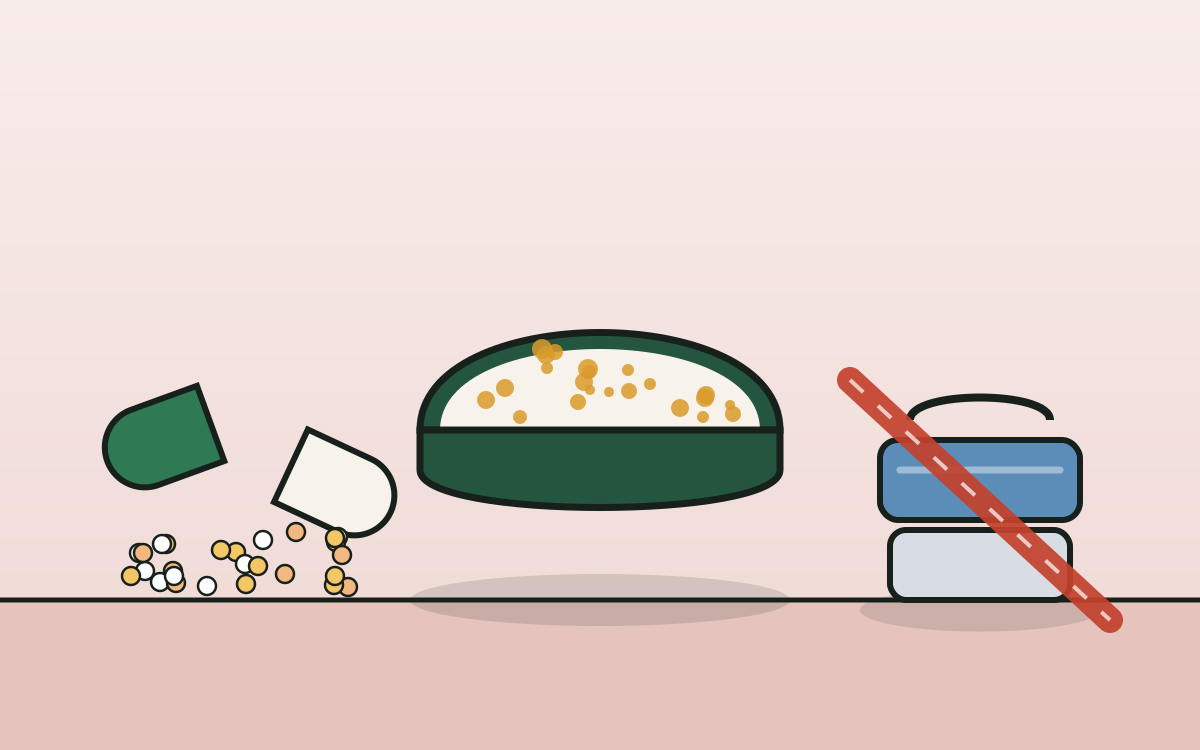
- modified-release tablets and capsules, marked MR, SR, XL or LA: crushing can release the whole dose at once;
- enteric-coated (EC) or gastro-resistant (GR) tablets: the coating protects the contents from stomach acid, and once broken the product may not work;
- soft capsules with liquid or paste inside;
- some medicines that are hazardous to whoever crushes them.
On supplement labels, look for the same idea in other words: “time release”, “sustained release”, “delayed release” or “enteric coated”, common on vitamin C, B complexes and fish oil.
Crushing a medicine outside its licence is “off-label”, so the pharmacist checks the product information first. Splitting is safer with tablets designed for it, such as those with a score line, but still ask. Before you crush, split or open anything, run through this list:
Before you split, crush or open anything
Tick each point you've confirmed. Ticks are saved only in this browser
0 / 7 checked
All ticked. If your pharmacist has confirmed this form can be split or crushed, ask what to mix it with too.
SPS also suggests a step people often skip: review whether every medicine is still needed and whether doses can be fewer. Fewer tablets is the easiest fix of all. Take a full list to your GP or pharmacist; our medicines list for your GP helps.
Who should be careful
- People with dysphagia after a stroke or with dementia or another neurological condition: forms and drink thickness are set by the speech and language therapist.
- People on a salt-restricted diet: avoid effervescent tablets.
- People with diabetes: count the sugar in gummies, chewables and syrups.
- Kidney disease: liquids and powders still contain magnesium, potassium and vitamins; see our page on supplements with kidney disease.
- Children in the house: gummies look like sweets; store them out of reach.
How to choose easy-to-swallow vitamins on iHerb
- Try a technique first; you may not need a new product.
- Choose the form by dose: drops for small doses, powders for large ones.
- Check sugar per serving for gummies and chewables.
- Check sodium for effervescent tablets.
- Avoid “time release” products if you need to split or crush.
- Compare the dose per serving with what you took before.
More pages for this age group are in our 50+ section, and an unsure parent can start with our vitamin check.
Bottom line: what to choose
Just one vitamin, small dose
Drops, for example vitamin D3
One drop on a spoon or a piece of bread
D3 drops on iHerbA daily multivitamin
Chewable multivitamin for adults
Check sugar and the mineral amounts
Chewables on iHerbA large daily dose, such as magnesium
Powder to stir into a drink
No effervescent tablets if you watch your salt
Powders on iHerbButtons lead to selections of the right form on iHerb. These are affiliate links; your price doesn't change.
FAQ
How can I make swallowing pills easier?
For tablets, try the pop-bottle method: tablet on the tongue, lips sealed round a soft plastic water bottle, then swallow with a sucking motion. For capsules, try the lean-forward method: capsule on the tongue, a sip of water, then tilt your head forward and swallow. In a 2014 study they helped in about 60% and 89% of attempts.
Can you crush tablets?
Not without checking. Modified-release tablets (MR, SR, XL, LA) can release the whole dose at once if crushed, and enteric-coated or gastro-resistant tablets (EC, GR) can stop working. Ask a pharmacist before you crush, split or open anything, supplements included.
Are liquid vitamins better than tablets?
Not better absorbed in general, but easier to swallow and to dose in small steps. Drawbacks: a shorter shelf life once opened, sometimes added sugar or sweeteners, and the need to measure accurately with a syringe or dropper.
Are chewable and gummy vitamins as good as tablets?
They can be, for vitamins needed in small amounts. A gummy is small, so minerals needed in larger amounts, such as calcium and magnesium, are often low or missing. Many contain sugar, and it’s easy to eat more than the label says.
When is difficulty swallowing a reason to see a doctor?
If you cough or choke when eating or drinking, feel food sticking in your throat or chest, bring food back up, have a wet or gurgly voice, lose weight or keep getting chest infections. The NHS advises an urgent GP appointment or NHS 111 for swallowing difficulties.
Sources
- Schiele JT et al. Two techniques to make swallowing pills easier. Ann Fam Med, 2014
- Specialist Pharmacy Service (NHS). Checking if tablets can be crushed or capsules opened
- Specialist Pharmacy Service (NHS). Choosing medicines formulations in swallowing difficulties
- NHS 111 Wales. Dysphagia (swallowing problems)
- George J et al. Association between cardiovascular events and sodium-containing effervescent, dispersible, and soluble drugs: nested case-control study. BMJ, 2013
Swallowing pills at a glance
Based on NHS, the Specialist Pharmacy Service and published studies
- Tablets
- try the pop-bottle method
- Capsules
- try the lean-forward method
- Easier forms
- drops, liquids, chewables, gummies, powders
- Watch for
- sugar in gummies, sodium in effervescent tablets
- Don't crush
- MR, SR, XL, LA, EC or GR without a pharmacist
- See a GP
- coughing or choking when eating, food sticking
If food and drink are hard to swallow too, it's not about pills. Ask for a GP appointment.
Shop D3 drops on iHerbCheck the dose per drop