Printable pill calendar: a weekly medication chart with tick boxes
 Reviewed by
This article contains affiliate links to iHerb. If you buy through them, we earn a commission at no extra cost to you. It doesn't affect which forms we recommend. Learn more
Morning, midday, evening, bedtime, and a tick in each box straight after the dose. It's a simple way to avoid missing a tablet or taking it twice. Fill in the calendar on this page and print it.
How to use the pill calendar
- Press “Add a row” and type the name of a medicine or vitamin.
- Enter the dose as it appears on the pack: 5 mg, 1 tablet, 2 drops.
- Add a note: “empty stomach”, “with food”, “30 minutes before breakfast”.
- Choose the time: morning, midday, evening or bedtime. One medicine can go in several slots.
- Press “Print the calendar” and put the sheet where you’ll definitely see it.
- Tick the box straight after each dose, not “later”.
Weekly pill calendar
Add what you take and when, then print a grid with tick boxes so you don't miss a dose or take one twice
Your calendar is stored only in this browser on this device.
The calendar is stored only in your browser. It won’t appear on another device, so keep the printout handy. If you’re setting it up for your mum or dad, print a copy for them and one for yourself.
Tips for remembering your medicines
A tablet is easier to remember when it’s tied to something you already do every day.
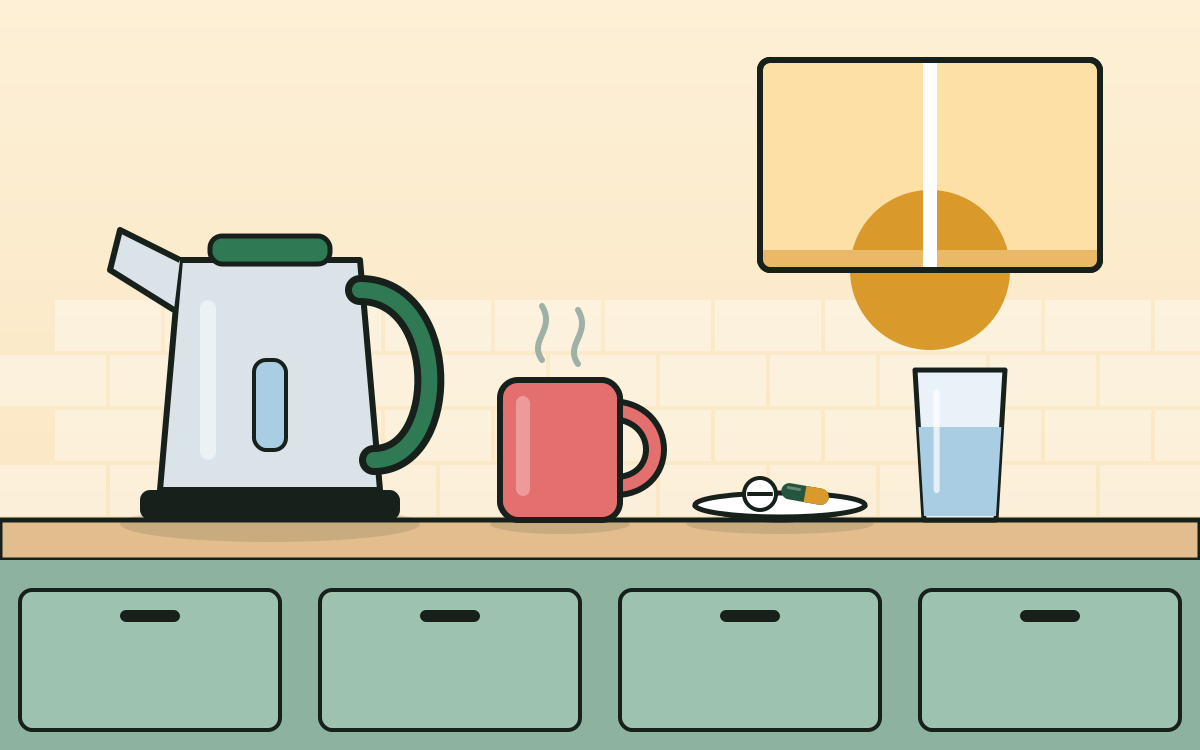
- Link it to a routine. Morning tablets go with the first cup of tea, evening ones with brushing your teeth. Store the medicines themselves in a cool cupboard, though, not next to the kettle.
- Same time every day. A fixed routine is easier to keep than “whenever I remember”.
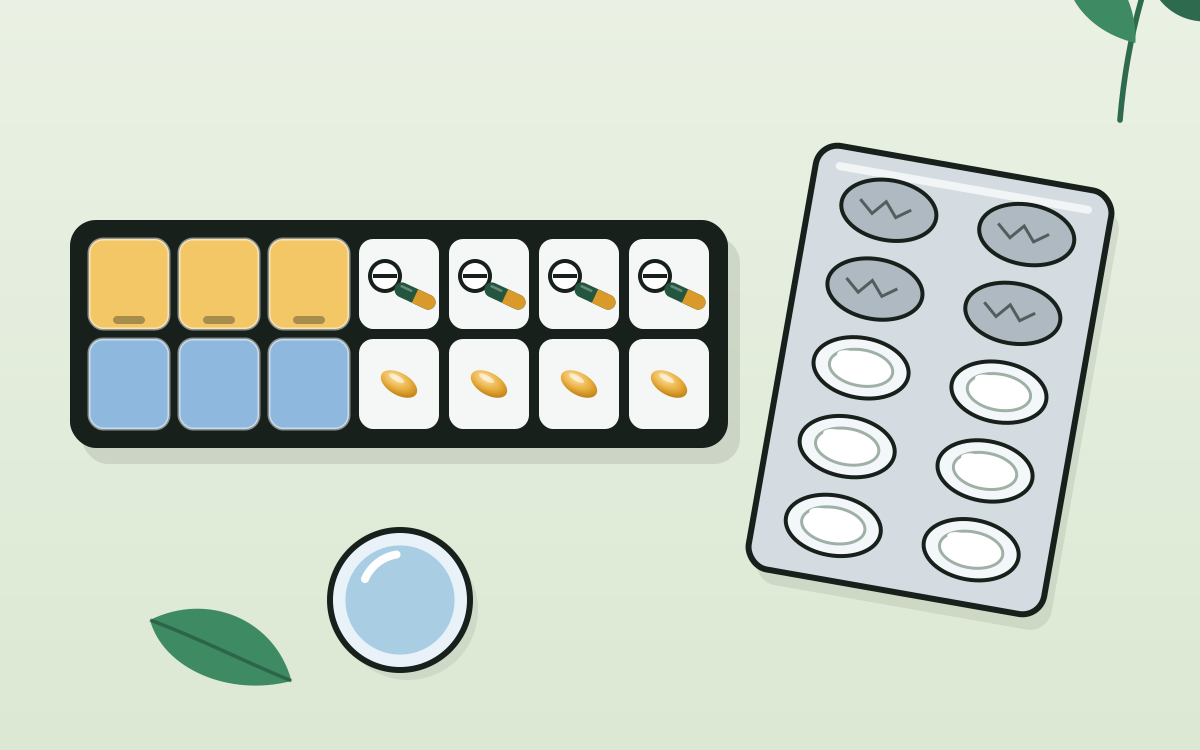
- A weekly organiser. MedlinePlus describes organisers for 7, 14 or 28 days, with sections for morning, midday, evening and bedtime.
- A phone reminder or an automatic dispenser with a sound and a light.
- Repeat prescriptions. Mark on the calendar when a pack will run out so you can order in time.
What to do if you miss a dose
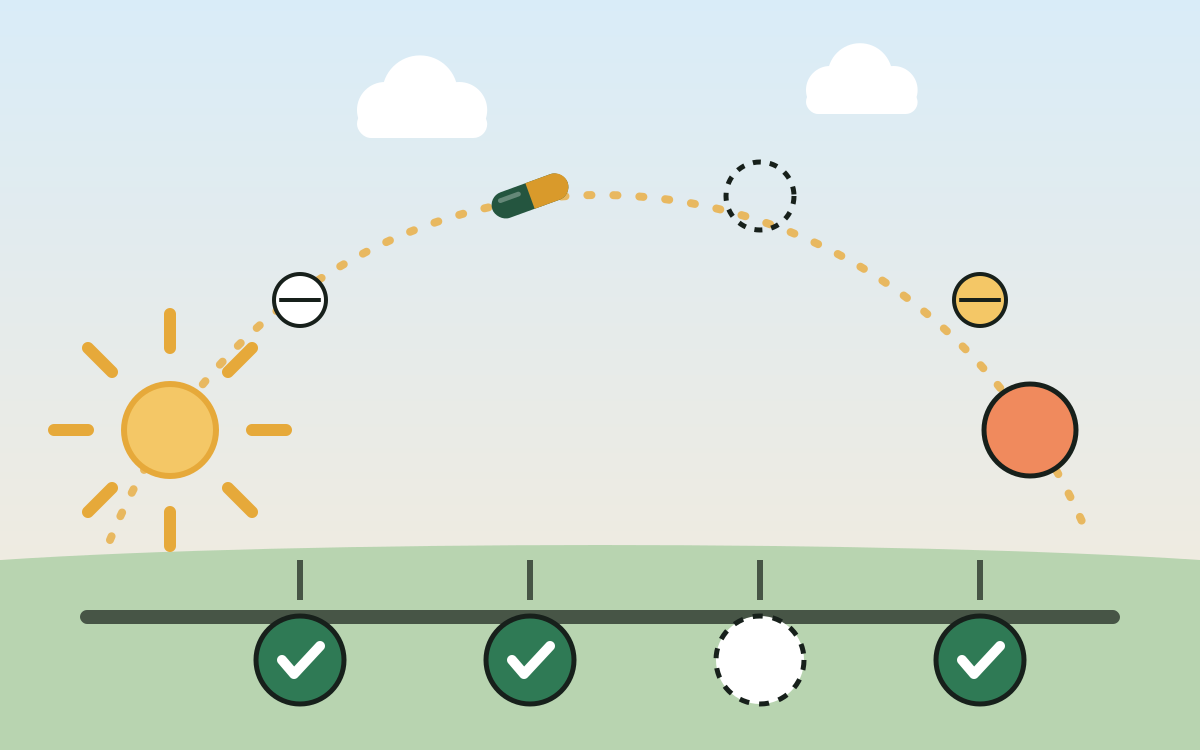
The exact rule depends on the medicine. The NHS Specialist Pharmacy Service says to start with the patient leaflet: the “How to take” section usually explains what to do after a missed dose. General pointers:
- if the leaflet doesn’t help, take a once- or twice-daily medicine when you remember, unless the next dose is due within a few hours; then skip the missed one;
- never take a double dose to catch up unless your prescriber has said so;
- for anticoagulants, insulin, epilepsy and Parkinson’s medicines, agree a plan with the clinic or team that prescribes them;
- if you’re unsure, ring your pharmacist.
Vitamins are simpler: a missed day of vitamin D or B12 doesn’t need a double portion tomorrow. Just carry on as usual.
Pick what happened to see the usual next step:
Missed a dose or not sure?
General rules. The exact answer for your medicine is in its leaflet or with your pharmacist
What happened
What's usually advised
Check the missed-dose section of the leaflet
If the leaflet doesn't say, NHS pharmacists advise that for most once- or twice-daily medicines you take the dose when you remember, unless the next one is due within a few hours. Then skip it.
Key point: don't take a double dose to catch up
What's usually advised
Don't take another
Ring your pharmacist first and say which medicine it is. For some, such as Parkinson's medicines, timing matters a lot.
Key point: tick the box straight after each dose
What's usually advised
Call your pharmacist or GP now
Give the name, dose and time. If you feel unwell, call 999 or NHS 111 (112 elsewhere in Europe).
Don't wait for symptoms if the extra tablet was for blood pressure, diabetes or blood thinning.
What's usually advised
Your care team sets the rules
For anticoagulants, insulin, epilepsy and Parkinson's medicines, agree a missed-dose plan with whoever prescribes them.
Key point: write the clinic's number on your calendar
What's usually advised
Just carry on tomorrow
One missed day of vitamin D or B12 changes nothing. There's no need for a double portion the next day.
If you’ve taken an extra tablet and feel unwell, call NHS 111, or 999 in an emergency (112 elsewhere in Europe).
Pill organiser or pill calendar?
| Method | What it shows | Pros | Limits |
|---|---|---|---|
| Weekly organiser | what’s due | you can see what’s left for today | not every medicine can come out of its packaging |
| Calendar with tick boxes | what’s been taken | stops double doses; printable | you have to remember to tick |
| Blister in its original pack | how many tablets are left | dose and expiry date always visible | confusing with many packs |
| Automatic dispenser | an alert at dose time | reminds you itself | needs batteries; pills are hard to get out when away |
A pair works best: an organiser for anything that can be decanted, and a calendar for everything, including medicines that stay in their original packs. One person should fill the organiser, at the same time each week, say on Sunday evening.
A pill calendar for your parents
If you’re filling in the calendar for your mum or dad, start with a medicines list for the GP and have it reviewed, so the chart only holds what they really need. Then:
- write names as they appear on the pack, in full;
- use the note to describe the tablet if several look alike;
- put the sheet somewhere visible, while the medicines stay in a cupboard;
- once a week, ask about empty boxes without blame: a missed dose is a reason to simplify the routine, not to argue.
More on helping with medicines in our guide to vitamins for elderly parents.
Storing your tablets
- Somewhere cool and dry, out of direct sunlight; not in the bathroom or above the cooker.
- In the original packaging, unless the tablet is in this week’s organiser.
- Out of reach of children and pets.
- Take out-of-date medicines back to the pharmacy, not in the bin or down the toilet.
How to choose a pill organiser on iHerb
- Count how many times a day you take medicines: that sets the number of sections.
- Choose compartments big enough for your largest capsules.
- Check the lids are easy to open, especially if your joints are stiff.
- Put every supplement on the chart, and everything you take on your medicines list for the GP.
- Before adding new supplements, read which vitamins you need over 50 and check our vitamin compatibility chart. If tablets are hard to swallow, see trouble swallowing pills.
Bottom line: what to choose
Two to four tablets a day
7-day organiser, morning and evening
Fill it once a week
Pill organisers on iHerbButtons lead to selections of the right form on iHerb. These are affiliate links; your price doesn't change.
FAQ
How do I make a medication chart?
List every medicine and supplement with its dose and time: morning, midday, evening or bedtime. Add notes such as “empty stomach” or “with food”. This calendar turns it into a weekly chart with tick boxes and prints it.
What should I do if I miss a dose?
Check the missed-dose section of the patient leaflet. If it doesn’t help, NHS pharmacists advise that for most once- or twice-daily medicines you take the dose when you remember, unless the next one is due within a few hours; then skip it. Don’t take a double dose to catch up unless your prescriber has told you to. If in doubt, ask your pharmacist.
What if I can't remember whether I took my tablet?
Don’t take another until you’ve rung your pharmacist and told them which medicine it is. From now on, tick the box straight after each dose.
Is a pill organiser or a pill calendar better?
They work best together. An organiser shows what’s due; a calendar shows what’s been taken. Medicines that must stay in their original packaging don’t go in an organiser, so ticking them off on a chart is especially useful.
Can I print a weekly pill chart?
Yes. Fill in the calendar and press “Print the calendar”. You’ll get a one-week sheet with your rows and empty tick boxes. Your data stays only in your browser.
Sources
Pill calendar at a glance
Based on MedlinePlus (NIH) and NHS pharmacy advice
- Dose times
- morning, midday, evening, bedtime
- When to tick
- straight after each dose
- Missed a dose
- check the leaflet; never take a double dose
- Not sure if you took it
- don't take another; ask your pharmacist
- Pill organisers
- 7, 14 or 28 days
- Where your data lives
- only in your browser
The calendar doesn't replace the leaflet or your prescriber's instructions. For warfarin, insulin and epilepsy medicines, your care team sets the missed-dose rules.
Shop pill organisers on iHerbUse it alongside the calendar to stay on track