Insomnia in older adults: what changes with age, why CBT comes first and what melatonin and supplements can do
 Reviewed by
This article contains affiliate links to iHerb. If you buy through them, we earn a commission at no extra cost to you. It doesn't affect which forms we recommend. Learn more
Sleep after 60 tends to be earlier, lighter and more broken, and some of that is simply normal. Long-term insomnia is different: it has a first-line treatment, CBT for insomnia, and it isn't a sleeping pill. This guide covers what's normal, why sedatives and night-time antihistamines carry extra risk later in life, and what melatonin, magnesium and L-theanine can realistically do.
Sleep over 60: what’s a normal change
Many people in their sixties notice the same thing: sleepy by ten, awake at five, and up once or twice in between. According to the NIA, that’s how sleep often changes with age. Older adults tend to go to bed and wake earlier. Sleep gets shorter and lighter, and waking in the night becomes more common.
What doesn’t change much is how much sleep you need: about 7–9 hours, as for younger adults. So the question isn’t “Am I sleeping like I did at 30?” It’s “Do I feel all right during the day?”
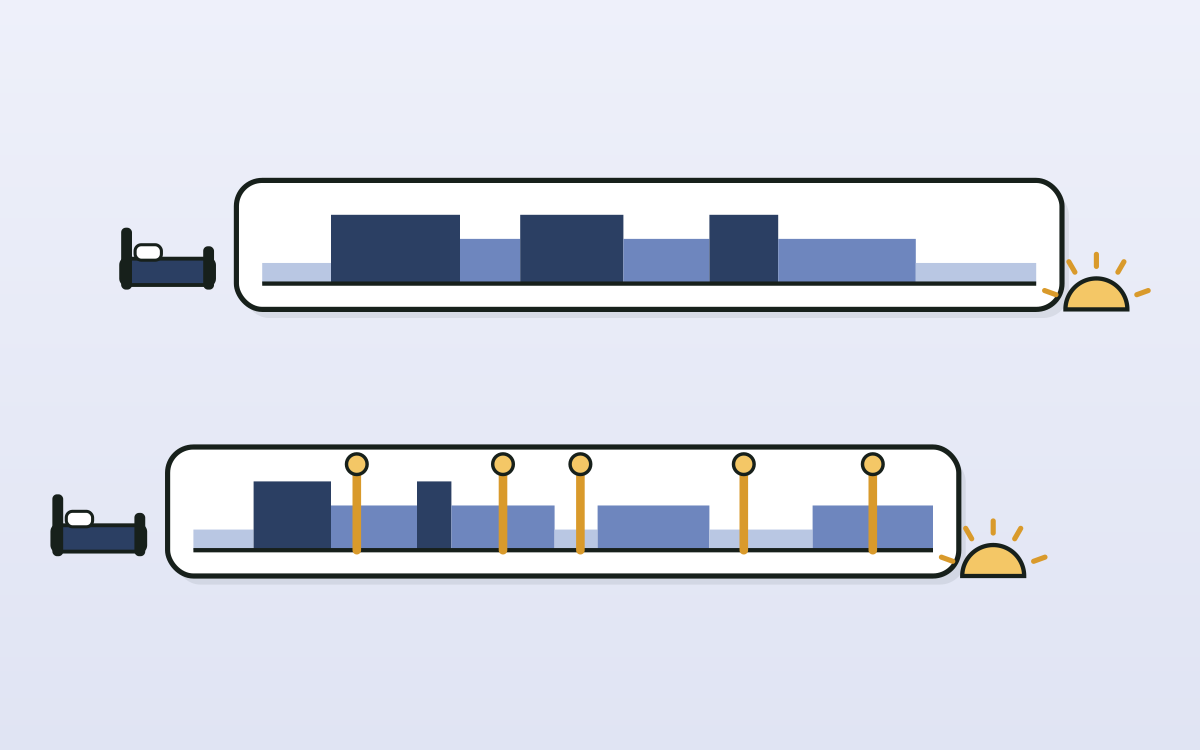
Things that make sleep worse later in life are often fixable:
- pain, a full bladder at night, heartburn;
- medicines and alcohol, even a small evening drink;
- naps late in the afternoon;
- low mood, worry, loneliness;
- sleep disorders that become more common with age: sleep apnoea and restless legs.
Pick what sounds most like you:
What's keeping you awake after 60
Pick what sounds most like you
Your situation
Where to start
Often a normal age shift
With age, people go to bed and wake earlier, and sleep gets shorter and lighter. If you feel fine in the day, there's nothing to treat. A regular schedule and a bedtime routine help.
Where to start
That's long-term insomnia
If poor sleep happens 3 nights a week for 3 months or more, CBT for insomnia (CBTi) is the first-line treatment. Keep a sleep diary for 2 weeks and take it to your GP.
Where to start
Sleep apnoea needs ruling out
Loud snoring with pauses in breathing is a reason to see your GP. Untreated sleep apnoea can lead to heart problems. It has its own treatment, such as a CPAP machine that keeps the airway open.
Where to start
Sounds like restless legs syndrome
Tingling and an urge to move your legs, worse in the evening and eased by moving. Iron (if a blood test shows you need it) or medicines usually help, so see your GP before buying iron.
Where to start
Less fluid late, a lit path
Avoid drinking a lot late in the day. A night light and no rugs or cables on the way to the toilet cut the risk of a fall, especially on sleeping pills.
Where to start
Wind-down and routine, not antihistamines
An hour of quiet before bed and the same wake-up time daily. L-theanine has small trials with modest effects. Night-time remedies with sedating antihistamines are best avoided after 65.
Insomnia in older adults: when it’s more than ageing
The NIA calls insomnia the most common sleep problem in adults aged 60 and over: trouble falling or staying asleep on at least three nights a week. The NHS calls it short-term if it lasts less than 3 months and long-term if it lasts 3 months or more. Typical signs are trouble falling asleep, lying awake, waking too early, and feeling tired, irritable or unable to concentrate the next day.
Start with the basics the NHS recommends:
- get up at the same time every day, even after a bad night;
- go to bed only when you’re sleepy, and relax for an hour beforehand;
- keep the bedroom dark, quiet and comfortable;
- no tea, coffee, alcohol or cigarettes for 6 hours before bed;
- be active in the day, but not in the 4 hours before bed;
- avoid daytime naps.
If that doesn’t help within a few weeks, see your GP. Before you go, keep a sleep diary for about two weeks, as the NIA suggests. Note when you go to bed, when you wake in the night and in the morning, plus caffeine, alcohol and exercise.

CBT for insomnia comes first
For long-term insomnia, NICE treats cognitive behavioural therapy for insomnia (CBTi) as the standard first-line treatment. It works on the habits and thoughts that keep you awake. You can do it with a therapist or through a digital programme, and NICE recommends one such online programme for use in the NHS.
In NICE’s appraisal, clinical experts said that 70–80% of people respond to CBTi, and about half of those stay well in the long term. Access varies across the country, so ask your GP what’s available locally. Don’t let a waiting list push you into pills by default.
Sleeping pills and falls: why they’re used sparingly
GPs now rarely prescribe sleeping pills for insomnia, says the NHS, because of serious side effects and the risk of dependence. When they are used, it’s for a few days, or weeks at most. Zopiclone, for example, isn’t usually prescribed for more than 4 weeks.
After 65 the case against them is stronger. The Beers Criteria from the American Geriatrics Society are a widely used list of medicines to avoid in older adults. According to them, benzodiazepines and “Z-drugs” (zopiclone, zolpidem) cause delirium, falls, fractures and road accidents in older people, while improving sleep only slightly.
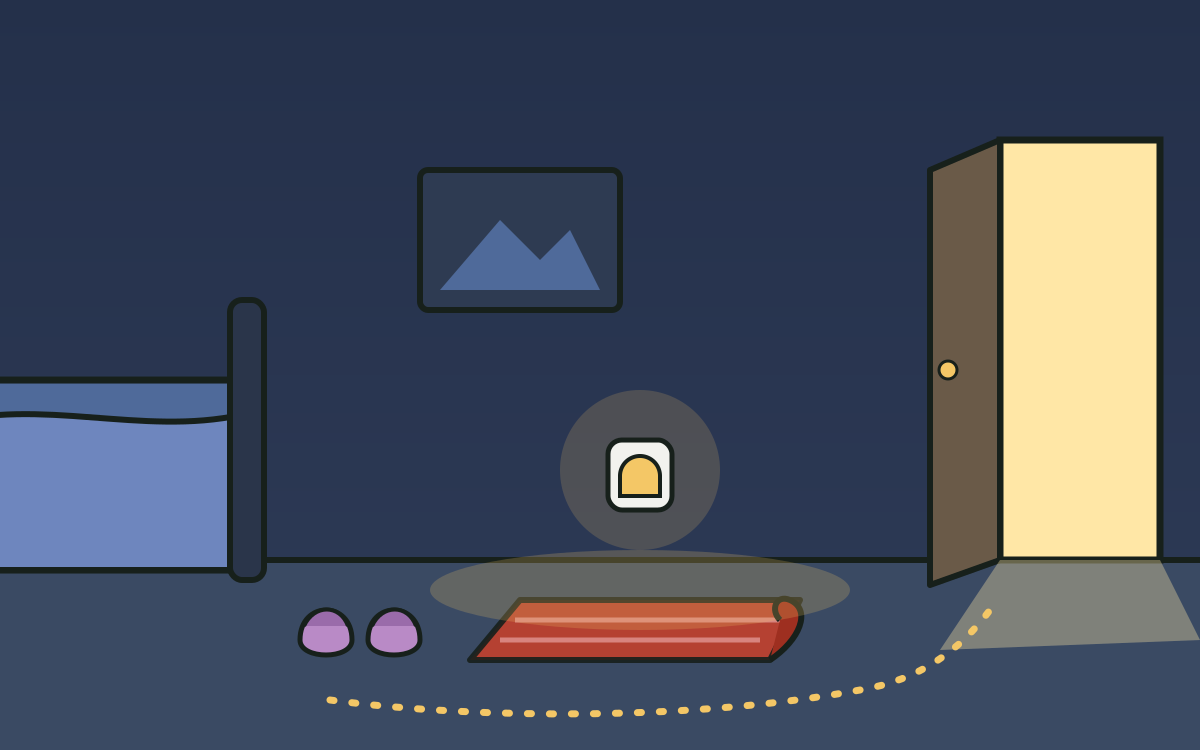
Night-time trips to the toilet make this worse. If you take anything sedating, make the route safe:
- a night light in the hallway or bathroom;
- no loose rugs or cables on the way;
- a lamp you can reach from bed;
- a phone with emergency numbers by the bed;
- fewer drinks late in the day, so you get up less often.
Never stop a sleeping pill you’ve taken for a long time all at once. Ask your GP how to reduce it gradually.
Avoid antihistamine sleep aids in older age
Many over-the-counter sleep aids in UK pharmacies contain a sedating antihistamine, such as diphenhydramine or promethazine. The Beers Criteria advise older adults to avoid these medicines. They’re highly anticholinergic (they block a nerve messenger called acetylcholine), and the body clears them more slowly with age. Tolerance builds when they’re used for sleep. They can cause confusion, dry mouth and constipation. Long-term exposure to anticholinergic medicines is linked to falls, delirium and dementia.
Pharmacy sleep aids shouldn’t be taken for more than 1–2 weeks, the NHS adds, and they can make you drowsy, which matters if you drive. If you already take other medicines, list them with our medicines list for your GP before buying anything for sleep.
Melatonin for the elderly: what’s licensed in the UK
In the UK melatonin is a prescription-only medicine. The NHS says it’s mainly used for short-term sleep problems in people aged 55 and over. The licensed product is a 2 mg prolonged-release tablet for primary insomnia from the age of 55. You take it 1–2 hours before bedtime, after food, for up to 13 weeks. Swallow it whole: crushing it spoils the slow release.
How much it helps, according to the product’s trials:
In a 3-week trial, people taking it reported falling asleep 24.3 minutes faster, against 12.9 minutes on placebo. Sleep quality and morning alertness both clearly improved in 26% of them, against 15% on placebo. In a sleep-lab study, it shortened the time to fall asleep by 9 minutes compared with placebo. That’s real, but modest. Points to know before you ask your GP:
- older people clear melatonin more slowly, so blood levels run higher than in younger adults;
- melatonin can add to the effect of zopiclone, zolpidem and benzodiazepines;
- the antidepressant fluvoxamine raises melatonin levels sharply, so the product information advises caution;
- don’t combine it with herbal sleep remedies, says the NHS, as you may get very drowsy;
- tell your GP if you have liver or kidney problems or an autoimmune condition.
Supplements sold on iHerb aren’t the same as the licensed tablet: doses and release vary, and they may not ship to the UK. Elsewhere in Europe the rules differ by country: some allow low-dose melatonin in food supplements, others treat it as a medicine. Our melatonin and sleep supplements guide covers doses and quality.
Magnesium and L-theanine: modest evidence
| Option | What the evidence shows | Caution after 60 |
|---|---|---|
| CBT for insomnia | First-line treatment for long-term insomnia (NICE) | Ask your GP about local access |
| Melatonin 2 mg prolonged-release | Falls asleep a little faster; licensed from 55 | Prescription only in the UK; up to 13 weeks |
| Magnesium | 3 small trials in 151 older adults: about 17 minutes faster to sleep; low-quality evidence | Not with kidney disease unless your GP agrees |
| L-theanine | Small trials, mostly 200 mg a day; modest effect | Ask first if you take sedatives |
| Z-drugs, benzodiazepines | Small gains in sleep | Falls, fractures, confusion; short courses only |
| Sedating antihistamines | Tolerance builds quickly | Best avoided after 65 |
Magnesium is cheap and gentle in the glycinate form, but don’t expect a sleeping pill. With kidney disease, magnesium can build up; see supplements and kidney disease. L-theanine, an amino acid from tea, may take the edge off a busy mind. Our L-theanine guide has the trial details. Glycine, another mild option, has only small Japanese studies behind it; see glycine for sleep.
When to see your GP
- Trouble sleeping for months, or it’s affecting how you cope with daily life.
- Loud snoring with pauses in breathing: possible sleep apnoea. Untreated, it can lead to heart problems, and it has its own treatment, such as a CPAP machine.
- An urge to move your legs in the evening: possible restless legs. Treatment with iron (if a blood test shows you need it) or medicines usually helps, so see your GP before buying iron.
- Low mood, worry or pain keeping you awake.
- You’ve been on sleeping pills for more than a few weeks.
How to choose a sleep supplement on iHerb after 60
- Fix the basics and try CBTi first; a supplement is an extra, not the treatment.
- Choose one single-ingredient product, not a “sleep complex” with several herbs.
- Avoid products with diphenhydramine or doxylamine: they’re medicines, not supplements.
- Check your medicines for sedatives, and show the label to your pharmacist.
- Give it 2–4 weeks, keep the sleep diary going and stop if nothing changes.
For more on sleep and stress, see our sleep and stress section, and for everyday supplements after 50, read vitamins for over 50s.
Bottom line: what to choose
Racing thoughts at bedtime
L-theanine 200 mg
Not a sleeping pill; ask first if you take sedatives
L-theanine on iHerbLittle magnesium in your diet, healthy kidneys
Magnesium glycinate in the evening
Evidence for sleep is weak; gentle on the stomach
Magnesium on iHerbWant a mild option to try
Glycine powder
Small Japanese studies; easy to measure as powder
Glycine on iHerbButtons lead to selections of the right form on iHerb. These are affiliate links; your price doesn't change.
FAQ
Is it normal to sleep less after 60?
Older adults need about the same 7–9 hours as younger adults, but they tend to go to bed and wake earlier, and sleep becomes shorter and lighter with more waking. If you feel fine during the day, that’s usually normal. If you’re tired, irritable or can’t concentrate, talk to your GP.
What is the best treatment for insomnia in older adults?
For long-term insomnia, CBT for insomnia (CBTi) is the first-line treatment, according to NICE. It’s offered face to face or as a digital programme. Sleeping pills are only for a few days or weeks when insomnia is severe.
Can elderly people take melatonin in the UK?
In the UK melatonin is prescription only. It’s mainly used for short-term sleep problems in people aged 55 and over: a 2 mg prolonged-release tablet 1–2 hours before bed, after food, for up to 13 weeks. Ask your GP.
Are over-the-counter sleeping tablets safe for older people?
Many contain sedating antihistamines such as diphenhydramine or promethazine. The American Geriatrics Society advises older adults to avoid them: they can cause confusion, constipation and next-day drowsiness and add to the risk of falls. The NHS says pharmacy sleep aids shouldn’t be used for more than 1–2 weeks.
Does magnesium help older people sleep?
Possibly a little. A review of 3 small trials in 151 older adults found people fell asleep about 17 minutes faster than on placebo, but the evidence was low quality. If you have kidney disease, don’t take magnesium without your GP’s agreement.
Why do I wake up at 4 am every morning?
Earlier waking is a common age-related change. It can also come from napping late in the day, alcohol, caffeine, pain, low mood or a medicine. A two-week sleep diary helps you and your GP spot the pattern.
Sources
- NHS. Insomnia
- NHS. About melatonin
- EMC. Circadin 2 mg prolonged-release tablets – Summary of Product Characteristics
- NICE TA922. Daridorexant for treating long-term insomnia – Committee discussion (CBTi as first-line treatment)
- National Institute on Aging. Sleep and Older Adults
- American Geriatrics Society. 2023 Updated AGS Beers Criteria for Potentially Inappropriate Medication Use in Older Adults. J Am Geriatr Soc, 2023
- Mah J, Pitre T. Oral magnesium supplementation for insomnia in older adults: a systematic review and meta-analysis. BMC Complement Med Ther, 2021
Sleep after 60 at a glance
For adults over 60, based on NHS, NICE, NIA and the AGS Beers Criteria
- Sleep needed
- 7–9 hours, about the same as younger adults (NIA)
- Long-term insomnia, first treatment
- CBT for insomnia (CBTi)
- Sleeping pills
- a few days to a few weeks at most
- Sedating antihistamines
- best avoided after 65: confusion and falls
- Melatonin in the UK
- prescription only; 2 mg slow-release licensed from 55
- Magnesium, L-theanine
- small trials, modest effects
Loud snoring with pauses in breathing, or restless legs at night, need a GP rather than a supplement.
Shop L-theanine on iHerbSmall trials, modest effect; check with your GP if you take sedatives
Contents
- Sleep over 60: what’s a normal change
- Insomnia in older adults: when it’s more than ageing
- CBT for insomnia comes first
- Sleeping pills and falls: why they’re used sparingly
- Avoid antihistamine sleep aids in older age
- Melatonin for the elderly: what’s licensed in the UK
- Magnesium and L-theanine: modest evidence
- When to see your GP
- How to choose a sleep supplement on iHerb after 60