Supplement cost per day calculator: compare bottles by cost per serving
This article contains affiliate links to iHerb. If you buy through them, we earn a commission at no extra cost to you. It doesn't affect which forms we recommend. Learn more
A 180-capsule bottle isn't always better value than a 120-capsule one: it depends on how many capsules make up your dose. This calculator turns the bottle price into the cost of one day and one month, so you can compare supplements fairly.
What the cost per day calculator works out
The calculator divides the capsules in the bottle by the capsules you take a day to find how many days the bottle lasts. It then divides the price by those days. That gives the cost of one day, and multiplied by 30, the approximate cost of a month.
Bottles differ in capsule count, serving size and the dose in each capsule. The price per bottle hides all of that. Two bottles at the same price can differ twofold in what a day of use costs.
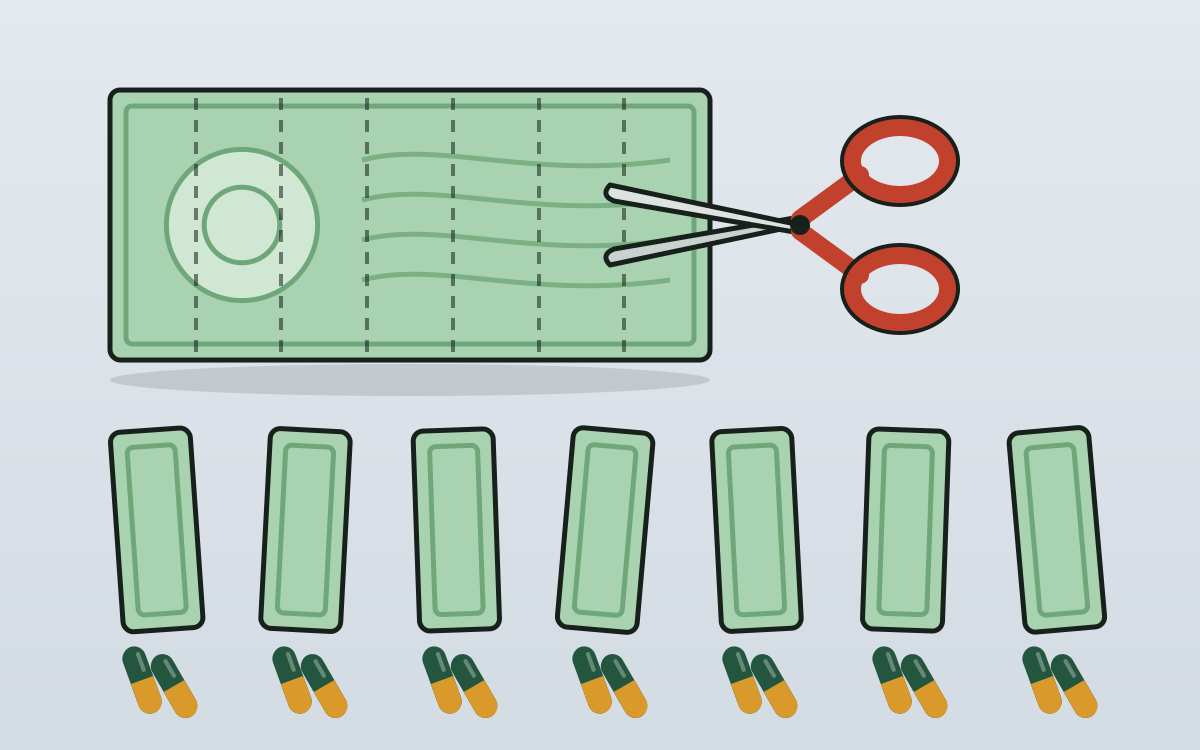
How to compare supplement cost per serving
Compare bottles at the same daily dose of the active ingredient, not the same number of capsules. An example with made-up prices for magnesium, when you want 200 mg a day:
| Bottle A | Bottle B | |
|---|---|---|
| Bottle price (example) | £15 | £17 |
| Capsules per bottle | 120 | 180 |
| Magnesium per capsule | 100 mg | 50 mg |
| Capsules for 200 mg | 2 | 4 |
| Lasts | 60 days | 45 days |
| Cost per day | £0.25 | £0.38 |
Bottle B is cheaper per capsule but dearer per day. To get the cost per dose, divide the cost per day by the dose: bottle A works out at about £0.13 per 100 mg of magnesium.
The magnesium example, step by step
The two bottles from the table above, for 200 mg of magnesium a day. Tap a step
Start with the dose, not the bottle
Decide how much of the active ingredient you need a day. Here it's 200 mg of magnesium.
- The label serving is the manufacturer's maximum, not necessarily your dose
Capsules for that dose
Find the magnesium per capsule in the Supplement Facts.
- Bottle A: 100 mg per capsule – 2 a day
- Bottle B: 50 mg per capsule – 4 a day
How long the bottle lasts
Divide the capsules in the bottle by the capsules a day.
- Bottle A: 120 ÷ 2 = 60 days
- Bottle B: 180 ÷ 4 = 45 days
What a day costs
Divide the bottle price by the days. The prices are made up.
- Bottle A: £15 ÷ 60 = £0.25
- Bottle B: £17 ÷ 45 = £0.38
- B is cheaper per capsule but dearer per day
Will you finish it in time?
Check the days against the expiry date. Omega-3, probiotics and liquid vitamins go off sooner, and a big bottle you can't finish costs more in the end.
How to use the calculator
- Decide the dose of the active ingredient you need, for example 200 mg of magnesium, 10 mcg of vitamin D or 500 mg of EPA+DHA.
- Use the Supplement Facts panel to see how many capsules give that dose. The label serving is the maximum the manufacturer recommends, not necessarily your dose.
- Enter the bottle price, the capsules in it and how many you’ll take a day.
- Note the cost per day and repeat for a second and third bottle.
- Any currency works: the formula is the same whether you enter pounds, euros or dollars.
Which bottle is really cheaper?
Enter the price in pounds, the capsules in the bottle and how many you take a day
0.30 £ a day
What one day's dose costs
The bottle lasts 60 days, which works out at about £9.00 a month
Compare on iHerbCompare bottles at the same daily dose of active ingredient, not the same number of capsules.
How to read the result
| What the calculator shows | Where | How to use it |
|---|---|---|
| Cost per day | The big number | The main figure for comparing bottles |
| Days the bottle lasts | The line below | Check it against the expiry date |
| Cost per month | The line below | For budgeting and planning your order |
If the bottles have different doses per capsule, first adjust capsules per day so both give the same dose. Otherwise you’re comparing different amounts of the nutrient.
Don’t skip the “days the bottle lasts” line. A 180-day pot with four months left before its expiry date is money heading for the bin.
When cheaper isn’t better value
- Bottles of 50 mg zinc, 5,000 IU vitamin D3 and “B-50” complexes are cheaper per milligram, but their doses are above the safe daily limit. NIH ODS points out that taking more than you need costs more and may raise the risk of side effects.
- Magnesium oxide is cheaper per milligram than glycinate but more likely to loosen stools.
- A typical 1,000 mg fish oil softgel has only 300 mg of EPA+DHA, so you need two for 500 mg. Compare fish oils by the cost per gram of EPA+DHA.
- Omega-3, probiotics and liquid vitamins go off sooner. A big bottle you can’t finish in time costs more in the end.
- Products with USP, NSF or IFOS seals can cost more, but an independent lab has checked what’s inside.

Limits of the calculator
- It doesn’t check whether a dose is safe. Use the zinc calculator and the B6 checker for that.
- It doesn’t include delivery or import VAT. Our iHerb VAT and duty calculator covers UK and EU orders.
- If your doctor has set a dose, calculate the cost for that dose, not the label serving.
How to find the best-value bottle on iHerb
- Work out the dose you need from the nutrient guide, for example magnesium glycinate vs citrate or how to choose fish oil.
- Open two or three suitable bottles and find the dose per capsule and the serving size in the Supplement Facts.
- Count capsules a day for your dose and enter them in the calculator.
- Pick the bottle with the lowest cost per day whose expiry date is later than your last dose.
- Before you pay, read our guide to ordering from iHerb.
Every line of the panel is explained in our guide on how to read a supplement label.
Bottom line: what to choose
Buttons lead to selections of the right form on iHerb. These are affiliate links; your price doesn't change.
FAQ
How do I work out supplement cost per serving?
Divide the bottle price by the number of servings in it. Servings per container is printed on the Supplement Facts panel. If your daily dose isn’t the same as the label serving, work out capsules per day for your dose and use the calculator instead.
How do I compare supplements fairly on price?
Compare cost per day at the same daily dose of the active ingredient. Use the Supplement Facts panel to see how many capsules give the dose you need, work out how many days the bottle lasts, and divide the price by those days.
Are bigger bottles better value?
Often, but not always. A bigger bottle may have less active ingredient per capsule, so you need more capsules for the same dose. Omega-3, probiotics and liquid vitamins also have shorter shelf lives: don’t buy more than you’ll use before the expiry date.
Why is the serving size 2 or 4 capsules?
Under US labelling rules, a serving on the Supplement Facts panel is the maximum amount the manufacturer recommends. You may need less, so count capsules for your own dose rather than the label serving.
Should I include delivery and VAT?
Not when comparing bottles with each other. For your budget, yes: delivery and any import VAT are shared across everything in the order. Our iHerb VAT and duty calculator helps with UK and EU orders.
Sources
Cost per day at a glance
How to compare supplements on price
- Days per bottle
- capsules in bottle ÷ capsules a day
- Cost per day
- bottle price ÷ days
- Per month
- cost per day × 30
- Compare
- at the same dose of the active ingredient
- Label serving
- often 2–4 capsules
- Don't save by
- taking a dose above the upper limit
Currency doesn't matter: the maths is the same in pounds, euros or dollars.
Compare on iHerbOpen the Supplement Facts and count capsules for your dose