Gentle iron supplements: which iron is easiest on the stomach, and how to avoid constipation
This article contains affiliate links to iHerb. If you buy through them, we earn a commission at no extra cost to you. It doesn't affect which forms we recommend. Learn more
An iron course lasts months, and plenty of people give up because of nausea, constipation or stomach pain. This page sets out what the trials show really reduces side effects, what helps less than the marketing suggests, and which symptoms you shouldn't put up with.
Why iron tablets make you feel sick or constipated
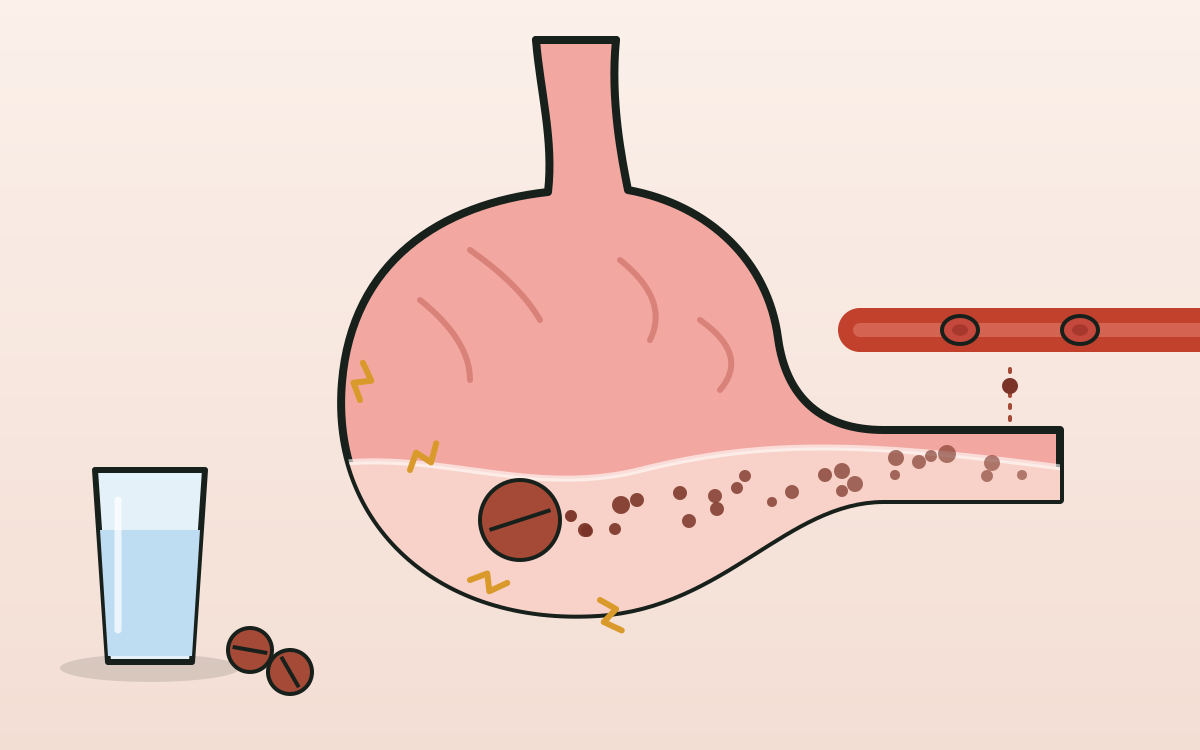
Your body absorbs only a small part of each iron tablet. In a study by Stoffel and colleagues, women with low iron stores absorbed 16–22% of the iron they took over a course. Everything else carries on through the gut. That unabsorbed iron irritates the lining, which is where the nausea, stomach pain, constipation or diarrhoea and the metallic taste come from.
How common is it? A 2015 meta-analysis pooled 43 trials with 6,831 adults. On ferrous sulphate, the odds of gut side effects were 2.3 times higher than on placebo. Across the trials, the authors found no clear link between dose and side effects. That doesn’t mean a lower dose can’t help you, only that “just take less” isn’t a sure fix.
This page is about tolerability only. Who needs iron, which forms exist and the basics of taking them are covered in our main guide to iron tablets. Any course should start with a ferritin test.
How much iron is in your tablet: dose matters more than the name
Prescription packs show the weight of the salt, while iHerb supplements usually state elemental iron. The British Society of Gastroenterology (BSG) gives these figures for UK products:
- ferrous sulphate 200 mg: 65 mg of iron;
- ferrous fumarate 210 mg: 69 mg, and the 322 mg tablet: 106 mg;
- ferrous gluconate 300 mg: 37 mg;
- ferric maltol: 30 mg per capsule;
- multivitamins with iron: up to 14 mg.
A 322 mg fumarate tablet carries more than seven times the iron of a multivitamin. In a study of older people with anaemia, cited by the BSG, 15 mg of iron a day raised haemoglobin as well as 50 or 150 mg did, with fewer side effects. That isn’t a reason to cut your own dose, but it’s a fair question for your GP if tablets disagree with you.
Taking iron every other day: what the trials show
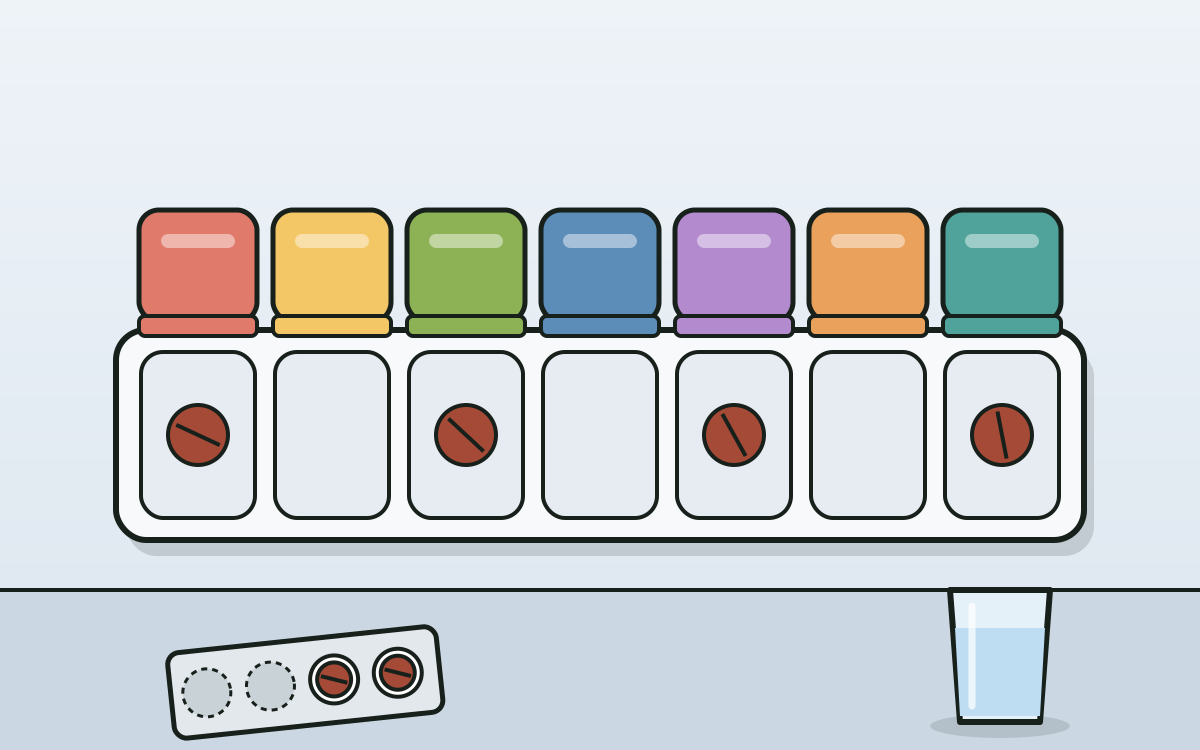
After a dose of iron your liver releases hepcidin, and for the next 24 hours iron is absorbed less well. Hence the idea of taking it on alternate days.
Stoffel, 2017 (Lancet Haematology). Forty women with ferritin of 25 µg/L or less took 60 mg of iron, either on 14 consecutive days or on alternate days for 28 days. Alternate days meant 21.8% of the iron was absorbed rather than 16.3%: 175 mg against 131 mg over the course. Splitting the daily dose into two didn’t improve absorption and pushed hepcidin up. In 2020 the same team found a similar result in women with anaemia, described in our iron tablets guide.
von Siebenthal, 2023 (EClinicalMedicine). 150 women with ferritin of 30 µg/L or less took the same total dose: 100 mg daily for 3 months, or 100 mg every other day for 6 months. Ferritin ended up the same. On iron days, gut complaints were 1.56 times as frequent on the daily schedule. Alternate days brought less nausea, less diarrhoea and much less stomach pain, which was 2.5 times as frequent on daily dosing. For constipation the authors found no clear difference. At 6 months, 11.4% of the daily group were still iron deficient, against 3.0% of the alternate-day group.
The price is time: reaching the same total dose takes twice as long. In one trial cited by the BSG, 60 mg twice a day raised haemoglobin faster than 120 mg on alternate days, although there was less nausea on the alternate-day plan. With severe anaemia, your GP may choose speed over comfort.
Iron bisglycinate vs ferrous sulphate: what the trials found
Bisglycinate is the most common “gentle” form on iHerb. There’s more data on it than on other alternatives, but less than you’d hope.
| Form | What trials found | What it means for you |
|---|---|---|
| Ferrous sulphate | More gut side effects than placebo (43 trials) | The standard treatment; if it disagrees with you, the dose or schedule changes first |
| Ferrous bisglycinate | In pregnancy, about a third as many gut complaints and higher haemoglobin; in children, no difference in haemoglobin or ferritin | A sensible option, especially in pregnancy; weak evidence for everyone else |
| Iron polysaccharide complex | In children aged 9–48 months, haemoglobin rose less than on sulphate and diarrhoea was more common: 58% vs 35% | No proof it’s gentler |
| Modified-release tablets | Don’t improve absorption or reduce side effects | The BSG advises against them |
Fischer’s 2023 review of bisglycinate included 17 trials. In pregnant women, the rate of gut complaints was 0.36 of that on other iron forms. Men and non-pregnant women had only 4 trials between them, and the authors described these without pooling them.
The NHS makes a practical point: a side effect with one type of iron may not happen with another. The BSG is more cautious. It says swapping one traditional salt for another (sulphate, fumarate, gluconate) isn’t supported by evidence, and it lists alternate days, ferric maltol or an infusion as the options. Changing form is worth discussing, just not as the first or only step.
With food or on an empty stomach: finding the trade-off
Iron is absorbed best on an empty stomach, 30 minutes before a meal or 2 hours after. With meals, the BSG says, up to 75% less gets through. Even so, the NHS is clear that you can take the tablet with or just after food if it upsets your stomach.
Some of the iron you actually swallow beats a full dose left in the cupboard after week two. Keep tea, coffee, dairy and eggs 2 hours away either way.
Liquid iron: who it suits and how to take it
Drops and syrups help if you struggle to swallow tablets. NHS rules for them:
- measure with the syringe or dropper from the pack, not a kitchen teaspoon;
- rinse your mouth with water afterwards, because drops can stain teeth black;
- don’t suck or chew iron tablets either, as that can cause mouth ulcers or staining.
Strengths vary. UK ferrous sulphate drops contain 25 mg of iron per ml; ferrous fumarate syrup has 45 mg per 5 ml. Work out your dose from the label before the first spoonful.
Iron tablets and constipation: what to do for each symptom
NHS tips for the common side effects:
- Constipation: more fibre from fruit, vegetables and cereals, plenty of water and regular exercise such as a daily walk. Our page on fibre has more.
- Feeling sick: take the tablet with or after a meal and stick to simple food, nothing rich or spicy.
- Heartburn or discomfort: eat slowly, with smaller, more frequent meals.
- Diarrhoea: drink plenty, and don’t take anti-diarrhoea medicines without asking a pharmacist or doctor first.
If the tips don’t help or a symptom won’t go away, talk to your GP or pharmacist rather than putting up with it. Pick your symptom in the card below.
What's bothering you on iron
Pick a symptom to see what you can try and when to see your GP. NHS advice and trial data
My symptom
What to try
Take it with or after food
You'll absorb less, but you'll stay on the course. Keep meals simple, nothing rich or spicy. In a trial, alternate-day dosing clearly reduced nausea.
Ask your GP about: switching to alternate days
What to try
Fibre, water and moving more
Fruit, vegetables, cereals, plenty of water and a daily walk. Alternate days didn't reduce constipation in the trial, and bisglycinate isn't a sure fix either.
Ask your GP about: a lower dose or another form if it doesn't settle
What to try
With food, in smaller meals
Take iron with or just after a meal, eat slowly and little and often. In the trial, stomach pain was 2.5 times as frequent on daily dosing as on alternate days.
Ask your GP about: alternate days or another form
What to try
Drink plenty
Water or squash will stop you getting dehydrated. Don't take anti-diarrhoea medicines without asking a pharmacist or doctor.
Bloody diarrhoea or black, tar-like poo means calling a doctor or 111 straight away.
What to try
Usually normal
Darker poo on iron is unabsorbed iron and harmless in itself.
Black, sticky poo, red poo or blood: call a doctor or 111 straight away.
What to try
Rinse after liquid iron
Liquid iron can stain teeth. Rinse your mouth with water straight after a dose, and don't suck or chew tablets.
Ask your GP about: the dose in ml if you switch to a liquid
Black poo from iron tablets: when it’s normal
Darker poo is common with iron and usually nothing to worry about, the NHS says. It’s the unabsorbed iron.
Call a doctor or 111 straight away if:
- your poo is black and tar-like (sticky and shiny);
- it’s red, or there’s blood in or on it;
- you feel unwell in any other way.
Swelling of the lips, tongue or throat, difficulty breathing or sudden confusion after a dose are signs of a serious allergic reaction. Call 999.
Iron tablets over the counter in the UK, and when to see a GP
According to the NHS, ferrous sulphate is available on prescription and to buy from pharmacies. The BSG adds that 200 mg tablets are sold over the counter and multivitamins with iron are on supermarket shelves. Being easy to buy doesn’t make a treatment dose safe without a diagnosis.
See your GP first, or go back, if:
- you haven’t had a blood test yet: iron deficiency has a cause that needs finding;
- you don’t feel better after 3–4 weeks, which is when most people notice a change;
- side effects carry on despite the tips above: the BSG suggests iron infusions when tablets don’t work or aren’t tolerated;
- you’re pregnant: your midwife or GP sets the dose, see our page on pregnancy vitamins;
- you have haemochromatosis, thalassaemia or another blood condition, a stomach ulcer or bowel disease such as IBD: the NHS says to tell your doctor before taking iron;
- you take other medicines, such as levothyroxine, antacids or antibiotics like doxycycline or ciprofloxacin: ask your pharmacist how far apart to take them.
Children are a special case. Their dose depends on age, weight and blood results, and an iron overdose in a young child can be fatal. Keep iron out of sight and reach, never on the kitchen worktop. If a child swallows any, call 111 straight away. Call 999 if they vomit blood, have a fit or can’t be woken. Take the pack with you to A&E.
How to choose gentle iron on iHerb
- Get a ferritin test and a full blood count first. Without a confirmed deficiency, no iron is gentle enough to take.
- Ask your GP for your dose of elemental iron and whether alternate days would suit you.
- Find the “Iron (as …)” line on the label: that’s elemental iron. Our guide on how to read a supplement label covers the rest.
- If sulphate made you sick or caused stomach pain, ask your GP about bisglycinate, but don’t expect it to fix constipation.
- If tablets are hard to swallow, choose a liquid with a measuring syringe.
- Skip modified-release tablets bought for gentleness: the BSG says they don’t help.
- Store the bottle high up and closed, away from children’s vitamins.
Bottom line: what to choose
Pregnant and sulphate disagrees with you
Ferrous bisglycinate
Your midwife or GP sets the dose; trials in pregnancy found fewer gut complaints
Bisglycinate on iHerbTablets are hard to swallow
Liquid iron with a dosing syringe
Measure with the syringe and rinse your mouth afterwards
Liquid iron on iHerbKeeping stores up after a course, on your GP's advice
Low-dose iron
Below a usual treatment dose; only if your GP suggests it
15–18 mg iron on iHerbButtons lead to selections of the right form on iHerb. These are affiliate links; your price doesn't change.
FAQ
Which iron supplement is better tolerated?
There’s no clear winner. The amount of elemental iron and how often you take it matter most. In trials in pregnant women, bisglycinate caused fewer gut complaints than other forms, but large comparisons in other adults are scarce.
Iron bisglycinate vs ferrous sulphate: which is gentler?
A review of 17 trials found about a third as many gut complaints with bisglycinate in pregnant women. In children, haemoglobin and ferritin rose no differently, and there are too few trials in non-pregnant adults to draw a conclusion. Ferrous sulphate and the other traditional salts remain the standard UK treatment.
How do I stop iron tablets causing constipation?
The NHS suggests more fibre from fruit, vegetables and cereals, plenty of water and regular exercise such as a daily walk. Alternate-day dosing cut nausea and stomach pain in a trial, but not constipation. If it persists, ask your GP about a lower dose or another form.
Is taking iron every other day better?
It can be, if your GP agrees. The British Society of Gastroenterology suggests one tablet every other day when daily tablets aren’t tolerated. In trials, iron was absorbed better and caused less nausea on alternate days, but the course takes longer to reach the same total dose.
Can I buy iron tablets over the counter in the UK?
Yes. The NHS says ferrous sulphate is available on prescription and to buy from pharmacies. The BSG adds that multivitamins with up to 14 mg of iron are sold in supermarkets. Treatment doses still need a blood test first, because iron deficiency always has a cause your GP should find.
Is black poo from iron tablets normal?
Usually, yes: darker poo is common with iron and nothing to worry about. If it’s black and tar-like, red, or has blood in or on it, call a doctor or 111 straight away.
Sources
- NHS. Ferrous sulfate: medicine for iron deficiency anaemia (how to take, side effects)
- Snook J et al. British Society of Gastroenterology guidelines for the management of iron deficiency anaemia in adults. Gut, 2021
- Stoffel NU et al. Iron absorption from oral iron supplements given on consecutive versus alternate days and as single morning doses versus twice-daily split dosing in iron-depleted women. Lancet Haematology, 2017
- von Siebenthal HK et al. Alternate day versus consecutive day oral iron supplementation in iron-depleted women: a randomized double-blind placebo-controlled study. EClinicalMedicine, 2023
- Fischer JAJ et al. The effects of oral ferrous bisglycinate supplementation on hemoglobin and ferritin concentrations in adults and children: a systematic review and meta-analysis. Nutrition Reviews, 2023
- Tolkien Z et al. Ferrous sulfate supplementation causes significant gastrointestinal side-effects in adults: a systematic review and meta-analysis. PLoS One, 2015
- Powers JM et al. Effect of low-dose ferrous sulfate vs iron polysaccharide complex on hemoglobin concentration in young children with nutritional iron-deficiency anemia. JAMA, 2017
Iron tolerability at a glance
Based on the NHS, the BSG and clinical trials
- Why side effects happen
- unabsorbed iron irritates the gut
- Ferrous sulphate vs placebo
- 2.3 times the odds of gut side effects
- Alternate days
- less nausea and stomach pain, no less constipation
- Bisglycinate
- fewer gut complaints in pregnancy; little data otherwise
- With food
- gentler, but up to 75% less is absorbed
- Black poo
- usually normal; tarry or bloody needs a doctor
Your GP sets the treatment dose, form and schedule after a blood test.
Browse bisglycinate on iHerbAgree any change of form or schedule with your GP
Contents
- Why iron tablets make you feel sick or constipated
- How much iron is in your tablet: dose matters more than the name
- Taking iron every other day: what the trials show
- Iron bisglycinate vs ferrous sulphate: what the trials found
- With food or on an empty stomach: finding the trade-off
- Liquid iron: who it suits and how to take it
- Iron tablets and constipation: what to do for each symptom
- Black poo from iron tablets: when it’s normal
- Iron tablets over the counter in the UK, and when to see a GP
- How to choose gentle iron on iHerb