Magnesium citrate: benefits, dosage, constipation and how it compares with glycinate
This article contains affiliate links to iHerb. If you buy through them, we earn a commission at no extra cost to you. It doesn't affect which forms we recommend. Learn more
Citrate is the most common form of magnesium: it dissolves well, costs little and has a mild laxative effect. That last point helps some people and bothers others. Below: what it's good for, how much to take, and when glycinate is the better choice.
What magnesium citrate is
Magnesium citrate is a salt of magnesium and citric acid. It dissolves well in water, so it comes as capsules, tablets and powders to mix into a drink. Forms that dissolve well tend to be absorbed more completely, and small studies suggest citrate is absorbed better than magnesium oxide.
Magnesium makes up only part of the compound’s weight:
- about 16% in anhydrous magnesium citrate;
- about 11–12% in hydrated forms.
On labels, the anhydrous salt may appear as trimagnesium citrate or magnesium citrate anhydrous, and the hydrate as magnesium citrate nonahydrate. If the form isn’t stated, assume the lower figure.
So “magnesium citrate 1,000 mg” means roughly 110–160 mg of actual magnesium. Reputable brands list elemental magnesium in the Supplement Facts panel, with the form in brackets: “Magnesium (as magnesium citrate) 200 mg”. That’s the number to go by. For how citrate compares with every other form, see types of magnesium compared.

Magnesium citrate benefits: what it’s good for
Magnesium helps turn food into energy and supports normal muscle and nerve function. The NHS says adults aged 19–64 need 300 mg a day (men) and 270 mg (women); EFSA’s figures are 350 mg and 300 mg. Most of that should come from food.
Citrate makes sense if:
- you eat few nuts, seeds, beans and wholegrains;
- you’ve taken proton pump inhibitors (such as omeprazole) or diuretics for a long time, which increase magnesium losses;
- you’re prone to constipation and a mild laxative effect would help;
- you want an affordable form and don’t need glycinate for tolerability.
What not to expect: a noticeable effect on sleep, stress or energy if you already get enough magnesium. The evidence for magnesium and sleep is modest; our guide to sleep supplements covers it. Who is actually at risk, and why a blood test says little, is explained in magnesium deficiency symptoms.
Magnesium citrate for constipation
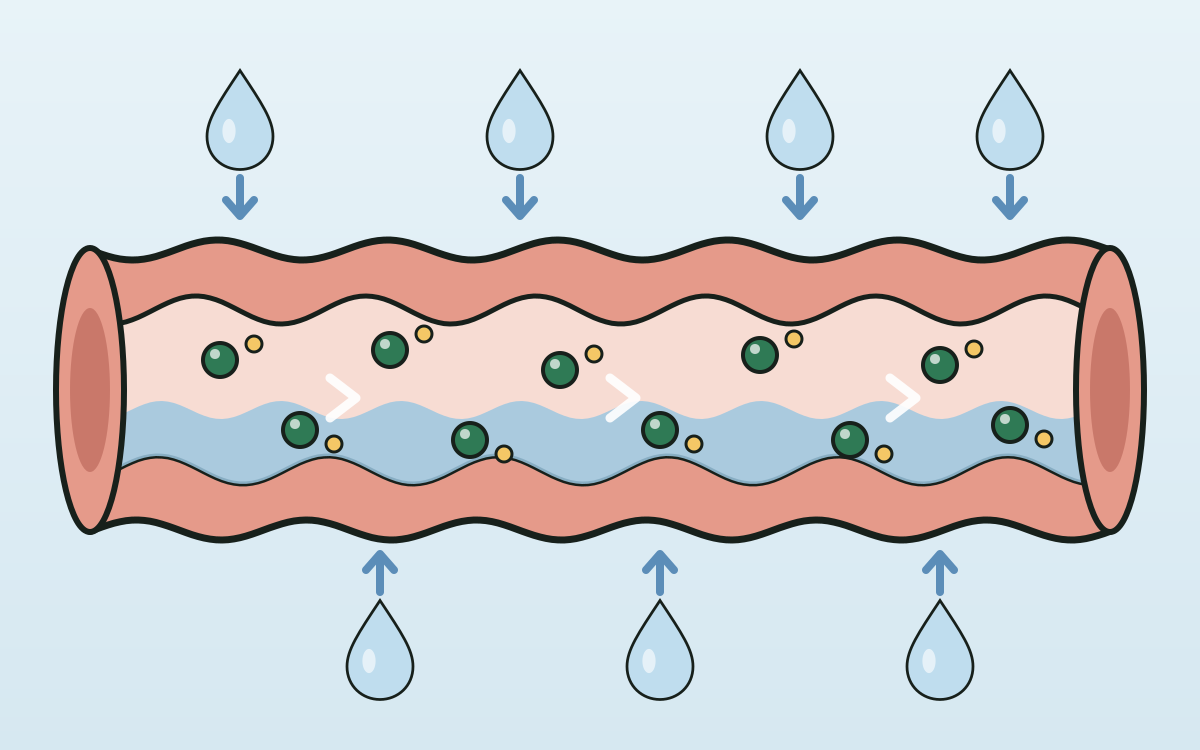
Magnesium salts are classic osmotic laxatives. Magnesium that isn’t absorbed draws water into the bowel and makes it move more. So looser stools on citrate aren’t an allergy or a sign of poor quality: they’re an expected effect of the dose.
Keep three things in mind:
- Laxative doses are higher than supplement doses. Magnesium laxatives contain several times more than a daily supplement, above the supplement upper limit.
- Short-term only. The NHS advises using laxatives for a short time; most start working within 3 days.
- Food and fluids first. Fibre, plenty of water and regular activity are the first steps for constipation.
See a GP if:
- constipation isn’t improving with treatment or keeps coming back;
- there’s blood in your poo;
- you’re losing weight without trying or feel tired all the time;
- you’re often bloated or have tummy pain;
- your bowel habits have suddenly changed.
Magnesium citrate dosage and timing
| Goal | Elemental magnesium | How |
|---|---|---|
| Daily top-up from a supplement | 100–200 mg a day | With food, in one or two doses |
| Upper limit for supplements | 250 mg a day (EFSA); 400 mg or less unlikely to harm (NHS) | Magnesium from food doesn’t count |
| If citrate loosens your stools | Lower the single dose | Split it into 2 doses or switch to glycinate |
| Kidney disease | Only on medical advice | Magnesium can build up |
- Take it with food to reduce stomach upset.
- Keep each dose to 200 mg or less. Larger single doses are more likely to loosen stools, and the NHS notes that more than 400 mg for a short time can cause diarrhoea.
- Time of day barely affects absorption. If citrate affects your bowels, morning or daytime is easier.
- Stir powder into a glass of water and drink it straight away.
- Add in magnesium from multivitamins, electrolyte drinks and effervescent tablets.
Work out how much magnesium your product gives you a day:
How much magnesium you get a day
Choose the magnesium per capsule or scoop on your label and how many you take
200 mg magnesium a day
Elemental magnesium from the supplement
80% of EFSA's 250 mg limit for magnesium from supplements
Within the EU limit. If your stools loosen, lower the single dose
Magnesium citrate on iHerbUse the Magnesium line on the Supplement Facts panel, not the citrate weight. Food magnesium doesn't count. With kidney disease, only on medical advice.
Magnesium citrate powder vs capsules
| Powder | Capsules and tablets | |
|---|---|---|
| Dose | Easy to adjust: half a scoop, a full scoop | Fixed; a serving is often 2–4 capsules |
| Taste | Tart; may contain flavourings and sweeteners | None |
| Convenience | Needs water and a scoop | Easy to carry |
| Tolerability | You can start low | Harder to overdo |
| What to check | Sugar and sweeteners | Capsules per serving |
Powder suits you if you struggle to swallow capsules or want to find your dose gradually. Start with half a serving for a few days and increase only if your stools stay normal. Capsules are easier for the same dose every day: open the tub, take two, done.
Step by step, it looks like this:
Starting magnesium citrate without upsetting your gut
Five steps for capsules or powder. Tap a step for the details
Find the magnesium per serving
Read the Magnesium line on the Supplement Facts panel, not the citrate weight. 1,000 mg of citrate holds roughly 110–160 mg of actual magnesium.
- If the form isn't stated, assume the lower figure
- A capsule serving is often 2–4 capsules
Half a serving for the first few days
Begin with half a scoop or half the capsule serving. Increase only if your stools stay normal.
- Take it with food
- Stir powder into a glass of water and drink it straight away
Settle on 100–200 mg a day
That's enough for a top-up. Keep each dose to 200 mg or less.
- EFSA's limit for supplements is 250 mg a day; the NHS says 400 mg or less is unlikely to harm
- Magnesium from food doesn't count
Morning or daytime if it loosens stools
Time of day barely affects absorption. If citrate affects your bowels, morning or daytime is easier than bedtime.
- Tetracycline and quinolone antibiotics: 2 hours before or 4–6 hours after magnesium
- Bisphosphonates: at least 2 hours apart
Loose stools mean lower the single dose
It's an expected effect of the dose, not a sign of poor quality. Split the dose in two or switch to glycinate.
- Severe diarrhoea, weakness or an irregular heartbeat: stop and get medical advice

Magnesium citrate vs glycinate
There are almost no human trials comparing the absorption of citrate and glycinate directly, so choose by tolerability and purpose.
| Citrate | Glycinate | |
|---|---|---|
| Magnesium share | about 11–16% | about 14% |
| Gut effect | Mildly laxative, more so at higher doses | Gentle; less likely to loosen stools |
| Usually chosen for | Constipation, price, powders | Sensitive gut, evening use |
| Price per 100 mg magnesium | Usually lower | Usually higher |
If citrate gives you loose stools even at 100–200 mg, switch to magnesium glycinate. If you take a magnesium product with added vitamin B6, check the B6 dose: see magnesium and vitamin B6.
Side effects, who should avoid it and interactions
The most common side effects of magnesium supplements are loose stools, nausea and stomach cramps. EFSA’s 250 mg limit for supplements is based on mild diarrhoea. Serious magnesium excess is rare and usually linked to very large doses of laxatives or antacids, or to kidney disease.
Get medical advice before taking it if you:
- have kidney disease;
- take tetracycline or quinolone antibiotics: take the antibiotic at least 2 hours before or 4–6 hours after magnesium;
- take bisphosphonates for osteoporosis: separate by at least 2 hours;
- are pregnant or breastfeeding;
- want to give magnesium to a child: doses depend on age and weight, so ask a paediatrician.
Our vitamin compatibility chart shows which other supplements to keep apart. Severe diarrhoea, weakness or an irregular heartbeat mean you should stop and get medical advice.
How to choose magnesium citrate on iHerb
- Decide on the format: capsules for a fixed dose, powder for a flexible one.
- Find elemental magnesium per serving in the Supplement Facts and check how many capsules or scoops that serving is.
- Pick a strength that gives 100–200 mg of magnesium a day and keeps you within 250 mg from supplements.
- In powders, check for sugar, sweeteners and flavourings.
- Compare the price per 100 mg of elemental magnesium in £ or €, not per tub.
For telling compound weight from elemental magnesium, see our Supplement Facts guide.
Bottom line: what to choose
Topping up magnesium daily
Magnesium citrate capsules
100–200 mg magnesium with food
Citrate on iHerbButtons lead to selections of the right form on iHerb. These are affiliate links; your price doesn't change.
FAQ
What is magnesium citrate good for?
Topping up magnesium if your diet is low in it, and relieving occasional constipation. The NHS puts adult needs at 270–300 mg a day, mostly from food. Evidence that it helps sleep or stress in people who aren’t deficient is limited.
How much magnesium citrate should I take a day?
For a daily top-up, 100–200 mg of elemental magnesium is enough for most adults. EFSA sets 250 mg a day from supplements as the safe limit; the NHS says 400 mg or less is unlikely to cause harm. Laxative doses are higher and only for short-term use.
Does magnesium citrate help with constipation?
Yes, magnesium salts work as osmotic laxatives: unabsorbed magnesium draws water into the bowel. The NHS advises using laxatives only for a short time. See a GP if constipation keeps coming back, or if you notice blood, weight loss or tummy pain.
Is magnesium citrate or glycinate better?
Both are well absorbed, and there are almost no head-to-head trials. Glycinate is gentler on the gut and suits evening use. Citrate is cheaper, comes as a powder and suits people prone to constipation.
When is the best time to take magnesium citrate?
Timing makes little difference to absorption. Take it with food and keep single doses at 200 mg or less. If it loosens your stools, morning or daytime is usually more convenient than bedtime.
How much magnesium is in 1,000 mg of magnesium citrate?
About 110–160 mg of elemental magnesium, depending on whether it’s the anhydrous salt or a hydrate. Check the Magnesium line on the Supplement Facts panel, which shows the magnesium itself.
Sources
Magnesium citrate at a glance
For adults, based on NHS, EFSA and NIH ODS
- Magnesium share
- about 11–16% of the compound's weight
- Typical dose
- 100–200 mg elemental magnesium a day
- Supplement limit
- 250 mg (EFSA); 400 mg or less unlikely to harm (NHS)
- Effect on the gut
- mildly laxative, stronger at higher doses
- Forms
- capsules, tablets, powder
- Caution
- kidney disease, some antibiotics, bisphosphonates
The limits apply to magnesium from supplements and medicines only, not from food.
Shop citrate on iHerbCompare elemental magnesium per serving, not citrate weight