NAD+ and NMN supplements: what they are, what human trials show and where they're legal
This article contains affiliate links to iHerb. If you buy through them, we earn a commission at no extra cost to you. It doesn't affect which forms we recommend. Learn more
NMN and NR are sold as anti-ageing supplements because they raise NAD+ levels in cells. In people, that's mostly been shown in blood tests rather than in health outcomes. We cover the trials, how NMN differs from NR, where each is legal and whether they're worth the money.
What are NAD+, NMN and NR?
NAD+ (nicotinamide adenine dinucleotide) is a coenzyme, a helper molecule for enzymes. Every cell has it and needs it to get energy from food. Enzymes involved in repairing DNA also depend on it. Your body makes NAD+ itself, from vitamin B3 and the amino acid tryptophan.
Supplements usually contain not NAD+ but its precursors, which cells turn into NAD+:
- NMN, nicotinamide mononucleotide;
- NR, nicotinamide riboside, often labelled “nicotinamide riboside chloride”;
- nicotinamide and niacin, the classic, cheap and long-studied forms of vitamin B3.
EFSA describes NMN as a source of nicotinamide, in other words a form of vitamin B3. How much NAD+ from capsules of NAD+ itself reaches your cells is unknown: clinical trials mostly use NMN and NR.
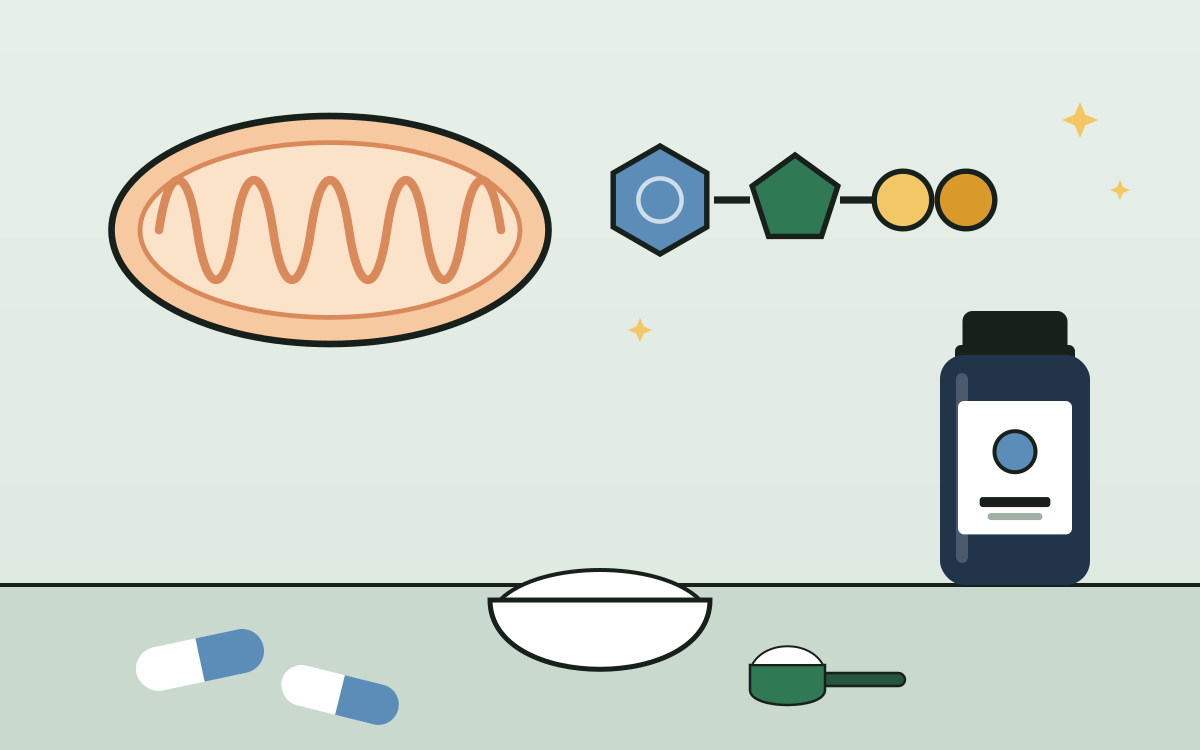
Why NMN is marketed as an anti-ageing supplement
In animal studies, NMN raised NAD levels, and the animals stayed healthy for longer and lived longer. That’s the basis of the anti-ageing marketing. But animal results don’t transfer neatly to people: human biology differs in many ways, and human trials last weeks rather than years.
NMN benefits: what human trials show
| Study | Who and how much | What it found |
|---|---|---|
| Randomised trial, 2023 | 80 healthy middle-aged adults; NMN 300, 600 or 900 mg a day for 60 days | Blood NAD rose in every NMN group; 6-minute walk and self-rated health were better than with placebo; insulin resistance didn’t change |
| Meta-analysis, 2024 | 8 trials, 342 adults; NMN 250–2,000 mg a day for 2–12 weeks | No benefit for blood sugar, insulin, HbA1c or cholesterol |
| Meta-analysis, 2025 | Older adults taking NMN or NR | NMN didn’t improve muscle mass, grip strength or walking speed; NR was linked to a longer walking distance in peripheral artery disease |
Points to weigh:
- the main proven effect is higher blood NAD, which is a lab value, not a health outcome;
- the trials are small and short, from 2 to 12 weeks;
- in the 2023 trial, some authors were employees of the chemical companies Abinopharm and ABA Chemicals;
- its “biological age” was worked out with an online calculator from blood tests, an estimate rather than a measure of ageing;
- there’s no evidence in people for longer life, protected memory or disease prevention.
The authors of the 2025 meta-analysis concluded that current evidence doesn’t support NMN or NR for preserving muscle in people over 60.
NMN, NR or NAD+: how they differ
Pick a compound to see what's known about it and its legal status
Compound
What's known
Nicotinamide mononucleotide: popular, thin evidence
It raises blood NAD levels. In a 60-day trial of 80 healthy adults, walking distance and self-rated health improved, but meta-analyses found no benefit for blood sugar, cholesterol or muscle in older adults.
Trials and rules: 250–2,000 mg a day for 2–12 weeks; in 2026 EFSA judged 300 mg a day safe for adults
As of October 2026 not authorised as a food in the UK or EU; since September 2025 the FDA no longer excludes it from US supplements.
What's known
Nicotinamide riboside: the one authorised in the UK and EU
It also raises NAD+. A 2025 meta-analysis found it didn't help preserve muscle mass or strength in older adults. In people with peripheral artery disease it was linked to a longer walking distance.
Trials and rules: EU authorisation: up to 300 mg NR chloride a day for adults; NR chloride is also on the GB register
What's known
NAD+ itself: the least data
NAD+ is a large molecule. How much of it reaches your cells from a capsule is unknown: clinical trials mostly use its precursors, NMN and NR.
What's known
Nicotinamide and niacin: the cheap, well-studied basis
NMN and NR are forms of vitamin B3. Niacin from ordinary food and multivitamins also feeds NAD+ production. B3 deficiency is rare if you eat a normal diet.
Trials and rules: EFSA upper limit for nicotinamide: 900 mg a day
What's known
No evidence it extends human life
The longevity data come from animals. Human trials are short and small, and their main outcome is blood NAD, not health.
Is NMN legal in the UK, EU and US?
| Where | NMN | NR |
|---|---|---|
| UK (Great Britain) | Not on the Food Standards Agency’s register of authorised novel foods | NR chloride is on the register, with the same limits as in the EU |
| EU | A novel food that needs authorisation. In May 2026 EFSA judged synthetic NMN safe at up to 300 mg a day for adults. As of October 2026 we found no Commission decision authorising it | Authorised in food supplements since 2020: up to 300 mg NR chloride a day, or 230 mg in pregnancy and breastfeeding |
| USA | In late 2022 the FDA said NMN was excluded from supplements because it had been authorised for study as a drug first. On 29 September 2025, answering a petition from two industry groups, the FDA reversed this: NMN is no longer excluded, because it was on sale as a supplement as early as 2017, before the drug research was authorised | Sold as a supplement |
Until the European Commission issues an authorisation, NMN can’t legally be sold as a food in the EU. After EFSA’s positive opinion, that decision may come soon, so check the current rules where you live before ordering.
How much NMN or NR to take
There’s no official dose: neither NMN nor NR is an essential nutrient, since your body also makes NAD+ from ordinary vitamin B3. Trials and regulators give some reference points:
| Compound | What’s known about the dose |
|---|---|
| NMN | Trials used 250–2,000 mg a day; EFSA judged 300 mg a day safe for adults |
| NR | The EU allows up to 300 mg NR chloride a day, or 230 mg in pregnancy and breastfeeding |
In the 2023 trial NMN was taken once a day. Blood NAD rose even at 300 mg, but more at 600 and 900 mg. Higher doses cost more and have less safety data, so it’s sensible to stay at or below 300 mg a day.
Here are those limits side by side:
NMN is often sold in “longevity” blends with resveratrol. We found no convincing evidence that such combinations help people.
Safety: who shouldn’t take NMN or NR
In the 2023 trial, NMN was well tolerated over 60 days with no serious side effects, even at 900 mg a day. There’s no data on use beyond a few months.
EFSA looked at NMN in more detail in 2026:
- 300 mg of NMN provides about 110 mg of nicotinamide, roughly five times the adult reference intake for niacin but below the 900 mg upper limit for nicotinamide;
- at high doses, rats showed changes in reproductive organs, but EFSA judged the safety margin at 300 mg a day to be enough;
- its conclusion applies to adults only, excluding pregnant and breastfeeding women.

Don’t take NMN or NR if:
- you’re pregnant or breastfeeding: NMN hasn’t been assessed for this, and while the EU allows NR at up to 230 mg a day, it has no proven benefit;
- it’s for a child or teenager;
- you’re being treated for cancer, unless your oncologist agrees: there’s no safety data.
If you take medicines or have long-term liver or kidney disease, talk to your GP first. Nicotinamide adds up across products, so check how much vitamin B3 is already in your B complex or multivitamin.
Price vs evidence
With NMN and NR you pay for one proven result: higher NAD in your blood. Before buying, work out the cost of a daily dose with our cost-per-day calculator and weigh it against what you’d actually get.
If you have a specific goal, there are better-studied options:
- strength and muscle: creatine monohydrate alongside resistance training;
- constant tiredness: get tested first for iron, vitamin B12 and thyroid function;
- memory: see the options in our brain and memory section.
Not sure what you need? Try our vitamin check.
How to choose NMN or NR on iHerb
- Check it’s legal where you live: NR is authorised in the UK and EU; NMN isn’t yet.
- Check the dose: no more than 300 mg NR chloride a day (the EU limit) or 300 mg NMN a day (EFSA’s safety assessment).
- Choose a single-ingredient product rather than a “longevity” blend with resveratrol and herbs.
- Add up your total nicotinamide, including any multivitamin.
- Prefer products with independent quality testing (USP, NSF or similar seals).
- Review honestly after 2–3 months. If nothing has changed, there’s no point carrying on.
Bottom line: what to choose
You want to try an NAD+ booster
Nicotinamide riboside (NR)
Authorised in the UK and EU; EU limit 300 mg a day
NR on iHerbYour goal is strength and muscle
Creatine monohydrate
Far better studied than NMN or NR
Creatine on iHerbButtons lead to selections of the right form on iHerb. These are affiliate links; your price doesn't change.
FAQ
What are the benefits of NMN supplements?
NMN reliably raises NAD levels in the blood. One 60-day trial found better walking distance and self-rated health, but meta-analyses found no benefit for blood sugar, cholesterol, muscle mass or strength. There’s no evidence that it extends human life.
Is NMN legal in the UK?
NMN is not on the Food Standards Agency’s register of authorised novel foods (latest update March 2026), so it isn’t authorised for sale as a food or supplement in Great Britain. Nicotinamide riboside chloride (NR) is on the register.
What's the difference between NMN, NR and NAD+?
NAD+ is the coenzyme your cells use. NMN and NR are precursors that cells turn into NAD+, and both are forms of vitamin B3. Most trials use NMN or NR; how much NAD+ from a capsule of NAD+ itself reaches your cells is unknown.
Is NMN safe?
In a trial of 80 adults over 60 days, there were no serious side effects, even at 900 mg a day. In 2026 EFSA judged 300 mg a day safe for adults, except during pregnancy and breastfeeding. There’s no data on use beyond a few months.
Is NMN better than NR?
There are almost no head-to-head trials in people. Both raise blood NAD, and neither has a proven health benefit. The practical difference is legal: NR is authorised as a food in the UK and EU, while NMN wasn’t as of October 2026.
Sources
- FDA. Response Letter to Natural Products Association and Alliance for Natural Health USA, docket FDA-2023-P-0872 (29 Sept 2025)
- EFSA NDA Panel. Safety of beta-nicotinamide mononucleotide (β-NMN) pursuant to Regulation (EU) 2015/2283. EFSA Journal, 2026
- Commission Implementing Regulation (EU) 2020/16 authorising nicotinamide riboside chloride as a novel food
- Food Standards Agency. Register of authorised novel foods (Great Britain)
- Yi L et al. The efficacy and safety of β-nicotinamide mononucleotide (NMN) supplementation in healthy middle-aged adults. GeroScience, 2023
- Chen F et al. Effects of Nicotinamide Mononucleotide on Glucose and Lipid Metabolism in Adults: A Systematic Review and Meta-analysis. Curr Diab Rep, 2024
- Prokopidis K et al. The Effect of Nicotinamide Mononucleotide and Riboside on Skeletal Muscle Mass and Function: A Systematic Review and Meta-Analysis. J Cachexia Sarcopenia Muscle, 2025
NAD+ and NMN at a glance
Based on EFSA, FDA and clinical trials
- What they are
- NAD+ is a cell coenzyme; NMN and NR are its precursors, forms of vitamin B3
- What's proven
- they raise blood NAD levels
- Not proven
- slower ageing, benefits for blood sugar, cholesterol or muscle
- Trial doses
- NMN 250–2,000 mg a day for up to 12 weeks
- Safety
- EFSA: NMN up to 300 mg a day is safe for adults
- NMN status
- allowed in US supplements; not authorised in the UK or EU as of October 2026
Long-term safety of NMN and NR in people is unknown. NMN hasn't been assessed in pregnancy or breastfeeding, and there's no reason to take either then.
Shop NR on iHerbNo proven health benefit; work out the daily cost first